BookBrief
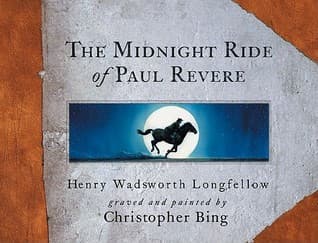
The Midnight Ride of Paul Revere cover
Archivist's Choice

The Midnight Ride of Paul Revere

Henry Wadsworth Longfellow (1999)

Genre

History / Children's

Reading Time

5 min

Key Themes

See below

Track Your Reading

Sign in to track this book

Paul Revere's legendary ride, brought to life with art and historical detail, inspires a new generation with the spirit of American independence.

Core Idea

Longfellow's 'The Midnight Ride of Paul Revere' turns a historical event into a lasting American myth. It shows how timely action, clear communication, and individual bravery are vital when facing hidden dangers. The poem highlights how one person's actions, supported by a network of patriots and shared through powerful stories, can start a revolution and become a key part of a nation's identity.
Reading time
5 min
Difficulty
Easy
✓ Read this if...
You want to understand how historical events are mythologized and used to inspire, especially in the context of American independence, or if you're looking for a foundational piece of American children's literature.
✗ Skip this if...
You are seeking a strictly factual, unembellished historical account of Paul Revere's ride or a deep analytical dive into the strategic military aspects of the American Revolution.

Core idea

The central argument and framework that powers the entire book.

Longfellow's 'The Midnight Ride of Paul Revere' turns a historical event into a lasting American myth. It shows how timely action, clear communication, and individual bravery are vital when facing hidden dangers. The poem highlights how one person's actions, supported by a network of patriots and shared through powerful stories, can start a revolution and become a key part of a nation's identity.

At a glance

Reading time

5 min

Difficulty

Easy

Read this if...

You want to understand how historical events are mythologized and used to inspire, especially in the context of American independence, or if you're looking for a foundational piece of American children's literature.

Skip this if...

You are seeking a strictly factual, unembellished historical account of Paul Revere's ride or a deep analytical dive into the strategic military aspects of the American Revolution.

Key Takeaways

1

The Power of Myth-Making

Longfellow's poem shaped Paul Revere's legacy, often overshadowing historical nuances.

Quote

'Listen, my children, and you shall hear / Of the midnight ride of Paul Revere,'

Longfellow's poem, though it takes poetic liberties, became the main story for many Americans about Paul Revere's ride. It uses rhythm and imagery well to place a specific version of events into the national memory. This shows how art, especially poetry, can shape public memory more than pure historical facts. The poem's ease of access and drama made Revere a famous name, turning an important but complex historical event into an easy-to-understand and inspiring tale of American bravery. This myth-making process is not only for Revere;...

Supporting evidence

The poem's opening lines, 'Listen, my children, and you shall hear / Of the midnight ride of Paul Revere,' immediately establish its role as a foundational story for future generations. Christopher Bing's illustrations further solidify this iconic imagery.

Apply this

When evaluating historical figures or events, recognize the distinction between popular narratives (often artistic or simplified) and complex historical accounts. Seek out multiple sources to understand the full scope, rather than relying solely on the most famous or romanticized version.
historical-mythologynational-identitypoetic-license
2

The Strategic Use of Signals

The 'one if by land, and two if by sea' signal was a crucial, pre-arranged communication tactic.

Quote

'Hang a lantern aloft in the belfry arch / Of the North Church tower, as a signal light,'

The planned signal of lanterns in the Old North Church belfry—one for a British land advance, two for a sea advance—was a smart and simple act of communication. This was not a last-minute decision but a carefully planned backup, showing the foresight and organization of the American patriots. Its success came from its clarity and ability to send important information over a distance, starting the alarm system that would warn the militia. This signal shows how important intelligence gathering and sharing are in military and revolutiona...

Supporting evidence

Longfellow explicitly details the signal: 'One if by land, and two if by sea; / And I on the opposite shore will be, / Ready to ride and spread the alarm'. Bing's illustrations often depict the church tower and the lanterns.

Apply this

In any organizational or collaborative effort, establish clear, concise, and pre-arranged communication protocols for critical information. Anticipate potential scenarios and design simple, unambiguous signals or messages to ensure rapid and accurate dissemination of vital updates.

military-strategyrevolutionary-tacticscommunication-protocol
3

The Timeliness of Action

Revere's ride was effective because it happened before the British could fully execute their surprise.

Quote

'He has left the village and mounted his steed; / And now, through the silence, and the night, / He rides with a thought in his heart, 'Beware!'

Paul Revere's mission depended entirely on its timing. His ability to leave quickly after the signal and spread the alarm before the British was key. If he had been delayed, or if the British had moved faster, their goal of surprise would have worked. This could have changed the outcomes at Lexington and Concord. This highlights how important speed and quick action are when facing dangers. In revolutions, success often comes down to who acts first and who can gather their forces fastest, turning information into immediate, decisive mo...

Supporting evidence

The poem's narrative builds tension around Revere's race against time, describing his urgent ride 'through the darkness and the night' to warn the sleeping towns.

Apply this

When faced with time-sensitive challenges or opportunities, prioritize rapid assessment and decisive action. Procrastination or undue delay can negate even the best plans. Develop systems to expedite decision-making and implementation when speed is of the essence.

strategic-timingproactive-actionmilitary-logistics
4

The Network of Patriotism

Revere was part of a larger, coordinated effort, not a lone hero, highlighting collective action.

Quote

'It was one by the village clock, / When he galloped into Lexington. / He saw the light, and heard the call, / And knew that his mission was not all.'

While Longfellow's poem focuses almost entirely on Paul Revere, historical records and illustrations remind us that Revere was just one rider in a large network of patriots. William Dawes and Samuel Prescott also rode that night, and many others helped gather intelligence and send signals. This group effort shows that revolutions are rarely the work of single people but rather the result of coordinated actions by dedicated groups. The 'midnight ride' was a relay race of information, showing the power of spread-out but connected resist...

Supporting evidence

Christopher Bing's additional historical notes and engravings often mention other riders and the broader network, subtly correcting the poem's singular focus on Revere. The historical context confirms Dawes and Prescott's involvement.

Apply this

When leading or participating in projects, recognize and celebrate the contributions of all team members. Avoid falling into the trap of 'hero worship,' which can diminish collective morale and obscure the true complexity of successful endeavors. Foster a culture of shared responsibility and recognition.

collective-actionrevolutionary-networksdecentralized-resistance
5

The Power of a Single Voice (or Ride)

One individual's courageous act can ignite widespread resistance and change the course of history.

Quote

'Through all the country-side he rode, / Spreading the alarm to every abode,'

Despite the larger network, Longfellow's focus on Revere's individual journey has merit. It shows how one determined person, acting with courage and purpose, can spark a larger movement. Revere's ride was not just about delivering a message; it was about showing defiance and urgency. His solitary journey through the night was a strong symbol, energizing communities and changing a quiet evening into a momentous call to arms. This shows the impact one person's initiative can have, proving that even small acts of bravery can spread to in...

Supporting evidence

The poem's narrative structure is entirely centered on Revere's perspective and actions, from receiving the signal to his interactions with the sleeping towns. The focus is squarely on 'his' ride and 'his' message.

Apply this

Never underestimate the potential impact of your own actions, even if they seem small or solitary. Identify opportunities where your initiative, courage, or unique contribution can serve as a catalyst for positive change or inspire others to act. Be the spark.

individual-impactcatalyst-for-changecourage-and-initiative
6

The Unseen Threat

The British advance was designed for surprise, making intelligence crucial to counter their plan.

Quote

'The British are coming! The British are coming!'

The British plan was to march secretly at night to capture colonial leaders and destroy military supplies, aiming to prevent organized resistance. This shows the psychological and tactical power of surprise in military operations. The patriots' counter-intelligence, specifically the 'one if by land, two if by sea' signal and Revere's ride, directly stopped this surprise. By warning the militia, they turned a possible ambush into a prepared defense, forcing the British to face an armed and ready public instead of an unsuspecting one. T...

Supporting evidence

The poem describes the British silently crossing the river and marching towards Lexington, intending to catch the colonists unaware. Historical accounts confirm the British objective of surprise and seizure of supplies.

Apply this

In strategic planning, always consider the 'surprise element' from a competitor or adversary. Invest in intelligence gathering and develop contingency plans to mitigate the impact of unexpected moves. Be prepared to adapt quickly when an anticipated threat materializes.

military-intelligencecounter-intelligencesurprise-attack
7

The Role of Ordinary Citizens

The success of the alarm depended on the readiness and response of everyday colonists.

Quote

'A hurry of hoofs in a village street, / A shape in the moonlight, a bulk in the dark, / And beneath, from the pebbles, in passing, a spark / Struck out by a steed flying fearless and fleet:'

Paul Revere's ride worked only because the 'country-folk' and militia were ready to respond to the alarm. The poem shows them waking, grabbing their muskets, and gathering. This shows that revolutionary success does not just depend on heroic leaders or secret operations. It also depends on ordinary citizens willing to respond and take part. The minute-men were farmers, artisans, and shopkeepers who had trained and organized, ready to defend their freedoms. Their collective readiness, prompted by Revere's warning, turned a warning into...

Supporting evidence

Longfellow describes the immediate response of the villagers: 'The meeting-house windows, blank and bare, / Gaze at him, with a solemn stare, / As if they wondered at the sight / Of a man who rode in the dead of night.' and then details the awakening of the militia.

Apply this

For any movement or initiative to succeed, cultivate broad engagement and ensure that your 'audience' or 'constituency' is informed, empowered, and ready to act when called upon. Don't just deliver a message; ensure the recipients are prepared to translate that message into action.

citizen-engagementgrassroots-movementcivilian-militia
8

The Unpredictability of History

Despite careful planning, historical events often unfold with unforeseen twists and turns.

Quote

'A voice in the darkness, a knock at the door, / And a word that shall echo forevermore!'

While Longfellow's poem offers a simple story, the historical reality of the midnight ride was more chaotic. Revere was captured, though he later escaped; Dawes fell from his horse; and Prescott was the only one to reach Concord. This shows that even the most carefully planned operations rarely happen exactly as expected. Outside factors, human error, and unexpected events always play a role. Understanding this unpredictability is key to understanding historical events and planning for the future. It teaches us that resilience, adapta...

Supporting evidence

Christopher Bing's historical notes often detail the actual complexities, such as Revere's capture and the involvement of multiple riders, contrasting with the poem's simplified account.

Apply this

When developing plans, incorporate flexibility and contingency measures. Assume that not everything will go according to script and prepare for potential setbacks or unexpected developments. Cultivate adaptability and problem-solving skills within your team.

historical-contingencyadaptive-planningunforeseen-circumstances
9

The Enduring Power of Storytelling

Longfellow's poem transcended its historical inaccuracies to become a cultural touchstone.

Quote

'In the hour of darkness and peril and need, / The people will waken and listen to hear / The hurrying hoof-beats of that steed,'

Longfellow's poem lasts not just as a historical account but as a strong piece of American storytelling. Its clear images, strong rhythm, and simple message of watchfulness and patriotism have secured its place in the national consciousness, despite its factual liberties. This shows that a story's emotional impact and appeal can often outweigh strict historical accuracy in terms of cultural influence. The poem reminds us that stories, especially those that touch on core national myths, have great power to teach, inspire, and unite gen...

Supporting evidence

The poem's continued inclusion in school curricula and its widespread recognition, even centuries later, attest to its enduring cultural impact. Christopher Bing's decision to illustrate this specific poem, rather than a purely factual account, further validates its lasting appeal.

Apply this

When communicating important messages, consider the power of narrative. Craft compelling stories that resonate emotionally and are easily memorable, even if they simplify complex realities. A well-told story can be more effective than a dry recitation of facts in inspiring action or fostering understanding.

narrative-powercultural-legacymyth-building

Critical analysis

Notable Quotes

Listen, my children, and you shall hear Of the midnight ride of Paul Revere,

The opening lines of the poem, setting the stage.

Hardly a man is now alive Who remembers that famous day and year.

The narrator's reflection on the passage of time since the event.

He said to his friend, 'If the British march By land or sea from the town to-night, Hang a lantern aloft in the belfry arch Of the North Church tower as a signal light,—

Paul Revere instructing his friend on the signal system.

One, if by land, and two, if by sea; And I on the opposite shore will be, Ready to ride and spread the alarm Through every Middlesex village and farm, For the country folk to be up and to arm.

Paul Revere detailing the signal and his plan of action.

A hurry of hoofs in a village street, A shape in the moonlight, a bulk in the dark, And beneath, from the pebbles, in passing, a spark Struck out by a light with a flying foot,

Describing Revere's ride through the countryside.

It was one by the village clock, When he galloped into Lexington.

Marking Revere's arrival in Lexington.

Then he said, 'Good-night!' and with muffled oar Silently rowed to the Charlestown shore,

Revere leaving Boston by boat to begin his ride.

A phantom ship, with each mast and spar Across the moon like a prison-bar, And a huge black hulk, that was magnified By its own reflection in the tide.

Describing the British man-of-war in the harbor.

It was two by the village clock, When he came to the bridge in Concord town.

Revere's arrival in Concord.

He saw the gilded weathercock Swim in the moonlight as he passed,

An observation by Revere during his ride.

The fate of a nation was riding that night;

Emphasizing the importance of Revere's mission.

So through the night rode Paul Revere; And so through the night went his cry of alarm To every Middlesex village and farm,—

Summarizing Revere's journey and its impact.

For, borne on the night-wind of the Past, Through all our history, to the last, The people will waken and listen to hear The hurrying hoof-beats of that steed, And the midnight message of Paul Revere.

The poem's concluding lines, reinforcing Revere's lasting legacy.

Quiz

Test Your Knowledge

Ready to see how well you understood this book? Take our interactive quiz with 10 questions.

10
Questions
~5
Minutes
?
Best Score

Key Questions (FAQ)

Henry Wadsworth Longfellow's poem recounts the legendary ride of Paul Revere on the eve of the American Revolutionary War. It describes his journey to warn colonial militias of the approaching British forces, emphasizing the importance of his actions and the spirit of American independence.

About the author

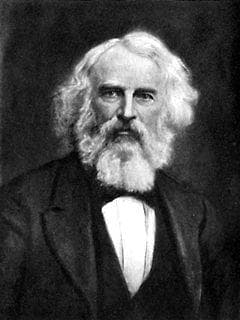
Henry Wadsworth Longfellow

Henry Wadsworth Longfellow was an American poet and educator. His original works include the poems "Paul Revere's Ride", "The Song of Hiawatha", and "Evangeline". He was the first American to completely translate Dante Alighieri's Divine Comedy and was one of the fireside poets from New England.