BookBrief
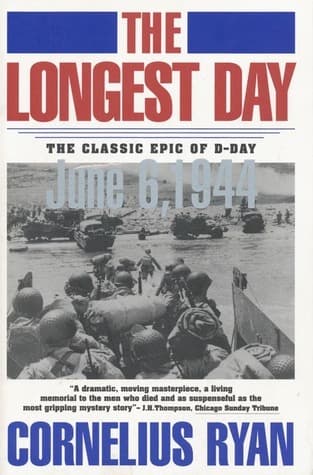
The Longest Day cover
Archivist's Choice

The Longest Day

Cornelius Ryan (1901)

Genre

History

Reading Time

10-12 hours

Key Themes

See below

Track Your Reading

Sign in to track this book

Cornelius Ryan's "The Longest Day" plunges readers into the brutal, historic hours of D-Day through accounts from both sides, detailing the courage, terror, and human resolve that shaped World War II.

Core Idea

Cornelius Ryan's "The Longest Day" reconstructs D-Day, June 6, 1944, using many firsthand accounts from soldiers, commanders, and civilians on both sides. The book argues that the Allied invasion of Normandy succeeded due to careful planning, individual acts of bravery and terror, key errors and clever deceptions, and sheer luck, all amidst the chaos of war. It focuses on the human side of this event, showing the personal sacrifices and the reality of combat.
Reading time
10-12 hours
Difficulty
Medium
✓ Read this if...
You want a comprehensive, human-centered account of D-Day, blending strategic overview with intimate personal experiences from all perspectives.
✗ Skip this if...
You are looking for a purely academic analysis of World War II strategy or prefer a book with minimal focus on individual narratives.

Core idea

The central argument and framework that powers the entire book.

Cornelius Ryan's "The Longest Day" reconstructs D-Day, June 6, 1944, using many firsthand accounts from soldiers, commanders, and civilians on both sides. The book argues that the Allied invasion of Normandy succeeded due to careful planning, individual acts of bravery and terror, key errors and clever deceptions, and sheer luck, all amidst the chaos of war. It focuses on the human side of this event, showing the personal sacrifices and the reality of combat.

At a glance

Reading time

10-12 hours

Difficulty

Medium

Read this if...

You want a comprehensive, human-centered account of D-Day, blending strategic overview with intimate personal experiences from all perspectives.

Skip this if...

You are looking for a purely academic analysis of World War II strategy or prefer a book with minimal focus on individual narratives.

Key Takeaways

1

The Fog of War is Real

Uncertainty and miscommunication were constant companions on D-Day.

Quote

No plan survives first contact with the enemy.

Ryan shows that even with careful planning, battle is chaotic. Communication failures, bad intelligence, and the operation's size meant commanders on both sides often had incomplete information. This 'fog of war' was a real force shaping decisions, leading to both errors and lucky breaks. The book highlights that leadership in such an environment requires adaptability, resilience, and the ability to make high-stakes decisions under pressure.

Supporting evidence

The misinterpretations of German command regarding the timing and location of the invasion, particularly their belief that the main assault would occur at Pas-de-Calais, as well as the initial confusion among Allied paratroopers dropped far from their objectives.

Apply this

In any complex project, anticipate and plan for communication failures and unexpected obstacles. Build in redundancies and empower team members to make informed decisions locally when central command is unclear. Prioritize clear, concise communication, even when under duress.

fog-of-warmilitary-strategydecision-making
2

Individual Valor Amidst Mass Chaos

The human element, from private to general, dictated the battle's ebb and flow.

Quote

Every man had his own D-Day, his own private terror, his own moment of courage.

Ryan masterfully weaves together many personal stories, showing that while D-Day was a huge strategic effort, its success depended on the bravery, cleverness, and will of individual soldiers. From paratroopers behind enemy lines to infantry assaulting beaches, the book highlights acts of heroism, fear, and sacrifice. These small stories humanize the invasion's scale, reminding us that 'history' is often the sum of countless personal struggles and wins. It emphasizes war's deep psychological effect on those who fought.

Supporting evidence

Stories of individual soldiers like Private John Steele, whose parachute got caught on a church steeple, or the unwavering resolve of Rangers scaling Pointe du Hoc under heavy fire, despite immense casualties.

Apply this

Recognize that even in large-scale endeavors, the performance and well-being of individuals are paramount. Foster a culture where personal initiative and resilience are valued. Understand that collective success is built upon the contributions and sacrifices of each team member.

heroismmilitary-historyhuman-element
3

Logistics: The Unsung Hero

The meticulous planning and execution of supplies were as crucial as combat.

Quote

Victory goes to the side with the best logistics.

While the combat stories are exciting, Ryan quietly emphasizes the huge logistical effort behind D-Day. The amount of men, equipment, food, and ammunition that had to cross the English Channel and land on the beaches was immense. Building artificial harbors (Mulberries) and ensuring a constant flow of supplies were essential for sustaining the invasion and preventing a stalemate. Without this unprecedented logistical support, the initial beachhead could not have expanded, and the operation would have failed. It demonstrates the power ...

Supporting evidence

The detailed descriptions of the Mulberry harbors being towed across the Channel, the constant stream of landing craft ferrying supplies, and the meticulous organization of ammunition and medical provisions.

Apply this

In any project, never underestimate the importance of logistical planning. Ensure resources, supplies, and support systems are robust and adaptable. A brilliant strategy is useless without the means to execute it effectively and sustain it over time.

logisticssupply-chainoperational-planning
4

The Power of Deception

Allied strategic deception played a pivotal role in the invasion's success.

Quote

The greatest weapon in this war is not the tank or the bomber, but the lie.

Ryan details Operation Fortitude, the Allied deception plan that convinced Germans the main invasion would be at Pas-de-Calais, not Normandy. This involved fake tanks, airfields, radio traffic, and a phantom army led by General Patton. This strategic misdirection was very effective, tying up many German forces away from the real landing zones and delaying their response. It shows how psychological warfare and intelligence can be as decisive as direct military action, shaping the battlefield before fighting begins.

Supporting evidence

The detailed accounts of Operation Fortitude, including the creation of 'Patton's Army' (FUSAG) in southeast England and the German high command's steadfast belief in the Pas-de-Calais threat.

Apply this

In competitive environments, strategic misdirection and controlling the narrative can be powerful tools. Understand competitor perceptions and, where ethical, use information asymmetry to your advantage. A well-executed 'bluff' can save significant resources.

deceptionmilitary-intelligencepsychological-warfare
5

The Brutality of the Beaches

Omaha Beach stands as a stark reminder of war's horrific cost.

Quote

For some, the longest day was over before it had truly begun, ending in the surf and the sand.

Ryan does not avoid the terrible realities of D-Day, especially the carnage on Omaha Beach. He vividly describes the strong German defenses, the devastating machine-gun fire, and the high casualties among American troops. This part of the book is a powerful, raw reminder of war's human cost and the immense courage needed to face such odds. It balances any romantic ideas of battle, grounding the history in the grim reality faced by those on the front lines.

Supporting evidence

The detailed accounts of the high casualty rates on Omaha Beach, the struggles of the landing craft to navigate obstacles, and the sheer volume of fire from German positions like 'Widerstandsnest 62'.

Apply this

When undertaking high-risk endeavors, thoroughly assess and prepare for worst-case scenarios. Understand the potential for catastrophic failure and ensure that contingency plans and support systems are in place to mitigate losses and sustain morale.

war-realitiesmilitary-casualtieshistorical-trauma
6

Leadership Under Fire

Effective leadership was often decentralized and highly adaptive.

Quote

The greatest leaders are those who can inspire action in the face of despair.

Ryan provides many examples of leadership, from Eisenhower's and Rommel's strategic decisions to the tactical actions of junior officers and NCOs on the beaches. The book shows that effective leadership on D-Day often meant taking action when communication failed, adapting to fast-changing situations, and inspiring troops despite great fear and casualties. It was not always about grand statements, but about small, brave acts that together turned the tide. This decentralized leadership was crucial in the chaotic environment.

Supporting evidence

General Bradley's decision to consider withdrawing from Omaha before the breakthrough, and the numerous instances of junior officers rallying their men to advance off the beaches when higher command was stalled.

Apply this

Empower leaders at all levels to make decisions and take initiative, especially in dynamic or crisis situations. Foster a culture of trust and adaptability, where rigid adherence to a plan is secondary to achieving the overarching objective. Lead by example and inspire resilience.

leadershipcrisis-managementadaptive-leadership
7

The Element of Surprise

Despite leaks, the timing and location of D-Day were a near-total surprise.

Quote

The enemy's greatest weakness is often his own certainty.

One of D-Day's most remarkable aspects, as Ryan explains, is the secrecy maintained for such a large operation. Despite thousands of personnel and many chances for leaks, the Germans were truly surprised by the Normandy landings' location and size. This surprise was amplified by their misjudgment of the weather and their firm belief in the Pas-de-Calais deception. The success of this secrecy highlights the importance of counter-intelligence and strict security, even before modern digital communication.

Supporting evidence

The German high command's confidence that the weather was too poor for an invasion, leading many senior officers to be away from their posts, and their continued belief in the Pas-de-Calais feint even after the Normandy landings began.

Apply this

In strategic planning, prioritize and protect critical information. Understand that a key advantage can be lost if details are compromised. Invest in robust security protocols and cultivate a culture of discretion within your organization.

secrecysurprise-attackinformation-security
8

The Cost of Indecision

German command paralysis played a significant role in their defeat.

Quote

Hesitation in battle is a death sentence.

Ryan effectively contrasts Allied initiative with the German high command's hesitation and internal conflicts. Hitler's strict control, conflicting advice from his generals, and the delay in releasing key armored reserves due to the belief in the Pas-de-Calais deception proved disastrous. This paralysis at the strategic level prevented a timely and coordinated German response, allowing the Allies to secure their beachheads. It is a strong lesson in the dangers of centralized, inflexible leadership and the need for quick, decisive acti...

Supporting evidence

The lengthy delays in deploying German panzer divisions, particularly the 12th SS Panzer Division, due to Hitler's personal approval being required and the persistent belief in the Pas-de-Calais threat.

Apply this

In high-stakes situations, foster a culture of decisive action. Avoid analysis paralysis and empower decision-makers to act swiftly when opportunities arise or threats emerge. Understand that delaying a decision can be as detrimental as making the wrong one.

decision-paralysismilitary-tacticsleadership-failure
9

The Global Impact, Personal Sacrifice

D-Day was a turning point for the world, built on individual struggles.

Quote

The invasion was not just a battle, but a testament to what free nations could achieve.

Ryan's story constantly reminds the reader of D-Day's huge stakes: liberating Europe from Nazi rule. He skillfully balances the grand strategy with the personal experiences of soldiers, civilians, and leaders. The book emphasizes that this moment in world history was built on the collective courage and sacrifice of countless individuals from different backgrounds. It is a powerful illustration that global outcomes result from personal actions, and freedom often comes at a great cost.

Supporting evidence

The stories of French civilians caught in the crossfire, the multinational composition of the Allied forces, and the solemn reflections of veterans years later.

Apply this

Connect individual contributions to the larger organizational mission. Remind teams of the 'why' behind their work and the broader impact of their efforts. Foster a sense of shared purpose and acknowledge the personal sacrifices made for collective success.

world-historysacrificecollective-action

Critical analysis

Notable Quotes

The wind was rising, and the sea was getting rougher. This was no day for an invasion.

Describing the weather conditions on June 5, 1944, before the postponement.

They were young, most of them, and they were afraid. But they were ready.

Referring to the Allied soldiers preparing for the landing.

The whole world seemed to explode. Then came the smell of burning cordite, and the screams.

A paratrooper's experience during the initial airborne assault.

Every man for himself now. That was the order, unspoken but understood.

Soldiers scattered and disoriented during the initial landings on the beaches.

The sea was red with blood and wreckage. But they kept coming.

Describing the horrific scene on Omaha Beach as waves of troops continued to land.

It was a miracle anyone got off that beach alive.

A veteran reflecting on the intensity of the fighting on Omaha Beach.

The sound of church bells ringing in Normandy, a sound they hadn't heard for four years.

French civilians reacting to the arrival of Allied forces.

They were dying for the cause of freedom, and they knew it.

Reflecting on the motivations of the Allied soldiers.

The fog of war was real, and it was thick with confusion and miscalculation.

Highlighting the inherent difficulties in command and control during the invasion.

Every yard gained was paid for in blood.

Describing the slow and costly advance inland from the beaches.

The Germans were surprised, but not broken. They fought with a desperate fury.

Acknowledging the fierce German resistance despite the element of surprise.

This was more than just a battle; it was the turning point of a war, and perhaps of history.

Emphasizing the historical significance of D-Day.

They had come to liberate, and they would not be denied.

Summarizing the resolve of the Allied forces.

The longest day, indeed, for those who lived it, and for those who died.

The author's concluding reflection on the profound impact of D-Day.

Quiz

Test Your Knowledge

Ready to see how well you understood this book? Take our interactive quiz with 10 questions.

10
Questions
~5
Minutes
?
Best Score

Key Questions (FAQ)

'The Longest Day' is Cornelius Ryan's classic historical account of the D-Day invasion of Normandy on June 6, 1944. It meticulously recreates the hours before and after the massive invasion, detailing the courage, heroism, and tragedy of the pivotal battle that turned the tide of World War II.

About the author

Cornelius Ryan

Cornelius Ryan was a renowned Irish-American journalist and author celebrated for his meticulously researched and gripping accounts of World War II. His most famous works, 'The Longest Day' and 'A Bridge Too Far,' are considered definitive narratives of pivotal Allied operations. Ryan's dedication to historical accuracy and vivid storytelling made him a master of military history non-fiction.