BookBrief
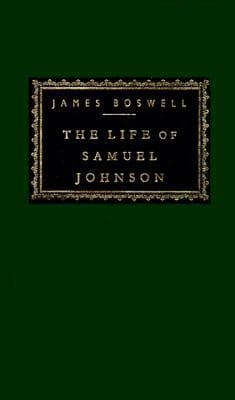
The Life of Samuel Johnson cover
Archivist's Choice

The Life of Samuel Johnson

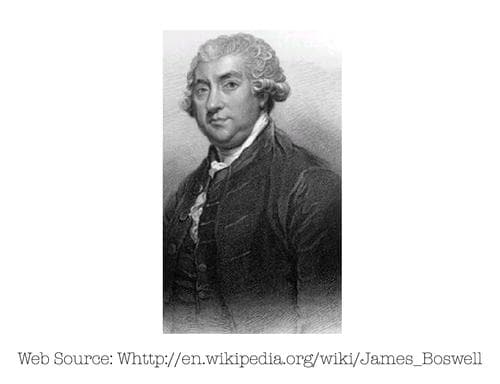
James Boswell (1776)

Genre

Biography / History

Reading Time

2500 min

Key Themes

See below

Track Your Reading

Sign in to track this book

Through the insatiable curiosity and meticulous journals of his friend Boswell, the larger-than-life lexicographer and moralist Samuel Johnson is immortalized in a biography brimming with wit, anecdote, and the pulse of 18th-century intellectual life.

Core Idea

James Boswell's "The Life of Samuel Johnson" chronicles the life, thoughts, and conversations of one of 18th-century England's most important intellectual figures. The book presents a living portrait of a complex man. It captures Johnson's intellect, his moral struggles, his wit, his melancholic temperament, and his deep-seated virtues, arguing for the value of a life examined and presented with honesty and admiration.
Reading time
2500 min
Difficulty
Hard
✓ Read this if...
You are fascinated by 18th-century English intellectual life, desire a deep dive into the mind of a historical giant, appreciate detailed biographical work, or want to witness the art of conversation and argument.
✗ Skip this if...
You prefer concise biographies, are averse to extensive verbatim conversations and digressions, or find the minutiae of 18th-century social customs and literary debates unengaging.

Core idea

The central argument and framework that powers the entire book.

James Boswell's "The Life of Samuel Johnson" chronicles the life, thoughts, and conversations of one of 18th-century England's most important intellectual figures. The book presents a living portrait of a complex man. It captures Johnson's intellect, his moral struggles, his wit, his melancholic temperament, and his deep-seated virtues, arguing for the value of a life examined and presented with honesty and admiration.

At a glance

Reading time

2500 min

Difficulty

Hard

Read this if...

You are fascinated by 18th-century English intellectual life, desire a deep dive into the mind of a historical giant, appreciate detailed biographical work, or want to witness the art of conversation and argument.

Skip this if...

You prefer concise biographies, are averse to extensive verbatim conversations and digressions, or find the minutiae of 18th-century social customs and literary debates unengaging.

Key Takeaways

1

The Art of Conversational Combat

Johnson's mastery of intellectual sparring reveals character and conviction.

Quote

Johnson, though he could be rough, was never rude to the poor; and he was always ready to give a reason for his opinions, even if that reason was simply: 'I have found it so.'

Samuel Johnson was a titan of conversation, seeing it not just as social discourse but as a rigorous intellectual exercise, often a form of combat. His sharp wit, erudition, and convictions made him a formidable debater. He valued truth and logic, frequently challenging prevailing sentiments and dissecting arguments. This combative style, while sometimes intimidating, was rooted in his desire to understand and assert reality, and it forced others to sharpen their own intellects. It was about the examination of ideas, a process through...

Supporting evidence

Boswell meticulously records numerous conversations where Johnson engages in fierce debates, often with Boswell himself, Goldsmith, or other members of their literary circle. One notable instance is Johnson's defense of the merits of London life against arguments for rural tranquility, or his strong opinions on political figures and literary works, where he would often silence opponents through sheer force of argument and wit.

Apply this

Cultivate the ability to articulate and defend your beliefs with clarity and conviction. Engage in robust intellectual discussions, not to dominate, but to test and refine your own understanding. Don't shy away from challenging popular opinions if you believe them to be flawed, but always be prepared to offer well-reasoned arguments in their place. Seek out conversational partners who will push your thinking, even if it means discomfort.
intellectual-discourserhetoricconvictioncritical-thinking
2

The Weight of Melancholy and the Pursuit of Virtue

Johnson's lifelong struggle with depression fueled his moral philosophy.

Quote

He was a man who had great stores of melancholy, which he fought against with constant application and the hope of Heaven.

Samuel Johnson wrestled with melancholy throughout his life, a 'vile melancholy' as he called it, which often plunged him into despair. This internal battle shaped his moral and philosophical outlook. Rather than succumbing, he actively fought his condition through relentless work, social engagement, and a commitment to Christian virtue. He believed that idleness led to despondency and that active benevolence and intellectual pursuit were antidotes. His moral writings, such as those in 'The Rambler,' often reflect this struggle, advoc...

Supporting evidence

Boswell frequently details Johnson's bouts of 'hypochondria' or 'melancholy,' describing his physical and mental struggles. He recounts Johnson's strict routines, his constant need for occupation, and his regular attendance at church and private devotion as methods to combat his inner demons. Johnson's essay 'The Idler' often touches upon the dangers of inaction and the importance of active engagement with life.

Apply this

Recognize that personal struggles, even profound ones, can be a source of strength and empathy. Combat feelings of despondency through purposeful action, intellectual engagement, and a commitment to helping others. Develop routines and disciplines that provide structure and meaning, even when motivation is low. Find strength in a moral or spiritual framework that provides guidance and hope.

melancholyvirtueresiliencemoral-philosophypurpose
3

The Power of Friendship and Literary Circles

Johnson's social world was vital for intellectual stimulation and personal support.

Quote

He delighted in the company of his friends, and was never happier than when surrounded by them, engaging in lively discourse.

For a man of intellect and often solitary pursuits, Samuel Johnson thrived within his social and literary circles, most famously 'The Club.' These friendships were not mere pleasantries but essential parts of his intellectual and emotional life. They provided a forum for robust debate, a source of comfort against his melancholic tendencies, and a community of like-minded individuals who understood his genius. Figures like Goldsmith, Burke, Garrick, and Boswell, challenged him, supported him, and provided material for his conversationa...

Supporting evidence

Boswell's entire biography is built around Johnson's interactions with his friends. He details numerous evenings at taverns like the Mitre and the Turk's Head, and meetings of The Club, where Johnson engaged with figures like Oliver Goldsmith, Edmund Burke, David Garrick, and Joshua Reynolds. These anecdotes reveal the depth and importance of these relationships to Johnson's daily life and intellectual output.

Apply this

Actively cultivate a strong social and intellectual network. Seek out friends who challenge your thinking, support your endeavors, and provide stimulating conversation. Don't underestimate the power of shared meals, regular meetings, or informal gatherings to foster intellectual growth and emotional well-being. Prioritize genuine connection over superficial acquaintances.

friendshipliterary-circlesintellectual-communitysocial-connection
4

The Lexicographer's Enduring Legacy

Johnson's Dictionary was a monumental feat, shaping the English language.

Quote

He defined the English language with a diligence and sagacity that had never before been seen, and perhaps never will be equaled.

Samuel Johnson's 'A Dictionary of the English Language' was an unprecedented achievement, undertaken largely single-handedly over nine years. Before his work, English lacked a comprehensive standard. Johnson compiled tens of thousands of words and provided clear, often witty, and sometimes opinionated definitions, illustrated with literary quotations. This effort set a benchmark for lexicography, influencing generations of scholars and solidifying the structure and usage of English. Beyond its linguistic impact, the Dictionary showed ...

Supporting evidence

Boswell details the immense labor involved in creating the Dictionary, from Johnson's initial proposal to Lord Chesterfield (and later his famous letter rebuking Chesterfield for late patronage) to the nine years of solitary toil. He quotes some of Johnson's more famous definitions, such as 'Oats' ('A grain, which in England is generally given to horses, but in Scotland supports the people.') and 'Patron' ('One who countenances, supports, or protects. Commonly a wretch who supports with insolence, and is paid with flattery.'), showcasing his wit and critical eye.

Apply this

Embrace ambitious, long-term projects that require deep focus and dedication, even if they seem overwhelming. Understand that true mastery often requires a solitary, sustained effort. Strive for clarity and precision in your own use of language, recognizing its power to shape thought and communication. Be willing to challenge existing norms and create new standards if you believe they will lead to improvement.

lexicographyenglish-languagescholarshipdedicationintellectual-achievement
5

The Complexities of Charity and Benevolence

Johnson's private acts of compassion reveal a deeply empathetic, if outwardly gruff, soul.

Quote

His house was a hospital for the sick, and a sanctuary for the unfortunate.

Beneath Johnson's often-gruff exterior lay a profound compassion for the less fortunate. His household was famously a refuge for a collection of impoverished and eccentric individuals, including blind Anna Williams, Dr. Robert Levet, and Mrs. Desmoulins. He shared his meager resources, often at personal sacrifice, and offered them not just shelter but also respect and friendship. This was a deeply ingrained moral imperative, driven by his Christian faith and his own experiences with poverty and suffering. He understood that true benev...

Supporting evidence

Boswell vividly describes Johnson's unique household, often referring to it as his 'motley family.' He recounts stories of Johnson bringing home beggars, sharing his food, and providing lodging and care for individuals who had nowhere else to go, even when his own financial situation was precarious. The death of Dr. Levet, one of Johnson's dependents, moved him deeply, inspiring a tender poem.

Apply this

Practice radical empathy and offer support to those in need, even when it's inconvenient or challenging. Understand that true benevolence extends beyond monetary contributions to include time, attention, and emotional support. Don't let social awkwardness or external appearances deter you from acts of kindness. Recognize the shared humanity in everyone, regardless of their circumstances.

charitybenevolenceempathycompassionsocial-justice
6

The Perils and Privileges of Patronage

Johnson's experience with Lord Chesterfield critiques the transactional nature of artistic support.

Quote

Is not a Patron, my Lord, one who looks with unconcern on a man struggling for life in the water, and when he has reached ground, encumbers him with help?

Johnson's famous letter to Lord Chesterfield, written after the latter offered belated patronage for the Dictionary, is a critique of the patron system. It exposed the hypocrisy of those who sought to claim credit for work they had not supported during its creation. Johnson, having toiled for years in poverty, felt the sting of Chesterfield's neglect and saw his sudden interest as self-serving. This incident shaped his views on artistic independence and the dignity of the writer. He argued that true support should be offered when it i...

Supporting evidence

The letter to Lord Chesterfield, famously quoted by Boswell, is the primary evidence. Johnson had dedicated the plan of his Dictionary to Chesterfield years earlier, but received no substantial support until the work was nearly complete and its success assured. Johnson's indignant response became a landmark in the history of literary independence.

Apply this

Value and seek genuine support during your struggles, not just during your triumphs. Be wary of those who offer help only when it's convenient or self-serving. Maintain your integrity and independence, refusing to be beholden to those who did not earn your gratitude. Champion the work of others when they are striving, not just when they have achieved success.

patronageartistic-independencedignity-of-workintegrityliterary-history
7

The Wisdom of Experience Over Theory

Johnson often prioritized lived experience and common sense above abstract philosophical speculation.

Quote

He was a man who preferred to judge by what he saw and felt, rather than by what he read in books.

Samuel Johnson was a pragmatist, often skeptical of elaborate philosophical systems that seemed detached from human experience. While learned, he privileged common sense, observation, and the lessons of life over abstract theory. His famous dismissal of Bishop Berkeley's idealism by kicking a stone ('I refute it thus!') illustrates this well. He believed that much of human wisdom came from grappling with the world as it is, with its difficulties and contradictions, rather than constructing perfect, but impractical, intellectual framew...

Supporting evidence

Boswell recounts Johnson's famous refutation of Berkeley's idealism by kicking a large stone and declaring, 'I refute it thus!' This anecdote encapsulates his preference for tangible reality over abstract philosophical concepts. His literary criticism, particularly of Shakespeare, also emphasizes the playwright's adherence to 'nature' and common human experience.

Apply this

Ground your understanding of the world in practical experience and observation, not just theoretical knowledge. Be skeptical of overly complex solutions that lack a clear connection to reality. Prioritize common sense and utility in your decision-making. Don't be afraid to challenge abstract ideas with concrete examples from your own life or the world around you.

pragmatismempiricismcommon-senselived-experienceanti-idealism
8

The Enduring Power of Biography

Boswell's meticulous approach created a living portrait, not just a historical account.

Quote

I will venture to say that he will be seen in my Work more completely than any man who has ever yet lived.

Boswell's 'Life of Samuel Johnson' is a landmark in biographical writing, not just for its subject, but for its revolutionary methodology. Boswell rejected the dry, hagiographic biographies common in his era, opting instead for a vibrant, warts-and-all portrait drawn from personal observation, extensive notes from conversations, and Johnson's own letters and papers. His detailed recording of Johnson's speech, mannerisms, and daily life brings the 'Great Cham' vividly to life, allowing readers to feel they know Johnson intimately. This...

Supporting evidence

Boswell's entire methodology, detailed within the book, is the evidence. He explicitly states his intention to present Johnson 'minutely' and 'with all his singularities.' He draws heavily from his own meticulously kept journals, recording conversations verbatim and describing Johnson's physical appearance, habits, and reactions in great detail. The sheer volume of direct quotes and anecdotes is unprecedented for its time.

Apply this

When documenting a life or an event, prioritize firsthand accounts, direct quotes, and detailed observation. Strive for authenticity and a balanced perspective, including both strengths and weaknesses. Understand that true insight often comes from capturing the small, telling details of daily life. Practice active listening and meticulous note-taking to preserve the nuances of human interaction.

biographyhistorical-writingauthenticityobservationdocumentation

Critical analysis

Notable Quotes

No man but a blockhead ever wrote, except for money.

Johnson's view on the motivation for writing.

When a man is tired of London, he is tired of life; for there is in London all that life can afford.

Johnson's praise for the city of London.

Patriotism is the last refuge of a scoundrel.

Johnson's cynical view of false displays of patriotism.

The noblest prospect which a Scotchman ever sees, is the high road that leads him to England!

Johnson's famous, often humorous, jab at Scotland.

It matters not how a man dies, but how he lives. The act of dying is not of importance, it lasts so short a time.

Johnson's perspective on the significance of life over death.

Depend upon it, Sir, when a man knows he is to be hanged in a fortnight, it concentrates his mind wonderfully.

Johnson's observation on the effect of imminent danger.

The greatest part of a writer's time is spent in reading, in order to write; a man will turn over half a library to make one book.

Johnson on the extensive research required for writing.

Knowledge is of two kinds. We know a subject ourselves, or we know where we can find information upon it.

Johnson's definition of knowledge.

Sir, I have found you an argument; but I am not obliged to find you an understanding.

Johnson's sharp retort during a debate.

A man should keep his friendship in constant repair.

Johnson's advice on maintaining relationships.

He who makes a beast of himself gets rid of the pain of being a man.

Johnson's reflection on indulgence and escapism.

To be happy at home is the ultimate result of all ambition.

Johnson's view on the true measure of success and contentment.

There is nothing which has yet been contrived by man, by which so much happiness is produced as by a good tavern or inn.

Johnson's appreciation for social establishments.

Questioning is not the mode of an ignorant, but of an inquiring mind.

Johnson's defense of curiosity and intellectual inquiry.

Quiz

Test Your Knowledge

Ready to see how well you understood this book? Take our interactive quiz with 10 questions.

10
Questions
~5
Minutes
?
Best Score

Key Questions (FAQ)

James Boswell's 'The Life of Samuel Johnson' is a comprehensive biography of the esteemed 18th-century English literary figure, Samuel Johnson. It chronicles Johnson's life, thoughts, and conversations, offering an intimate portrait through Boswell's meticulous observations and records.

About the author