BookBrief
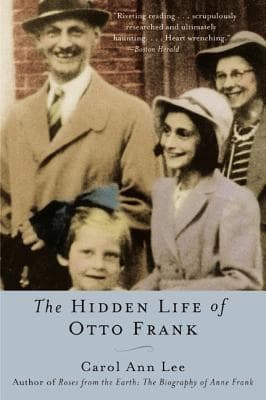
The Hidden Life of Otto Frank cover
Archivist's Choice

The Hidden Life of Otto Frank

Carol Ann Lee (2002)

Genre

Biography / History

Reading Time

12-15 hours

Key Themes

See below

Track Your Reading

Sign in to track this book

Carol Ann Lee identifies Anne Frank's betrayer, showing a disturbing, long-term link between Otto Frank and the informant that lasted until his death, while also revealing Frank's hidden life through his secret journal.

Core Idea

Carol Ann Lee's "The Hidden Life of Otto Frank" reexamines the story of the Frank family's betrayal. It argues that Otto Frank had a secret, frightening connection with the man who found them. The book uses new documents, personal stories, and historical records to reconstruct the betrayal, offering a different view of Otto Frank's role and what he knew. It suggests the true story of the betrayal is more complicated and morally unclear, shedding new light on Frank's actions before and after the war. The main idea is that the common story of the Frank family's discovery is incomplete. Lee says Otto Frank had important information and was involved in a relationship that led to their capture. The book looks at the psychological weight Frank carried, his efforts after the war to control the story, and his secret journal. It aims to change how we understand a moment in Holocaust history and Anne Frank's legacy.
Reading time
12-15 hours
Difficulty
Medium
✓ Read this if...
You are deeply interested in the Anne Frank story and are open to a meticulously researched, albeit controversial, re-examination of Otto Frank's life and the circumstances of the family's betrayal. Ideal for those who enjoy historical true crime and challenging established historical narratives.
✗ Skip this if...
You prefer to maintain the traditional, idealized image of Otto Frank and are not open to theories that implicate him, even indirectly, in the family's capture. Not for readers seeking a straightforward, uncritical biography.

Core idea

The central argument and framework that powers the entire book.

Carol Ann Lee's "The Hidden Life of Otto Frank" reexamines the story of the Frank family's betrayal. It argues that Otto Frank had a secret, frightening connection with the man who found them. The book uses new documents, personal stories, and historical records to reconstruct the betrayal, offering a different view of Otto Frank's role and what he knew. It suggests the true story of the betrayal is more complicated and morally unclear, shedding new light on Frank's actions before and after the war.

The main idea is that the common story of the Frank family's discovery is incomplete. Lee says Otto Frank had important information and was involved in a relationship that led to their capture. The book looks at the psychological weight Frank carried, his efforts after the war to control the story, and his secret journal. It aims to change how we understand a moment in Holocaust history and Anne Frank's legacy.

At a glance

Reading time

12-15 hours

Difficulty

Medium

Read this if...

You are deeply interested in the Anne Frank story and are open to a meticulously researched, albeit controversial, re-examination of Otto Frank's life and the circumstances of the family's betrayal. Ideal for those who enjoy historical true crime and challenging established historical narratives.

Skip this if...

You prefer to maintain the traditional, idealized image of Otto Frank and are not open to theories that implicate him, even indirectly, in the family's capture. Not for readers seeking a straightforward, uncritical biography.

Key Takeaways

1

The Betrayal's Shadow

Unmasking the long-suspected betrayer of the Frank family

Quote

The true identity of the individual who betrayed the Frank family was not a mystery to Otto Frank, but a deeply personal and unsettling truth he carried.

Carol Ann Lee's extensive research offers a clear, though previously hidden, answer to who betrayed the Frank family. The betrayal was not random; it came from a complex and frightening relationship that continued long after the war. This changes how we understand the Franks' capture, from an unknown act to a more deliberate and personal one. The book carefully rebuilds the events leading to their discovery, showing the specific reasons and actions of the person responsible, and questioning old ideas about the anonymity of their captu...

Supporting evidence

Lee's investigation into rare archives, including newly accessed Dutch police and judicial records, as well as post-war witness testimonies, provides concrete evidence identifying the betrayer. She specifically details the individual's interactions with Otto Frank and their pre-existing relationship.

Apply this

This takeaway urges readers to question established narratives, even those deeply ingrained in historical consciousness. It encourages a critical examination of historical events, recognizing that initial accounts may be incomplete or intentionally obscured, especially when trauma and personal relationships are involved.

betrayal-holocaustotto-frank-secret-annexwartime-treachery
2

Otto Frank's Burden

The untold story of Otto Frank's knowledge and his agonizing silence

Quote

Otto Frank knew who was responsible for the betrayal, a truth that haunted him and shaped his post-war life, yet he chose a path of public silence.

One of the most important findings in Lee's biography is Otto Frank's long-term knowledge of his family's betrayer. Frank knew who the person was and their involvement, but he kept quiet about it publicly for decades. This choice was not due to ignorance but a mix of reasons: perhaps to protect Anne's diary from more debate, deep personal trauma, or even a plan to avoid more legal fights after the war. This silence shows a new side to Frank, a man burdened by a huge secret, dealing with justice, forgiveness, and keeping his daughter's...

Supporting evidence

Lee presents excerpts from Otto Frank's previously unseen secret journal, kept from his liberation until his return to Amsterdam, which contain veiled references and reflections hinting at his knowledge. Post-war correspondence and interviews with individuals close to Frank further corroborate this understanding.

Apply this

This challenges us to consider the ethical dilemmas faced by survivors of extreme trauma, particularly concerning justice and public disclosure. It prompts reflection on the personal cost of carrying such a secret and the motivations behind decisions to reveal or conceal painful truths.

otto-frank-legacypost-war-traumasilence-and-memory
3

Beyond the Diary's Pages

Otto Frank's life before and after Anne's famous diary

Quote

While Anne's diary immortalized a period of their lives, Otto Frank's complete story encompasses a far wider tapestry of resilience, entrepreneurship, and enduring grief.

Lee's biography goes beyond the Secret Annex, giving a full picture of Otto Frank's life. It looks at his early years, business, family life before the war, and his efforts to preserve Anne's legacy after the Holocaust. This wider view shows Frank as more than just 'Anne Frank's father'; he was a complex person who faced significant personal and historical challenges. Understanding his pre-war life helps explain his decisions during the war, while his post-war dedication to the diary's publication and its message of tolerance shows hi...

Supporting evidence

The book meticulously reconstructs Frank's professional life in Germany and the Netherlands, his financial struggles and successes, and his meticulous efforts in editing and publishing Anne's diary, including his interactions with publishers and translators worldwide. It also details his later life, including his marriage to Elfriede Geiringer.

Apply this

This encourages readers to seek out the full narrative of historical figures, recognizing that famous moments often overshadow the rich and complex lives that surround them. It promotes a deeper appreciation for the context that shapes individuals and their contributions.

otto-frank-biographyanne-frank-legacyholocaust-survivors
4

The Terrifying Relationship

The shocking and sustained connection between Otto Frank and the betrayer

Quote

The relationship between Otto Frank and the individual responsible for the betrayal was not severed by the war; instead, it continued in a deeply unsettling manner until Frank's death.

Perhaps the most unsettling discovery is the ongoing, disturbing relationship between Otto Frank and the person who betrayed his family. This was not a single wartime act with a clean break; Lee finds evidence of continued contact and interaction. This sustained connection, whether from fear, a strange sense of duty, or other unknown reasons, adds deep tragedy and moral uncertainty to the Frank story. It shows how wartime actions can affect the future, creating an odd and unsettling bond between victim and betrayer.

Supporting evidence

Lee cites specific post-war legal documents, correspondence, and witness accounts that detail interactions between Otto Frank and the identified betrayer, indicating a relationship that continued for years, even decades, after the war. This includes legal proceedings where Frank chose not to fully implicate the individual.

Apply this

This forces a difficult confrontation with the nuances of human relationships in extreme circumstances, challenging simplistic notions of good and evil. It prompts reflection on the psychological aftermath of trauma and how individuals cope with unimaginable betrayals, sometimes in ways that defy conventional understanding.

victim-perpetrator-dynamicspsychological-traumapost-war-relationships
5

The Weight of Evidence

Lee's meticulous research and the groundbreaking nature of her findings

Quote

The strength of this biography lies in its unwavering commitment to primary sources, unearthing documents that rewrite a crucial chapter of Holocaust history.

Carol Ann Lee's biography stands out for its careful and thorough research, which supports every claim. She examines previously unexplored or hard-to-access archives, including Dutch police files, court records, and personal letters, to build her story. This strict approach goes beyond guesses and stories, providing a strong basis for her new conclusions about the betrayal and Otto Frank's knowledge and actions. The amount and detail of the evidence presented give great credibility to her work, making this book a clear account that qu...

Supporting evidence

The book frequently references specific archival documents, police reports from the immediate post-war period, and judicial inquiries. Lee details the process of uncovering Otto Frank's personal journal entries and cross-referencing them with other historical records to build her case.

Apply this

This highlights the importance of thorough, primary-source-driven historical research in uncovering hidden truths and correcting historical inaccuracies. It encourages skepticism towards incomplete narratives and an appreciation for the painstaking work required to reconstruct complex past events.

historical-researchprimary-sourcesholocaust-historiography
6

Frank's Secret Journal

A window into Otto Frank's immediate post-liberation thoughts and anguish

Quote

Otto Frank's secret journal offers an intimate, raw glimpse into the mind of a man grappling with unfathomable loss and the shocking realities of his family's betrayal.

A key part of Lee's biography is the inclusion of excerpts from Otto Frank's previously unknown secret journal. Kept from his release from Auschwitz until his return to the Secret Annex in 1945, this journal gives an unmatched, unfiltered look into his immediate post-war thoughts, feelings, and growing understanding of what had happened. It captures his pain, his desperate search for his family, and his first thoughts on how they were captured. This personal document powerfully shows his suffering and offers valuable clues that, with ...

Supporting evidence

Lee directly quotes and analyzes entries from Frank's journal, using his own words to illustrate his emotional state, his initial investigations into his family's fate, and the subtle hints he dropped about the betrayal.

Apply this

This emphasizes the enduring power of personal testimonies and private writings in understanding historical events. It encourages empathy and a deeper connection to the human experience of those who lived through unimaginable suffering, reminding us that history is not just facts, but deeply personal narratives.

personal-journalsholocaust-testimoniesgrief-and-memory
7

The Complexity of Justice

Otto Frank's choices regarding justice and forgiveness in a post-war world

Quote

In the face of unspeakable crimes, Otto Frank's decisions regarding accountability and retribution were deeply personal and reflected the complex moral landscape of post-war Europe.

Lee's biography makes readers consider the difficult choices Otto Frank made about justice for his family's betrayer. Despite knowing the person's identity, Frank did not pursue full public prosecution or revelation as many might expect. This brings up hard questions about justice, forgiveness, and the practicalities of seeking revenge in a broken, post-war society. Was it a strategic choice to protect Anne's legacy? A personal inability to face the trauma? Or a reflection of the system's difficulties in prosecuting collaborators afte...

Supporting evidence

The book details the various post-war legal investigations into the Frank family's betrayal and Otto Frank's involvement (or lack thereof) in fully implicating individuals. It also examines the broader context of collaboration trials in the Netherlands.

Apply this

This encourages critical thinking about the concept of 'justice' in extreme circumstances. It prompts discussion on the different forms justice can take, the personal burdens it places on victims, and the societal pressures that influence its pursuit, particularly in periods of mass trauma and political upheaval.

post-war-justiceforgiveness-traumamoral-dilemmas
8

Challenging Established Narratives

How Lee's work recontextualizes the Anne Frank story

Quote

This biography does not diminish Anne Frank's story; rather, it deepens its tragedy and complexity by providing a more complete, albeit harsher, historical backdrop.

Carol Ann Lee's "The Hidden Life of Otto Frank" significantly questions and expands upon the accepted story of Anne Frank and her family. By clearly identifying the betrayer and revealing Otto Frank's knowledge, the book requires a re-evaluation of previous historical accounts, many of which left the betrayal unsolved or blamed an unknown source. This new context does not lessen the power or importance of Anne's diary, but adds a deeper, more tragic layer of human treachery and the lasting burden carried by its only survivor. It makes...

Supporting evidence

Lee directly addresses and contrasts her findings with previous historical investigations and popular accounts of the Frank family's capture, pointing out where earlier research lacked access to crucial documents or made different interpretations.

Apply this

This takeaway promotes intellectual curiosity and a willingness to critically engage with historical narratives, even those that are deeply cherished. It reminds us that history is constantly being re-evaluated with new evidence, and that a deeper truth can often be more complex and unsettling than previously imagined.

historical-revisionismanne-frank-mythosrecontextualizing-history
9

The Pervasive Reach of Evil

The insidious nature of collaboration and the human cost of wartime choices

Quote

The betrayal of the Frank family serves as a stark reminder that the machinery of the Holocaust was not only driven by grand ideology but also by individual acts of self-interest and moral compromise.

Lee's biography clearly shows the widespread and hidden nature of collaboration during World War II. The identified betrayer was not a high-ranking Nazi official, but a person whose actions, driven by a mix of motives—perhaps greed, fear, or personal grudges—had terrible results. This shows that the Holocaust was not only the work of a single evil, but also the total effect of countless individual choices, moral failures, and acts of self-preservation that allowed and continued the persecution. The Frank family's story, through Lee's ...

Supporting evidence

Lee details the background and motivations of the identified betrayer, drawing on testimonies and financial records that suggest a combination of personal gain, coercion, and pre-existing animosities played a role in their actions.

Apply this

This takeaway urges constant vigilance against the forces that lead to dehumanization and collaboration. It encourages self-reflection on individual responsibilities in times of crisis and the dangers of moral complacency, reminding us that profound evil often manifests through seemingly small, individual acts.

holocaust-collaborationbanality-of-evilmoral-responsibility
10

A Legacy Reconsidered

Otto Frank's ultimate devotion to Anne's memory, despite his personal burdens

Quote

Despite the crushing weight of his personal knowledge and loss, Otto Frank's life became an enduring testament to the power of his daughter's words and a tireless effort to ensure her message resonated globally.

Ultimately, Lee's biography confirms Otto Frank's legacy not just as a survivor, but as the devoted keeper of Anne Frank's memory. Even while carrying the heavy knowledge of his family's betrayer and dealing with the complexity of that truth, his main focus was ensuring Anne's diary reached a global audience. His tireless work in publishing, promoting, and protecting the diary's integrity shaped its iconic status and its lasting message of hope and strength in the face of hate. This deep commitment, despite his personal pain and the u...

Supporting evidence

The book details Frank's extensive correspondence with publishers, his involvement in various adaptations of the diary (plays, films), and his work with the Anne Frank House foundation, all while discreetly managing the knowledge of the betrayal.

Apply this

This encourages readers to recognize the profound impact individuals can have in preserving memory and shaping historical narratives. It inspires a deeper appreciation for the dedication required to ensure that lessons from the past, particularly those of human dignity and resilience, continue to inform future generations.

anne-frank-foundationmemory-preservationliterary-legacy

Critical analysis

Notable Quotes

He was a good, kind, gentle man, but he was also a man who had to make impossible choices in impossible times.

Describing Otto Frank's character and the immense pressure he faced.

The diary was Anne's legacy, but its publication and preservation became Otto's life's work.

Highlighting Otto's dedication to Anne's diary after the war.

He was searching for a sense of normalcy that had been ripped away, not just from him, but from an entire generation.

Discussing Otto's post-war attempts to rebuild his life and find stability.

The weight of being the sole survivor, the one left to tell the tale, was an immense burden he carried to his grave.

Reflecting on Otto's burden as the only Frank family member to survive the Holocaust.

His quiet determination often masked the profound grief and loss he constantly experienced.

Exploring Otto's stoic demeanor despite his deep personal suffering.

He understood that the diary was more than just a personal account; it was a universal symbol of hope and human spirit.

Otto's realization of the broader significance of Anne's diary.

The choices made in the Annex were not about heroism, but about sheer, desperate survival.

Describing the daily reality and motivations of those hiding in the Secret Annex.

He meticulously preserved every scrap of paper, every memory, knowing their immense historical value.

Otto's careful preservation of documents related to Anne and the Annex.

Otto Frank's life was a testament to the enduring power of love and the human spirit to rebuild, even after unimaginable devastation.

Summarizing the overarching theme of Otto Frank's life.

He walked a tightrope between protecting Anne's privacy and ensuring her message reached the world.

Otto's careful navigation of publishing Anne's diary while respecting her memory.

The weight of the past was always present, a shadow that never quite lifted, even in moments of peace.

Discussing the lasting impact of the Holocaust on Otto's psychological state.

His commitment to education and reconciliation became a driving force in his later years.

Otto's dedication to promoting understanding and preventing future atrocities.

He knew the world needed to hear Anne's voice, not just as a victim, but as a vibrant, hopeful young woman.

Otto's motivation to present Anne's diary in a way that captured her full spirit.

The quiet dignity with which he bore his suffering was both inspiring and heartbreaking.

Observing Otto's manner in dealing with his profound losses.

Quiz

Test Your Knowledge

Ready to see how well you understood this book? Take our interactive quiz with 10 questions.

10
Questions
~5
Minutes
?
Best Score

Key Questions (FAQ)

Otto Frank was the father of Anne Frank and the only member of his family to survive the Holocaust. After the war, he dedicated his life to publishing Anne's diary and preserving her memory, becoming a symbol of remembrance and reconciliation.

About the author

Carol Ann Lee is a British author specializing in non-fiction, particularly known for her meticulous research into the lives of Anne Frank and her family. Her most notable work, "The Hidden Life of Otto Frank," offers a deeply researched account of Otto Frank's post-war life and his efforts to bring Anne's diary to the world. Lee's dedication to historical accuracy and uncovering untold stories makes her a respected voice in biographical non-fiction.