BookBrief
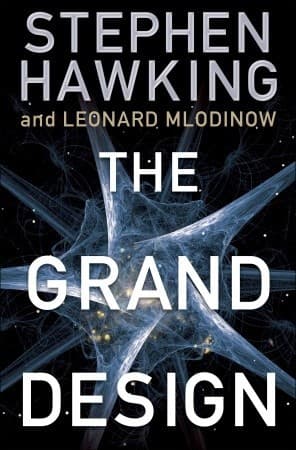
The Grand Design cover
Archivist's Choice

The Grand Design

Stephen Hawking (2010)

Genre

History / Spirituality / Science / Philosophy

Reading Time

180 min

Key Themes

See below

Track Your Reading

Sign in to track this book

Stephen Hawking and Leonard Mlodinow challenge our deepest ideas about creation, reality, and the universe's origin, proposing a multiverse born from quantum fluctuations where observation shapes history, and M-theory is the ultimate quest for everything.

Core Idea

The Grand Design argues that philosophy is dead, made irrelevant by modern science, especially physics. It says the universe's creation and existence can be fully explained by scientific laws, specifically M-theory, without a divine creator. The book introduces 'model-dependent realism,' stating that there is no single objective reality, only various models that describe the universe, and the 'best' model is the most elegant and predictive. It further proposes that the universe spontaneously created itself from nothing due to gravity and quantum fluctuations, leading to a multiverse where our universe is one of many, making the apparent fine-tuning of our universe for life a statistical outcome rather than evidence of design.
Reading time
180 min
Difficulty
Medium
✓ Read this if...
You are curious about how modern physics, particularly M-theory and quantum mechanics, attempts to explain the origin and nature of the universe without invoking a creator, and are open to challenging traditional philosophical and religious views on existence.
✗ Skip this if...
You are looking for a deep dive into the mathematical intricacies of M-theory, prefer a philosophical exploration that doesn't dismiss metaphysics, or are uncomfortable with a purely scientific, deterministic view of creation that explicitly disavows a divine role.

Core idea

The central argument and framework that powers the entire book.

The Grand Design argues that philosophy is dead, made irrelevant by modern science, especially physics. It says the universe's creation and existence can be fully explained by scientific laws, specifically M-theory, without a divine creator. The book introduces 'model-dependent realism,' stating that there is no single objective reality, only various models that describe the universe, and the 'best' model is the most elegant and predictive. It further proposes that the universe spontaneously created itself from nothing due to gravity and quantum fluctuations, leading to a multiverse where our universe is one of many, making the apparent fine-tuning of our universe for life a statistical outcome rather than evidence of design.

At a glance

Reading time

180 min

Difficulty

Medium

Read this if...

You are curious about how modern physics, particularly M-theory and quantum mechanics, attempts to explain the origin and nature of the universe without invoking a creator, and are open to challenging traditional philosophical and religious views on existence.

Skip this if...

You are looking for a deep dive into the mathematical intricacies of M-theory, prefer a philosophical exploration that doesn't dismiss metaphysics, or are uncomfortable with a purely scientific, deterministic view of creation that explicitly disavows a divine role.

Key Takeaways

1

Model-Dependent Realism

Our perception of reality is shaped by the models we use to understand it.

Quote

There is no model-independent test of reality. It is an illusion to think that there is.

Hawking and Mlodinow argue that there is no objective reality independent of our minds and the models we create to interpret sensory data. Instead, what we see as 'real' is simply the most effective model for making predictions and understanding our observations. This 'model-dependent realism' means that different models, even if they seem to contradict each other, can both be valid if they accurately describe a particular set of phenomena. The concept challenges the idea of a single, objective reality, suggesting that our understandi...

Supporting evidence

The authors illustrate this with the example of different models for the solar system – Ptolemy's geocentric model and Copernicus's heliocentric model. While the heliocentric model is simpler and more accurate, Ptolemy's model could still make accurate predictions for a long time, demonstrating that a 'wrong' model can still be useful within its domain.

Apply this

Recognize that 'truth' is often relative to the framework of understanding. When encountering conflicting perspectives, instead of immediately dismissing one, evaluate which model offers the most predictive power and internal consistency for the specific context. This encourages intellectual humility and a more nuanced approach to knowledge acquisition.

model-dependent-realismscientific-modelsepistemology
2

The Quantum Multiverse

The universe is not unique; an infinite number of universes exist, each with different laws.

Quote

Because there is a law like gravity, the universe can and will create itself from nothing.

The book suggests a multiverse, an infinite collection of universes, each possibly governed by different physical laws. This idea comes from quantum theory, particularly the concept of 'sum over histories,' where every possible history of the universe exists at the same time. The authors argue that our specific universe, with its physical constants suitable for life, is not a miracle but simply one outcome among many. This explanation for our existence removes the need for a divine creator, as the sheer number of universes makes it st...

Supporting evidence

The 'sum over histories' formulation of quantum mechanics, pioneered by Richard Feynman, suggests that a particle takes every possible path between two points, with probabilities assigned to each. Applied to the universe, this implies an infinite branching of possibilities, leading to a multiverse.

Apply this

Embrace the idea that our universe is just one possibility, fostering a sense of both wonder and humility. This perspective can inform discussions on the anthropic principle, encouraging us to look for scientific explanations for cosmic fine-tuning rather than defaulting to supernatural ones.

multiversequantum-mechanicsanthropic-principle
3

Gravity as the Creator

Gravity, not a divine being, is the ultimate force responsible for the universe's spontaneous creation.

Quote

Because there is a law like gravity, the universe can and will create itself from nothing.

Hawking and Mlodinow make a bold claim: the universe, including space and time, could have spontaneously created itself from nothing due to the basic laws of physics, especially gravity. They explain that the positive energy of matter is exactly balanced by the negative gravitational potential energy, meaning the total energy of the universe can be zero. This allows for creation without breaking energy conservation. This 'self-creation' mechanism, driven by quantum fluctuations and gravity, removes the traditional role of a divine cre...

Supporting evidence

The authors refer to the concept of 'negative gravitational energy' balancing the positive energy of matter. If you want to lift a book, you expend energy. This energy becomes positive potential energy in the book. If you drop the book, gravity does work, and this work is stored as negative gravitational potential energy. In a closed universe, the total energy can be zero, allowing for spontaneous creation.

Apply this

When considering the origin of the universe, prioritize scientific explanations that rely on known physical laws. Challenge assumptions that require an external agent for creation, and explore how fundamental forces like gravity can lead to complex phenomena from seemingly simple beginnings.

cosmic-origingravityquantum-fluctuationscreation-from-nothing
4

Top-Down Cosmology

Our observations in the present determine the universe's past, not the other way around.

Quote

The past, like the future, is indefinite and exists only as a spectrum of possibilities.

The book introduces 'top-down cosmology,' a new way of thinking. Instead of the past determining the present, quantum mechanics suggests that observing in the present actually 'selects' a specific history for the universe from all possible histories. This means the past is not a fixed reality but a product of our current interactions and measurements. This concept challenges linear cause and effect and suggests a deep connection between the observer and the observed, extending even to the very beginning of the universe. It is an idea ...

Supporting evidence

The 'sum over histories' approach implies that a particle doesn't follow a single path, but rather all possible paths. Similarly, the universe doesn't have a single past. It's only by observing the universe *now* that we effectively 'choose' one of the many possible pasts that could have led to our present state.

Apply this

Rethink the deterministic view of history. Understand that our current scientific inquiries and observations are not merely uncovering a pre-existing past, but actively contributing to its definition within the framework of quantum reality. This encourages a more dynamic and interactive view of scientific discovery.

top-down-cosmologyquantum-historyobserver-effectcausality
5

The End of Philosophy?

Science has usurped philosophy's role in answering fundamental questions about existence.

Quote

Philosophy is dead. Philosophy has not kept up with modern developments in science, particularly physics.

Hawking and Mlodinow provocatively declare the death of philosophy, arguing that science, particularly physics, has become the main field for answering the deepest questions about the universe's origin, nature, and our place in it. They contend that traditional philosophical approaches, lacking evidence and predictive power, are no longer able to address these complex questions. This statement is a direct challenge to centuries of intellectual tradition, positioning science as the ultimate source of truth and meaning. While controvers...

Supporting evidence

The book itself provides the evidence: it uses advanced physics concepts like quantum mechanics, M-theory, and cosmology to address questions like 'Why is there something rather than nothing?' and 'What is the nature of reality?' – questions traditionally tackled by philosophers.

Apply this

Engage with scientific literature and theories when grappling with fundamental existential questions. While philosophy still offers valuable frameworks for ethics and meaning, acknowledge the growing capacity of science to provide concrete, testable answers to ontological and cosmological inquiries.

philosophy-of-sciencescientific-determinismepistemology
6

M-Theory: The Theory of Everything

M-theory is the leading candidate for a unified theory describing all fundamental forces.

Quote

M-theory is the only candidate for a complete theory of the universe.

The authors present M-theory as the most promising 'Theory of Everything,' able to unify all basic forces of nature, including gravity, into one framework. M-theory suggests that our universe exists in 11 dimensions, with some curled up and others extended. It includes various string theories and supergravity, offering a possible solution to the problem of combining general relativity with quantum mechanics. If confirmed, M-theory would represent the highest point of human scientific achievement, providing a complete description of re...

Supporting evidence

The book details M-theory's ability to incorporate all five consistent superstring theories and 11-dimensional supergravity into a single framework, suggesting it is a more fundamental theory from which others arise as approximations.

Apply this

Stay informed about developments in theoretical physics, particularly in areas like string theory and M-theory, as they represent the cutting edge of our understanding of the universe. Recognize the profound implications such a theory would have on our understanding of reality, space, and time.

m-theorystring-theorytheory-of-everythingquantum-gravity
7

Fine-Tuning is an Illusion

The apparent 'fine-tuning' of our universe is a consequence of the multiverse, not design.

Quote

It is not necessary to invoke God to light the blue touch paper and set the universe going.

The 'fine-tuning problem' refers to the observation that the basic constants of physics seem perfectly set for life. Many see this as evidence for intelligent design. However, Hawking and Mlodinow argue that this apparent fine-tuning is an illusion. In a multiverse, where countless universes exist with different physical laws, it is statistically certain that at least one universe would have the precise conditions for life. We simply find ourselves in that particular universe because it is the only one where we could exist. This nat...

Supporting evidence

The authors explain that if the cosmological constant were slightly different, the universe would either collapse too quickly or expand too fast for stars and galaxies to form. In the multiverse, these conditions are just one outcome among many, and we observe them because we exist.

Apply this

Approach arguments for intelligent design with critical skepticism. Consider whether a multiverse hypothesis or other naturalistic explanations can account for observed cosmic phenomena, rather than immediately attributing them to supernatural intervention.

fine-tuning-problemanthropic-principlemultiverseintelligent-design
8

Our Origins in Quantum Fluctuations

We are products of random quantum events in the very early universe.

Quote

We are ourselves the product of quantum fluctuations in the very early universe.

The book states that the universe, and life itself, came from quantum fluctuations in the early universe. These small, spontaneous energy variations, allowed by the Heisenberg Uncertainty Principle, could have been the starting points from which the vast structures of the cosmos, including galaxies, stars, and life, emerged. This perspective means our existence is not the result of a grand plan or divine intervention, but rather a consequence of basic, probabilistic quantum events. It places our origins firmly in physics, emphasizing ...

Supporting evidence

The cosmic microwave background radiation exhibits tiny temperature fluctuations, which are believed to be the imprints of quantum fluctuations in the very early universe, later amplified by cosmic inflation to form the seeds of large-scale structures.

Apply this

Appreciate the deep connection between the microscopic quantum world and the macroscopic universe. Understand that complex order can arise from random, fundamental processes, fostering a scientific awe for the universe's self-organizing capabilities.

quantum-fluctuationscosmic-inflationorigin-of-lifeheisenberg-uncertainty-principle

Critical analysis

Notable Quotes

M-theory is the only candidate for a complete theory of the universe.

Discussing the leading contender for a unified theory of physics.

Because there is a law such as gravity, the universe can and will create itself from nothing.

Explaining the concept of spontaneous creation from quantum fluctuations.

It is not necessary to invoke God to light the blue touch paper and set the universe going.

Challenging the traditional role of a creator in the universe's origin.

The universe has a multitude of possible histories, each with its own probability.

Introducing the concept of the multiverse and sum over histories.

We are just an advanced breed of monkeys on a minor planet of a very average star. But we can understand the universe. That makes us something very special.

Reflecting on humanity's place and capacity for understanding.

Philosophy is dead. Philosophy has not kept up with modern developments in science, particularly physics.

Arguing for the primacy of science in answering fundamental questions.

The human brain is a magnificent machine, but it is not perfect.

Discussing the limitations of human perception and understanding.

We live in a universe governed by laws that are consistent and predictable.

Highlighting the underlying order and rationality of the cosmos.

The universe did not have just one beginning, but many possible beginnings.

Further elaborating on the implications of the multiverse theory.

The laws of nature are not just a collection of rules; they are the rules that govern existence itself.

Emphasizing the fundamental and pervasive nature of physical laws.

Reality is not a single, objective truth, but rather a collection of observer-dependent realities.

Exploring the implications of quantum mechanics on the nature of reality.

The future is not predetermined, but rather unfolds as a consequence of the laws of nature and our choices.

Discussing determinism versus free will within a scientific framework.

What is the nature of reality? Where did all this come from? Did the universe need a creator? Most of us don't spend our time worrying about these questions, but most of us are also happy to leave them to the philosophers.

Setting the stage for the book's ambition to answer these questions through science.

Observations not only disturb what has to be measured, they produce it.

Referencing the observer effect in quantum mechanics.

Quiz

Test Your Knowledge

Ready to see how well you understood this book? Take our interactive quiz with 10 questions.

10
Questions
~5
Minutes
?
Best Score

Key Questions (FAQ)

'The Grand Design' argues that the universe's existence and apparent 'grand design' can be explained by modern science, particularly quantum theory and M-theory, without the need for a divine creator. It posits that the universe spontaneously arose from nothing and that our reality is model-dependent.

About the author