BookBrief
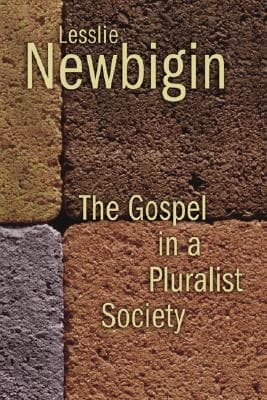
The Gospel in a Pluralist Society cover
Archivist's Choice

The Gospel in a Pluralist Society

Lesslie Newbigin (1989)

Genre

Spirituality / Philosophy

Reading Time

6-8 hours

Key Themes

See below

Track Your Reading

Sign in to track this book

Lesslie Newbigin helps Christians understand modern pluralism, offering a way to share and live the gospel confidently amid different worldviews, cultural relativism, and secularism.

Core Idea

Lesslie Newbigin argues that the main Western story of modernity, often seen as neutral, is actually a specific story based on Enlightenment ideas that push religious truth aside. He says the Christian Gospel is not just a private spiritual choice but a public truth, giving a full explanation of reality. Newbigin supports engaging with diverse societies by confidently stating Christ's universal leadership and by humble, open discussion. The church, as a community living out future hope, shows the Gospel's truth through its life, inviting others to 'see with new eyes' rather than just offering intellectual proof.
Reading time
6-8 hours
Difficulty
Medium
✓ Read this if...
You are a Christian leader, theologian, or thoughtful layperson wrestling with how to articulate and live out the Christian faith authentically and effectively in a diverse, post-modern, and often skeptical Western society. You want a robust theological framework for mission that embraces dialogue without sacrificing conviction.
✗ Skip this if...
You are looking for a simple how-to guide for evangelism or apologetics, prefer quick answers to deep theological reflection, or are not interested in the philosophical and cultural challenges to Christian truth claims.

Core idea

The central argument and framework that powers the entire book.

Lesslie Newbigin argues that the main Western story of modernity, often seen as neutral, is actually a specific story based on Enlightenment ideas that push religious truth aside. He says the Christian Gospel is not just a private spiritual choice but a public truth, giving a full explanation of reality. Newbigin supports engaging with diverse societies by confidently stating Christ's universal leadership and by humble, open discussion. The church, as a community living out future hope, shows the Gospel's truth through its life, inviting others to 'see with new eyes' rather than just offering intellectual proof.

At a glance

Reading time

6-8 hours

Difficulty

Medium

Read this if...

You are a Christian leader, theologian, or thoughtful layperson wrestling with how to articulate and live out the Christian faith authentically and effectively in a diverse, post-modern, and often skeptical Western society. You want a robust theological framework for mission that embraces dialogue without sacrificing conviction.

Skip this if...

You are looking for a simple how-to guide for evangelism or apologetics, prefer quick answers to deep theological reflection, or are not interested in the philosophical and cultural challenges to Christian truth claims.

Key Takeaways

1

The Dominant Narrative is Not Neutral

Modern secularism presents itself as objective, but it's a faith system.

Quote

The dominant culture of the West is not neutral but rests upon a set of beliefs about the nature of reality, truth, and human flourishing that are as much 'faith' as any religious system.

Newbigin says that the common secular worldview, often seen as the neutral or objective view, is actually a specific religious commitment. It relies on unproven ideas about reason, human independence, and making truth private. This 'way of seeing things' shapes how we view reality, often pushing religious claims aside as subjective or unreasonable. He encourages Christians to see that they are not just dealing with a neutral public space, but with a competing, though often unacknowledged, belief system. Understanding this helps believ...

Supporting evidence

Newbigin draws on Michael Polanyi's concept of 'tacit knowledge' and 'personal knowledge' to show that all knowledge, including scientific, is undergirded by unprovable commitments and beliefs. He also references Alasdair MacIntyre's critique of Enlightenment rationality, highlighting its failure to provide a coherent moral framework.

Apply this

Christians should critically examine the underlying assumptions of secular discourse, identifying its 'faith' commitments rather than accepting its claims to neutrality. When engaging in public square discussions, frame Christian truth claims not as mere opinions, but as a comprehensive worldview offering a different, and Newbigin would argue, more coherent understanding of reality and human purpose.

secularismworldviewepistemologyplausibility-structures
2

The Gospel as Public Truth

Christianity offers a public, verifiable truth, not just private spirituality.

Quote

The gospel is not merely a private word of comfort but a public announcement concerning the nature of reality, the meaning of history, and the destiny of all creation.

Newbigin argues that the gospel is not a private spiritual experience or a list of rules, but a public truth claim about the whole universe. It offers a complete explanation of reality that challenges and reorders all other stories. In a diverse society that often puts faith in the private sphere, Newbigin insists that Christians must reclaim the public nature of their belief. This means presenting the gospel not as 'one choice among many,' but as the lens through which all reality can be rightly understood, affecting ethics, politics...

Supporting evidence

He often refers to the early church's proclamation of Jesus as 'Lord' – a direct challenge to Caesar's lordship and a claim about ultimate authority, not just personal belief. The Resurrection, in particular, is presented as a publicly verifiable event that grounds the gospel's claim to be public truth.

Apply this

Christians should articulate their faith in ways that connect to broader societal issues, demonstrating how the gospel provides answers to questions about justice, meaning, and human destiny. Engage in public discourse not by privatizing faith, but by showing its relevance and explanatory power for the common good. Avoid language that confines faith to personal feelings or preferences.

public-theologytruth-claimsworldviewevangelism
3

Mission as Cross-Cultural Encounter

Engaging pluralism requires a missionary stance, not just dialogue or evangelism.

Quote

The church's task in a pluralist society is missionary. It is not primarily to engage in dialogue, nor simply to evangelize, but to be a missionary community, living and bearing witness to the gospel in a cross-cultural encounter.

Newbigin says the church in the West needs to remember its missionary identity. It operates in a 'pagan' or post-Christian setting, much like a missionary in a foreign country. This does not mean aggression, but understanding that the main culture has its own 'faith' and 'language' that needs to be understood and engaged with from a gospel perspective. It means living out the gospel truly within the culture, showing its truth, and being ready to explain it, rather than just debating or converting. It is a full approach that involves b...

Supporting evidence

Newbigin's own extensive experience as a missionary in India deeply informs this perspective. He understood firsthand the necessity of inculturation and contextualization without syncretism, and the challenge of communicating across profound cultural divides. He often contrasts this with the 'parochial' mindset of the Western church.

Apply this

Christians should view their local communities as mission fields, seeking to understand the cultural narratives, values, and questions of their neighbors. This involves learning the 'language' of contemporary culture and translating the gospel in ways that are both faithful and comprehensible, without compromising its core message. Focus on lived witness and community building as much as verbal proclamation.

missiologyinculturationcontextualizationpost-christian
4

The Community as the Hermeneutic of the Gospel

The church's life, not just its words, interprets the gospel for the world.

Quote

The only hermeneutic of the gospel is a congregation of men and women who believe it and live by it.

This is one of Newbigin's most important and challenging ideas. He argues that the main way the gospel becomes clear and believable to a diverse world is not just through abstract theological arguments or clever defenses. Instead, it is through the visible, lived reality of the Christian community. The church, as a group of people brought together, showing love, justice, forgiveness, and hope, becomes the 'proof' or 'explanation' of the gospel. When the church lives out the radical meanings of Christ's leadership, it provides a real, ...

Supporting evidence

Newbigin frequently points to the early church in Acts, whose communal life, sharing of resources, and radical love attracted outsiders. He also draws on his experience in India, where the witness of Christian communities, often marginalized, spoke louder than words.

Apply this

Churches should prioritize cultivating authentic, loving, and distinct communities that visibly embody the values of the Kingdom of God. This means focusing on reconciliation, mutual care, hospitality, and sacrificial service within the church, and allowing these practices to spill over into the broader community. The church's internal life must be a compelling demonstration of the gospel's power.

ecclesiologywitnessincarnationcommunity
5

Confidence, Not Certainty

Christian faith is a confident trust, not an infallible logical proof.

Quote

Faith is not the clinging to a set of beliefs but a confident trust in the living God who has revealed himself in Jesus Christ.

Newbigin separates 'certainty' (often linked to scientific proof or logic) from 'confidence' (a trust based on personal experience and community witness). He says that modern thought, especially since the Enlightenment, has often demanded a kind of objective certainty for truth claims, which faith cannot offer in the same way. Christian faith is not less rational, but rational in a different way. It is a confident commitment to a story and a person, confirmed by the Spirit and the community. This confidence allows Christians to engage...

Supporting evidence

He contrasts the 'certainty' of Enlightenment rationality with the 'confidence' of biblical faith, which is often described as 'faithfulness' or 'trust.' He uses Polanyi's concept of 'fiduciary acts' – the unprovable commitments that undergird all knowledge – to show that even scientific knowledge requires a prior act of faith.

Apply this

Christians should articulate their faith not as a set of irrefutable proofs, but as a compelling and coherent story that invites trust and commitment. Be open about the limits of human reason while confidently testifying to the transformative power and explanatory depth of the gospel. Engage in dialogue with humility, recognizing the 'faith' implicit in other worldviews.

epistemologyfaithtrustreason
6

The Eschatological Hope as Present Reality

The future hope of God's Kingdom impacts present ethics and action.

Quote

The future hope of the Kingdom of God is not merely a distant promise but a present reality that shapes our lives and actions now.

For Newbigin, Christian hope is not passively waiting for a future event, but an active, transforming power in the present. The 'already and not yet' nature of God's Kingdom means that while its full coming is future, its power and presence are available now, calling Christians to live differently. This future hope gives the reason and framework for ethical living, social justice, and mission in a diverse world. It protects against both unrealistic idealism (thinking we can fully establish the Kingdom ourselves) and cynical despair (t...

Supporting evidence

He frequently references the biblical narrative of creation, fall, redemption, and consummation, emphasizing the continuity of God's purposes. The Lord's Prayer, 'Your Kingdom come, your will be done, on earth as it is in heaven,' is a key example of this present-future tension.

Apply this

Christians should live with a robust sense of hope, allowing the future promise of God's Kingdom to inform their daily choices, ethical decisions, and engagement with societal problems. This means actively pursuing justice, caring for creation, and promoting reconciliation, not as mere humanitarian efforts, but as anticipatory signs of the coming Kingdom. Avoid both triumphalism and defeatism.

eschatologykingdom-of-godhopeethics
7

Dialogue and Proclamation are Intertwined

Effective mission requires both humble listening and bold witness.

Quote

The church must be prepared for genuine dialogue, listening with humility and openness, but this must never lead to abandoning the unique, public truth of the gospel.

Newbigin rejects the false choice between discussion and sharing the gospel. He says that real Christian engagement in a diverse society needs both. Discussion is important for understanding others, building relationships, and finding common ground, showing respect and humility. However, this listening must eventually lead to sharing the gospel, not in an aggressive way, but as a natural result of the Christian's confident trust in the gospel's truth. True discussion is not about weakening the gospel but about finding ways to communic...

Supporting evidence

He uses the example of Paul's speech on Mars Hill (Acts 17), where Paul engages with Athenian philosophy and culture, finding points of contact before introducing the resurrection of Christ. This demonstrates both respectful engagement and clear proclamation.

Apply this

Christians should cultivate a spirit of genuine curiosity and humility in engaging with people of other faiths and worldviews, seeking to understand their perspectives and experiences. At the same time, they must be prepared to articulate their own faith clearly, lovingly, and confidently, without apology or compromise, recognizing that the gospel offers unique answers to universal human questions.

dialogueevangelismapologeticscross-cultural-communication
8

The Church as a Counter-Culture

To be faithful, the church must resist assimilation to dominant cultural norms.

Quote

The church is called to be a sign, instrument, and foretaste of God's Kingdom, which means it must be distinct from the surrounding culture, not merely a reflection of it.

Newbigin warns against the church simply taking on the values and ideas of the surrounding culture, whether secular, consumerist, or otherwise. He argues that when the church just mirrors the world, it loses its prophetic voice and its unique message. Instead, it must embody a distinct counter-culture—a community whose practices, values, and worldview are shaped by the gospel, offering a compelling alternative. This distinctiveness is not about isolation, but about showing a different way of being human and organizing life, based on C...

Supporting evidence

He critiques aspects of Western Christianity that have become too comfortable with individualism, materialism, and a privatized faith, thereby losing their distinctiveness. He often refers to the early church's radical social practices as a counter-cultural witness.

Apply this

Churches should regularly assess how deeply they have absorbed secular values and practices, and intentionally cultivate practices (e.g., communal sharing, Sabbath rest, radical hospitality, simple living) that reflect the values of the Kingdom. This means being willing to challenge cultural idols and offer a genuinely alternative way of life that is both attractive and distinct.

counter-cultureprophetic-witnesscultural-critiquediscipleship
9

The Universality of Christ's Lordship

Christ's authority extends over all creation, not just individual believers.

Quote

The confession 'Jesus is Lord' is a universal claim about the sovereignty of God over all creation, not merely a personal religious preference.

Newbigin states that the central Christian belief, 'Jesus is Lord,' is a claim about the universe, not just a personal spiritual one. It states Christ's ultimate authority over all parts of reality—politics, economics, science, art, and personal life. In a diverse society that often separates religion, Newbigin insists that Christians must boldly affirm the universal reach of Christ's leadership. This means engaging with all areas of life from a Christ-centered view, trying to bring every thought and action under his rule. It provides...

Supporting evidence

He roots this in biblical passages like Colossians 1:15-20, which declares Christ as the head of all creation, and Philippians 2:9-11, where every knee will bow and every tongue confess Jesus as Lord. He contrasts this with modern tendencies to restrict Christ's authority to the 'spiritual' realm.

Apply this

Christians should live with the conviction that Christ's lordship applies to all areas of their lives and all aspects of society. This empowers them to engage in various vocations and public spheres, seeking to apply Christian principles and values, not as imposition, but as a demonstration of the wisdom and goodness of God's reign. Avoid privatizing faith or limiting Christ's authority to church or personal devotion.

christologylordship-of-christcosmologyholistic-faith
10

Learning to See with New Eyes

The gospel transforms our perception of the world and ourselves.

Quote

To be converted is not merely to change one's beliefs, but to acquire a new way of seeing, a new lens through which to interpret all of reality.

Newbigin says that accepting the gospel is not just agreeing to ideas, but a deep change in one's entire worldview. It is about 'learning to see' reality through Christ's life, death, and resurrection. This new way of seeing allows Christians to tell truth from falsehood in other worldviews, to understand the brokenness of the world, and to see God's ongoing work within it. This changed view is important for navigating a diverse society, allowing believers to engage with wisdom and compassion, understanding both the common good and th...

Supporting evidence

He often connects this to the biblical concept of 'metanoia' (repentance), which implies a change of mind or perspective. He also draws on Polanyi's idea of 'indwelling' – becoming so immersed in a framework that it shapes one's perception.

Apply this

Christians should actively seek to cultivate a gospel-informed perspective on all aspects of life, continually asking how Christ's story illuminates current events, cultural trends, and personal experiences. Engage in practices (e.g., contemplative prayer, biblical study, intentional community) that train the mind and heart to see the world as God sees it, fostering both discernment and empathy in a pluralistic context.

conversionworldview-transformationdiscernmentspiritual-formation

Critical analysis

Notable Quotes

The church is not an end in itself, but an instrument for God's mission in the world.

Emphasizing the missional nature of the church over its institutional preservation.

True knowledge is not simply information; it is personal encounter and participation.

Challenging a purely intellectual understanding of faith and advocating for experiential knowing.

The gospel is not an answer to all questions, but a question mark against all answers.

Highlighting the disruptive and challenging nature of the gospel to existing worldviews.

To be truly human is to live in relationship with God, with one another, and with the whole creation.

Defining human flourishing within a relational framework, rooted in Christian theology.

The resurrection is not just an event in the past, but a present reality that defines the nature of the church's mission.

Connecting the historical event of the resurrection to the ongoing life and mission of the Christian community.

We are called not to retreat from the world, but to engage it with the gospel, offering a credible witness.

Arguing against Christian withdrawal and for active, contextualized engagement with society.

The church's primary task is not to make converts, but to be a community that embodies the gospel.

Shifting the focus from individual conversion numbers to the corporate witness of the Christian community.

Pluralism is not a problem to be solved, but a context in which the gospel must be proclaimed.

Offering a positive framing of pluralism as the given reality for mission, rather than an obstacle.

Faith is not opposed to reason, but goes beyond it, offering a comprehensive framework for understanding reality.

Addressing the relationship between faith and reason, asserting faith's broader explanatory power.

The credibility of the gospel depends not only on what we say, but on how we live.

Emphasizing the importance of consistent Christian living and ethical conduct in evangelism.

Mission is not primarily an activity of the church, but an attribute of God.

Placing mission in a theological framework, rooted in God's own nature rather than human initiative.

The gospel offers not a private salvation, but the salvation of the whole created order.

Broadening the understanding of salvation beyond individual souls to cosmic redemption.

To be truly counter-cultural is not to withdraw from culture, but to offer a radically different way of living within it.

Defining counter-cultural engagement as transformative presence rather than isolation.

The church is called to be a sign, instrument, and foretaste of God's kingdom.

Describing the multifaceted role of the church in relation to the coming kingdom of God.

Quiz

Test Your Knowledge

Ready to see how well you understood this book? Take our interactive quiz with 10 questions.

10
Questions
~5
Minutes
?
Best Score

Key Questions (FAQ)

Lesslie Newbigin argues that the Christian gospel, far from being irrelevant, offers a unique and public truth claim that can confidently engage with and speak to the challenges of a pluralist society, rather than retreating into a private belief system.

About the author