BookBrief
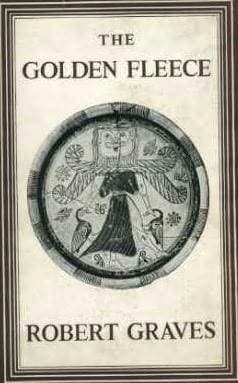
The Golden Fleece cover
Archivist's Choice

The Golden Fleece

Robert Graves (1944)

Genre

History / Fantasy / Historical Fiction

Reading Time

Varies greatly depending on reader's pace and engagement with dense passages

Key Themes

See below

Track Your Reading

Sign in to track this book

Robert Graves reimagines the quest for the Golden Fleece as a raw, human expedition. Jason leads demigods and heroes on a journey filled with divine acts, Herculean pranks, and passionate affairs.

Synopsis

Jason, a man disliked by many but attractive to women, must get the Golden Fleece from Colchis. King Pelias gave him this task. He gathers fifty Argonauts, including Hercules, Orpheus, and Atalanta. Their journey includes a stop on the all-female island of Lemnos, where Hercules fathers many children, and an initiation into Samothrace's sacred mysteries, which leaves them with a divine glow. Hercules leaves for his own tasks, and Jason leads the remaining Argonauts through the Symplegades to Colchis. There, with help from Aphrodite, Jason charms Medea, the sorceress princess. She betrays her father, King Aeëtes, to help Jason get the Fleece. The story details their dangerous return, Medea's marriage to Jason, and the Argonauts' final trials before Jason's death in Iolcos. Graves explores the culture of ancient Greece, showing the voyage as a rough and often crude expedition.
Reading time
Varies greatly depending on reader's pace and engagement with dense passages
Difficulty
Hard
Pacing
Variable
Mood
Epic, Mythological, Erudite, Adventurous, Anthropological
✓ Read this if...
You enjoy richly detailed historical fiction with a strong mythological basis, are interested in the 'real' human story behind ancient Greek myths, or appreciate Robert Graves's unique blend of scholarship and imaginative storytelling.
✗ Skip this if...
You prefer fast-paced action over extensive character development and philosophical musings, are not interested in ancient Greek culture or mythology, or dislike long speeches and a more formal narrative style.

Plot Summary

The Prophecy and Jason's Claim

Pelias, the king of Iolcos, hears a prophecy to beware of a man with one sandal. This happens when Jason, the true heir, arrives in Iolcos, having lost a sandal helping an old woman (Hera in disguise). Jason confronts Pelias and demands his throne. Pelias, worried about the prophecy, agrees to give up the throne if Jason can get the Golden Fleece from Colchis. This impossible task is meant to kill Jason. Jason accepts the quest, setting up the Argo's voyage.

Assembling the Argonauts

News of Jason's quest spreads, bringing heroes, demigods, and skilled people seeking glory. These include Hercules, Orpheus, Castor and Pollux, Nauplius, and Argus, who builds the Argo. Atalanta, a huntress, also joins, though her presence as the only woman creates some initial disagreement. This diverse group forms the Argonauts, united under Jason's leadership despite his personal flaws, mainly his ability to charm women.

The Island of Lemnos

The Argonauts' first stop is Lemnos, an island with only women. The Lemnian women, led by Queen Hypsipyle, had killed all the men for their unfaithfulness. The Argonauts' arrival offers a temporary solution to their population problem. The heroes, especially Hercules, spend time in celebration and procreation. This long stay leads to many children born nine months later, many from Hercules. The episode shows the Argonauts' virility and acts as a crude break before the journey's more dangerous parts.

Mysteries of Samothrace

Continuing their journey, the Argonauts land on Samothrace, where they are initiated into the mysteries of the Great Goddess. This ritual involves seeing a symbolic mating between the Goddess of All Being and the Serpent Priapus, ending with the birth of a sacred bull. Then, sacred nymphs physically attack the heroes, scratching and biting until even Hercules passes out. When they wake, the Argonauts have a 'faint nimbus of light,' showing divine protection and a higher spiritual state, preparing them for the dangers in the Black Sea.

The Departure of Hercules

As the Argo goes into the Black Sea, Hercules is called away. A divine command requires him to clean the Augean Stables. Despite his frustration, Hercules leaves the Argo. He quickly finishes the task but stays with a Lydian high priestess, who teaches him to spin and braids his hair, showing a hidden wish for a more feminine role. The Argonauts, though missing their strongest member, must continue without him.

Passage Through the Symplegades

The Argonauts face a challenge passing through the Symplegades, the Clashing Rocks. These rocks, at the Black Sea's entrance, were said to crash together, crushing any ship. Following advice from the prophet Phineus, the Argonauts release a dove between the rocks. The dove passes, losing only a few tail feathers as the rocks clash and move back. Taking this chance, the Argonauts row hard, helped by Athena, who holds the rocks long enough for the Argo to pass. The ship gets only minor damage, showing they passed this deadly obstacle.

Arrival in Colchis

After many trials across the Black Sea, the Argonauts reach Colchis, King Aeëtes' land, where the Golden Fleece is guarded. The sight of the Colchian capital, with its defenses and the grove where the Fleece rests, fills the Argonauts with awe and fear. They know reaching Colchis is just the first step; getting the Fleece will require cleverness, bravery, and perhaps divine help, as King Aeëtes is hostile to outsiders and has powerful magic.

Medea's Enchantment and Betrayal

When the Argonauts arrive in Colchis, Aphrodite helps Jason. She tells her son, Eros, to shoot Medea, King Aeëtes' sorceress daughter, with a love arrow. As Jason enters the palace, Eros strikes Medea's heart, making her fall in love with him. Overwhelmed, Medea promises to help Jason get the Golden Fleece, even if it means betraying her father. This divine act starts a series of events where Medea's magic helps Jason succeed, but at a great personal cost to her and her family.

The Trials of King Aeëtes

King Aeëtes, unwilling to give up the Golden Fleece, gives Jason impossible tasks. First, Jason must yoke fire-breathing bulls and plow a field. Then, he must plant dragon's teeth, which grow into an army. Finally, he must defeat these warriors. Medea, in love with Jason, gives him magic herbs and advice. She gives him ointment to protect him from the bulls' flames and tells him to throw a stone among the warriors, making them fight each other. With Medea's help, Jason completes all of Aeëtes' challenges.

Acquiring the Golden Fleece

Despite Jason's success, King Aeëtes still refuses to give the Golden Fleece and plots against the Argonauts. Medea, loyal to Jason, leads him to the grove where the Fleece is guarded by a sleepless dragon. Using her magic, Medea puts the dragon to sleep with a potion and spells. With the dragon asleep, Jason takes the Golden Fleece from its tree. This act finishes the quest but starts a desperate escape from Colchis as King Aeëtes finds out about his daughter's betrayal and the theft of his treasure.

The Escape from Colchis

With the Golden Fleece, Jason and Medea flee Colchis on the Argo, pursued by King Aeëtes. To slow her father, Medea kills her younger brother, Apsyrtus, dismembers his body, and scatters his remains in the sea. Aeëtes, needing to perform burial rituals, stops to gather his son's body, giving the Argo time to escape. This act shows Medea's ruthlessness and her abandonment of her family for Jason, highlighting the dark price of their success and her magic.

The Return Journey's Perils

The Argo's return journey is as dangerous as the trip out. The Argonauts must pass the Sirens, whose songs lure sailors to their deaths; Orpheus's music covers their melodies. They also encounter Scylla and Charybdis, the whirlpool and six-headed beast, which they narrowly escape with divine help. The heroes pass the Phaeacians, where King Alcinous and Queen Arete offer refuge from the pursuing Colchians. Each encounter tests the Argonauts' resolve, skill, and bonds, adding to their legend.

The Phaeacians and Medea's Marriage

After escaping Colchis, the Argonauts find refuge on Scheria, ruled by King Alcinous and Queen Arete. King Aeëtes' fleet eventually catches up, demanding Medea's return. Alcinous rules that if Medea is still a virgin, she must return to her father, but if married, she is protected. To save Medea, Jason and Medea quickly marry in the sacred cave of Macris, consummating their union. This marriage protects Medea and strengthens her bond with Jason, keeping her with the Argonauts for the rest of their journey.

The Argonauts' Final Trials

As the Argo continues home, the Argonauts meet the bronze giant Talos, Crete's guardian, who stops them from landing. Talos, vulnerable only at a vein in his ankle, is defeated by Medea's magic, which either drives him mad or makes him remove the plug from his vein, draining his ichor. They also visit the Garden of the Hesperides for water. These challenges show the constant presence of myth and magic and Medea's essential role in the Argonauts' survival, even after getting the Fleece.

Return to Iolcos and Jason's Demise

The Argonauts return to Iolcos, giving the Golden Fleece to Pelias. Pelias gives the throne to Jason. However, Jason's story does not end happily. Medea, still protective and vengeful, arranges Pelias's death by tricking his daughters into believing they can restore his youth by dismembering and boiling him. This act leads to Jason and Medea's exile. Jason's later life has more misfortune and betrayal, ending with his death when a rotten beam from the Argo falls on him, a lonely end for the hero.

Principal Figures

Jason

The Protagonist

From a seemingly ordinary man thrust into an epic quest, Jason achieves his goal through the help of others but ultimately faces a tragic downfall, losing his kingdom and love.

Medea

The Supporting/Antagonist

Medea transforms from a loyal princess to a heartbroken, vengeful sorceress, sacrificing everything for love only to be betrayed, leading to her subsequent acts of retribution.

Hercules

The Supporting

Hercules joins the quest as an unstoppable force but departs to fulfill other destinies, showcasing his independent path as a hero.

Pelias

The Antagonist

Pelias begins as a powerful, cunning usurper but is ultimately outsmarted and brutally murdered by Medea, losing his kingdom and life.

Orpheus

The Supporting

Orpheus uses his musical gifts to aid the Argonauts through several perils, demonstrating the power of art in heroic endeavors.

Argus

The Supporting

Argus's primary arc is the successful construction of the Argo, enabling the quest.

Atalanta

The Supporting

Atalanta joins the quest, demonstrating her prowess as a huntress and challenging gender expectations, proving her worth among male heroes.

King Aeëtes

The Antagonist

Aeëtes, a powerful king, is outwitted and betrayed by his own daughter, suffering the loss of his sacred treasure and a son.

Themes & Insights

The Nature of Heroism

The novel explores heroism beyond simple strength. Jason, as leader, often relies on his crew's skills and Medea's magic. This suggests heroism involves leadership, cleverness, and using collective talents. Hercules, the strongman, shows vulnerabilities and even a wish for femininity, complicating the traditional hero image. The Argonauts' journey shows heroism in cunning, art (Orpheus), and the unexpected (Atalanta). The 'nimbus of light' after Samothrace hints at a spiritual side to their heroism.

Captaincy devolved on Jason of lolcos—a man nobody liked or trusted, but who had a power denied to all the others: women instantly fell in love with him. Even surly Hercules agreed it a quality worth all the rest.

Narrator

The Power and Peril of Love and Desire

Love and desire are strong, often destructive forces. Jason's charm with women is a key 'power' that leads to Medea's intense, yet tragic, devotion. Medea's love for Jason makes her betray her family, murder her brother, and commit terrible acts, showing how love can lead to extreme moral compromise and violence. The Lemnos episode, with widespread procreation, highlights raw desire. Even Hercules's hidden wish for femininity, shown through his relationship with the Lydian high priestess, speaks to the complex nature of human longing.

Aphrodite won the Fleece for them. She made her son Eros wait behind a pillar with his bow until handsome Jason strode into the King of Colchis' palace. Eros shot Medea thru the heart, & the smitten princess helped to get the Fleece from her father's temple.

Narrator

The Conflict Between Old and New Religions/Cultures

Graves's 'The White Goddess' influences this theme, showing a conflict between older, matriarchal religions and the rising patriarchal Olympian gods. The Samothrace mysteries, with the Goddess of All Being and the Serpent Priapus, represent an ancient spirituality different from the Greek gods. The all-female Lemnian society and the Golden Fleece (possibly from an older sacrificial cult) point to lingering matriarchal traditions. The Argonauts, representing a 'modern' heroic age, meet these older spiritual systems, suggesting a shift in ancient cultural and religious beliefs.

On Samothrace, they were initiated into the sacred mysteries. The Goddess of All Being mated with the Serpent Priapus to be delivered of a bull. Then the sacred nymphs leapt on them & scratched & bit until even Hercules passed out. Thereafter, the Argonauts glowed with 'a faint nimbus of light.'

Narrator

The Price of Ambition and Betrayal

The quest for the Golden Fleece is driven by ambition—Jason's to reclaim his throne and Pelias's to keep power. This ambition comes with a high cost, often paid through betrayal and suffering. Medea's betrayal of her father and brother for Jason leads to her exile and a life of tragedy. Pelias's betrayal of Jason's family leads to his death. Jason, in his pursuit of glory, makes choices that lead to his downfall. The story shows that ambition, especially with deceit and a lack of morals, brings bad results, affecting not only the ambitious person but also those around them.

She made her son Eros wait behind a pillar with his bow until handsome Jason strode into the King of Colchis' palace. Eros shot Medea thru the heart, & the smitten princess helped to get the Fleece from her father's temple.

Narrator

Plot Devices & Literary Techniques

The MacGuffin (The Golden Fleece)

A coveted object that drives the plot, but whose true nature is ambiguous.

The Golden Fleece serves as the central MacGuffin of the story. Its exact nature — whether a literal golden sheepskin, a book of alchemic secrets, or even the skin of a human sacrifice — remains mysterious, as Graves notes. What matters is its symbolic value as a prize that motivates Jason's quest and sets the entire adventure in motion. Its ambiguity allows for deeper interpretations regarding the nature of power, wealth, and ancient rituals, making its retrieval a catalyst for the true drama, which lies in the journey and the characters' transformations, rather than the object itself.

Divine Intervention

Gods and goddesses actively influence the events and characters' fates.

Divine intervention is a pervasive plot device, with gods and goddesses frequently shaping the Argonauts' journey. Hera aids Jason from the outset, Aphrodite ensures Medea falls in love with him, and Athena helps the Argo navigate the Symplegades. This device underscores the ancient Greek worldview where mortal destinies are intertwined with divine will. It provides both challenges and solutions, often driving key plot points and highlighting the limited agency of mortals in the face of powerful cosmic forces. The 'nimbus of light' on Samothrace is another example of divine influence, granting the Argonauts protection.

Prophecy

Foreshadowing events that guide or compel characters' actions.

Prophecy plays a crucial role, particularly in initiating the quest. Pelias is warned by an oracle to beware of a man with one sandal, which directly leads him to challenge Jason to retrieve the Fleece. This device creates dramatic tension and a sense of predetermined fate, even as characters make choices within those constraints. It frames the narrative, giving a sense of inevitability to certain events, while allowing for the unfolding of human drama and the specific ways in which these prophecies are fulfilled, often through unexpected means.

The Hero's Journey (with subversion)

A classic narrative pattern of a hero's departure, initiation, and return, but with significant deviations.

The novel broadly follows the structure of the Hero's Journey: Jason's call to adventure, his recruitment of allies, the trials of the journey, and his eventual return with the prize. However, Graves subverts this device by portraying Jason as a somewhat reluctant and often dependent hero, lacking the self-sufficiency of more archetypal figures. His reliance on Medea and the collective strength of his crew challenges the notion of a singular, all-powerful hero, adding a layer of realism and complexity to the traditional mythic structure. The tragic end for Jason further deviates from a purely triumphant return.

Critical analysis

Notable Quotes

There are two sorts of courage: one, the courage of the moment, which comes to a man when he is faced with a sudden danger; the other, the courage of endurance, which enables him to bear a long and painful trial.

Jason reflecting on different forms of bravery needed for the quest.

The gods are not mocked, nor do they forget. What is done in darkness will be brought to light, and what is whispered in secret will be proclaimed from the rooftops.

A warning about divine justice and the consequences of actions.

Love is a madness, a divine possession that makes fools of the wise and heroes of cowards.

Medea's internal thoughts on the power and irrationality of her feelings for Jason.

A man's fate is woven by the Fates, but he himself chooses the shuttle.

A philosophical observation on free will within the confines of destiny.

The sea is a cruel mistress, but she holds the secrets of the world in her depths.

The Argonauts' constant struggle with and reliance on the sea during their voyage.

Glory is a fleeting shadow, but a good name endures forever.

A reflection on the true meaning of lasting legacy versus temporary fame.

There is no evil so great that it cannot be overcome by a greater good, nor any good so pure that it cannot be corrupted by a lesser evil.

A philosophical discussion on the balance of good and evil in the world.

Fear is a weapon, but also a shield. It can paralyze, or it can protect.

Observations on the dual nature of fear in the face of danger.

To forget the past is to be condemned to repeat it.

A warning about the importance of historical memory.

The greatest treasures are not always gold or jewels, but the bonds of friendship and loyalty.

Jason recognizing the value of his companions on the quest.

Power corrupts, and absolute power corrupts absolutely. But the desire for power is often born of weakness.

Reflections on the nature of tyranny and the motivations behind it.

The true hero is not one who never falls, but one who always rises again.

An encouraging thought on resilience and overcoming adversity.

Sometimes the greatest wisdom lies in knowing when to abandon one path and seek another.

Jason making a difficult strategic decision during the quest.

Quiz

Test Your Knowledge

Ready to see how well you understood this book? Take our interactive quiz with 10 questions.

10
Questions
~5
Minutes
?
Best Score

Key Questions (FAQ)

The book retells the mythical voyage of Jason and the Argonauts aboard the Argo, treating the legendary expedition as a historically plausible, albeit bawdy and bloody, event. Graves incorporates his theories from 'The White Goddess' as a cultural and anthropological backdrop, exploring the ancient Greek tale with a blend of historical fiction and mythological reinterpretation.

About the author

Robert Graves

Captain Robert von Ranke Graves was an English poet, historical novelist and critic. His father was Alfred Perceval Graves, a celebrated Irish poet and figure in the Gaelic revival; they were both Celticists and students of Irish mythology. Graves produced more than 140 works in his lifetime. His poems, his translations and innovative analysis of the Greek myths, his memoir of his early life—including his role in World War I—Good-Bye to All That (1929), and his speculative study of poetic inspiration The White Goddess have never been out of print. He is also a renowned short story writer, with stories such as "The Tenement" still being popular today.