BookBrief
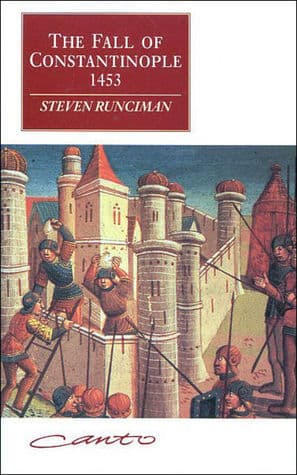
The Fall of Constantinople 1453 cover
Archivist's Choice

The Fall of Constantinople 1453

Steven Runciman (1990)

Genre

History / Spirituality

Reading Time

9-12 hours

Key Themes

See below

Track Your Reading

Sign in to track this book

The 1453 siege and fall of Constantinople was a dramatic event where Western neglect sealed Byzantium's fate, changing empires and starting the Greek intellectual movement that helped the Renaissance.

Core Idea

Steven Runciman's "The Fall of Constantinople 1453" details the final siege and capture of the Byzantine capital. He argues its end was not just a military defeat but the result of centuries of political isolation, religious division, and Western disinterest. Runciman shows how the long-standing theological split between Eastern and Western Christianity prevented significant European aid, leaving Constantinople open to the Ottoman army under Mehmed II. The book says the fall marked the end of the Roman Empire's eastern part, changing Europe's and the Mediterranean's political situation. It also helped start the Renaissance by sending Greek scholars and texts west. The main idea is that Constantinople's fall was an unavoidable tragedy caused by internal problems, outside pressure, and Christian disunity. Runciman uses historical accounts, political analyses, and religious contexts to show that despite some heroic resistance, the city's fate was sealed by its isolation and the Ottoman Empire's ambition. He describes the human cost and importance of this event.
Reading time
9-12 hours
Difficulty
Medium
✓ Read this if...
You are fascinated by the end of empires, the clash of civilizations, or the detailed history of a pivotal moment that shaped the modern world. Ideal for those interested in the Byzantine Empire, Ottoman history, or the intersection of religion and politics.
✗ Skip this if...
You prefer broad overviews or light historical narratives. This book is detailed and focuses intently on a specific historical event, requiring a dedicated interest in the period and its complexities.

Core idea

The central argument and framework that powers the entire book.

Steven Runciman's "The Fall of Constantinople 1453" details the final siege and capture of the Byzantine capital. He argues its end was not just a military defeat but the result of centuries of political isolation, religious division, and Western disinterest. Runciman shows how the long-standing theological split between Eastern and Western Christianity prevented significant European aid, leaving Constantinople open to the Ottoman army under Mehmed II. The book says the fall marked the end of the Roman Empire's eastern part, changing Europe's and the Mediterranean's political situation. It also helped start the Renaissance by sending Greek scholars and texts west.

The main idea is that Constantinople's fall was an unavoidable tragedy caused by internal problems, outside pressure, and Christian disunity. Runciman uses historical accounts, political analyses, and religious contexts to show that despite some heroic resistance, the city's fate was sealed by its isolation and the Ottoman Empire's ambition. He describes the human cost and importance of this event.

At a glance

Reading time

9-12 hours

Difficulty

Medium

Read this if...

You are fascinated by the end of empires, the clash of civilizations, or the detailed history of a pivotal moment that shaped the modern world. Ideal for those interested in the Byzantine Empire, Ottoman history, or the intersection of religion and politics.

Skip this if...

You prefer broad overviews or light historical narratives. This book is detailed and focuses intently on a specific historical event, requiring a dedicated interest in the period and its complexities.

Key Takeaways

1

A City's Isolation, A Civilization's End

The fall of Constantinople was not just a military defeat, but the culmination of centuries of Western indifference and Byzantine decline.

Quote

The fall of Constantinople in 1453 was not merely the conquest of a city, but the extinction of the Roman Empire in its eastern form, a thousand-year-old bastion against the encroaching East.

Runciman shows Constantinople as a once-powerful empire reduced to a city-state, a shadow of its past, increasingly cut off from a Western Europe busy with its own problems and religious splits. The book shows that the final siege, while dramatic, was the last gasp of an empire that had suffered for a long time from internal decay, financial issues, and a lack of support from its Christian neighbors. The split between the Orthodox and Catholic churches, old political rivalries, and a general underestimation of the Ottoman threat led t...

Supporting evidence

Runciman details the numerous appeals for help sent to Western powers, particularly the Pope and various European monarchs, and the paltry, often symbolic, responses received. The repeated failures of promised crusades and the outright hostility of some Western factions (like the Venetians and Genoese at times prioritizing trade over faith) underscore this isolation.

Apply this

Leaders and nations must recognize the interconnectedness of global security. Ignoring distant threats or allowing internal divisions to overshadow collective defense can lead to catastrophic, far-reaching consequences for all. Proactive diplomacy and genuine alliances are crucial.

byzantine-empireeastern-orthodoxottoman-expansion
2

The Schism's Fatal Divide

The deep theological and political rift between Eastern Orthodoxy and Roman Catholicism proved a fatal impediment to a united Christian defense.

Quote

Better the Sultan's turban than the Cardinal's hat.

The Great Schism of 1054, and the anger that followed, ruined any real chance of effective Western help. Runciman notes how Byzantines, especially common people and much of the clergy, disliked the Latin Church, particularly after the Fourth Crusade sacked Constantinople in 1204. Attempts at reunion, like the Council of Florence, were mostly political moves by desperate Byzantine emperors, met with suspicion and rejection by the people. The price of Western aid often included submitting to Rome, a condition many Byzantines found worse...

Supporting evidence

The strong popular opposition to the Union of the Churches, even as the Ottoman threat loomed, is extensively documented. Runciman cites protests and sermons against Latinization, demonstrating that for many Byzantines, preserving their Orthodox faith was paramount, even if it meant risking conquest.

Apply this

Ideological purity, when pursued to the exclusion of pragmatic alliances, can lead to self-destruction. Understanding the core values and historical grievances of potential allies is essential for building effective coalitions, even if it means compromising on non-essential points.

great-schismlatin-churchorthodox-church
3

Mehmed II: The Sultan's Vision

The Ottoman victory was not merely military might, but the product of Sultan Mehmed II's ruthless ambition, strategic genius, and unwavering resolve.

Quote

Mehmed II was a man of immense will and intellectual curiosity, a sovereign who saw himself as the heir to Rome and the destined conqueror of the world.

Runciman describes Mehmed II as a strong and complex leader. Mehmed was not a barbarian; he was a highly educated person who knew several languages and was interested in history, philosophy, and military engineering. His desire to capture Constantinople was not just a strategic need but a personal ambition. He carefully planned the siege, overseeing the building of large cannons, his army's logistics, and even the daring act of moving ships overland into the Golden Horn. His charm and strong will inspired his troops, and his harshness...

Supporting evidence

Runciman details Mehmed's personal involvement in the siege, from supervising the casting of the giant cannon 'Basilica' to his innovative strategy of portaging ships across Galata. His post-conquest actions, such as immediately ordering the repair of the Hagia Sophia and repopulating the city, underscore his long-term vision.

Apply this

True leadership requires a clear vision, meticulous planning, and the courage to execute unconventional strategies. Understanding the 'why' behind an objective, combined with intellectual curiosity and adaptability, can overcome seemingly insurmountable obstacles.

ottoman-empiremehmed-iimilitary-strategy
4

The Human Cost of Neglect

The heroic, yet desperate, defense of Constantinople highlights the tragic human cost of political and religious apathy.

Quote

The defenders, few in number but magnificent in spirit, fought with the courage born of despair, knowing they stood at the precipice of their world.

Runciman makes the struggle human, focusing on the defenders and citizens of Constantinople. Emperor Constantine XI Palaiologos appears as a tragic but heroic figure, refusing to leave his city and fighting bravely until his likely death in the final attack. The small group of foreign volunteers, especially Giustiniani Longo and his Genoese, fought with great courage, often taking the worst of the Ottoman attacks. The book conveys the fear, tiredness, and despair that took over the city, contrasting with the relentless Ottoman assault...

Supporting evidence

Runciman recounts numerous personal anecdotes and details of the siege: the repair of breaches, the desperate prayers in Hagia Sophia, the courage of Emperor Constantine XI leading charges, and the eventual chaos and atrocities committed during the city's fall.

Apply this

History provides a powerful lesson in empathy. Understanding the human impact of geopolitical decisions (or indecisions) can foster a greater sense of responsibility and urgency in addressing humanitarian crises and preventing conflicts.

constantine-xisiege-warfarehumanitarian-crisis
5

The Renaissance's Unintended Catalyst

The fall of Constantinople, while a catastrophe for Byzantium, inadvertently fueled the European Renaissance through the exodus of Greek scholars.

Quote

The fall of the city, though a tragedy, scattered its learned men and their invaluable texts across Western Europe, igniting a fervent passion for Greek learning.

One of Constantinople's most important, and ironic, results was its effect on Western Europe. Runciman shows that as the Ottoman threat grew and after the city's capture, many Byzantine scholars, philosophers, and artists fled west, finding safety in Italy and other parts of Europe. These people brought with them knowledge of classical Greek language and literature, and valuable manuscripts, many of which were unknown or lost in the West. This flow of ancient knowledge, along with the Byzantine intellectual tradition, greatly stimulat...

Supporting evidence

Runciman details the migration of key scholars like John Argyropoulos, Demetrius Chalcondyles, and Cardinal Bessarion, and their contributions to Italian universities and intellectual circles, bringing with them classical texts and a deep understanding of ancient Greek thought.

Apply this

Even in profound tragedy, unforeseen opportunities can arise. Leaders and societies should be prepared to embrace and integrate new perspectives and knowledge, recognizing that cultural exchange, even when forced, can lead to innovation and progress.

renaissancegreek-scholarscultural-exchange
6

The End of an Era, The Birth of Another

The fall marked the definitive end of the medieval era and the dawn of a new geopolitical landscape dominated by gunpowder empires.

Quote

With the walls of Constantinople breached by cannon fire, the age of chivalry and fortified castles began its slow, inevitable decline.

Runciman argues that 1453 is a turning point in history, marking the end of the Middle Ages. The Ottomans' successful use of large cannons against Constantinople's supposedly impenetrable walls showed that traditional siege warfare and fortified castles were no longer effective. This change in technology, along with the rise of a unified, expanding Ottoman Empire in the East, changed the balance of power. It made European nations rethink their military plans, invest in new technologies, and face a powerful, non-Christian empire that n...

Supporting evidence

The detailed accounts of the Ottoman cannon 'Basilica' and its destructive power against the Theodosian Walls are central. Runciman also describes the immediate and long-term geopolitical shifts, including Venice's and Genoa's altered trade relations and the fear of further Ottoman expansion into Europe.

Apply this

Technological advancements can rapidly render old systems obsolete. Leaders must remain adaptable, embracing innovation in defense, economics, and governance to stay relevant and secure in a rapidly changing world.

gunpowder-revolutionottoman-empiregeopolitical-shift
7

Religious Zeal vs. Pragmatic Politics

The conflict was a clash of empires fueled by religious fervor, yet ultimately decided by strategic foresight and practical execution.

Quote

For the Turks, the conquest was a sacred duty, a fulfillment of prophecy; for the Byzantines, a desperate struggle for survival of their faith and heritage.

Runciman highlights the religious aspect of the conflict: a 'holy war' for both sides. For the Ottomans, capturing Constantinople was a mission from God, a step in expanding Islam and fulfilling prophecies. For the Byzantines, it was a defense of Orthodox Christianity, a fight against non-believers. However, Runciman suggests that while religious passion provided motivation, Mehmed II's practical skill, better logistics, and effective military strategy ultimately won. The Byzantines, despite their faith and courage, were hindered by i...

Supporting evidence

Runciman contrasts the fervent religious rhetoric on both sides with the concrete military actions: Mehmed's use of intelligence, engineering, and disciplined troops versus the Byzantines' reliance on miracles and the hope for Western intervention that never materialized in force.

Apply this

While belief systems can inspire, effective action requires practical planning, resource allocation, and strategic thinking. Relying solely on faith or hope without concrete steps to address challenges is a recipe for failure.

religious-warfareottoman-islambyzantine-christianity
8

The Price of Hubris and Complacency

Western Europe's overconfidence and underestimation of the Ottoman threat sealed Constantinople's fate and exposed its own vulnerabilities.

Quote

Western Christendom, secure in its own internal squabbles and the illusion of its own invincibility, failed to grasp the magnitude of the threat until it was too late.

Runciman criticizes Western European powers, showing them as mostly unconcerned and shortsighted. Despite repeated warnings and desperate pleas from Constantinople, many Western leaders either underestimated the Ottoman Empire's abilities or were too busy with their own political rivalries and family ambitions to offer real help. The belief that Constantinople was impregnable, or that God would simply protect it, led to a dangerous overconfidence. This complacency not only doomed Byzantium but also left Western Europe open to later Ot...

Supporting evidence

Runciman details the limited and often symbolic aid sent by Venice, Genoa, and the Pope, contrasting it with the immense resources and manpower Mehmed II mobilized. The failures of various crusader attempts prior to 1453 also highlight this complacency.

Apply this

Never underestimate a rising power or dismiss a distant threat. Complacency and internal divisions can blind nations to existential dangers, leading to catastrophic consequences that eventually impact everyone.

western-europeottoman-threatpolitical-complacency
9

The Legacy of Greek Identity

Even under foreign rule, the Greek people maintained their distinct identity, language, and Orthodox faith, ensuring the survival of their cultural heritage.

Quote

Though the empire fell, the Greek spirit, rooted in Orthodoxy and Hellenism, endured, a flame kept alive through centuries of foreign domination.

While the Byzantine Empire ended politically, Runciman shows that the Greek people and their culture did not disappear. Under Ottoman rule, the Orthodox Church, led by the Ecumenical Patriarch, became the main institution for keeping Greek language, customs, and religious practices alive. The 'millet system' gave religious communities some self-rule, allowing Greek identity to grow around the Church. This resilience shows the power of cultural and religious institutions to preserve national identity, even without a sovereign state. By...

Supporting evidence

Runciman discusses the role of the Patriarchate under Ottoman rule and how it became the de facto leader of the Greek community, preserving religious rites, language, and cultural memory. He also notes the continued use of Greek as a lingua franca in certain regions and among the Phanariotes.

Apply this

Cultural and religious institutions are vital for maintaining identity and cohesion, especially during periods of political subjugation or upheaval. Investing in and preserving these institutions can ensure the long-term survival of a people's heritage.

greek-identityorthodox-churchcultural-preservation
10

The Enduring Power of Symbolism

Constantinople's fall was a symbolic watershed, forever altering the psychological and historical landscape of both East and West.

Quote

The capture of the City of the World's Desire was more than a military triumph; it was a profound symbolic victory that resonated through centuries.

Runciman ends by showing Constantinople's great symbolic importance. For centuries, it had been the 'Second Rome,' the strong center of Christianity, and the inheritor of classical civilization. Its fall shocked Europe, showing Islam's triumph over Christianity in the East and breaking the idea of Byzantine invincibility. For the Ottomans, its capture made their empire legitimate and solidified their claim as Rome's true successors. This symbolic shift had deep psychological effects, causing fear and calls for crusades in the West, wh...

Supporting evidence

Runciman discusses the immediate and long-term reactions in both the East and West: the widespread mourning and fear in Europe, the triumphalist narratives in Ottoman chronicles, and the continued invocation of 1453 in later historical and political discourse.

Apply this

Understanding the symbolic significance of events and places is crucial for comprehending historical narratives and contemporary geopolitical dynamics. Symbols hold immense power to inspire, unite, or divide, and their manipulation can shape destinies.

symbolismhistorical-memorygeopolitical-impact

Critical analysis

Notable Quotes

Constantinople was a city of paradoxes, its grandeur inseparable from its decay, its piety from its superstition, its learning from its ignorance.

Describing the general state of the city before the siege.

The Emperor Constantine XI Palaeologus, a man more fitted for a happier age, was now called to play the tragic hero in the last act of a long drama.

Introducing the final Byzantine Emperor.

Sultan Mehmet had a cold, calculating brain, a restless, driving energy, and a vision of universal empire.

Characterizing Sultan Mehmet II.

The long years of theological dispute had sapped the spiritual and material strength of the Empire.

Discussing the internal weaknesses of Byzantium.

When the choice lay between Latin help and Orthodox purity, the majority of the Byzantines preferred purity and destruction.

Highlighting the religious divisions and their consequences.

For the Byzantines, the fall of their city was not merely a military defeat; it was the end of the world.

Reflecting on the psychological impact of the conquest.

The cannon that breached the walls of Constantinople not only brought down a city but also heralded the end of an era in warfare.

Discussing the role of new artillery technology.

There was no last-minute miracle, no divine intervention to save the City of God.

Lamenting the lack of a miraculous salvation for Constantinople.

The ultimate triumph of the Turks was not merely a victory of arms, but a testament to their superior organization and unwavering determination.

Analyzing the factors contributing to the Ottoman victory.

The silence that fell over the city after the final assault was more terrifying than the din of battle.

Describing the immediate aftermath of the city's fall.

The dream of a united Christendom against the infidel remained, as always, a dream, shattered by petty rivalries and self-interest.

Critiquing the failure of Western Europe to provide substantial aid.

The loss of Constantinople was a wound from which the heart of Eastern Christianity would never fully recover.

Assessing the long-term impact on the Orthodox Church.

In the end, it was not only a city that fell, but a civilization, a way of life, and a spiritual ideal.

Summarizing the broader significance of the event.

Quiz

Test Your Knowledge

Ready to see how well you understood this book? Take our interactive quiz with 10 questions.

10
Questions
~5
Minutes
?
Best Score

Key Questions (FAQ)

The Fall of Constantinople in 1453 marked the end of the Byzantine Empire and was a profound shock to Western Christendom. For the Ottoman Turks, it secured their empire's future and provided a new imperial capital, while for the Greeks, it signified the end of their civilization and initiated an exodus of scholars who greatly influenced the European Renaissance.

About the author