BookBrief
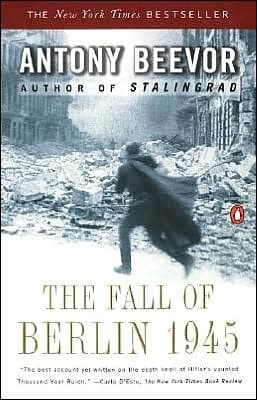
The Fall of Berlin 1945 cover
Archivist's Choice

The Fall of Berlin 1945

Antony Beevor

Genre

History

Reading Time

12-15 hours

Key Themes

See below

Track Your Reading

Sign in to track this book

Antony Beevor tells the story of World War II's final months, when the Red Army advanced into Germany, bringing mass rape, pillage, and destruction, as millions of civilians were caught between Soviet terror and Nazi fanaticism.

Core Idea

Antony Beevor's "The Fall of Berlin 1945" describes the final battle for the German capital, showing it as a peak of total war, with extreme brutality, widespread atrocities, and the complete breakdown of society. The book shows how the Red Army's advance into Germany, fueled by years of suffering and a desire for revenge, caused a wave of rape, pillage, and destruction for civilians. Meanwhile, the Nazi regime's fierce resistance led to the senseless killing of its own people and the city's devastation. Beevor emphasizes the personal cost of this event, showing how ordinary people, German and Soviet, faced violence, starvation, and sexual assault, leaving lasting trauma that shaped post-war Europe.
Reading time
12-15 hours
Difficulty
Medium
✓ Read this if...
You are deeply interested in the Eastern Front of WWII, the human cost of conflict, or the detailed, often harrowing, experience of civilians and soldiers during urban warfare. This book is essential for understanding the brutal realities of the war's end.
✗ Skip this if...
You prefer a high-level strategic overview of WWII without graphic descriptions of violence and human suffering, or if you are sensitive to detailed accounts of rape and atrocities against civilians.

Core idea

The central argument and framework that powers the entire book.

Antony Beevor's "The Fall of Berlin 1945" describes the final battle for the German capital, showing it as a peak of total war, with extreme brutality, widespread atrocities, and the complete breakdown of society. The book shows how the Red Army's advance into Germany, fueled by years of suffering and a desire for revenge, caused a wave of rape, pillage, and destruction for civilians. Meanwhile, the Nazi regime's fierce resistance led to the senseless killing of its own people and the city's devastation. Beevor emphasizes the personal cost of this event, showing how ordinary people, German and Soviet, faced violence, starvation, and sexual assault, leaving lasting trauma that shaped post-war Europe.

At a glance

Reading time

12-15 hours

Difficulty

Medium

Read this if...

You are deeply interested in the Eastern Front of WWII, the human cost of conflict, or the detailed, often harrowing, experience of civilians and soldiers during urban warfare. This book is essential for understanding the brutal realities of the war's end.

Skip this if...

You prefer a high-level strategic overview of WWII without graphic descriptions of violence and human suffering, or if you are sensitive to detailed accounts of rape and atrocities against civilians.

Key Takeaways

1

The Price of Total War

Civilians, not just soldiers, bear the brunt of ideological conflict and military collapse.

Quote

The result was the most terrifying example of fire and sword ever known, with tanks crushing refugee columns under their tracks, mass rape, pillage and destruction.

Beevor shows that the 'total war' idea of Nazi Germany, and the Soviet response, erased the traditional lines between soldiers and civilians. The war's final months in Eastern Europe saw unprecedented civilian suffering, often as deliberate targets or victims of societal breakdown. The Nazi regime's extreme ideology, especially its refusal to admit defeat and organize evacuations, directly condemned millions of its own citizens to death, displacement, and atrocity. This was a war where the home front became the active front, and the m...

Supporting evidence

The author details how Nazi Party chiefs, 'refusing to face defeat, had forbidden the evacuation of civilians,' leading to 'hundreds of thousands of women and children [freezing] to death or [being] massacred.'

Apply this

Leaders must prioritize civilian protection and humanitarian considerations in conflict zones, even (especially) in the face of defeat. The long-term consequences of ideological intransigence far outweigh any short-term perceived gain.


total-warcivilian-casualtiesideological-fanaticism
2

The Vengeance of the Red Army

Decades of brutal occupation fueled a retaliatory fury unleashed upon the German populace.

Quote

The Red Army had much to avenge when it finally reached the frontiers of the Reich in January 1945. Political instructors rammed home the message of Wehrmacht and SS brutality.

Beevor clearly shows that the Red Army's atrocities during its advance into Germany were not just random acts of violence. They came from a deliberate policy of revenge, encouraged by Soviet political instructors. The book makes it clear that the Soviet experience of Nazi occupation—mass murder, enslavement, and destruction—created a strong desire for retribution. This institutionalized anger led to widespread rape, pillage, and destruction, especially for German civilians. It shows how violence can repeat itself and how past wrongs c...

Supporting evidence

Beevor explicitly states that 'political instructors rammed home the message of Wehrmacht and SS brutality,' directly preceding the description of 'mass rape, pillage and destruction.'

Apply this

Societies emerging from conflict must actively address and reconcile past traumas to prevent cycles of vengeance. International bodies should prioritize accountability for all wartime atrocities, regardless of the victor.

red-armywartime-atrocitiesvengeancecycle-of-violence
3

The Collapse of Order

When state authority crumbles, societal structures rapidly devolve into chaos and self-preservation.

Quote

Antony Beevor reconstructs the experiences of those millions caught up in the nightmare of the Third Reich's final collapse...

The book vividly shows the quick collapse of German society as the Third Reich faced its end. As Nazi authority dissolved and the Red Army advanced, all order vanished. This created a vacuum filled by fear, opportunism, and desperate self-preservation. Beevor highlights how individuals and communities, without state protection, had to make impossible choices, often taking extreme measures to survive. The breakdown extended to basic human decency, seen in the government abandoning civilians and the scramble for resources and safety. It...

Supporting evidence

The text describes 'millions caught up in the nightmare' and the 'terror of the Red Army,' implying a complete breakdown of state protection and order for civilians.

Apply this

Governments and international organizations must develop robust contingency plans for maintaining order and providing humanitarian aid in collapsing states. Individuals should understand the importance of community and resilience in times of crisis.

societal-collapseanarchyhuman-behaviorstate-failure
4

Endurance Amidst Atrocity

The human capacity for survival and self-sacrifice shines through even in the darkest hours.

Quote

...but also one of astonishing endurance, self-sacrifice and survival against all odds.

Despite the horror and suffering in the book, Beevor also shows the deep resilience and self-sacrifice of individuals. Amidst mass rapes, starvation, and violence, there were countless acts of courage, kindness, and determination to survive. People protected their families, shared meager resources, and found ways to endure terrible conditions. This part of the story balances the widespread savagery, reminding readers of the enduring human spirit even in the worst situations. It suggests that while systems and ideologies can dehumanize...

Supporting evidence

Beevor explicitly notes the story is 'one of astonishing endurance, self-sacrifice and survival against all odds,' indicating numerous anecdotes of such acts within the broader narrative.

Apply this

Recognize and celebrate human resilience in the face of adversity. Support humanitarian efforts that empower individuals and communities to rebuild and recover from trauma.

resiliencehuman-spiritsurvivalself-sacrifice
5

The Peril of Fanaticism

Unwavering ideological commitment, especially in leadership, leads to catastrophic and senseless destruction.

Quote

Nazi Party chiefs, refusing to face defeat, had forbidden the evacuation of civilians.

Beevor powerfully shows how the Nazi leadership's extreme fanaticism directly made the German people suffer more. Their refusal to admit inevitable defeat, driven by a twisted ideology, led to suicidal orders, the deliberate blocking of civilian evacuations, and the prolongation of a lost war. This ideological blindness prevented rational decisions and condemned millions to a gruesome fate. The book is a stark example of how extreme beliefs, when held by those in power, can override basic human empathy and strategic logic, leading to ...

Supporting evidence

The direct quote highlights the Nazi leadership's 'refusing to face defeat' and forbidding evacuations, directly linking fanaticism to civilian deaths.

Apply this

Scrutinize leaders' adherence to ideology, especially when it conflicts with pragmatic solutions or humanitarian concerns. Cultivate critical thinking and skepticism towards dogmatic beliefs.

fanaticismideologypolitical-leadersself-destruction
6

The Refugee Crisis of 1945

Mass displacement and forced migration are an inherent, devastating consequence of large-scale conflict.

Quote

Over seven million fled westwards from the terror of the Red Army.

Beevor highlights the huge refugee crisis in Eastern Europe in the war's final months, a story often overshadowed by military campaigns. Millions of Germans, fearing the advancing Red Army and its reputation for brutality, fled westward, often in harsh winter conditions. These journeys were dangerous, with starvation, disease, and further attacks. The sheer number of displaced people—'over seven million'—shows that war's impact goes far beyond battlefields, creating vast populations struggling for survival. It is a poignant reminder t...

Supporting evidence

The specific figure of 'over seven million fled westwards' provides concrete evidence of the scale of the refugee crisis.

Apply this

Acknowledge and prepare for mass displacement as an inevitable outcome of major conflicts. Support international efforts to protect refugees and provide humanitarian aid.

refugee-crisismass-displacementwartime-migrationhumanitarian-crisis
7

The Personal Cost of History

History is not just dates and battles; it is the sum of countless individual tragedies and triumphs.

Quote

Antony Beevor reconstructs the experiences of those millions caught up in the nightmare...

Beevor's approach to history focuses on human experience, moving beyond grand strategic stories to show the lives of ordinary people. By combining countless individual accounts, diaries, letters, and survivor testimonies, he ensures that the abstract numbers of casualties and displaced persons are given faces, names, and personal stories. This method prevents the reader from becoming numb to the suffering and instead creates deep empathy for those who lived through the fall of Berlin. It is a strong argument for micro-history, showing...

Supporting evidence

The description of the book's scope, 'reconstructs the experiences of those millions,' indicates a focus on individual and collective human stories.

Apply this

Seek out diverse perspectives and personal narratives when studying historical events. Support oral history projects and archives that preserve individual experiences.

microhistoryoral-historyhuman-experiencehistorical-empathy
8

The Brutality of Urban Warfare

Cities become death traps and battlegrounds, amplifying destruction and civilian casualties.

Quote

The Red Army had much to avenge when it finally reached the frontiers of the Reich in January 1945.

While not directly stated, the title 'The Fall of Berlin 1945' strongly suggests a focus on city warfare, a destructive type of conflict Beevor is known for detailing. Fighting in Berlin would have turned a dense city into a death trap. Every building, street, and subway tunnel became a possible battleground, maximizing destruction and civilian exposure to combat. City warfare blurs the lines between soldiers and civilians, as civilians are caught in the fighting, and vital infrastructure is destroyed. This increases suffering, makes ...

Supporting evidence

The book's title, 'The Fall of Berlin 1945,' inherently points to the specific context of urban warfare in a major European capital.

Apply this

Develop strategies for protecting civilians and critical infrastructure in urban conflict zones. Advocate for international laws that specifically address the unique challenges and responsibilities of urban warfare.

urban-warfaresiege-warfarecity-destructioncivilian-protection
9

The Moral Ambiguity of Victory

Even 'victors' can commit horrific acts, complicating simplistic narratives of good versus evil.

Quote

The result was the most terrifying example of fire and sword ever known, with tanks crushing refugee columns under their tracks, mass rape, pillage and destruction.

Beevor’s honest portrayal of the Red Army's actions in Germany challenges any simple idea of 'good guys' winning World War II. While defeating Nazi Germany was morally necessary, the methods used by Soviet forces, driven by revenge and ideology, were often horrific. Widespread atrocities, especially mass rape, complicate the celebratory story of liberation. This makes readers confront the uncomfortable truth that even those fighting for a 'just' cause can become barbaric. It highlights the moral compromises and ethical difficulties in...

Supporting evidence

The description of the Red Army's actions – 'tanks crushing refugee columns under their tracks, mass rape, pillage and destruction' – directly illustrates the moral compromises of the 'victors.'

Apply this

Approach historical events with nuance, recognizing the moral complexities of all parties. Hold all actors in conflict accountable for their actions, regardless of their ultimate victory or defeat.

moral-ambiguitywar-crimeshistorical-nuancevictor's-justice
10

The Legacy of Trauma

The psychological and societal scars of such brutal conflict endure for generations.

Quote

Antony Beevor reconstructs the experiences of those millions caught up in the nightmare of the Third Reich's final collapse...

While the book focuses on 1945, Beevor's detailed account of the 'nightmare' implicitly shows the lasting trauma on survivors. Experiences of mass rape, displacement, starvation, and witnessing extreme brutality would have left deep psychological wounds on individuals and collective memory. This trauma would not disappear with the war's end but would shape post-war Germany for decades, affecting family dynamics, national identity, and international relations. The book is a powerful reminder that the 'end' of a war is just the start of...

Supporting evidence

The comprehensive detailing of the 'nightmare' experienced by 'millions' suggests an inescapable and long-lasting psychological impact.

Apply this

Recognize the long-term impacts of conflict on mental health and societal well-being. Support initiatives for historical reckoning and intergenerational dialogue to process and heal from collective trauma.

historical-traumapost-war-societycollective-memoryintergenerational-trauma

Critical analysis

Notable Quotes

The Red Army was like an avalanche, unstoppable and devastating.

Describing the Soviet advance into Germany.

The sheer scale of the destruction and suffering defied imagination.

Reflecting on the devastation of the Eastern Front and Germany.

For many, the end of the war brought not liberation, but a new form of terror.

Referring to the experiences of German civilians with the Red Army.

Stalin's primary objective was not just victory, but the subjugation of Eastern Europe.

Analyzing Stalin's strategic goals for the end of the war.

The battle for Berlin was a microcosm of the entire Eastern Front: brutal, desperate, and merciless.

Summarizing the nature of the final battle for Berlin.

Hitler's final days were a descent into a delusional fantasy, detached from the reality of his collapsing Reich.

Describing Hitler's state of mind in the Führerbunker.

The German High Command clung to the illusion of counter-attacks even as the city crumbled around them.

Illustrating the denial within the German military leadership.

Rape became a weapon of war, leaving an indelible scar on the lives of countless women.

Addressing the widespread sexual violence committed by Soviet troops.

The courage of ordinary Berliners, enduring unimaginable hardships, was truly remarkable.

Highlighting the resilience of civilians during the siege.

Victory parades masked the immense human cost and the moral ambiguities of the triumph.

Reflecting on the celebrations of victory juxtaposed with the suffering.

The Soviet victory was achieved through immense sacrifice, a testament to their endurance and will.

Acknowledging the sheer effort and casualties sustained by the Red Army.

The stories of individual survival, against all odds, are testaments to the human spirit.

Focusing on personal narratives of resilience amidst the chaos.

The legacy of 1945 continues to shape European politics and memory.

Concluding thoughts on the long-term impact of the war's end.

The final battle for Berlin was not just a military confrontation, but a clash of ideologies and a struggle for the future of a continent.

Broadening the interpretation of the Battle of Berlin's significance.

Quiz

Test Your Knowledge

Ready to see how well you understood this book? Take our interactive quiz with 10 questions.

10
Questions
~5
Minutes
?
Best Score

Key Questions (FAQ)

Antony Beevor's 'The Fall of Berlin 1945' reconstructs the harrowing final months of World War II in the Third Reich, focusing on the Red Army's advance, the collapse of Nazi Germany, and the experiences of millions of civilians and soldiers caught in the conflict. It details the widespread destruction, mass rape, and immense suffering during this period.

About the author

Antony Beevor

Antony Beevor is a distinguished historian and the author of numerous acclaimed works on military history. His book, 'The Fall of Berlin 1945,' is a seminal work detailing the brutal final days of World War II in Europe. Beevor's clear prose and rigorous research have made him one of the most respected military historians of his generation.