“A gentle Knight was pricking on the plaine, Ycladd in mightie armes and silver shielde, Wherein old dints of deepe wounds did remaine, The cruell markes of many a bloody fielde;”
— Introducing the Redcrosse Knight, the protagonist of Book I.

Edmund Spenser (1979)
Genre
History / Fantasy
Reading Time
Varies significantly, but expect 50+ hours for a thorough reading due to its length and complexity
Key Themes
See below
Sign in to track this book
An allegorical quest through a fantasy world where knights fight dragons, witches, and temptations to embody holiness, temperance, and love, subtly honoring Queen Elizabeth I.
The story starts with Una, a maiden, traveling to Gloriana's court to find help. A dragon holds her parents and kingdom captive. Gloriana assigns the Redcrosse Knight, a seemingly new but eager warrior, to join Una on this quest. He wears armor with a red cross, symbolizing holiness. On their journey, they meet Archimago, a sorcerer who tricks Redcrosse with illusions, making him think Una is unchaste and causing him to leave her. This deception sends Redcrosse on a path of error and temptation, showing his youth and openness to false appearances, a contrast to Una's steady truth.
After Archimago's trick, Redcrosse meets Duessa, a beautiful but evil witch, disguised as the noble Fidessa. Duessa, a symbol of falsehood and the Roman Catholic Church (from Spenser's Protestant view), seduces Redcrosse and leads him further astray. They face challenges together, including a battle with Sansfoy, whom Redcrosse defeats, taking his shield. Duessa's true nature starts to show, but Redcrosse, blinded by her charm and his pride, does not notice. He is drawn into a world of sin and illusion, moving further from holiness and his mission with Una, who keeps looking for him despite his betrayal.
Duessa brings Redcrosse to the House of Pride, ruled by Queen Lucifera, where he sees a parade of the Seven Deadly Sins. Here, Redcrosse fights Sansjoy, Sansfoy's brother, and is wounded. Duessa takes him to the underworld to heal him, further involving him in her magic. Redcrosse is then captured by the giant Orgoglio and jailed. Duessa becomes Orgoglio's lover, showing her true loyalty and abandonment of Redcrosse. This imprisonment represents Redcrosse's spiritual downfall and his weakness when separated from Una and true faith.
While Redcrosse is in Orgoglio's prison, Una continues her sad search for him. She meets Prince Arthur, a brave knight, who is on his own quest to find the Faerie Queene. Moved by Una's situation and the injustice to Redcrosse, Arthur agrees to help her. Together, they confront Orgoglio, and Arthur, with his sword and shield, defeats the giant and his monster. They free Redcrosse from his dark dungeon, finding him weak, thin, and without his armor, a clear image of his spiritual and physical decline. This rescue is a turning point, offering Redcrosse a chance at redemption.
After his rescue, Una brings Redcrosse to the House of Holiness, a place for spiritual healing and teaching, overseen by Dame Caelia and her daughters, Fidelia, Speranza, and Charissa. Here, Redcrosse undergoes a spiritual cleansing, learning about faith, hope, and charity. Contemplation teaches him, revealing his true lineage as St. George, a destined saint of England. This time of spiritual learning and self-reflection prepares him for his final battle. It is a key stage in his change from a naive knight to a champion of holiness, equipped with spiritual wisdom and resolve.
Finally strong and spiritually pure, Redcrosse confronts the dragon that has terrorized Una's kingdom and held her parents captive. The battle is fierce and long, lasting three days. Redcrosse is almost defeated many times, but he is helped by divine intervention from the Well of Life and the Tree of Life, which heal his wounds. On the third day, using divine strength, Redcrosse delivers the final blow, killing the dragon. This victory frees Una's parents and her land, symbolizing the triumph of holiness over evil and the return of truth and justice. Redcrosse is hailed as a hero and promised to Una.
Book II introduces Sir Guyon, the Knight of Temperance, with the Palmer, his guide. Their quest is to destroy the Bowre of Bliss, the enchanting but corrupting home of the sorceress Acrasia, who seduces knights into sensual indulgence, turning them into beasts. Their journey is full of challenges that test Guyon's self-control. They meet figures representing intemperance, such as Phaedria, who embodies idleness, and Furor and Occasion, representing uncontrolled rage. Guyon's steady adherence to temperance is always shown as he handles these temptations, displaying his disciplined nature and commitment to virtue.
A significant test for Guyon happens when he is separated from the Palmer and finds the Cave of Mammon, the underworld of greed. Mammon tries to tempt Guyon with vast riches, offering him gold, jewels, and power. Despite being surrounded by wealth and the promise of endless material gain, Guyon refuses to take any of it. He endures a difficult watch without food or rest, showing his complete detachment from worldly desires. This event deeply tests his temperance, proving he is immune to greed's corrupting influence, even when faced with its strongest forms.
After many trials, Guyon, with the Palmer's help, reaches the Bowre of Bliss. This is a place of artificial beauty and sensual pleasures, designed to trap and corrupt. Acrasia, the enchantress, is found with one of her victims, Verdant, indulging languidly. Guyon, keeping his temperance even among such allure, captures Acrasia in a net. He then destroys the Bowre, tearing down its false beauty and freeing the knights who had become beasts, though they remain in animal form, unable to regain humanity. This act symbolizes reason and virtue overcoming unchecked sensual pleasure.
Book III introduces Britomart, a strong and chaste lady-knight, wearing male armor. Her quest is not for a general virtue but a personal one: to find her destined husband, Sir Artegall, whose face she saw in an enchanted mirror of her nurse, Glauce. Britomart embodies Chastity, and her journey explores love, desire, and female heroism. She meets various knights and ladies, often showing her superior fighting skill. Her quest is connected to national destiny, as she is a descendant of British kings and the future mother of heroes. Her strong resolve and purity guide her through many challenges.
Throughout her journey, Britomart faces many challenges that test her chastity and courage. She defeats the lustful knight Marinell, though she does not realize he is her destined husband. She also encounters Malecasta's castle, where she is mistaken for a man and receives unwanted advances, which she forcefully rejects. Her journey also brings her to Scudamour and Amoret, representing pure married love, and she helps Amoret escape the enchanter Busirane, who holds her captive with unrequited love spells. Britomart's unwavering virtue and fighting skill are consistently shown as she navigates these moral situations.
Britomart's quest continues, leading her to the Temple of Isis, where she receives a prophecy about her future and her role in founding a line of British monarchs. Later, she fights a knight and defeats him, only to find, when she removes his helmet, that it is Sir Artegall, the man she has been seeking. This first meeting is marked by conflict, but it quickly turns to mutual respect and then love, fulfilling the enchanted mirror's prophecy. Their meeting marks a key point in her quest, moving from an abstract search to a concrete, though initially combative, union.
After uniting with Britomart, Sir Artegall goes on his own adventures, representing Justice. He is joined by Talus, his iron servant, who strictly enforces justice without mercy. Artegall's quest involves correcting wrongs and establishing order, often in complex moral situations. He resolves disputes, punishes the wicked, and restores rightful heirs. A notable episode involves his encounter with the Amazonian queen Radigund, who defeats him and forces him to wear women's clothes, symbolizing the disruption of natural order when justice is not properly applied. This highlights the difficulties of upholding justice in a flawed world.
Book VI introduces Sir Calidore, the Knight of Courtesy, whose quest is to hunt and capture the Blatant Beast, a monster that embodies slander, gossip, and public criticism. Calidore's journey tests his courtesy and noble behavior in a world increasingly full of envy and malice. He meets various characters who represent different forms of rudeness. He briefly leaves his quest to live among humble shepherds, finding peace in their simple, virtuous life and falling in love with Pastorella. This interlude shows the contrast between courtly life and pastoral simplicity, and the lasting value of genuine courtesy.
After his time with the shepherds, Calidore returns to his quest. He eventually finds the Blatant Beast and, after a difficult fight, manages to muzzle it and lead it in chains. This victory brings a temporary peace from slander. However, the poem ends with the Beast eventually breaking its chains and escaping, continuing to spread its words throughout the world. This ending suggests that while individual acts of courtesy and virtue can temporarily suppress evil, slander and malice are inherent in human nature and can never be fully removed, offering a somewhat realistic view on the persistence of societal problems.
The Protagonist
Transforms from a susceptible, inexperienced warrior into a true champion of holiness through suffering and spiritual instruction.
The Protagonist/Allegorical Figure
Remains constant and true throughout the trials, eventually restoring Redcrosse to his spiritual path and achieving her quest.
The Antagonist
Her deceptions are repeatedly exposed, leading to her public humiliation and punishment, though she remains a persistent evil force.
The Supporting
Acts as a consistent force for good and rescue, embodying the pinnacle of chivalric virtue.
The Protagonist
Successfully resists all temptations, culminating in the destruction of the Bowre of Bliss, proving the power of temperance.
The Protagonist
Her quest for Artegall culminates in their union, fulfilling her personal destiny and her role in national prophecy.
The Supporting/Protagonist
His journey explores the complexities of implementing justice, sometimes facing personal humiliation before reaffirming his commitment to the virtue.
The Mentioned
Remains a constant, inspiring, but largely unseen force throughout the poem.
The Antagonist
His repeated attempts at deception are often thwarted, but he remains a recurring threat, symbolizing the enduring presence of deceit.
The Antagonist
Her reign of corrupting pleasure is violently ended by Sir Guyon, though the forces she represents are always present.
The poem is built around exploring different virtues (Holiness, Temperance, Chastity, Justice, Courtesy) and their opposing vices. Each book dedicates a knight's quest to embodying a specific virtue, showing its challenges and rewards. For example, Redcrosse's journey in Book I details the path to Holiness, from initial enthusiasm to spiritual error (Duessa, Orgoglio) and eventual redemption through learning at the House of Holiness. Conversely, Sir Guyon's quest for Temperance in Book II shows the dangers of intemperance, from Phaedria's idleness to Acrasia's destructive sensuality, highlighting the constant struggle between good and evil within people and society.
“For of the soule the bodie forme doth take: / For soule is forme, and doth the bodie make.”
A main theme is how appearances can deceive and how hard it is to tell truth from falsehood. Characters are often tricked by illusions, disguises, and superficial beauty. Archimago, the illusionist, constantly tricks characters by making false seem true and true seem false. Duessa, who appears as the beautiful Fidessa but is revealed to be ugly, clearly shows this theme. Redcrosse's initial abandonment of Una (Truth) for Duessa (Falsehood) is a clear example. This theme emphasizes the need for spiritual insight and the dangers of relying only on outward show, reflecting Spenser's Protestant focus on inner faith over outer ritual.
“For truth is one, and changes not her hue; / But falsehood doth transforme itselfe anew.”
While set in a patriarchal society, the poem includes strong and complex female characters, especially Britomart, the lady-knight of Chastity. Britomart challenges traditional gender roles by being a better warrior than many male knights, showing that virtue and heroism are not only for men. Her quest is a personal one for love, yet she embodies a public virtue and is central to Britain's national destiny. Una, despite her vulnerability, is a figure of steady strength and truth. However, the poem also presents negative female figures like Duessa and Acrasia, who represent corruption and destructive sensuality, creating a varied portrayal of female power, both good and bad.
“Ne may love be compard to ought in th' earth, / That either heaven or earth at all may breed; / For what hath love that hath not found a birth / In heaven, and doth not thence his being feed?”
The Faerie Queene is a complex allegory, working on moral, religious, and political levels. Each knight embodies a moral virtue, while their quests often reflect religious conflicts (e.g., Protestantism vs. Catholicism in Redcrosse's story). The poem is a celebration of England and Queen Elizabeth I, who is Gloriana. Characters like Britomart are directly linked to the lineage of British kings, predicting a glorious national future. This layering of allegory teaches readers about moral behavior, reinforces Protestant belief, and legitimizes and glorifies the Tudor monarchy and English national identity.
“Lo! I the man, whose Muse whilome did maske, / As time her glory to advaunce began, / In gentle Thespian fields, of which I aske / Her now to sing of Knights and Ladies mart.”
The poem often warns against the dangers of idleness and uncontrolled sensual indulgence, showing them as corrupting forces that weaken both body and spirit. The House of Pride, with its slow inhabitants and parade of the Seven Deadly Sins, illustrates how pride and laziness lead to moral decay. Sir Guyon's quest against Acrasia's Bowre of Bliss is the most direct look at this theme. The Bowre, a place of beautiful but artificial pleasure, turns men into beasts, symbolizing how too much indulgence strips humanity of its reason and virtue. This theme highlights the importance of discipline, purpose, and active involvement in virtuous pursuits.
“Who ever doth to temperance apply / His stedfast life, and all his actions frame, / Trust me, shall find no greater enimy / Then his owne flesh, that doth him most inflam.”
A narrative where characters and events represent abstract ideas or historical figures.
Spenser employs allegory as the foundational structure of The Faerie Queene. Every major character, location, and event carries symbolic meaning beyond its literal interpretation. For example, the Redcrosse Knight represents Holiness and the Anglican Church, Una is Truth, Duessa is Falsehood and Catholicism, and the dragon is Sin/Satan. The quests are not merely adventures but moral and spiritual journeys. This device allows Spenser to impart moral lessons, comment on religious controversies, and celebrate political figures (like Gloriana for Queen Elizabeth I) in a rich, multi-layered narrative, making the poem a profound ethical and political statement veiled in romance.
An extended, elaborate comparison that often goes for several lines.
Spenser frequently uses epic similes, drawing comparisons between a scene or character and something often grander or more detailed from nature, mythology, or everyday life. These similes are typically lengthy and serve to heighten the dramatic effect, add vivid imagery, or provide deeper insight into the emotional or physical state of the characters. For instance, a knight's fall might be compared to a tree uprooted by a storm, or a battle described with the intensity of natural phenomena. This device adds a sense of grandeur and classical weight to the narrative, linking Spenser's romance to the traditions of Homer and Virgil.
A nine-line stanza, with eight lines in iambic pentameter and a final alexandrine.
Spenser invented a unique stanza form for his epic poem, consisting of nine lines. The first eight lines are in iambic pentameter (ten syllables), and the ninth line is an alexandrine (twelve syllables), rhyming ABABBCBCC. This distinctive stanza, now known as the Spenserian stanza, creates a slow, stately, and often melancholic rhythm. The longer final line provides a sense of closure or emphasis, allowing Spenser to expand on an image or thought. This complex, intricate structure contributes significantly to the poem's rich, ornate style and its unique musicality, setting it apart from other epic works.
A journey undertaken by a hero to achieve a specific goal or virtue.
The entire narrative of The Faerie Queene is built around the quest motif. Each book focuses on a different knight undertaking a quest to achieve or embody a specific virtue. Redcrosse's quest for Holiness, Guyon's for Temperance, and Britomart's for Chastity are prime examples. The quest serves as a narrative framework, allowing the protagonist to encounter various challenges, temptations, and allies, thereby exploring the complexities of the virtue being examined. This device provides both an episodic structure and a continuous thematic thread, driving the moral and allegorical development of the characters and the poem as a whole.
“A gentle Knight was pricking on the plaine, Ycladd in mightie armes and silver shielde, Wherein old dints of deepe wounds did remaine, The cruell markes of many a bloody fielde;”
— Introducing the Redcrosse Knight, the protagonist of Book I.
“Faire virgin, to redeeme from thrall thy land: For what is it that makes man most to dread, But conscienceless despaire and guilty head?”
— Una's plea to the Redcrosse Knight to help her land, linking fear to despair.
“For of the soule the body forme doth take: For soule is forme, and doth the body make.”
— A philosophical statement about the relationship between soul and body.
“Sleepe after toyle, port after stormie seas, Ease after warre, death after life does greatly please.”
— A reflection on the comforting end of struggles, often attributed to the weary.
“Upon a great adventure he was bond, That faery land him fardest brought from home.”
— Describing Guyon's commitment to his quest in Faerie Land.
“In wicked court, where he now serves the King, And hath for wages but a wicked thing.”
— A critique of corrupt courts and their rewards.
“No greater mischief ever was invented, Nor greater scath to publick weal invented, Than that, which private gain to publick good preferred.”
— A condemnation of prioritizing personal profit over societal welfare.
“And ever, as he rode, his heart did yearne To prove his puissance in battle brave.”
— Guyon's desire to test his strength in combat, showing his knightly spirit.
“But ah! who ever loved, that loved not at first sight?”
— A romantic musing on the nature of love, suggesting its immediate onset.
“With that, he gan his sturdy steede to guide, And with a mightie stroke him smote to ground.”
— A description of a decisive blow in combat.
“For by the way she had him often taught, What due respects to all she did impart.”
— Una's role in guiding and educating the Redcrosse Knight.
“That sith she was the daughter of a King, He should her treat with all due courtesie.”
— Emphasizing the proper treatment of royalty and noble women.
“And on his shield a bloody cross was peinct, For straunge adventures and for perils great.”
— The symbolic meaning of the Redcrosse Knight's shield, representing his trials.
“For who can shun the stroke of destiny, That doth a sure and certain course direct?”
— A contemplation on the inevitability of fate.
Ready to see how well you understood this book? Take our interactive quiz with 10 questions.
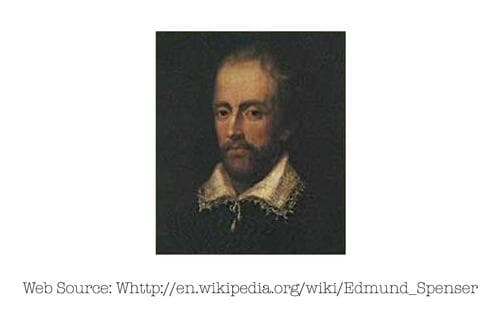
Edmund Spenser was an English poet best known for The Faerie Queene, an epic poem and fantastical allegory celebrating the Tudor dynasty and Elizabeth I. He is recognized as one of the premier craftsmen of nascent Modern English verse and is often considered one of the greatest poets in the English language.
Michael S. Heiser
4.5

Winston S. Churchill
4.5

Will Durant
4.4
Sigurd F. Olson
4.4
Thomas Sowell
4.4

Emmanuel Guibert
4.3
W.E.B. Du Bois
4.3
Joseph Campbell
4.3