BookBrief
The Diary of a Young Girl cover
Archivist's Choice

The Diary of a Young Girl

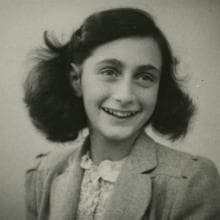
Anne Frank (1947)

Genre

Biography / Memoir / History

Reading Time

270 min

Key Themes

See below

Track Your Reading

Sign in to track this book

During the Nazi occupation, a teenage girl's diary, written from a secret annex, shares observations on humanity, hope, and the wait for freedom.

Core Idea

Anne Frank's diary gives an intimate account of Jewish life in hiding during the Holocaust. It shows the strength of the human spirit during oppression. Frank's observations illustrate the terror and deprivation she faced, along with the universal experiences of adolescence, family life, and finding identity. The book shows the importance of personal stories, demonstrating how one young voice can make the statistics of genocide real and provide a lasting legacy of hope against historical atrocity.
Reading time
270 min
Difficulty
Easy
✓ Read this if...
You want a deeply personal, poignant, and historically significant first-hand account of the Holocaust from the perspective of a young girl, exploring themes of hope, resilience, and the human spirit.
✗ Skip this if...
You are looking for a broad historical analysis of World War II or the Holocaust's political intricacies, as this is a personal memoir focused on daily life and internal reflections.

Core idea

The central argument and framework that powers the entire book.

Anne Frank's diary gives an intimate account of Jewish life in hiding during the Holocaust. It shows the strength of the human spirit during oppression. Frank's observations illustrate the terror and deprivation she faced, along with the universal experiences of adolescence, family life, and finding identity. The book shows the importance of personal stories, demonstrating how one young voice can make the statistics of genocide real and provide a lasting legacy of hope against historical atrocity.

At a glance

Reading time

270 min

Difficulty

Easy

Read this if...

You want a deeply personal, poignant, and historically significant first-hand account of the Holocaust from the perspective of a young girl, exploring themes of hope, resilience, and the human spirit.

Skip this if...

You are looking for a broad historical analysis of World War II or the Holocaust's political intricacies, as this is a personal memoir focused on daily life and internal reflections.

Key Takeaways

1

The Power of the Pen in Confinement

Writing as a lifeline for sanity and self-discovery amidst isolation.

Quote

I can shake off everything if I write; my sorrows disappear, my courage is reborn.

Anne Frank's diary, 'Kitty,' shows the helpful nature of writing, especially in hard situations. Confined to the Secret Annexe, without freedom, education, or social interactions, Anne found comfort and purpose in her daily entries. Writing was her confidante, a safe place to share frustrations, explore her growing sexuality, express her dreams, and observe the complex dynamics of her hidden world. This act of writing helped her process the trauma and monotony of her life and supported her intellectual and emotional growth. It changed...

Supporting evidence

Anne consistently refers to her diary as 'Kitty,' addressing it directly and sharing her most intimate thoughts, reflecting a deep personal connection and reliance on the act of writing for emotional release and intellectual engagement.

Apply this

Cultivate a regular journaling practice to process emotions, clarify thoughts, and track personal growth, especially during challenging or isolating periods. Use it as a private space for uncensored self-expression.

journaling-therapyself-discoveryresilience
2

The Microcosm of Humanity in Hiding

Confinement reveals the best and worst of human nature under duress.

Quote

The Annexe is a small piece of the world, but it contains all the world's problems.

The Secret Annexe, a few rooms, became a place where the personalities and flaws of eight people were amplified under the pressure of constant fear and forced closeness. Anne carefully records the small arguments over food, the clashing egos, the moments of selfishness, and the acts of kindness and shared humanity. The Van Daans (the van Pels in reality), especially Mrs. Van Daan's focus on possessions and Mr. Van Daan's selfishness about food, were different from the Franks' attempts to keep dignity and education. This forced shared ...

Supporting evidence

Anne's detailed descriptions of arguments over rationing, the distribution of food, and the constant friction between her mother and Mrs. Van Daan, as well as her own struggles with her mother and Mr. Dussel.

Apply this

When facing prolonged close-quarter interactions, practice empathy and self-awareness to mitigate conflicts. Recognize that stress amplifies both positive and negative traits in individuals, and strive for understanding over judgment.

group-dynamicspsychology-of-confinementhuman-nature
3

Adolescence Under Siege

Coming of age in extraordinary circumstances accelerates growth and introspection.

Quote

I want to be useful or bring enjoyment to all people, even those I've never met. I want to go on living even after my death!

Anne's diary is not just a historical document; it is a record of adolescence happening in extreme conditions. She deals with common teenage concerns—her changing body, her first crush (on Peter Van Daan), her difficult relationship with her mother, her search for identity, and her intellectual ambitions—all while living in constant fear of discovery. The isolation and forced self-reflection, along with the threat to her life, made her mature quickly. She developed a strong self-awareness, an understanding of human psychology, and a s...

Supporting evidence

Anne's detailed descriptions of her physical changes, her evolving feelings for Peter, her critical analysis of her parents' marriage, and her articulated ambitions for a career in writing and journalism.

Apply this

Recognize that adversity can be a catalyst for accelerated personal growth and self-discovery. Encourage self-reflection and the pursuit of passions, even when circumstances are challenging, as they can provide purpose.

adolescent-psychologyidentity-formationresilience-in-youth
4

The Enduring Power of Hope

Maintaining optimism and belief in humanity amidst pervasive darkness.

Quote

It's a wonder I haven't abandoned all my ideals, they seem so absurd and impractical. Yet I cling to them because I still believe, in spite of everything, that people are truly good at heart.

The most surprising part of Anne Frank's diary is her belief in the goodness of humanity, even as she saw and experienced its darkest parts. Despite the constant threat of capture, the reports of terrible acts, and the difficult personalities in the Annexe, Anne consistently found reasons to hope. She looked forward to the end of the war, dreamed of a future where she could write, and found beauty in nature through a small window. This optimism, not from being naive but from choosing to look for good, shows the human spirit's ability ...

Supporting evidence

Anne's frequent expressions of hope for the future, her deep appreciation for nature (like the chestnut tree outside the window), and her famous quote about believing in people's goodness despite all evidence.

Apply this

Actively seek out sources of hope and beauty in everyday life, even in difficult times. Cultivate an optimistic mindset by focusing on future possibilities and the positive aspects of human nature.

optimismhuman-spiritpsychological-resilience
5

The Hidden Heroes of History

The quiet courage of those who risk everything to protect others.

Quote

Our protectors are angels, they do everything for us.

The survival of the eight people in the Secret Annexe for over two years depended on the courage and loyalty of their helpers: Miep Gies, Bep Voskuijl, Victor Kugler, and Johannes Kleiman. These individuals, non-Jewish employees of Otto Frank's company, risked their lives daily to provide food, news, and emotional support to those in hiding. Their actions show the moral courage needed to defy an oppressive regime and offer help, knowing that discovery meant death or imprisonment. Their selfless acts contrast with the widespread cooper...

Supporting evidence

Anne's detailed accounts of Miep and Bep bringing food, books, and news from the outside world, as well as the constant risks they took to ensure the Annexe's inhabitants had what they needed.

Apply this

Recognize and support individuals and organizations who advocate for justice and protect vulnerable populations, often at great personal risk. Consider how one can act with moral courage in their own sphere of influence.

moral-couragealtruismholocaust-rescuers
6

The Fragility of Freedom

Appreciating fundamental rights when they are brutally stripped away.

Quote

The best remedy for those who are afraid, lonely or unhappy is to go outside, somewhere where they can be quiet, alone with the heavens, nature and God. Because only then does one feel that all is as it should be.

Anne Frank's time in hiding reminds us of the value of basic freedoms often taken for granted. Her desire for simple things—to walk outside, to go to school, to look out a window without fear, to have privacy—shows how deeply connected our sense of self and well-being are to our liberty. The forced confinement, the constant threat of discovery, and the loss of basic rights like movement, speech, and assembly illustrate the impact of tyranny on the individual spirit. Her diary makes readers think about the value of these rights and the...

Supporting evidence

Anne's recurring expressions of yearning for the outside world, her descriptions of watching the sky and the chestnut tree, and her frustration with the lack of privacy and freedom of movement within the Annexe.

Apply this

Actively participate in democratic processes, advocate for human rights, and appreciate the freedoms available. Avoid complacency regarding civil liberties, understanding their historical fragility.

civil-libertiestyrannyhuman-rights
7

The Weight of a Secret Life

The psychological toll of perpetual secrecy and fear.

Quote

We've been cut off from the outside world, from friends and school, and we're living in such a way that we can't be ourselves.

Living in the Secret Annexe was not just physical confinement but a psychological burden. The inhabitants had to remain silent, move carefully, and hide any signs of their presence. This constant secrecy created an environment of anxiety, paranoia, and internal tension. Anne's diary reveals the mental effort needed to keep this facade, the fear of every noise, every footstep, and the weight of knowing their lives depended on absolute discretion. This stress damaged trust, made small irritations worse, and changed their personalities, ...

Supporting evidence

Anne's frequent mentions of having to be quiet during the day, the fear of the Gestapo, the tension during air raids, and the general atmosphere of anxiety and suspicion within the Annexe.

Apply this

Recognize the psychological toll of living under constant stress or secrecy. Prioritize mental well-being and seek healthy outlets for stress. Understand the importance of open communication and trust in relationships.

psychological-traumaanxietymental-health-in-captivity
8

The Universal Voice of Youth

A young girl's perspective transcends time and circumstance.

Quote

I often think how much more difficult it would be if we were boys. A boy has a far harder time here than a girl.

Despite her life's circumstances, Anne Frank's voice is universal because she expresses the experiences and concerns of adolescence. Her diary captures the emotions of teenage angst, first love, family conflict, the search for identity, and intellectual curiosity. This relatability, the fact that a young girl's thoughts on her parents, her body, and her dreams feel familiar, makes her story powerful beyond its historical context. She shows that the inner world of a young person, with all its complexities and hopes, stays constant rega...

Supporting evidence

Anne's detailed descriptions of her crushes, her arguments with her mother, her reflections on her own character flaws and strengths, and her dreams for a future career.

Apply this

Value and listen to the voices of young people, recognizing the depth of their insights and experiences. Understand that fundamental human experiences transcend cultural and historical barriers.

universal-themesyouth-perspectivecoming-of-age
9

The Legacy of Bearing Witness

One individual's story ensures history is remembered and lessons are learned.

Quote

I hope I shall be able to confide completely in you, as I have never been able to do in anyone before, and I hope you will be a great source of comfort and support.

Anne Frank's diary, initially a private record, became one of the most important historical documents of the Holocaust after her death. Her detailed and personal account offers a human perspective on the horrors of that period, making the abstract statistics of war real and relatable. By telling her story through writing, Anne ensures that victims are not just numbers but are remembered as individuals with dreams, fears, and complex inner lives. Her legacy shows the importance of personal stories in understanding history and preventin...

Supporting evidence

The very existence of the diary, preserved by Miep Gies, and its subsequent publication and global impact as a primary source for understanding the Holocaust.

Apply this

Support and engage with personal testimonies and memoirs, especially from marginalized communities, to gain deeper insights into history and current events. Encourage the documentation of personal stories for future generations.

holocaust-educationhistorical-memorypersonal-narrative
10

The Nuance of Family Bonds

Love and conflict coexist and evolve under extreme pressure.

Quote

Mother and I are two opposites. Father understands me better.

The close quarters of the Annexe made the already complex dynamics of the Frank family and their co-habitants more intense. Anne's diary gives an unfiltered look into her changing relationships, especially her often-difficult connection with her mother, Edith. While she loved her father, Otto, whom she saw as her intellectual equal and confidante, her relationship with her mother had misunderstandings and criticism, a common adolescent struggle made worse by confinement. Over time, Anne's view of her mother softened, showing a growing...

Supporting evidence

Anne's early critical remarks about her mother's perceived lack of understanding, contrasted with later entries showing more compassion and an attempt to understand her mother's perspective.

Apply this

Practice empathy and patience in family relationships, especially during periods of stress. Recognize that perspectives can evolve, and understanding can deepen over time through conscious effort.

family-dynamicsparent-child-relationshipsempathy-development

Critical analysis

Notable Quotes

In spite of everything, I still believe that people are really good at heart.

Anne reflects on her optimism and faith in humanity despite the horrors of the Holocaust.

How wonderful it is that nobody need wait a single moment before starting to improve the world.

Anne expresses her belief in the power of individual action to create positive change.

I can shake off everything as I write; my sorrows disappear, my courage is reborn.

Anne describes the therapeutic and empowering effect of writing in her diary.

Think of all the beauty still left around you and be happy.

Anne advises finding joy in small, beautiful things during difficult times.

I don't think of all the misery, but of the beauty that still remains.

Anne emphasizes focusing on positive aspects of life rather than despair.

Parents can only give good advice or put them on the right paths, but the final forming of a person's character lies in their own hands.

Anne reflects on personal responsibility and independence in shaping one's character.

Where there's hope, there's life. It fills us with fresh courage and makes us strong again.

Anne discusses the vital role of hope in sustaining strength and resilience.

I want to go on living even after my death!

Anne expresses her desire for her words and legacy to endure beyond her life.

The best remedy for those who are afraid, lonely or unhappy is to go outside, somewhere where they can be quiet, alone with the heavens, nature and God.

Anne suggests finding solace in nature and spirituality to overcome negative emotions.

Laziness may appear attractive, but work gives satisfaction.

Anne reflects on the value of hard work and productivity over idleness.

I must uphold my ideals, for perhaps the time will come when I shall be able to carry them out.

Anne commits to maintaining her beliefs and aspirations despite current limitations.

No one has ever become poor by giving.

Anne comments on the generosity and richness found in helping others.

I see the world being slowly transformed into a wilderness; I hear the approaching thunder that, one day, will destroy us too.

Anne expresses fear and awareness of the escalating dangers of World War II.

Who would ever think that so much went on in the soul of a young girl?

Anne marvels at the depth and complexity of her inner thoughts and emotions.

Quiz

Test Your Knowledge

Ready to see how well you understood this book? Take our interactive quiz with 10 questions.

10
Questions
~5
Minutes
?
Best Score

Key Questions (FAQ)

It is the real diary of Anne Frank, a Jewish teenager who documented her life while hiding from the Nazis in Amsterdam during World War II. The diary details her experiences, thoughts, and emotions during two years in hiding with her family and others in a concealed annex.

About the author

Anne Frank

Anne Frank was a German-born diarist and Holocaust victim. Her posthumously published diary, "The Diary of a Young Girl," became one of the world's most widely read books, offering a poignant account of her experiences hiding from the Nazis during World War II. Her writings provide a powerful testament to the human spirit in the face of persecution.