BookBrief
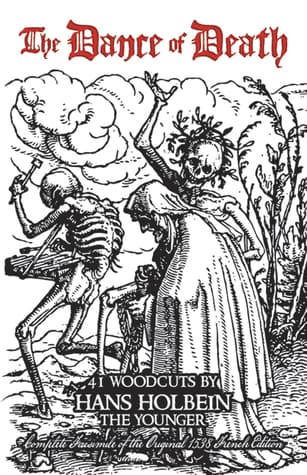
The Dance of Death cover
Archivist's Choice

The Dance of Death

Hans Holbein (1538)

Genre

History / Creativity

Reading Time

160 min

Key Themes

See below

Track Your Reading

Sign in to track this book

Holbein's 'The Dance of Death' is a striking 1538 woodcut series that shows a skeleton taking people from every part of society, from kings to children, as a constant reminder of death's inevitability.

Core Idea

Hans Holbein the Younger's 'The Dance of Death,' from 1538, is a visual work using woodcuts to show death's power over all social classes. It argues that death makes everyone equal, affecting popes, emperors, peasants, and children alike, removing their earthly status and possessions. More than just a reminder of mortality, the work critiques 16th-century European society, showing Death as an active, often mocking, part of human life. The book demonstrates how visual stories and careful craft can convey complex social critiques, making the 'Dance of Death' theme last.
Reading time
160 min
Difficulty
Medium
✓ Read this if...
You are fascinated by the history of art, the macabre, social commentary through visual narrative, or want to understand 16th-century European perspectives on mortality and societal structures. Also for those interested in the craft of woodcut printing and early book illustration.
✗ Skip this if...
You prefer modern art styles, are sensitive to themes of death and decay, or are looking for a light, purely historical narrative without deep artistic analysis.

Core idea

The central argument and framework that powers the entire book.

Hans Holbein the Younger's 'The Dance of Death,' from 1538, is a visual work using woodcuts to show death's power over all social classes. It argues that death makes everyone equal, affecting popes, emperors, peasants, and children alike, removing their earthly status and possessions. More than just a reminder of mortality, the work critiques 16th-century European society, showing Death as an active, often mocking, part of human life. The book demonstrates how visual stories and careful craft can convey complex social critiques, making the 'Dance of Death' theme last.

At a glance

Reading time

160 min

Difficulty

Medium

Read this if...

You are fascinated by the history of art, the macabre, social commentary through visual narrative, or want to understand 16th-century European perspectives on mortality and societal structures. Also for those interested in the craft of woodcut printing and early book illustration.

Skip this if...

You prefer modern art styles, are sensitive to themes of death and decay, or are looking for a light, purely historical narrative without deep artistic analysis.

Key Takeaways

1

Death, the Great Equalizer

Holbein's 'Dance of Death' visually dismantles social hierarchies by showing death's indiscriminate reach.

Quote

The king, emperor, pope, and cardinal must cease from their functions. The skull is thrust into the face of the astrologer. The hourglass runs out onto the floor. Countess, nun, sailor, peddler, senator are all stopped by the common force.

Holbein's 'Dance of Death' is a strong visual lesson about everyone's mortality, a concept that was very important in 16th-century Europe. Through its 41 woodcuts, the work clearly shows that social status and earthly power are illusions. No one, from the highest religious and political leaders to the poorest worker, escapes death. This constant portrayal reminded people that all human efforts and differences are temporary. It questioned the social order by showing that in death, everyone is equal, a idea that could be comforting or d...

Supporting evidence

The woodcuts depict a stylized skeleton seizing figures from all classes: a king, an emperor, a pope, a cardinal, a countess, a nun, a sailor, a peddler, and a senator, among others. Each scene illustrates death interrupting their specific roles and daily lives.

Apply this

Reflect on personal priorities, recognizing that material wealth and social status are temporary. Focus on cultivating virtues, relationships, or legacies that transcend fleeting earthly distinctions. Use this perspective to challenge societal judgments based solely on status.

memento-morisocial-hierarchymortality
2

The Intimate Terror of Death

Death is not a distant concept but an immediate, often playful, and inescapable presence in everyday life.

Quote

A stylized skeleton seizes the child from his mother's breast. The skeleton snatches, plays, tugs, and cavorts throughout the rest of the book.

Unlike many similar artworks that showed death as a serious figure, Holbein's skeletons are active and almost playful. They don't just 'take' people; they 'snatch,' 'play,' 'tug,' and 'cavort.' This active, almost playful portrayal makes death feel more personal and less abstract. It is not a distant, certain end, but a constant presence in human life, appearing in the most vulnerable moments, like taking a child from its mother. This direct, often physical interaction increases the feeling of terror and certainty, as death is shown n...

Supporting evidence

Specific woodcuts show the skeleton actively interacting with its victims: snatching a child from its mother, playing a musical instrument for a reveler, tugging at the robes of a king, or thrusting a skull into an astrologer's face.

Apply this

Acknowledge the unpredictable and personal nature of life's transitions. Rather than fearing or ignoring the inevitable, integrate an awareness of impermanence into daily life to foster a deeper appreciation for present moments and relationships. Embrace mindfulness of time's passage.

personification-of-deathmemento-moriexistentialism
3

Art as Social Commentary

Holbein's work transcends mere religious allegory, offering a pointed critique of 16th-century society.

Quote

Art historians and social historians will find this to be one of the best depictions of class life caught at its fateful moment.

Beyond its spiritual message, 'The Dance of Death' is also a notable piece of social commentary. Holbein's careful depiction of different social classes – from the emperor to the peasant, the cardinal to the peddler – captures the details of 16th-century life. Each woodcut is a small scene, showing the specific activities, clothing, and settings of various jobs and social ranks. By showing death intervening in these specific situations, Holbein not only highlights death's reach but also subtly criticizes the values and concerns of eac...

Supporting evidence

The book description explicitly states its value to 'social historians' for its 'best depictions of class life caught at its fateful moment.' The detailed woodcuts show specific attire, tools, and settings for each character (e.g., the King on his throne, the Plowman in his field, the Merchant with his wares).

Apply this

Analyze contemporary media and art for subtle (or overt) social commentary. Consider how current societal structures, power dynamics, or cultural values are being reflected or critiqued in creative works. Use art as a lens to understand and question your own society.

social-critiquehistorical-artclass-structure
4

The Power of Visual Narrative

Holbein's woodcuts convey complex theological and social messages with unparalleled clarity and emotional impact.

Quote

Forty-one finely cut, highly detailed woodcuts capture the single motif, Memento mori: 'Remember, you will die.'

In a time when not everyone could read, visual art was important for spreading ideas, and Holbein was skilled at this. The 'finely cut, highly detailed' nature of the woodcuts allowed for rich storytelling that went beyond simple pictures. Each image tells a story, showing not just 'who' but also 'how' and 'where' death intervenes. This visual storytelling made the 'Memento Mori' message understandable and impactful to many people, regardless of their reading ability. The consistent theme, combined with varied scenarios, created a str...

Supporting evidence

The book consists of 41 woodcuts, each a detailed scene, rather than just abstract symbols. The description highlights their 'finely cut, highly detailed' nature, emphasizing their narrative capacity. The fact that the theme was 'common' but Holbein's 'variety of expressions' made each unique speaks to his narrative skill.

Apply this

When communicating important ideas, consider the impact of visual storytelling. Utilize images, diagrams, or visual metaphors to enhance understanding and emotional resonance, especially for diverse audiences. Think about how a concept can be illustrated rather than just explained.

visual-communicationnarrative-artwoodcut-art
5

Craftsmanship and Detail as Persuasion

The exquisite detail in Holbein's woodcuts elevates the work from mere illustration to profound artistic statement.

Quote

Although the theme is common, the variety of expressions, social groups, backgrounds, styles of dress and architecture, and calls to death are so varied that each one is unique in its power.

The technical skill in Holbein's woodcuts is not just for looks; it is key to the work's power. The 'finely cut, highly detailed' quality of each image, made by Hans Lützelburger, allows for rich depictions of diverse 'expressions, social groups, backgrounds, styles of dress and architecture.' This attention to detail grounds the universal theme of death in specific, relatable human experiences. By showing death interacting with such carefully rendered individuals and settings, Holbein makes the abstract idea of mortality intensely pe...

Supporting evidence

The book description praises the 'finely cut, highly detailed woodcuts' and the 'variety of expressions, social groups, backgrounds, styles of dress and architecture,' noting that this variety makes 'each one unique in its power.'

Apply this

In any creative or professional endeavor, recognize the power of meticulous detail and high-quality craftsmanship. These elements not only enhance aesthetic appeal but also deepen engagement, convey authenticity, and strengthen the message or argument being presented. Don't compromise on execution.

artistic-craftsmanshipdetail-in-artpersuasive-art
6

The Enduring Resonance of Memento Mori

Holbein's work taps into a timeless human preoccupation with mortality, making its message perpetually relevant.

Quote

Forty-one finely cut, highly detailed woodcuts capture the single motif, Memento mori: 'Remember, you will die.'

The main message of 'Memento Mori' – 'Remember, you will die' – is not new to Holbein's time; it is a universal human truth. Holbein's brilliance is in giving this old philosophical and religious concept a vivid, accessible, and memorable visual form. By showing death's certainty across all ages and social classes, the work goes beyond its 16th-century context and still connects with people today. It prompts contemplation on life's shortness, the meaning of existence, and the final fate of all beings. In an age often marked by distrac...

Supporting evidence

The book explicitly states the central motif is 'Memento mori.' The 'theme of the dance of death was a popular one of the sixteenth century,' indicating its historical resonance, and its reprinting today signifies its continued relevance.

Apply this

Regularly engage in practices of self-reflection or mindfulness that acknowledge the finite nature of life. This can foster gratitude, motivate purposeful action, and help prioritize what truly matters over transient desires or anxieties. Consider journaling or meditation on impermanence.

memento-moriexistential-philosophymortality-awareness
7

A Window into 16th-Century Life and Death

The 'Dance of Death' offers invaluable insights into the daily realities, fears, and beliefs of Holbein's era.

Quote

Art historians and social historians will find this to be one of the best depictions of class life caught at its fateful moment.

Holbein's 'Dance of Death' is more than a moral story; it is a detailed historical document. The specific depictions of various social roles – from the King, Pope, and Cardinal to the Astrologer, Countess, Nun, Sailor, and Peddler – offer a fascinating look into the social hierarchy, jobs, and daily lives of 16th-century Europe. The 'styles of dress and architecture' in each scene provide real visual information for historians. Also, the popularity of the 'dance of death' theme itself shows the widespread cultural worries and religiou...

Supporting evidence

The description highlights its value to 'art historians and social historians' as 'one of the best depictions of class life.' The specific mention of 'styles of dress and architecture' points to its historical detail.

Apply this

When studying historical periods, look beyond major events to understand the everyday lives and cultural zeitgeist of the people. Seek out art, literature, and primary sources that offer granular details about beliefs, customs, and social structures, recognizing that these reveal deeper truths than grand narratives alone.

16th-century-historycultural-studieshistorical-art
8

The Collaboration of Art and Craft

The success of 'The Dance of Death' is a testament to the symbiotic relationship between artistic vision and skilled execution.

Quote

This work, from the woodblocks of collaborator Hans Lützelburger, was first published in book form in 1538.

While Holbein's artistic talent created the powerful images and story, the physical making of 'The Dance of Death' was a team effort, especially involving Hans Lützelburger, the master woodblock cutter. The phrase 'from the woodblocks of collaborator Hans Lützelburger' highlights that the 'finely cut, highly detailed' quality, so important to the work's impact, depended greatly on Lützelburger's technical skill. Holbein's vision would have remained a sketch without the precise and detailed carving that brought it to life in print. Thi...

Supporting evidence

The book description explicitly credits 'collaborator Hans Lützelburger' for the 'woodblocks,' indicating his crucial role in the physical creation of the prints from Holbein's designs.

Apply this

Recognize the value of collaborative efforts in creative and professional projects. Appreciate the distinct contributions of different skill sets – visionaries, designers, technicians, implementers – and how their synergy leads to superior outcomes. Foster an environment where craft and concept are equally valued.

artistic-collaborationwoodcut-techniquecraftsmanship
9

Beyond Religious Dogma: Human Experience

While rooted in Christian tradition, Holbein's 'Dance' resonates due to its focus on universal human experiences of fear, vanity, and acceptance.

Quote

The theme of the dance of death was a popular one of the sixteenth century. Holbein captured the feeling of death, the leveler, in its attack on all classes, both sexes, and all ages.

Though 'The Dance of Death' came from a deeply religious European setting, its lasting power goes beyond specific religious beliefs. Holbein's skill is in capturing the raw 'feeling of death' as a 'leveler' that affects 'all classes, both sexes, and all ages.' This universal approach connects to basic human experiences: the fear of the unknown, the uselessness of worldly pursuits, and the eventual, unavoidable acceptance of death. The non-religious and spiritual worries about death come together in Holbein's depictions, making the wor...

Supporting evidence

The description emphasizes Holbein's capture of the 'feeling of death' and its attack on 'all classes, both sexes, and all ages,' underscoring its universal human scope beyond just religious figures.

Apply this

When exploring complex topics, seek to identify the underlying universal human experiences or emotions. Frame your understanding or communication in a way that transcends specific cultural, religious, or ideological boundaries to achieve broader resonance and empathy. Look for common ground in diverse perspectives.

human-conditionexistentialismuniversal-themes
10

The Art of the Book: A Curatorial Legacy

The reprinting of 'The Dance of Death' highlights the ongoing value of preserving and sharing rare, historically significant books.

Quote

This edition, reprinting the unabridged 1538 edition, is the first in a series reprinting great rare books from the Rosenwald Collection.

The fact that this modern reprinting exists shows the important role of institutions and curators in protecting cultural heritage. By making the 'unabridged 1538 edition' available, the Rosenwald Collection and its publishing partners ensure that Holbein's important work continues to educate and inspire. Rare books, like this one, are not just historical curiosities; they are direct links to understanding past societies, artistic innovations, and intellectual trends. Their careful reproduction allows 'art historians and social histori...

Supporting evidence

The description explicitly states this edition is a 'reprinting the unabridged 1538 edition' and is 'the first in a series reprinting great rare books from the Rosenwald Collection,' directly illustrating the curatorial effort.

Apply this

Support institutions and initiatives dedicated to preserving and digitizing historical artifacts, rare books, and cultural records. Recognize that access to these primary sources is crucial for informed historical understanding, artistic inspiration, and the continuity of human knowledge. Advocate for library and museum funding.

bibliophilecultural-preservationrare-books

Critical analysis

Notable Quotes

The great leveller, Death, spares no one, be they pope or peasant, king or commoner.

A central theme across many woodcuts, illustrating the universality of death's reach.

All earthly power and glory are but transient shadows, easily swept away by the dance of death.

Reflecting on the futility of worldly power in the face of inevitable death.

From the cradle to the grave, Death is our constant, silent companion, ever-present.

Emphasizing death's continuous presence throughout a human life.

Though we strive for riches and earthly delights, Death reminds us of their ultimate emptiness.

A commentary on materialism and its insignificance in the grand scheme of life and death.

No amount of piety or sin can sway Death from its appointed task.

Illustrating that death's judgment is impartial, regardless of one's moral standing.

The artist, in his craft, seeks to capture the fleeting nature of life and the stark reality of its end.

Reflecting on Holbein's own artistic intent and the purpose of his work.

Even in moments of joy and celebration, Death lurks, an uninvited guest.

Highlighting death's unexpected appearances in various life scenarios.

The dance is universal, a grim waltz that all must eventually join.

Metaphorical description of death as a compulsory, shared experience.

Against the backdrop of human folly and ambition, Death stands as the ultimate truth.

Positioning death as the undeniable reality in contrast to human endeavors.

The creative mind, through its depictions, confronts the anxieties of its age.

A broader reflection on how art addresses societal fears and concerns, applicable to Holbein's era.

Each stroke of the graver tells a story of life's brevity and death's inevitability.

Focuses on the artistic technique and its narrative purpose in the woodcuts.

The rich tapestry of human existence, with all its roles and stations, unravels before Death's gaze.

Illustrates how death dissolves the complex social structures of the time.

Holbein's genius lies in making the abstract terror of death vividly, disturbingly real.

Appreciating the artistic impact and effectiveness of Holbein's portrayal of death.

A mirror held up to humanity, reflecting our common fate and the fragility of our being.

Describes the work's function as a universal reflection on human mortality.

Quiz

Test Your Knowledge

Ready to see how well you understood this book? Take our interactive quiz with 10 questions.

10
Questions
~5
Minutes
?
Best Score

Key Questions (FAQ)

'The Dance of Death' is a celebrated series of forty-one woodcuts created by Hans Holbein the Younger and collaborator Hans Lützelburger, first published in 1538. It vividly depicts the universal power of death, showing a stylized skeleton seizing individuals from all social classes, ages, and genders.

About the author