BookBrief
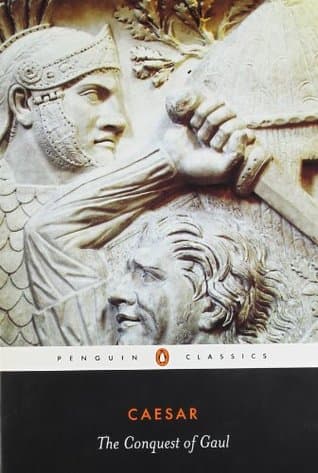
The Conquest of Gaul cover
Archivist's Choice

The Conquest of Gaul

Gaius Julius Caesar (1951)

Genre

Biography / History

Reading Time

12 Minutes

Key Themes

See below

Track Your Reading

Sign in to track this book

Julius Caesar chronicles his relentless military campaigns and strategic brilliance as he subjugates the diverse tribes of Gaul, forever altering the course of Roman history.

Core Idea

Gaius Julius Caesar's "The Conquest of Gaul" is a firsthand historical account of his campaigns in Gaul between 58 and 50 BC. It details the military strategies, political maneuvering, and cultural observations that led to the Roman subjugation of various Gallic tribes. Beyond a mere war chronicle, the book serves as a powerful piece of political propaganda, designed to justify Caesar's actions to the Roman Senate and people, enhance his public image, and solidify his claim to military and political authority.
Difficulty
Medium

Core idea

The central argument and framework that powers the entire book.

Gaius Julius Caesar's "The Conquest of Gaul" is a firsthand historical account of his campaigns in Gaul between 58 and 50 BC. It details the military strategies, political maneuvering, and cultural observations that led to the Roman subjugation of various Gallic tribes. Beyond a mere war chronicle, the book serves as a powerful piece of political propaganda, designed to justify Caesar's actions to the Roman Senate and people, enhance his public image, and solidify his claim to military and political authority.

At a glance

Difficulty

Medium

Key Takeaways

1

Unrivaled Military Leadership

Caesar's strategic brilliance and adaptability were key to Roman success.

Quote

The greater the difficulty, the greater the glory.

Caesar's military brilliance is central to 'The Conquest of Gaul.' He consistently adapted to different terrains and enemy tactics, from building a massive bridge over the Rhine in ten days to besieging Alesia. His campaigns involved more than just overwhelming force; they were lessons in logistics, psychological warfare, and quick decision-making. He knew how important it was to keep his legions' morale high, often leading from the front. This comprehensive approach, combining engineering skill with tactical flexibility, allowed him ...

Supporting evidence

The construction of the Rhine bridge (Book IV), the circumvallation and contravallation lines at Alesia (Book VII).

Apply this

Leaders can learn from Caesar's multifaceted approach to problem-solving, emphasizing both strategic vision and practical execution, along with the critical role of leading by example.

2

Propaganda and Self-Fashioning

Caesar meticulously crafted his own narrative to justify actions and secure political power.

Quote

It is a common failing of men to make an exception of themselves.

This book is more than a historical account; it is a lesson in political persuasion. Caesar, as the only narrator, presents events in a way that favors him, always portraying his actions as defensive, necessary, or good for Rome. His descriptions of Gallic 'barbarism' and internal conflicts help justify Roman intervention and conquest. He often minimizes Roman losses while exaggerating enemy numbers and cruelties. This self-serving story was important for his political goals in Rome, aiming to impress the Senate and the Roman people w...

Supporting evidence

Consistent framing of Gallic tribes as aggressors or threats, even when Roman expansion was the clear catalyst. Caesar's careful omission of details that might cast him in a negative light.

Apply this

Understand how historical narratives are shaped by their authors and the importance of critically evaluating primary sources for inherent biases and political motivations.

3

The Brutality of Roman Conquest

Beneath the glory, the conquest involved immense human cost and ruthless suppression.

Quote

War is a matter in which the side that is the stronger always appears to be the more righteous.

While Caesar's account celebrates Roman power, it also shows the harsh reality of imperial expansion. The story is full of mass killings, enslavement, and the destruction of Gallic towns and cultures. The treatment of the Aduatuci, where 53,000 people were sold into slavery, or the near destruction of the Eburones, shows the ruthless efficiency of Roman warfare. Caesar's detached tone in describing these acts highlights the Roman view of conquered peoples—seeing them as resources or obstacles rather than individuals. This is the book'...

Supporting evidence

The enslavement of the Aduatuci (Book II), the punitive campaigns against the Eburones (Book VI), and the systematic burning of crops and villages.

Apply this

Reflect on the ethical implications of conquest and the long-term human cost of imperial ambitions, challenging romanticized notions of historical 'heroes'.

4

Gallic Disunity as Rome's Advantage

Internal tribal conflicts among the Gauls significantly facilitated Roman dominance.

Quote

In all Gaul there are two factions.

The 'Conquest of Gaul' shows how the disunity and rivalries among the Gallic tribes were Rome's greatest strategic advantage. Caesar used these divisions, forming alliances with some tribes against others, and employing a 'divide and conquer' strategy. Even when a leader like Vercingetorix united a large part of Gaul, old animosities often reappeared, weakening their resistance. This internal conflict, along with a lack of central command, prevented the Gauls from presenting a united front against the Roman legions. Caesar's understan...

Supporting evidence

The frequent switching of alliances among Gallic tribes, the Aedui's initial support for Caesar, and the internal disputes during Vercingetorix's rebellion.

Apply this

Recognize how internal divisions can weaken a group's ability to resist external pressures and the strategic advantage gained by exploiting such fragmentation.

5

The Importance of Logistics and Engineering

Rome's logistical superiority and engineering prowess were critical force multipliers.

Quote

The Roman mind could not be deterred by any difficulty.

Beyond tactical skill, Caesar's story highlights the Roman army's amazing logistical and engineering abilities. The ability to build roads, bridges, and fortifications quickly allowed legions to move fast, secure supply lines, and conduct sieges that would have been impossible for less organized forces. The construction of the double lines of circumvallation and contravallation at Alesia, spanning miles and including ditches, ramparts, and watchtowers, shows this. This engineering superiority helped military operations and also intimi...

Supporting evidence

The Rhine bridge construction (Book IV), the siege works at Alesia (Book VII), and the constant establishment of fortified camps.

Apply this

Appreciate the foundational role of logistics and infrastructure in large-scale operations, whether military, business, or humanitarian, and the need for robust support systems.

6

Leadership Under Extreme Pressure

Caesar's composure and decisive action in crises often averted disaster.

Quote

In great dangers, the most daring counsels are the safest.

Caesar's ability to stay calm and make quick, effective decisions in dangerous moments is a recurring theme. Whether rallying his troops during unexpected Gallic ambushes, addressing mutinies, or personally fighting to inspire his men, Caesar consistently showed exceptional leadership under pressure. His presence on the battlefield was often a turning point, giving his legions confidence and demoralizing the enemy. This unwavering resolve, combined with a willingness to take calculated risks, helped him navigate many near-disasters an...

Supporting evidence

His personal intervention during the battle against the Nervii (Book II), his handling of the siege of Gergovia, and his calming of troops during Vercingetorix's early successes.

Apply this

Develop resilience and decisive thinking in high-stress situations, understanding that calm leadership can be contagious and critical for team performance.

7

The Role of Fortune (and Caesar's Exploitation of it)

Caesar often attributed success to fortune, subtly enhancing his own mystique.

Quote

Fortune, which has a great power in all things, especially in war.

Throughout the story, Caesar often mentions 'fortune' or 'fate' to explain unexpected events, good and bad. While it seems humble, this device often magnifies his achievements when fortune favors him, implying divine approval of his mission. When setbacks happen, blaming fortune can deflect blame from his own mistakes. This lets him maintain an aura of invincibility and divine favor, important for both his troops' morale and his political standing in Rome. It also subtly suggests that his destiny was linked to Rome's greatness, a powe...

Supporting evidence

His repeated references to 'fortune' in battles, such as the unexpected arrival of reinforcements or the enemy making a crucial error.

Apply this

Analyze how leaders use rhetoric, including references to luck or destiny, to shape perceptions of their competence and legitimacy, and to manage both successes and failures.

8

The Shifting Sands of Allegiance

Loyalty in ancient Gaul was fluid, driven by self-interest and immediate power dynamics.

Quote

Such is the custom of Gaul, that all nations are divided into factions, and these factions are ruled by their leading men.

The book clearly shows how fluid allegiances were among the Gallic tribes and even within Roman-allied groups. Tribes would switch sides based on perceived advantage, fear of Roman reprisal, or promises of plunder. This constant re-evaluation of loyalty, often driven by a practical assessment of who had the upper hand, made the political situation unstable. Caesar often had to re-establish alliances, punish defectors, and reward loyalists to keep control. This highlights a basic difference between modern nationalistic loyalties and th...

Supporting evidence

The Aedui's wavering loyalty, the defection of various client states, and the constant need for Caesar to secure hostages or tribute to ensure compliance.

Apply this

Understand the complexities of alliance management and how different cultural contexts shape motivations for loyalty and betrayal in political and business negotiations.

9

The Inevitability of Roman Imperialism

The conquest of Gaul was a logical, if brutal, extension of Roman expansionist policy.

Quote

All Gaul has been reduced to a province.

While Caesar presents his campaigns as defensive, the overall story suggests that the conquest of Gaul was an almost inevitable result of Rome's expansion. Rome consistently sought to secure its borders, control trade routes, and exploit new territories for resources and manpower. Gaul, with its wealth and location, was a prime target. Caesar's actions, though driven by personal ambition, perfectly aligned with this broader imperial project. The book, therefore, is a powerful case study in the dynamics of imperial expansion, showing h...

Supporting evidence

Rome's prior conquests in Cisalpine Gaul, Spain, and North Africa, establishing a pattern of aggressive expansion.

Apply this

Analyze the historical patterns of empire building and the underlying motivations—economic, political, and ideological—that drive states to expand their influence and territory.

10

The Human Cost of War, Unseen

The narrative's focus on Roman triumph overshadows the immense suffering of ordinary people.

Quote

War is a terrible thing; it is easy to begin, but very difficult to stop.

Despite its detailed accounts of battles and sieges, 'The Conquest of Gaul' says little about the personal suffering of non-combatants and common soldiers. The story, focused on military strategy and Caesar's leadership, only offers glimpses into the devastation caused to Gallic families, the trauma of enslavement, or the daily hardships faced by legionaries beyond the glory of battle. This omission limits the book, as it prevents a full understanding of the human experience of this long conflict. It forces readers to infer the immens...

Supporting evidence

The descriptions of towns being sacked, populations enslaved, and widespread famine resulting from scorched-earth tactics, without dwelling on individual suffering.

Apply this

Cultivate empathy by actively seeking out diverse perspectives and untold stories in historical accounts, moving beyond official narratives to understand the full human impact of events.

Critical analysis

Notable Quotes

Quiz

Test Your Knowledge

Ready to see how well you understood this book? Take our interactive quiz with 10 questions.

10
Questions
~5
Minutes
?
Best Score

Key Questions (FAQ)

The Conquest of Gaul is a firsthand account by Julius Caesar detailing his military campaigns in Gaul between 58 and 50 BC. It describes his strategies, battles, and interactions with various Gallic tribes, ultimately leading to the Roman annexation of the region.

About the author