BookBrief
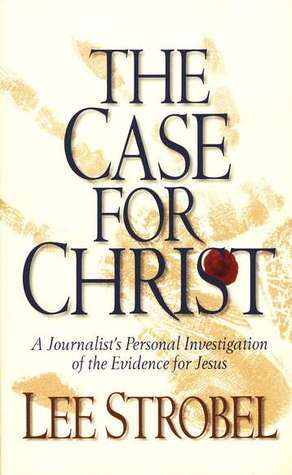
The Case for Christ cover
Archivist's Choice

The Case for Christ

Lee Strobel (1998)

Genre

History / Spirituality

Reading Time

360 min

Key Themes

See below

Track Your Reading

Sign in to track this book

An investigative journalist uses his skepticism and journalistic methods to interview experts and find evidence for the historical and divine claims of Jesus Christ.

Core Idea

Lee Strobel, an investigative journalist and former atheist, examines the historical evidence for Jesus Christ, focusing on his divinity and resurrection. He interviews experts in New Testament studies, archaeology, medical science, and psychology to review the claims of Christianity. Strobel addresses common objections and alternative theories, building a case that shows the historical reliability of the Gospels, the authenticity of Jesus' miracles, and the physical reality of his resurrection. The book's argument is that the evidence, when evaluated, points to the truth of the Christian faith, offering a rational basis for belief.
Reading time
360 min
Difficulty
Medium
✓ Read this if...
You are a skeptic or seeker curious about the historical and evidential basis for Christianity, or a Christian looking to deepen your understanding and ability to articulate your faith.
✗ Skip this if...
You are firmly convinced against the existence or divinity of Christ and are not open to considering counter-arguments, or you prefer purely theological or devotional works without an apologetic focus.

Core idea

The central argument and framework that powers the entire book.

Lee Strobel, an investigative journalist and former atheist, examines the historical evidence for Jesus Christ, focusing on his divinity and resurrection. He interviews experts in New Testament studies, archaeology, medical science, and psychology to review the claims of Christianity. Strobel addresses common objections and alternative theories, building a case that shows the historical reliability of the Gospels, the authenticity of Jesus' miracles, and the physical reality of his resurrection. The book's argument is that the evidence, when evaluated, points to the truth of the Christian faith, offering a rational basis for belief.

At a glance

Reading time

360 min

Difficulty

Medium

Read this if...

You are a skeptic or seeker curious about the historical and evidential basis for Christianity, or a Christian looking to deepen your understanding and ability to articulate your faith.

Skip this if...

You are firmly convinced against the existence or divinity of Christ and are not open to considering counter-arguments, or you prefer purely theological or devotional works without an apologetic focus.

Key Takeaways

1

Eyewitness Reliability: More Than Meets the Eye

Ancient historical accounts, especially those corroborated by multiple, independent sources, hold significant weight.

Quote

The New Testament documents are not just random stories; they bear the marks of genuine eyewitness testimony, much like what you'd find in a court of law.

Strobel, through interviews with scholars like Dr. Craig Blomberg, examines the New Testament documents as historical evidence. He looks at the criteria historians use to assess ancient texts, including the number of manuscripts, their age compared to the original events, and the internal consistency of the accounts. The book argues that the volume of early New Testament manuscripts surpasses that of other ancient texts whose historicity is rarely questioned, such as those by Plato or Caesar. Also, the short time between the events an...

Supporting evidence

Dr. Craig Blomberg's discussion on the criteria for historical reliability, comparing the New Testament manuscript evidence (over 5,800 Greek manuscripts) to other ancient texts like Homer's Iliad (643 manuscripts) or Caesar's Gallic Wars (10 manuscripts).

Apply this

When evaluating historical claims, especially those from ancient times, consider the quantity and quality of source documents, the time gap between events and their recording, and the potential for corroborating evidence from independent sources. Don't dismiss ancient texts simply because of their age; apply consistent historical methodology.
historical-reliabilityeyewitness-testimonytextual-criticism
2

The Corroborating Evidence of Non-Biblical Sources

External historical records, though sparse, confirm key aspects of Jesus' existence and early Christian beliefs.

Quote

Even hostile sources from antiquity inadvertently confirm the existence of Jesus and the early Christian movement, providing a valuable external check.

Strobel investigates non-Christian sources to see if they support the New Testament's claims about Jesus. These sources do not offer detailed biographies, but they are important because they come from outside the Christian tradition, often from those hostile to it. Historians like Tacitus, Pliny the Younger, and Josephus, despite their different perspectives, refer to Christ, Christians, their founder, and their beliefs. Tacitus, for instance, mentions 'Christus' as the founder of the Christians, executed by Pontius Pilate during Tibe...

Supporting evidence

References from Roman historians Tacitus (Annals 15.44) and Pliny the Younger (Letters 10.96), and the Jewish historian Josephus (Antiquities of the Jews 18.3.3 and 20.9.1).

Apply this

When evaluating historical figures or movements, always seek out external, independent verification. Even brief mentions from non-aligned or even hostile sources can significantly strengthen the case for historicity, as they are less likely to be biased in favor of the subject.

external-corroborationjosephustacitus
3

Archaeology's Silent Affirmation

Archaeological discoveries, while not proving theological claims, consistently align with and illuminate biblical narratives.

Quote

Archaeology doesn't prove the Bible is the Word of God, but time and again, it has provided evidence that supports the historical reliability of its accounts.

Strobel examines archaeology's role in validating the New Testament's historical context, consulting with Dr. John McRay. Archaeology cannot 'prove' miracles or theological doctrines, but it often confirms the existence of cities, customs, rulers, and geographical details mentioned in the biblical texts. This consistency adds credibility to the overall historical framework. For instance, the discovery of the Pilate Inscription confirmed the existence of Pontius Pilate, a figure central to the crucifixion narrative, who was once doubte...

Supporting evidence

The Pilate Inscription, confirming Pontius Pilate's governorship; the discovery of the Pool of Bethesda with its five porticoes, aligning with John 5:2; and the consistent identification of cities and geographical features.

Apply this

When encountering ancient texts, consider how archaeological findings can provide context and support for the historical accuracy of descriptions, even if they don't directly prove every claim. Look for corroborating evidence from the ground that aligns with textual details.

archaeologyhistorical-contextpilate-inscription
4

Scientific Scrutiny of Miracles: Beyond Naturalism

The possibility of miracles requires an openness to something beyond purely naturalistic explanations.

Quote

If God exists, then miracles are not only possible but entirely consistent with His nature. The real question is not 'Can miracles happen?' but 'Did they happen?'

Strobel addresses miracles, especially the resurrection, by interviewing Dr. William Lane Craig, a philosopher and theologian. The argument is that a purely naturalistic worldview, which assumes no supernatural intervention, will always rule out miracles by definition. However, if one considers the possibility of a God who created the universe and can intervene in it, then miracles are logically plausible. The discussion then shifts from the possibility of miracles to the evidence for specific miracles, especially Jesus' resurrection....

Supporting evidence

Dr. William Lane Craig's philosophical argument for the possibility of miracles given a theistic worldview, and his subsequent historical defense of the resurrection based on the empty tomb, appearances, and the transformation of the disciples.

Apply this

Before dismissing phenomena as 'impossible,' examine the underlying philosophical assumptions. Consider whether a purely naturalistic framework is the only valid lens, or if other worldviews allow for different possibilities. Apply this critical self-reflection to all extraordinary claims.

miraclesnaturalismtheismresurrection
5

The Psychological Case for the Resurrection

The radical transformation of the disciples, from fearful to fearless martyrs, is a powerful indicator of a profound, life-altering event.

Quote

It's one thing for people to die for what they believe is true; it's another thing entirely to die for what they know is a lie.

Strobel consults with Dr. Gary Habermas, an expert on the resurrection, to explore the psychological impact on the disciples. The argument focuses on the dramatic transformation of Jesus' followers. After Jesus' crucifixion, the disciples were scattered, fearful, and disappointed. Yet, shortly after, they became bold preachers, willing to endure persecution and even martyrdom for their belief in a resurrected Christ. This change, from despair to conviction, is hard to explain by naturalistic means such as mass hallucination or a delib...

Supporting evidence

The consistent historical record of the apostles' willingness to suffer and die for their belief in the resurrected Christ, contrasting sharply with their fear and scattering after the crucifixion. This is seen as strong evidence against 'stolen body' or 'hallucination' theories.

Apply this

When evaluating the credibility of a historical event, consider the motivations and subsequent actions of the key players. A radical and persistent change in behavior, especially in the face of extreme adversity, can be a powerful indicator of a genuinely transformative experience.

resurrection-evidenceapostlesmartyrdompsychological-impact
6

The Medical Perspective on the Crucifixion and Resurrection

The brutal reality of crucifixion and the physiological impossibility of surviving it bolster the resurrection claim.

Quote

From a purely medical standpoint, it is virtually impossible to argue that Jesus merely 'swooned' or survived the crucifixion. The evidence points to death.

Strobel interviews Dr. Alexander Metherell, a medical doctor, to understand the physiological aspects of crucifixion and death. Dr. Metherell details the torture Jesus endured, from the scourging that stripped away flesh to the crucifixion itself, which caused pain, suffocation, and eventual cardiac arrest. The Roman soldiers, experts in execution, would have ensured Jesus was dead, especially by piercing his side with a spear, from which 'blood and water' flowed — a detail Metherell explains as consistent with fluid separation in the...

Supporting evidence

Dr. Alexander Metherell's detailed medical explanation of the scourging, crucifixion, and spear wound (John 19:34), confirming the physiological impossibility of survival and the medical consistency of the 'blood and water' observation with actual death.

Apply this

When evaluating historical accounts of death or injury, consider consulting medical expertise to understand the physiological realities. This can help rule out or support various theories by grounding them in scientific fact, especially when extraordinary claims are made.

crucifixionswoon-theorymedical-evidenceresurrection
7

The Problem of Explaining Away the Empty Tomb

No naturalistic theory adequately accounts for the empty tomb, a historical fact widely accepted even by early opponents of Christianity.

Quote

The empty tomb is not just a Christian legend; it's a historical problem that even Jesus' enemies had to acknowledge and try to explain away.

Strobel, through his interviews, highlights the empty tomb as evidence for the resurrection. Christians claimed it was empty, and the earliest Jewish and Roman opponents of Christianity also implicitly acknowledged it by offering alternative explanations, such as the disciples stealing the body. This suggests the empty tomb was a recognized fact in Jerusalem shortly after the crucifixion. If the tomb still contained Jesus' body, the authorities could have easily produced it to stop the Christian movement. Their failure to do so, and t...

Supporting evidence

The early Jewish polemic (Matthew 28:11-15) that the disciples stole the body, which implicitly acknowledges the empty tomb. The inability of authorities to produce a body to stop the spread of Christianity.

Apply this

When investigating historical events, pay close attention to the explanations offered by both proponents and opponents. The very existence of counter-arguments, especially those that acknowledge a shared factual premise (like an empty tomb), can be powerful indirect evidence for that premise.

empty-tombresurrection-theorieshistorical-fact
8

The Cumulative Case: A Web of Evidence

The strength of the resurrection claim lies not in a single piece of evidence, but in the interconnectedness of multiple, mutually reinforcing lines of inquiry.

Quote

No single piece of evidence proves the resurrection beyond all doubt, but when you weave together the eyewitness testimony, the circumstantial evidence, the historical corroboration, and the psychological impact, it creates an incredibly strong case.

Strobel's journalistic approach leads to the idea of a 'cumulative case' for Christ's resurrection. He argues that while individual pieces of evidence might be debated, their combined weight creates a compelling argument. This includes the historical reliability of the New Testament, external support from non-Christian sources, archaeological consistency, the medical impossibility of survival, the empty tomb, and the transformation of the disciples. Each line of evidence, strong on its own, becomes more powerful when viewed as part of...

Supporting evidence

The entire structure of the book, which systematically builds upon the evidence from eyewitness testimony, external sources, archaeology, medical science, philosophy, and psychology, demonstrating how each category reinforces the others to form a comprehensive argument.

Apply this

When evaluating complex claims, especially historical ones, avoid seeking a single 'smoking gun.' Instead, look for a convergence of evidence from diverse fields. Consider how different data points interlock and mutually support a central hypothesis, building a stronger, more resilient argument.

cumulative-caseevidence-synthesishistorical-argument
9

The Nature of Belief: Beyond 'Blind Faith'

Christian faith, as presented, is not a leap into the dark but a step taken on the basis of reasoned evidence and historical inquiry.

Quote

I came to faith not by abandoning reason, but by following the evidence where it led, no matter how unsettling the implications.

Strobel's personal journey, from atheist to Christian, shows that belief in Christ does not require intellectual compromise. He presents it as a rational conclusion drawn from an honest assessment of historical and scientific evidence. His initial skepticism as an investigative journalist led him to test the claims of Christianity, expecting to disprove them. However, the evidence he uncovered, across multiple disciplines, led him to a different conclusion. This challenges the idea that faith is irrational or requires ignoring facts. ...

Supporting evidence

Strobel's own conversion story, detailed throughout the book, as he moves from an atheistic Chicago Tribune journalist to a believer based on the evidence he meticulously gathered and analyzed.

Apply this

Approach deeply held beliefs, both your own and others', with intellectual curiosity and a willingness to follow evidence, even if it challenges your preconceptions. Recognize that 'faith' can sometimes be a reasoned response to compelling evidence, not merely an unthinking acceptance.

faith-and-reasonskepticismintellectual-honestyconversion

Critical analysis

Notable Quotes

I was determined to find out if there was any credible evidence that Jesus of Nazareth really is the Son of God.

Strobel's opening statement about his investigative journey as a skeptical journalist.

The resurrection is the supreme vindication of Jesus' divine identity.

From a discussion with theologian Dr. Gary Habermas on the significance of the resurrection.

If Jesus was not raised from the dead, Christianity is a fraud.

Paraphrasing the Apostle Paul's argument in 1 Corinthians 15, cited in the book.

The New Testament documents are the most reliable ancient texts we have.

Interview with Dr. Bruce Metzger, a biblical manuscript expert.

Eyewitness testimony is the gold standard in any court of law, and the Gospels pass that test.

Strobel's conclusion after examining the Gospel accounts.

Jesus' crucifixion is one of the most well-attested facts of ancient history.

From a discussion with historian Dr. Edwin Yamauchi.

The transformation of the disciples from cowards to courageous martyrs is powerful evidence.

Analyzing the behavioral change of the apostles after Jesus' resurrection.

Science and faith are not enemies; they answer different questions.

Interview with Dr. William Lane Craig on the relationship between science and religion.

The universe had a beginning, and that implies a Beginner.

Discussing cosmological arguments for God's existence.

Miracles are not violations of natural law but acts of God within creation.

From a philosophical discussion on the possibility of miracles.

The Old Testament contains hundreds of prophecies that point to Jesus.

Examining messianic prophecies with Dr. Louis Lapides.

Doubt is not the opposite of faith; unbelief is.

Reflecting on his own journey from atheism to belief.

The evidence is compelling enough to require a verdict.

Strobel's closing argument, urging readers to decide about Jesus.

Quiz

Test Your Knowledge

Ready to see how well you understood this book? Take our interactive quiz with 10 questions.

10
Questions
~5
Minutes
?
Best Score

Key Questions (FAQ)

'The Case for Christ' is a non-fiction book by Lee Strobel that investigates the historical and scientific evidence for Jesus Christ. Using his background as an investigative journalist, Strobel interviews experts in fields like history, philosophy, and science to examine the claims of Christianity.

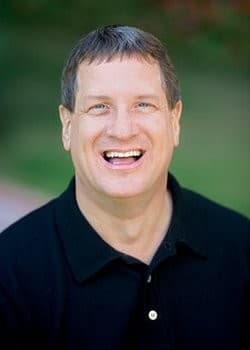
About the author