BookBrief
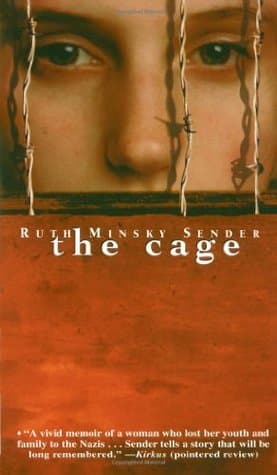
The Cage cover
Archivist's Choice

The Cage

Ruth Minsky Sender (1986)

Genre

Biography / Memoir / History

Reading Time

270 min

Key Themes

See below

Track Your Reading

Sign in to track this book

In the Lodz ghetto and Auschwitz, young Riva holds onto her mother's words of hope. She vows to survive the Holocaust and share her story, a powerful account of human endurance.

Core Idea

Ruth Minsky Sender's memoir, "The Cage," shows the strength of the human spirit and how important memory and storytelling are for keeping humanity alive during the Holocaust. Through her account, Sender explains that even in the worst situations, small acts of resistance, kindness, and hidden support can help people live. She also emphasizes the duty to remember, so the terrible events are never forgotten. The lasting power of a mother's last words, the fragility of childhood, and the deep scars of trauma are main ideas. The book shows the will to live and why sharing these stories is important to prevent future genocides.
Reading time
270 min
Difficulty
Medium
✓ Read this if...
You want a deeply personal, harrowing, yet ultimately inspiring first-hand account of survival during the Holocaust, emphasizing the power of family, memory, and the human will to live.
✗ Skip this if...
You are looking for a detached historical analysis or are not prepared for graphic descriptions of suffering and loss, though the book focuses more on resilience than gratuitous violence.

Core idea

The central argument and framework that powers the entire book.

Ruth Minsky Sender's memoir, "The Cage," shows the strength of the human spirit and how important memory and storytelling are for keeping humanity alive during the Holocaust. Through her account, Sender explains that even in the worst situations, small acts of resistance, kindness, and hidden support can help people live. She also emphasizes the duty to remember, so the terrible events are never forgotten. The lasting power of a mother's last words, the fragility of childhood, and the deep scars of trauma are main ideas. The book shows the will to live and why sharing these stories is important to prevent future genocides.

At a glance

Reading time

270 min

Difficulty

Medium

Read this if...

You want a deeply personal, harrowing, yet ultimately inspiring first-hand account of survival during the Holocaust, emphasizing the power of family, memory, and the human will to live.

Skip this if...

You are looking for a detached historical analysis or are not prepared for graphic descriptions of suffering and loss, though the book focuses more on resilience than gratuitous violence.

Key Takeaways

1

The Power of a Mother's Last Words

A mother's enduring wisdom provides a lifeline in the face of unimaginable horror.

Quote

As long as there is life, there is hope.

Ruth Minsky Sender's memoir, 'The Cage,' shows how her mother's final words became a source of strength for Riva and her brothers during the increasing terror of the Lodz ghetto. This simple statement, 'As long as there is life, there is hope,' was more than just a feeling; it became a practical way to survive. In a world designed to take away dignity and life, these words reminded them to look for any sign of possibility, any reason to keep going. It was not naive hope, but a strong, almost defiant, commitment to living. This point h...

Supporting evidence

Riva and her brothers repeatedly recall and draw strength from Mama's words after her deportation, using them as a guiding principle through the hardships of the ghetto.

Apply this

In moments of personal crisis or despair, recall a core piece of wisdom or encouragement from a trusted mentor or loved one. Use it as a mental touchstone to reframe your perspective and find a path forward, no matter how small.


resiliencehopematernal-influence
2

Small Acts of Resistance and Humanity

Even in the darkest of times, tiny gestures of defiance and kindness can illuminate the human spirit.

Quote

Every small act of kindness, every shared crumb, was a testament to the fact that they could not break our spirit completely.

During the dehumanizing actions of the Holocaust, 'The Cage' reveals that the human spirit showed itself in unexpected ways. Riva's story includes times when people, often risking much, did small acts of kindness or defiance. Sharing bread, offering a comforting word, or secretly teaching a child were not big rebellions, but strong affirmations of humanity. They worked against the Nazis' attempt to reduce people to numbers, proving that empathy and connection could not be completely destroyed. These seemingly small acts provided impor...

Supporting evidence

Examples include the shared crumbs among prisoners, the compassionate gestures from fellow inmates or even occasional guards, and the secret gatherings for prayer or storytelling.

Apply this

Actively seek opportunities for small acts of kindness, even when facing personal challenges. Understand that these gestures, however minor, can have a disproportionately large impact on both the recipient and your own sense of humanity and agency.

humanityresistancecompassion
3

The Power of Narrative and Memory

Bearing witness through storytelling becomes an act of justice and a safeguard against historical erasure.

Quote

I vowed to live... to write the unforgettable memoir that is a testament to the strength of the human spirit.

Ruth Minsky Sender's survival and choice to write 'The Cage' emphasize how important storytelling is when facing terrible events. The memoir itself is a strong act of remembering, making sure victims are not forgotten and their stories are told. By carefully telling her experiences, Riva turns personal suffering into a shared historical record. This act of remembering is not just for healing; it is a deep moral duty. It helps fight against Holocaust denial and ensures future generations can learn from the past. The book shows that mem...

Supporting evidence

The very existence of 'The Cage' as a memoir is the primary evidence, fulfilling Riva's vow to live and tell her story for the millions who could not.

Apply this

Cultivate the habit of documenting your own experiences or those of others, especially significant life events or historical moments. Recognize the power of personal narratives to preserve memory, educate, and contribute to a broader understanding of history.

memorystorytellinghistorical-preservation
4

The Dehumanizing Grip of the Ghetto

Life in the Lodz ghetto systematically stripped away dignity and humanity, yet also forged an unbreakable will.

Quote

The ghetto was a cage, not just of barbed wire, but of hunger, fear, and the constant erosion of everything that made us human.

Before the concentration camps, 'The Cage' clearly shows the hidden dehumanization in the Lodz ghetto. This first stage of persecution was not just about physical confinement; it was a psychological attack. Constant hunger, loss of belongings, arbitrary rules, and the constant threat of deportation slowly took away the victims' sense of self and community. Riva's story details how families were separated, education stopped, and basic human rights disappeared. Yet, within this 'cage,' resilience often began. Shared suffering created de...

Supporting evidence

Riva's detailed descriptions of daily life in the Lodz ghetto, including the starvation, the forced labor, the separation of families, and the constant fear of selection.

Apply this

Reflect on how external pressures or systemic injustices can gradually erode personal well-being and autonomy. Actively resist these forces by maintaining your core values, seeking connection, and advocating for human dignity, even in small ways.

ghetto-lifedehumanizationsurvival-instinct
5

The Fragility of Childhood in War

Children, though resilient, bore the brunt of war's cruelty, forced to mature at an accelerated and traumatic pace.

Quote

We were children, but the war stole our childhood, replacing games with hunger and innocence with terror.

'The Cage' is a moving story about the childhoods lost by the Holocaust generation. Riva, a young girl, has to become a caregiver for her younger brothers after her mother is sent away. Her story shows the harsh reality where children lost their innocence, their education, and their basic right to play and grow up safely. Instead, they learned about starvation, death, and constant violence. Yet, the book also highlights their remarkable ability to adapt and hold onto hope, even in the worst situations. This point emphasizes the unique...

Supporting evidence

Riva's role in caring for her younger brothers, their games of make-believe amidst squalor, and their desperate search for food demonstrate the loss of childhood and accelerated maturity.

Apply this

Recognize and advocate for the protection of children in conflict zones globally. Support organizations that provide education, psychological care, and safe spaces for children affected by war and displacement.

child-traumastolen-innocencewar-impact
6

The Unseen Network of Support

Survival often hinged on the unexpected kindness of strangers and the solidarity of fellow sufferers.

Quote

Sometimes, a single gesture of kindness from a stranger was all it took to rekindle the will to live.

An important part of Riva's survival, as told in 'The Cage,' was the informal, often dangerous, network of support she found. While the Holocaust was meant to isolate and break people, human connection proved surprisingly strong. From fellow prisoners sharing small amounts of food to an occasional, conflicted guard offering a small favor, these acts of solidarity were not just comforting; they often saved lives. These moments show the human need for connection and the surprising ways it can appear even in the most hostile places. This...

Supporting evidence

Riva's encounters with other prisoners who offered support, shared food, or helped her navigate the brutal camp system. The 'unexpected small acts of kindness' mentioned in the summary.

Apply this

Actively build and nurture your personal support network. Be open to both giving and receiving help, recognizing that interdependence is a strength, especially during challenging times.

solidarityhuman-connectionmutual-aid
7

The Enduring Scars of Trauma

Survival is not an end but a beginning of a lifelong journey with the indelible marks of atrocity.

Quote

Even after liberation, the cage remained, not around my body, but deep within my soul.

While 'The Cage' ends with Riva's freedom and survival, it acknowledges that the end of physical captivity does not erase the psychological wounds of the Holocaust. The trauma Riva experienced, and by extension all survivors, is a lifelong burden. Losing family, starvation, constant fear, and witnessing terrible cruelty leave lasting scars on the mind. The book, in being a memoir written years later, suggests the ongoing process of dealing with these memories. This point is a reminder that while resilience is strong, trauma is real an...

Supporting evidence

The very act of writing the memoir, decades later, suggests an ongoing need to process and share the traumatic experiences, indicating their lasting impact.

Apply this

Practice empathy and understanding towards individuals who have experienced significant trauma. Recognize that healing is a complex, non-linear process, and offer ongoing support without judgment.

post-traumahealing-journeypsychological-impact
8

The Indomitable Will to Live

Despite systematic efforts to extinguish life, the fundamental drive for survival can defy all odds.

Quote

I vowed to live, not just for myself, but for Mama, for my brothers, for the millions of other victims.

Riva's strong promise to live, a main idea of 'The Cage,' shows the power of the human will to survive. Even when facing starvation, disease, terrible cruelty, and the constant threat of death in Auschwitz and the work camps, Riva held onto life with fierce determination. This was not passive acceptance, but an active, conscious decision to resist the forces of destruction. Her vow went beyond personal survival, becoming a mission to speak for those who died. This point highlights a basic part of being human: an inherent, often unexpl...

Supporting evidence

Riva's continued efforts to find food, maintain hygiene, care for others, and persist through multiple camp transfers and severe illness, all driven by her explicit vow to live.

Apply this

In moments of extreme adversity, consciously choose to focus on the next step, the next breath, the next moment of possibility. Cultivate a tenacious mindset, understanding that persistence itself is a form of defiance against overwhelming odds.

will-to-liveperseverancehuman-spirit
9

The Moral Imperative of Witnessing

To remember and share is to honor the dead and protect the living from repeating history's darkest chapters.

Quote

If we do not remember, we are doomed to repeat.

'The Cage' is more than a personal memoir; it is a strong moral duty to remember the Holocaust. Riva's commitment to writing her story comes from a deep understanding that silence allows terrible events to be forgotten and possibly repeated. Her story is a clear warning, carefully detailing the gradual steps of dehumanization and persecution that led to the 'Final Solution.' This point emphasizes the ethical responsibility that survivors, and by extension all of humanity, have to engage with difficult histories. By facing the past, we...

Supporting evidence

The very existence of the book, written to ensure the stories of the victims are not forgotten and to educate future generations.

Apply this

Actively seek out and engage with historical accounts of human rights abuses and genocides. Support educational initiatives that promote historical literacy and critical thinking to prevent future atrocities.

historical-memorynever-againmoral-responsibility

Critical analysis

Notable Quotes

We were so young, so full of life, so unaware of the terrible events that lay before us.

Ruthie reflecting on her childhood before the war intensified.

The ghetto was a cage, but it was our cage, and we tried to live in it as best we could.

Describing life in the Piotrkow Trybunalski ghetto.

Hope was a dangerous thing in the ghetto. It could give you strength, but it could also break your heart.

Ruthie's internal thoughts on the dual nature of hope during extreme hardship.

Bread was life. A crust of bread was a treasure beyond measure.

Highlighting the extreme scarcity of food and its vital importance.

My mother's last words to me were, 'Remember, Ruthie, you are a human being. Don't let them take that away from you.'

Her mother's powerful final message before being separated.

We were not just numbers. We were people with names, with families, with dreams.

Countering the dehumanization experienced in the camps.

The will to live is a powerful force, even when all hope seems lost.

Ruthie's reflection on the inner strength that kept her going.

Every day was a struggle, a battle to survive another hour, another minute.

Describing the constant, relentless nature of survival in the camps.

The silence was sometimes more terrifying than the screams.

Reflecting on the oppressive atmosphere and psychological toll of the camps.

We clung to each other, our only family now, in this terrible place.

Describing the bond and mutual support among prisoners.

Freedom. It was a word we dreamed of, whispered about, but hardly dared to believe in.

The concept of liberation as a distant, almost mythical idea.

To tell our story is to remember, and to remember is to ensure it never happens again.

Ruthie's motivation for writing her memoir and sharing her experiences.

Even in the darkest of times, there were glimmers of human kindness, small acts of defiance.

Acknowledging moments of humanity amidst widespread cruelty.

My children would know what happened. They would carry the truth forward.

Ruthie's commitment to passing on her history to future generations.

Quiz

Test Your Knowledge

Ready to see how well you understood this book? Take our interactive quiz with 10 questions.

10
Questions
~5
Minutes
?
Best Score

Key Questions (FAQ)

'The Cage' is a powerful memoir detailing Ruth Minsky Sender's experiences as a young Jewish girl, Riva Minska, during the Holocaust. It recounts her life in the Lodz ghetto, her deportation to Auschwitz, and her survival through various work camps, all while holding onto hope and the memory of her family.

About the author