BookBrief
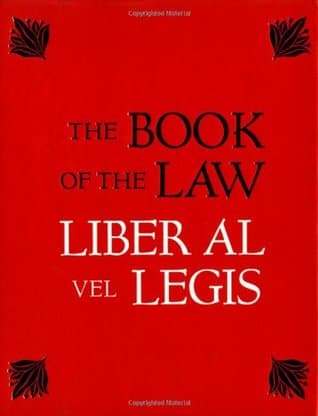
The Book of the Law cover
Archivist's Choice

The Book of the Law

Aleister Crowley (1976)

Genre

Spirituality / Philosophy

Reading Time

90 min

Key Themes

See below

Track Your Reading

Sign in to track this book

This book, allegedly dictated in Cairo, presents a spiritual manifesto. It challenges conventional morality with the decree 'Do what thou wilt,' which forms the basis for Aleister Crowley's philosophy of Thelema.

Core Idea

"The Book of the Law" describes a spiritual and philosophical system. It declares a new era—the Aeon of Horus—marked by the central idea: "Do what thou wilt shall be the whole of the Law. Love is the law, love under will." This is not a call for self-indulgence, but an instruction to find and act on one's True Will. True Will is the unique, divinely appointed purpose of each person, free from usual morality, social rules, or religious beliefs. The book states that by following True Will, people reach their best potential and help the universe. 'Love' here is the method or setting for this self-fulfillment, not the goal itself. Crowley says that old ideas of sin, pity, and weakness are outdated limits that stop personal growth and human development. Instead, the book promotes strength, self-knowledge, and the active interaction of opposing forces (like Nuit and Hadit) as necessary for creation. The text encourages using 'magick'—defined as any act that causes willed change—to achieve one's True Will. This creates a new ethical system that goes beyond conventional good and evil, focusing on personal freedom and the steady pursuit of one's unique path.
Reading time
90 min
Difficulty
Hard
✓ Read this if...
You are interested in a foundational text of modern occultism, a radical reinterpretation of spirituality, or a philosophy that prioritizes individual will and self-deification.
✗ Skip this if...
You are looking for a gentle introduction to spirituality, prefer conventional religious frameworks, or are easily offended by anti-establishment and elitist rhetoric.

Core idea

The central argument and framework that powers the entire book.

"The Book of the Law" describes a spiritual and philosophical system. It declares a new era—the Aeon of Horus—marked by the central idea: "Do what thou wilt shall be the whole of the Law. Love is the law, love under will." This is not a call for self-indulgence, but an instruction to find and act on one's True Will. True Will is the unique, divinely appointed purpose of each person, free from usual morality, social rules, or religious beliefs. The book states that by following True Will, people reach their best potential and help the universe. 'Love' here is the method or setting for this self-fulfillment, not the goal itself. Crowley says that old ideas of sin, pity, and weakness are outdated limits that stop personal growth and human development. Instead, the book promotes strength, self-knowledge, and the active interaction of opposing forces (like Nuit and Hadit) as necessary for creation. The text encourages using 'magick'—defined as any act that causes willed change—to achieve one's True Will. This creates a new ethical system that goes beyond conventional good and evil, focusing on personal freedom and the steady pursuit of one's unique path.

At a glance

Reading time

90 min

Difficulty

Hard

Read this if...

You are interested in a foundational text of modern occultism, a radical reinterpretation of spirituality, or a philosophy that prioritizes individual will and self-deification.

Skip this if...

You are looking for a gentle introduction to spirituality, prefer conventional religious frameworks, or are easily offended by anti-establishment and elitist rhetoric.

Key Takeaways

1

Thelema's Central Dogma: True Will

Beyond hedonism, 'Do what thou wilt' is a spiritual imperative to discover and enact one's unique purpose.

Quote

Do what thou wilt shall be the whole of the Law.

The core idea of Thelema, 'Do what thou wilt,' is often misunderstood as permission for unlimited self-indulgence. However, Crowley explains that 'Will' here means one's True Will—a divinely given, unique purpose within each person. This is different from selfish desires or social demands. True Will is a deep, inherent current of intent that, when found and followed, aligns the person with the universe. Finding True Will is the main spiritual practice of Thelema. It requires strict self-examination, looking inward, and often removing ...

Supporting evidence

The Book of the Law itself, particularly Chapter I, Verse 40: 'The word of Sin is Restriction.' This implies that anything hindering the expression of True Will is anathema, while its free expression is the path to liberation.

Apply this

Engage in practices of self-inquiry, meditation, and journaling to differentiate between superficial desires and deeper, intrinsic motivations. Observe patterns in one's life where genuine passion and effortless flow emerge, as these often indicate the presence of True Will. Regularly question whether actions are driven by external expectation or internal calling.

true-willthelemaliber-al
2

Love as the Method, Not the End

'Love is the law, love under will' reframes love as the energetic force facilitating the realization of True Will.

Quote

Love is the law, love under will.

While 'Do what thou wilt' sets the goal, 'Love is the law, love under will' describes the method. This is not emotional or romantic love, but a broad, active idea of unity and connection that helps fulfill True Will. It implies a dynamic, creative force—a 'lust of result' in the alchemical sense—that drives the person toward their purpose. Love, in this context, is the connecting agent, the energy that allows the person to work effectively within the universe. It is not a goal in itself. Without Will, Love can be without direction; wi...

Supporting evidence

Chapter III, Verse 57: 'Love is the law, love under will.' This concise statement, following the declaration of 'Do what thou wilt,' acts as a crucial qualifier and operational principle, emphasizing that the execution of Will must be imbued with this specific quality of love.

Apply this

Approach all endeavors related to personal growth and purpose with an attitude of passionate engagement and connection, rather than detached intellectualism or forced effort. Cultivate a sense of interconnectedness with one's work, environment, and fellow beings, allowing this 'love' to fuel focused action towards True Will.

love-under-willthelemic-loveagape
3

The Aeon of Horus: A New Spiritual Paradigm

The Book of the Law heralds a new age of individual sovereignty and self-deification, replacing older religious dogmas.

Quote

Every man and every woman is a star.

Crowley says that humanity has entered the 'Aeon of Horus,' a new spiritual time marked by individual awakening and the recognition of inner divinity in each person. This replaces the earlier Aeons of Isis (matriarchal, pagan, naturalistic) and Osiris (patriarchal, monotheistic, self-sacrificing). The Aeon of Horus focuses on courage, strength, self-reliance, and direct experience of the divine without others. The phrase 'Every man and every woman is a star' shows this change, stating that each person is a unique, self-shining entity ...

Supporting evidence

The entire structure of The Book of the Law, with its three chapters attributed to Nuit (Isis), Hadit (Osiris), and Ra-Hoor-Khuit (Horus), clearly delineates this progression of aeons. Chapter I, Verse 3, 'Every man and every woman is a star,' is a direct assertion of this new paradigm of individual divinity.

Apply this

Challenge inherited religious or societal beliefs that diminish individual power or agency. Embrace personal responsibility for one's spiritual path and seek to understand one's unique 'star-nature' through self-exploration and direct experience, rather than relying solely on external authorities.

aeon-of-horusnuithaditra-hoor-khuit
4

The Rejection of Sin and Restriction

The book redefines 'sin' as any act that impedes the discovery or expression of one's True Will.

Quote

The word of Sin is Restriction.

In a new interpretation of traditional morality, The Book of the Law states that 'Restriction' is the only 'sin.' This is not about breaking random rules, but about anything that stops a person from finding, accepting, and acting on their True Will. This includes outside demands (social rules, religious beliefs, oppressive laws) and inner limits (fear, self-doubt, false beliefs, unexamined habits). This idea frees people from guilt related to natural impulses, as long as those impulses align with their True Will. Conversely, actions u...

Supporting evidence

Chapter I, Verse 40: 'The word of Sin is Restriction.' This direct statement is unambiguous and forms a core ethical principle within Thelema.

Apply this

Identify areas in life where self-imposed or externally imposed restrictions are preventing genuine self-expression or progress towards personal goals. Actively work to dismantle these barriers, whether through behavioral changes, psychological work, or challenging external authorities.

restrictionsin-thelemaliberation
5

The Dynamic Polarity of Nuit and Hadit

Cosmic creation and individual existence arise from the interplay of infinite space (Nuit) and infinitely contracted point (Hadit).

Quote

I am Nuit; and my word is six and fifty. Divide, add, multiply, and understand.

The Book of the Law introduces Nuit and Hadit as basic cosmic ideas. Nuit is the infinite space, the starry heavens, endless possibilities, and the receptive feminine idea. She is all-encompassing, the 'body of Nu' that holds everything. Hadit, on the other hand, is the infinitely small point, the core of every star and every atom, the masculine, projective idea. He represents individual consciousness and the 'flame that burns in every heart of man, and in the core of every star.' Their joining is the source of all existence, an activ...

Supporting evidence

Chapter I (Nuit) and Chapter II (Hadit) of The Book of the Law are dedicated to expressing the nature of these two deities. Nuit's declaration in Chapter I, Verse 1, 'Had! The manifestation of Nuit,' immediately establishes their interconnectedness.

Apply this

Recognize the interplay of boundless potential (Nuit) and focused individual action (Hadit) in one's own life. Cultivate both an expansive vision and a concentrated effort towards specific goals, understanding that both are necessary for creation and manifestation.

nuithaditra-hoor-khuitcosmic-polarity
6

The Practicality of Magick

Magick is presented not as supernatural trickery, but as a scientific method for enacting change in conformity with Will.

Quote

Magick is the Science and Art of causing Change to occur in conformity with Will.

While The Book of the Law does not define 'Magick' in scientific terms, it sets the philosophical basis for Crowley's later system. It suggests that following one's True Will has strong effects on reality. Magick, in Thelema, is not about calling spirits or doing tricks. It is about the focused use of one's will to create desired results, both inside and out. It is a systematic way to change oneself and the world, using an understanding of cosmic laws and psychological principles. The 'Law of Thelema' itself is an instruction for magi...

Supporting evidence

Although the precise definition is found in 'Magick in Theory and Practice,' The Book of the Law provides the core principle in Chapter I, Verse 44: 'For I am perfect, being Not; and my number is nine. By the fools shalt thou be told apart by a name; for I will never cease. My number is 11, as all their numbers who are of us.' This mystical numerology and emphasis on the individual's inherent perfection points towards a system of self-mastery.

Apply this

Approach personal goal-setting and self-improvement with a 'magical' mindset: clearly define your True Will regarding an outcome, then apply focused intention, symbolic actions, and consistent effort. View obstacles as opportunities to refine your will, rather than insurmountable barriers.

magicktrue-will-manifestationritual
7

The Rejection of Pity and Weakness

The Book advocates for strength, courage, and a ruthless pursuit of True Will, eschewing sentimental weakness.

Quote

Pity not the fallen! I never knew them. I am not for them. I console not.

This is one of the more difficult and debated parts of The Book of the Law. It rejects 'pity' and any weakness or self-sacrifice that reduces individual strength or stops the pursuit of True Will. This is not an approval of cruelty, but a call for strong self-reliance. It also recognizes that true compassion comes from strength, not weakness. The book suggests that focusing on the 'fallen' or being too emotional takes energy away from one's own divine purpose. It is a clear reminder that the Aeon of Horus values the 'crowned and conqu...

Supporting evidence

Chapter II, Verse 18: 'Pity not the fallen! I never knew them. I am not for them. I console not.' This direct command from Hadit (the core of individuality) underscores the emphasis on individual strength and self-sufficiency.

Apply this

Cultivate inner resilience and focus on personal growth rather than becoming overly entangled in external dramas that deplete energy. Practice discerning between genuine support and enabling weakness, prioritizing actions that empower rather than merely soothe.

strengthself-reliancethelemic-ethics
8

The Nature of Ritual and Ceremony

Ritual is a tool for focusing Will and connecting with the divine, not mere superstition.

Quote

There is no law beyond Do what thou wilt.

While The Book of the Law does not detail specific rituals, its nature as a dictated text, a 'revelation,' shows the importance of sacred acts and ceremonial interactions with the divine. Crowley later created many ritual systems, but the main idea is present: rituals are not empty actions. They are highly focused acts of Will meant to align the person with their True Will and cosmic forces. They are psychological tools for self-change, creating a 'temple' where the person can consciously interact with their inner divinity and the uni...

Supporting evidence

Chapter III, Verse 37: 'Also the mantras and spells; the obeah and the wanga; the work of the wand and the work of the sword; these shall he learn and teach.' This verse explicitly mentions various magical tools and practices, indicating the practical application of the Law through ritual.

Apply this

If inclined, explore structured meditation, visualization, or personal ceremonies to deepen connection with your True Will and manifest intentions. Even daily routines can be imbued with ritualistic intention to elevate their significance and effectiveness.

ritualceremonymagical-practice
9

The Imperative of Self-Knowledge

Discovering one's True Will necessitates profound and often uncomfortable self-exploration.

Quote

For pure will, unassuaged of purpose, delivered from the lust of result, is every way perfect.

The core idea of 'Do what thou wilt' depends entirely on knowing 'what thou wilt.' This is not a passive discovery but an active, often hard, process of removing old habits, selfish desires, and social expectations to find the true, inherent purpose. This journey of self-knowledge is central to Thelema and is implied by The Book of the Law. It requires honesty, looking inward, and a willingness to face one's hidden flaws and limits. Without this deep self-awareness, 'will' can easily become mere whim or outside manipulation. The 'lust...

Supporting evidence

Chapter I, Verse 57: 'The word of Sin is Restriction.' This applies to internal restrictions (ignorance of self) as much as external ones. The constant emphasis on individual sovereignty throughout the text implicitly demands self-knowledge as its foundation.

Apply this

Engage in regular self-reflection, perhaps through journaling, shadow work, or therapy, to uncover subconscious motivations and conditioning. Practice mindfulness to observe thoughts and desires without immediate judgment, discerning between transient wants and deeper, resonant purposes.

self-knowledgeintrospectiontrue-will-discovery
10

The Beyond-Good-and-Evil Ethic

The Book of the Law transcends conventional morality, asserting that True Will is the ultimate arbiter of right action.

Quote

For I am unique & conqueror. I am not of the slaves that perish.

The ethics in The Book of the Law are like Nietzsche's, moving 'beyond good and evil' as commonly understood. Actions are not good or bad based on outside rules. They are judged by how well they align with a person's True Will. If an action truly serves one's unique purpose and does not violate the True Will of others (as 'love under will' suggests harmonious interaction), then it is 'right' for that person. This is not an excuse for nihilism, but a demand for a higher, more self-chosen morality. It rejects the 'slave morality' of obe...

Supporting evidence

Chapter III, Verse 58: 'Fear not at all; fear not men nor Fates, nor gods, nor anything. Money fear not, nor laughter of the folk, nor any other power in heaven or upon the earth or under the earth. Nu is your refuge as Hadit your light; and I am the strength, force, fire, of your own arm.' This powerful injunction to fearlessness directly challenges conventional ethical systems based on fear of punishment or divine wrath.

Apply this

Critically examine personal moral frameworks. Are they based on internalized societal norms, or do they genuinely reflect one's deepest values and purpose? Practice making decisions based on internal alignment with True Will, rather than external approval or fear of judgment, while remaining mindful of the 'love under will' principle.

beyond-good-evilthelemic-moralityslave-moralitymaster-morality

Critical analysis

Notable Quotes

Do what thou wilt shall be the whole of the Law.

The central dictate of the book, establishing the principle of Thelema.

Love is the law, love under will.

A crucial clarification of the Law, emphasizing that love must be directed by one's true will.

There is no god but man.

A radical statement asserting the divinity and autonomy of the individual.

Every man and every woman is a star.

Emphasizing the unique and divine nature of each individual.

The word of the Law is Θελημα.

Stating the Greek word for 'Will' as the essence of the Law.

The method of attaining the union is the joy of the world.

Suggesting that spiritual realization brings profound joy and fulfillment.

I am the Snake that giveth Knowledge & Delight and bright glory, and stir the hearts of men with drunkenness. To worship me take wine and strange drugs whereof I will tell my prophet, & be drunk thereof! They shall not harm ye at all. It is a lie, this folly against self. The exposure of innocence is a lie. Be strong, o man! lust, enjoy all things of sense and rapture: fear not that any God shall deny thee for this.

Nuit's message encouraging sensory experience, pleasure, and freedom from conventional morality.

For I am perfect, being not. And my number is 11, as all their numbers who are of us.

Nuit's declaration of her nature as formless perfection and association with the number 11, significant in Thelema.

Remember all ye that existence is pure joy; that all the sorrows are but as shadows; they pass & are done; but there is that which remains.

A philosophical assertion that joy is the fundamental nature of existence, despite transient sorrows.

Now, therefore, let me be known by my name Nuit, and by my secret name Hadit, and by my secret name Ra-Hoor-Khuit.

The three principal deities of Thelema are introduced and identified by their names.

Pity not the fallen! I never knew them. I am not for them. I console not: I hate the consoled and the consoler.

Hadit's stern message against pity and consolation, emphasizing self-reliance and strength.

Fear not at all; fear neither men nor Fates, nor gods nor anything. Money fear not, nor laughter of the folk, nor any other power in heaven or upon the earth or under the earth. Nu is your refuge as Hadit your light; and I am the strength, force, vigour, of your arms.

Ra-Hoor-Khuit's exhortation to overcome all fear, asserting divine protection and inner strength.

Success is thy proof: argue not; convert not; talk not overmuch! Those who are with thee, let them be with thee; those who are against thee, let them be against thee!

A pragmatic instruction for the adept, emphasizing action and results over debate or conversion.

But ye, o my people, rise up & awake! Let the rituals be rightly performed with joy & beauty!

A call to action for followers of Thelema to engage in joyous and beautiful ritual practice.

Quiz

Test Your Knowledge

Ready to see how well you understood this book? Take our interactive quiz with 10 questions.

10
Questions
~5
Minutes
?
Best Score

Key Questions (FAQ)

'The Book of the Law' is the foundational text for Aleister Crowley's philosophy and religion, Thelema. It was allegedly dictated to him in Cairo in April 1904 and contains the core principles and laws of this spiritual system.

About the author

Aleister Crowley

Aleister Crowley was a highly influential, albeit controversial, English occultist and ceremonial magician. He is most famous for authoring "The Book of the Law" (1904), the foundational text of Thelema. Crowley also wrote "The Book of Lies" (1913) and numerous other works on magic, religion, and philosophy, shaping modern occult thought.