BookBrief
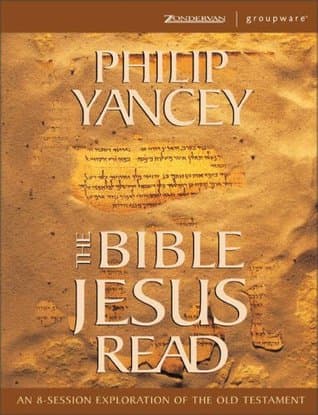
The Bible Jesus Read cover
Archivist's Choice

The Bible Jesus Read

Philip Yancey (1999)

Genre

History / Spirituality

Reading Time

4-6 hours

Key Themes

See below

Track Your Reading

Sign in to track this book

Philip Yancey explores the Old Testament to show how its ancient wisdom reveals God's nature and connects to Jesus's faith.

Core Idea

Philip Yancey examines the Old Testament through Jesus's perspective, arguing that these old texts, often seen as harsh or unimportant, shaped Jesus's understanding of God, people, and the world. He shows how books like Job, Deuteronomy, Psalms, and Ecclesiastes offer a core story of a God who deeply interacts with an imperfect world and humanity. These books provide insights into suffering, justice, love, and the search for meaning that are still relevant today. Yancey suggests that by understanding the Old Testament as Jesus did, readers can find a more complete picture of God and their own spiritual path, accepting both the good and the difficult parts of these foundational texts.
Reading time
4-6 hours
Difficulty
Medium
✓ Read this if...
You are a Christian seeking to understand the Old Testament's relevance, curious about how Jesus interacted with these scriptures, or struggling with the 'hard parts' of the Old Testament.
✗ Skip this if...
You are looking for a purely academic or critical analysis of the Old Testament, or prefer a book focused solely on New Testament theology.

Core idea

The central argument and framework that powers the entire book.

Philip Yancey examines the Old Testament through Jesus's perspective, arguing that these old texts, often seen as harsh or unimportant, shaped Jesus's understanding of God, people, and the world. He shows how books like Job, Deuteronomy, Psalms, and Ecclesiastes offer a core story of a God who deeply interacts with an imperfect world and humanity. These books provide insights into suffering, justice, love, and the search for meaning that are still relevant today. Yancey suggests that by understanding the Old Testament as Jesus did, readers can find a more complete picture of God and their own spiritual path, accepting both the good and the difficult parts of these foundational texts.

At a glance

Reading time

4-6 hours

Difficulty

Medium

Read this if...

You are a Christian seeking to understand the Old Testament's relevance, curious about how Jesus interacted with these scriptures, or struggling with the 'hard parts' of the Old Testament.

Skip this if...

You are looking for a purely academic or critical analysis of the Old Testament, or prefer a book focused solely on New Testament theology.

Key Takeaways

1

Job: Embracing Unanswerable Suffering

The Old Testament doesn't always provide easy answers, particularly in the face of profound pain.

Quote

Job's story doesn't offer a formula for suffering, but rather a profound invitation to trust God even when explanations are withheld.

The book of Job questions the simple idea, common in ancient Israel and sometimes today, that good people prosper and suffering means sin. Job, a blameless man, suffers great loss and pain, leading his friends to offer standard, unhelpful explanations. God's response to Job is not a logical reason for his suffering, but a grand show of divine power. God tells Job, in effect, 'You cannot possibly understand my ways.' This story makes readers face the mystery of suffering and the limits of human understanding. It suggests that faith is ...

Supporting evidence

The narrative arc of Job, where his friends' theological frameworks fail to comfort or explain, and God's eventual, non-explanatory speeches from the whirlwind.

Apply this

When facing personal suffering or observing the suffering of others, resist the urge to find pat theological answers. Instead, practice lament and honest questioning, recognizing that faith can coexist with unanswered questions and profound grief.
theodicymystery-of-sufferingfaith-in-doubt
2

Deuteronomy: Love as Law

God's commands are rooted in a deep love, not just arbitrary rules, for the well-being of humanity.

Quote

Deuteronomy is not just a book of laws; it's a passionate sermon from God's heart, designed to draw His people into a loving covenant.

Deuteronomy, often seen as a dry legal text, is presented by Yancey as a deep expression of God's love and desire for a good relationship with humanity. Moses's passionate speeches repeat the Law, but always in the context of God's saving history and His loyalty to His agreement. The commands—from sabbath rest to caring for the poor—are shown not as burdens, but as ways to life, justice, and community. They reflect God's character and His vision for a society built on love, fairness, and memory, making obedience an act of love in retu...

Supporting evidence

Moses's repeated exhortations to 'love the Lord your God with all your heart, soul, and might' (Deuteronomy 6:5) and the social justice laws regarding the alien, orphan, and widow.

Apply this

Approach religious or moral guidelines not as restrictive rules, but as invitations to a deeper, more loving relationship with God and others. Reflect on how specific 'laws' or principles contribute to human flourishing and justice.

covenant-theologyethics-of-lovedivine-law
3

Psalms: Unfiltered Spirituality

The Psalms provide a divinely sanctioned space for expressing every human emotion to God.

Quote

The Psalms give us permission to bring our full, messy selves before God – our joy, our anger, our fear, our doubt – without pretense.

Yancey points out the Psalms as a spiritual place where every human emotion is accepted and directed toward God. Unlike other religious texts that might focus on being calm or only positive expressions of faith, the Psalms include raw sadness, strong anger, deep doubt, and joyful praise. This collection shows that a real relationship with God includes all human experiences, even the 'negative' feelings. It teaches believers that honesty, even very direct honesty, is not a barrier to God but a way to deeper closeness. It challenges the...

Supporting evidence

Specific Psalms of lament (e.g., Psalm 22, 88), imprecation (e.g., Psalm 137), and praise (e.g., Psalm 150), showcasing a wide emotional range.

Apply this

Cultivate a spiritual practice that allows for honest expression of all emotions to God. Journal, pray, or sing without censoring your true feelings, trusting that God can handle your full humanity.

lamentemotional-honestyspiritual-authenticity
4

Ecclesiastes: The End of Earthly Wisdom

True meaning is found beyond the relentless pursuit of worldly achievements and pleasures.

Quote

Ecclesiastes strips away all our illusions about finding ultimate meaning in anything 'under the sun,' pointing us towards a different source.

The book of Ecclesiastes, with its famous line 'meaningless, meaningless, everything is meaningless,' offers a surprisingly modern critique of the human condition. The Preacher explores every possible path to meaning and satisfaction—wisdom, pleasure, wealth, hard work, power—only to conclude that all are ultimately 'meaningless' or 'vapor.' This is not about believing in nothing, but a strong argument that nothing 'under the sun' can provide ultimate fulfillment. Yancey argues that Ecclesiastes is an important 'negative space' in the...

Supporting evidence

The Preacher's exhaustive experimentation with pleasure (Ecclesiastes 2:1-11), wisdom (Ecclesiastes 1:16-18), and labor (Ecclesiastes 2:18-23), consistently concluding 'it was all meaningless, a chasing after the wind.'

Apply this

Regularly evaluate your pursuits and investments of time and energy. Ask whether they offer lasting meaning or merely temporary satisfaction. Prioritize activities and relationships that connect you to transcendent purpose and community, rather than solely material or status-driven goals.

existentialismmeaninglessnesstranscendent-purpose
5

The Prophets: God Talks Back (and Confronts)

Prophetic messages are not just predictions, but urgent calls to justice, repentance, and relational faithfulness.

Quote

The prophets were God's passionate, often exasperated, spokespersons, holding up a mirror to a society that had lost its way.

The prophetic books are often misunderstood as mainly predicting the future. Yancey stresses their main role as 'forth-telling'—delivering God's message to people at that time. The prophets constantly exposed social injustice, idol worship, and spiritual indifference, calling Israel back to its agreement with God. Their messages were uncomfortable, challenging the existing situation and often met with resistance. They show a God who is deeply involved in human matters, especially in justice for the disadvantaged, and who demands real,...

Supporting evidence

Isaiah's condemnation of empty religious rituals without justice (Isaiah 1:10-17), Amos's cry for justice to 'roll on like a river' (Amos 5:24), and Jeremiah's sorrow over Israel's unfaithfulness.

Apply this

Actively listen for prophetic voices in your own time that challenge societal norms, expose injustice, and call for ethical living. Cultivate a sensitivity to issues of justice and compassion, and consider how your actions align with God's desire for a just world.

social-justicerepentancedivine-righteousness
6

The Old Testament is Jesus's Foundation

Understanding Jesus requires a deep appreciation for the Hebrew Scriptures he lived and taught from.

Quote

Jesus didn't invent a new religion; he fulfilled and radically reinterpreted the one found in the pages of the Old Testament.

Yancey's main idea is that Jesus knew the Old Testament well and often referred to it. He argues that to truly understand Jesus's teachings, his identity, and his mission, one must understand the biblical context from which he came. Jesus's understanding of God, humanity, sin, and salvation was shaped by the Law, the Prophets, and the Writings. His stories, his arguments with religious leaders, and even his suffering on the cross are made clearer by the rich detail of the Hebrew Scriptures. This point emphasizes that the Old Testament...

Supporting evidence

Jesus's frequent quotes from the Old Testament (e.g., 'Love the Lord your God...' from Deuteronomy, 'Man shall not live on bread alone...' from Deuteronomy), and his explanation to the disciples on the road to Emmaus about how 'all the Scriptures' pointed to him (Luke 24).

Apply this

Commit to regular study of the Old Testament, seeking connections to Jesus's life and teachings. When reading the New Testament, consciously look for the Old Testament echoes and foundations to deepen your understanding.

biblical-theologychristologycovenant-continuity
7

A God Who Engages with Imperfection

The Old Testament reveals a God who works through flawed people and challenging circumstances.

Quote

The God of the Old Testament is not afraid of human brokenness; in fact, He often chooses to work most powerfully within it.

Unlike stories that show perfect heroes, the Old Testament is very honest about the faults of its main figures—from Abraham's lies to Moses's anger to David's adultery. Yancey highlights that God consistently chooses to work with imperfect people and allows them to make mistakes. This shows His grace, patience, and strong commitment to His agreement. This view challenges any idea of a distant, cold God. Instead, it presents a God who is deeply involved in the messy parts of human history, saving and changing even the hardest situation...

Supporting evidence

The stories of Jacob's trickery, David's sin with Bathsheba, and Peter's denial of Jesus (as a New Testament parallel, but reflecting the same principle of working through flawed individuals).

Apply this

Embrace your own imperfections and those of others, recognizing that God's power is often made perfect in weakness. Extend grace to yourself and others, focusing on growth and transformation rather than condemnation.

divine-gracehuman-fallibilityredemption
8

The Old Testament's Enduring Relevance

Far from being obsolete, the Hebrew Scriptures offer timeless insights into human nature and God's character.

Quote

The questions and struggles of the Old Testament are not ancient relics; they are the perennial human questions that still echo in our modern souls.

Yancey makes a strong case against the common wrong idea that the Old Testament is irrelevant or replaced by the New. He shows how its stories, poetry, and laws deal with common human experiences: suffering, justice, love, community, and the search for meaning. The psychological depth of Job, the emotional honesty of the Psalms, the existential worry of Ecclesiastes, and the call to justice from the Prophets connect deeply with today's readers. By engaging with these old texts, we gain a deeper understanding of God's consistent nature...

Supporting evidence

The continued popularity and study of books like Job and Ecclesiastes in modern philosophical and theological discourse, and the application of prophetic calls for justice in contemporary social movements.

Apply this

Make a conscious effort to engage with the Old Testament regularly, seeking out its wisdom and relevance for your personal life and the world around you. Don't dismiss it as 'old' or 'difficult' but approach it as a rich source of divine revelation.

biblical-relevancetimeless-wisdomspiritual-formation
9

Facing the 'Hard Parts' of Scripture

The Old Testament's challenging passages are opportunities for deeper theological reflection, not reasons to dismiss it.

Quote

Instead of avoiding the difficult parts of the Bible, we should lean into them, allowing them to stretch our understanding of God.

Yancey does not avoid the difficult parts of the Old Testament—the violence, the seemingly harsh laws, the apparent contradictions. He encourages readers to face these 'hard parts' honestly instead of ignoring them. He suggests that these passages, though uncomfortable, are important for developing a clear understanding of God's character, human history, and the progress of revelation. They challenge simple interpretations and invite deeper theological thought. They often reveal God's justice, patience, and ultimate plan for salvation...

Supporting evidence

Discussions around the 'holy war' passages, the imprecatory psalms, or the seemingly legalistic demands, which Yancey often contextualizes historically and theologically.

Apply this

When encountering difficult or confusing passages in scripture, resist the urge to ignore them. Instead, engage in careful study, seek out diverse interpretations, and allow these challenges to refine your understanding of God and faith.

biblical-criticismtheological-wrestlingprogressive-revelation
10

The Old Testament as a Story of Relationship

Above all, the Old Testament chronicles God's persistent desire for a loving, covenantal relationship with humanity.

Quote

From creation to the prophets, the Old Testament is one grand, unfolding narrative of God reaching out to His people.

Ultimately, Yancey presents the entire Old Testament not as separate stories, laws, and poems, but as a continuous story of God's constant desire for a relationship with humanity. Despite human rebellion, failure, and forgetfulness, God consistently starts, renews, and keeps His agreement. This main idea connects the different books, showing a God who is faithful, patient, and very personal. It ends with the expectation of a Messiah who would fully embody and complete this divine longing for closeness, setting the stage for the New Te...

Supporting evidence

The recurring themes of covenant (with Abraham, Moses, David), God's presence (Tabernacle, Temple), and the prophets' calls for Israel to return to their 'first love.'

Apply this

View your own life story as part of this larger narrative of God's relational pursuit. Actively seek to deepen your personal relationship with God, recognizing His consistent faithfulness and desire for intimacy with you.

covenantdivine-lovepersonal-relationship-with-God

Critical analysis

Notable Quotes

The Old Testament is not a book of rules, but a book of relationships.

Yancey's overarching theme about the nature of the Old Testament.

Jesus didn't come to abolish the law, but to fulfill it. And in fulfilling it, he showed us its true intent: love.

Interpreting Jesus' view on the Mosaic Law and its ultimate purpose.

Grace is not opposed to effort, it is opposed to earning. Earning is an attitude. Grace is a gift.

Explaining the distinction between effort and earning in the context of grace.

The prophets were not fortune-tellers, but forth-tellers. They spoke God's truth to their generation.

Clarifying the role and function of the Old Testament prophets.

Doubt is not the enemy of faith; certainty is.

Discussing the role of doubt in a spiritual journey.

The Bible is not a textbook on science or history, but a book about God and humanity's relationship with Him.

Defining the primary purpose and scope of the biblical text.

Suffering is not a punishment, but an opportunity for God's grace to be revealed.

Reflecting on the theological meaning and purpose of suffering.

The Psalms give us permission to feel, to rage, to lament, and to praise, all before God.

Highlighting the emotional honesty and breadth of expression found in the Psalms.

Reading the Old Testament through the lens of Jesus transforms it from a dusty ancient text into a living word.

Emphasizing the importance of a Christocentric reading of the Old Testament.

God's justice is not merely punitive; it is restorative.

Exploring the nature of divine justice as depicted in scripture.

The wilderness experiences in the Bible are not detours, but essential parts of the journey.

Considering the spiritual significance of periods of struggle and barrenness.

To understand Jesus, we must understand the spiritual world in which he lived and breathed—the world of the Hebrew Scriptures.

Stressing the foundational importance of the Old Testament for comprehending Jesus.

The covenant is not a contract based on performance, but a relationship based on promise.

Distinguishing between a legal contract and the biblical concept of covenant.

Humility is not thinking less of yourself, but thinking of yourself less.

A common Yancey quote, often applied to biblical teachings on humility.

Quiz

Test Your Knowledge

Ready to see how well you understood this book? Take our interactive quiz with 10 questions.

10
Questions
~5
Minutes
?
Best Score

Key Questions (FAQ)

'The Bible Jesus Read' explores the Old Testament through the lens of how Jesus himself would have understood and engaged with these ancient texts. Philip Yancey guides readers through key sections like Job, Deuteronomy, Psalms, Ecclesiastes, and the Prophets, illuminating their relevance for contemporary faith.

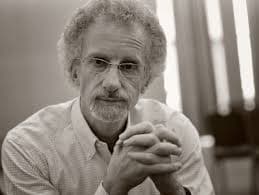
About the author