BookBrief
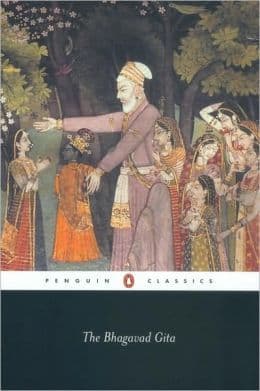
The Bhagavad Gita cover
Archivist's Choice

The Bhagavad Gita

Krishna-Dwaipayana Vyasa (2003)

Genre

History / Spirituality / Philosophy

Reading Time

160 min

Key Themes

See below

Track Your Reading

Sign in to track this book

During a battle, a divine charioteer reveals cosmic truths about duty, devotion, and self-realization to a conflicted warrior, guiding him from despair to enlightened action.

Core Idea

The Bhagavad Gita is a philosophical dialogue between Krishna and Arjuna on the battlefield. It addresses the human conflict between duty and personal desire, exploring the nature of existence. The text discusses various paths to spiritual freedom, stressing the importance of performing duties without attachment to outcomes (karma yoga), understanding the eternal self (Atman), and cultivating devotion (bhakti yoga). These practices lead to inner peace, self-realization, and unity with the Divine. The Gita argues that true freedom comes from letting go of egoistic desires and aligning actions with universal truth.
Reading time
160 min
Difficulty
Medium
✓ Read this if...
You are seeking ancient wisdom on duty, ethics, spiritual paths, self-mastery, or a foundational text in Hindu philosophy and spirituality. It is particularly useful for those grappling with moral dilemmas, the purpose of action, or the nature of the self.
✗ Skip this if...
You prefer modern self-help books with actionable steps, are looking for a light read, or have no interest in philosophical or spiritual inquiry from an Eastern perspective. The text can be dense and requires contemplation.

Core idea

The central argument and framework that powers the entire book.

The Bhagavad Gita is a philosophical dialogue between Krishna and Arjuna on the battlefield. It addresses the human conflict between duty and personal desire, exploring the nature of existence. The text discusses various paths to spiritual freedom, stressing the importance of performing duties without attachment to outcomes (karma yoga), understanding the eternal self (Atman), and cultivating devotion (bhakti yoga). These practices lead to inner peace, self-realization, and unity with the Divine. The Gita argues that true freedom comes from letting go of egoistic desires and aligning actions with universal truth.

At a glance

Reading time

160 min

Difficulty

Medium

Read this if...

You are seeking ancient wisdom on duty, ethics, spiritual paths, self-mastery, or a foundational text in Hindu philosophy and spirituality. It is particularly useful for those grappling with moral dilemmas, the purpose of action, or the nature of the self.

Skip this if...

You prefer modern self-help books with actionable steps, are looking for a light read, or have no interest in philosophical or spiritual inquiry from an Eastern perspective. The text can be dense and requires contemplation.

Key Takeaways

1

Action Without Attachment

Perform your duty without craving the fruits of your labor.

Quote

You have a right to perform your prescribed duties, but you are not entitled to the fruits of your actions. Never consider yourself to be the cause of the results of your activities, nor be attached to inaction.

Karma Yoga, a central teaching of the Bhagavad Gita, is about acting without attachment. Arjuna, facing the dilemma of fighting his relatives, is told to perform his warrior duty (Dharma) without caring about the outcome—victory or defeat. This means focusing on the action itself, aligned with one's duty, rather than personal gain or loss. Desiring specific results clouds judgment and ties one to the cycle of karma. By letting go of the need for particular outcomes, one can act with more clarity, efficiency, and inner peace, turning w...

Supporting evidence

Krishna's counsel to Arjuna before the battle of Kurukshetra, specifically addressing Arjuna's reluctance to fight due to the potential consequences and his attachment to his relatives.

Apply this

When undertaking a task, whether at work or in personal life, consciously set aside expectations for specific outcomes. Focus entirely on the quality and integrity of your effort. For instance, when working on a project, dedicate yourself fully to the process without constantly worrying about promotions or praise. This cultivates resilience and reduces stress from external validation.


karma-yogadharmadetachment
2

The Nature of the Self (Atman)

Understand your true, eternal, and unchanging essence beyond the temporary body.

Quote

For the soul there is never birth nor death. Nor, having once been, does he ever cease to be. He is unborn, eternal, ever-existing, undying and primeval. He is not slain when the body is slain.

One of the Gita's deepest philosophical insights is the difference between the temporary body and the eternal soul (Atman). Krishna tells Arjuna that grieving for the dead is misguided because the soul is immortal, simply shedding old bodies like worn-out clothes. This idea changes how one views life, death, suffering, and joy. It emphasizes that our true identity is not our physical form, social roles, or possessions, but an indestructible, divine spark within. Recognizing this truth frees one from the fear of death and the pain of l...

Supporting evidence

Krishna's explanation to Arjuna about the impermanence of the body and the permanence of the soul in Chapter 2, when Arjuna is lamenting the potential death of his relatives.

Apply this

When facing loss, illness, or the aging process, remind yourself of the distinction between your temporary physical form and your eternal consciousness. Practice mindfulness to observe thoughts and emotions without identifying with them, reinforcing the idea that you are the observer, not the fleeting experience. This can foster a profound sense of inner stability.

atmanbrahmanreincarnationsamsara
3

The Path of Devotion (Bhakti Yoga)

Cultivate unwavering love and surrender to the Divine as a direct route to liberation.

Quote

Always think of Me, become My devotee, worship Me and offer your homage unto Me. Thus you will come to Me without fail. I promise you this because you are My very dear friend.

Bhakti Yoga, the path of loving devotion, is shown as a powerful way to spiritual realization. Krishna says that sincere devotion, regardless of one's social status or intelligence, can lead directly to unity with the Divine. This path involves constant remembrance of God, offering all actions and their results to Him, and cultivating surrender. It is not blind faith but a deep, heartfelt connection that goes beyond ritual. Bhakti turns everyday activities into worship, purifying the heart and dissolving the ego, eventually leading to...

Supporting evidence

Krishna's personal assurances to Arjuna, particularly in Chapters 9 and 12, where he outlines the ease and efficacy of devotion for all beings.

Apply this

Integrate small acts of devotion into your daily life. This could be dedicating your work to a higher purpose, expressing gratitude, or engaging in prayer or meditation focused on love for the divine. Instead of seeing spiritual practice as a separate activity, infuse your everyday actions with a spirit of offering and surrender.

bhakti-yogadevotionsurrendermoksha
4

The Three Gunas and Their Influence

Understand the qualities of nature (Sattva, Rajas, Tamas) that shape perception and action.

Quote

Sattva, Rajas, and Tamas — these three modes, O mighty-armed, born of Prakriti, bind fast the embodied, immutable soul in the body.

The Bhagavad Gita introduces the three Gunas—Sattva (goodness, clarity), Rajas (passion, activity), and Tamas (ignorance, inertia)—as fundamental qualities of material nature (Prakriti) that influence all beings. These Gunas are not moral judgments but inherent tendencies that shape our thoughts, emotions, and actions. Understanding their interaction helps one see the motivations behind one's own behavior and that of others. The goal is not to remove them entirely, as they are part of creation, but to rise above their influence, espec...

Supporting evidence

Krishna's detailed description of the Gunas and their effects on individuals in Chapter 14, explaining how they bind the soul.

Apply this

Observe your dominant Guna in different situations. If you find yourself procrastinating (Tamas) or overly agitated (Rajas), consciously choose activities or thoughts that cultivate Sattva, such as meditation, healthy eating, or purposeful work. For example, if feeling lethargic, avoid stimulating but ultimately depleting activities and instead opt for a quiet walk or mindful breathwork.

sattvarajastamasprakriti
5

The Importance of Self-Control

Mastering the senses and the mind is essential for spiritual progress and inner peace.

Quote

The mind is restless, turbulent, obstinate and very strong, O Krishna, and to subdue it, I think, is more difficult than controlling the wind.

Arjuna himself speaks of the universal difficulty of controlling an unruly mind. Krishna acknowledges this challenge but states that through consistent practice (Abhyasa) and detachment (Vairagya), the mind can be disciplined. Self-control is not suppression but intelligently directing one's energy away from temporary pleasures toward higher goals. An uncontrolled mind acts as an enemy, causing delusion and suffering, while a disciplined mind becomes one's greatest ally, helping with concentration, clarity, and inner wisdom. This mast...

Supporting evidence

Arjuna's lament about the difficulty of controlling the mind in Chapter 6, and Krishna's subsequent teaching on the practice of yoga and detachment.

Apply this

Implement daily practices that cultivate self-control, such as mindful eating (slowing down, savoring), conscious breathing exercises, or setting small, achievable goals for delayed gratification. When tempted by distractions, pause and ask if the action aligns with your long-term well-being or merely a fleeting desire.

abhyasavairagyamindfulnesssenses
6

Yoga as Union and Discipline

Yoga is not just postures, but a holistic path to unite the individual self with the Divine.

Quote

When the mind, intellect, and self are controlled, free from desire, he is called a Yogi who is united with the Supreme.

The Gita defines 'Yoga' broadly: a discipline and a way to unite with the Supreme. It includes various paths—Karma Yoga (action), Bhakti Yoga (devotion), Jnana Yoga (knowledge), and Dhyana Yoga (meditation)—all leading to the same goal. It is a system for integrating the body, mind, and spirit, meant to purify the individual and reveal their true nature. The text describes meditation practices, including posture, breath control, and sense withdrawal, stressing consistency and a calm environment. Yoga is presented as a balanced lifesty...

Supporting evidence

The detailed instructions on meditation and the qualities of a yogi in Chapter 6, along with the overarching framework of different yoga paths throughout the text.

Apply this

Beyond physical postures, integrate aspects of yoga into your daily routine. Practice mindful breathing for a few minutes each day. Before starting a task, set an intention to perform it with focus and dedication (Karma Yoga). Take time for self-reflection to understand your true motivations (Jnana Yoga).

yogameditationdhyana-yogabalance
7

The Universal Form of God (Vishvarupa)

Witnessing the cosmic manifestation of the Divine inspires awe, humility, and surrender.

Quote

If hundreds of thousands of suns were to rise simultaneously in the sky, their effulgence might resemble the effulgence of the Supreme Person in that universal form.

The climax of the Bhagavad Gita is Krishna's revelation of His Vishvarupa, His terrifying and magnificent universal form, to Arjuna. This vision is a spiritual experience that breaks Arjuna's limited human view, forcing him to face the infinite nature of God. It shows that God is not just a personal deity but the source and destroyer of all creation, both beautiful and terrifying, encompassing all time and space. Seeing this form brings both awe and terror, leading Arjuna to complete surrender and a deeper understanding of Krishna's d...

Supporting evidence

Arjuna's vision of Krishna's universal form in Chapter 11, his subsequent awe, fear, and plea for Krishna to return to his human form.

Apply this

Cultivate a sense of wonder and humility by contemplating the vastness of the universe and the intricate interconnectedness of life. Engage in practices that help you feel connected to something larger than yourself, whether through nature, art, or spiritual contemplation. This can shift perspective from self-centeredness to universal awareness.

vishvarupacosmic-formdivine-revelationomnipresence
8

The Path of Knowledge (Jnana Yoga)

Seek wisdom through discernment and understanding the ultimate truth of reality.

Quote

Just as a blazing fire turns firewood to ashes, O Arjuna, so does the fire of knowledge burn to ashes all reactions of material activities.

Jnana Yoga, the path of knowledge, emphasizes intellectual inquiry and spiritual discernment to understand ultimate truth. It involves seeing the difference between the eternal self (Atman) and the perishable material world (Prakriti). Through study, reflection, and meditation, the practitioner seeks to remove ignorance (avidya) that hides this truth. This path is not just academic; it requires deep contemplation and direct experience to move past intellectual understanding and gain intuitive wisdom. The fire of knowledge burns away k...

Supporting evidence

Krishna's teachings on the nature of reality, the soul, and the importance of wisdom in Chapters 2, 4, and 13.

Apply this

Engage in regular self-inquiry. Ask 'Who am I?' beyond your roles and possessions. Read philosophical or spiritual texts and reflect deeply on their meanings. Practice discernment in your daily life, questioning assumptions and seeking to understand the underlying truths behind situations rather than just reacting to appearances.

jnana-yogaavidyawisdomdiscrimination
9

The Qualities of a Wise Person (Stitha-Pragya)

Cultivate equanimity, inner peace, and freedom from desire and fear.

Quote

He whose mind is undisturbed amidst sorrows, who is free from longing for pleasures, and who is free from attachment, fear, and anger, is called a sage of steady mind.

The Gita describes the characteristics of a 'Stitha-Pragya' or a person of steady wisdom—an ideal state. Such a person is not affected by life's opposites, remaining calm in pleasure and pain, honor and dishonor, gain and loss. They have mastered their senses, withdrawn their mind from outside distractions, and are content within themselves. This state comes from consistent spiritual practice and a deep understanding of the self. A wise person acts without personal motive, their actions driven by duty and compassion, not by the desire...

Supporting evidence

Krishna's detailed description of the 'Stitha-Pragya' in Chapter 2, outlining the characteristics of a self-realized person.

Apply this

Practice observing your reactions to life's ups and downs without judgment. When faced with a difficult situation or a pleasant surprise, consciously try to maintain an inner equilibrium. Develop the habit of pausing before reacting, allowing your intellect to guide your response rather than impulsive emotions.

stitha-pragyaequanimityinner-peacedetachment
10

The Path of Renunciation (Sannyasa)

True renunciation is not the abandonment of action, but of the desire for its fruits.

Quote

Renunciation and the performance of action without desire for results both lead to the supreme goal, but of the two, the performance of action in devotion is superior to the renunciation of action.

The Gita clarifies that true renunciation (Sannyasa) is not about physically abandoning duties or leaving the world, but about letting go of the desire for the results of one's actions. It is a mental state of non-attachment, not a physical act of doing nothing. While complete renunciation of all worldly duties might suit a few, for most, Karma Yoga (action without attachment) is presented as a more practical and equally effective path. The text distinguishes between giving up actions and giving up attachment to their results, emphasi...

Supporting evidence

Krishna's discussion on the nature of Sannyasa and Tyaga (renunciation of the fruits of action) in Chapter 18, clarifying the difference between true and false renunciation.

Apply this

Examine your motivations before undertaking tasks. Are you acting purely for personal gain, or can you infuse your efforts with a sense of duty, service, or higher purpose? Instead of quitting a challenging job, for example, consider how you can perform your duties with less attachment to outcomes and more focus on the quality of your contribution.

sannyasatyaganon-attachmentkarma-yoga

Critical analysis

Notable Quotes

You have the right to work, but never to the fruit of work. You should never engage in action for the sake of reward, nor should you ever cease to act.

Krishna advises Arjuna on the nature of action and detachment in Karma Yoga.

For the uncontrolled, there is no divine wisdom, nor meditation, nor peace. For him who has no peace, how can there be happiness?

Krishna emphasizes the importance of self-control for achieving inner peace and happiness.

Verily, there is no purifier in this world like knowledge. He who is perfected in Yoga finds it in the self in due course of time.

Krishna speaks about the purifying power of true knowledge, attained through spiritual practice.

The mind is restless, turbulent, obstinate and very strong, O Krishna, and to subdue it, I think, is more difficult than controlling the wind.

Arjuna expresses his difficulty in controlling the mind, a common human struggle.

That man who sees Me everywhere and sees everything in Me, to him I am never lost, nor is he ever lost to Me.

Krishna describes the state of a devotee who perceives the divine in all aspects of existence.

Better indeed is knowledge than mechanical practice. Better than knowledge is meditation. But better than meditation is renunciation of the fruit of action, for peace immediately follows such renunciation.

Krishna outlines a hierarchy of spiritual practices, culminating in selfless action.

The soul is never born nor dies. Nor once having been, does he ever cease to be. He is unborn, eternal, ever-existing, undying and primeval. He is not slain when the body is slain.

Krishna explains the eternal and indestructible nature of the soul to console Arjuna about death.

When a man abandons all desires that arise in the mind, O Partha, and is content in the Self alone, then he is said to be a man of steady wisdom.

Krishna defines the characteristics of a person with steady wisdom (sthitaprajna).

Whatever a great man does, that alone common men follow. Whatever he sets up as a standard, that the world pursues.

Krishna explains the influence of leaders and the importance of their actions as examples.

The deluded, when they depart from the body, or dwell in it, or experience, or are united with qualities, do not see Me. But those who possess the eye of knowledge see Me.

Krishna speaks about the inability of the unenlightened to perceive the divine reality.

He who sees inaction in action, and action in inaction, he is wise among men, he is a Yogi, and he is the doer of all actions.

Krishna describes the profound understanding of a Yogi who transcends dualities of action and inaction.

There is nothing, either moving or unmoving, that can exist without Me.

Krishna reveals his all-pervasive nature as the ultimate reality.

Fix your mind on Me, be devoted to Me, worship Me, and bow down to Me. You will come to Me alone. I promise you, for you are dear to Me.

Krishna offers a direct path to liberation through devotion to him.

Yoga is skill in action.

A concise definition of Yoga emphasizing efficiency and right conduct in all activities.

Quiz

Test Your Knowledge

Ready to see how well you understood this book? Take our interactive quiz with 10 questions.

10
Questions
~5
Minutes
?
Best Score

Key Questions (FAQ)

The central message of the Bhagavad Gita revolves around the importance of selfless action (karma yoga), devotion to God (bhakti yoga), and the pursuit of knowledge (jnana yoga) as paths to spiritual liberation. It emphasizes performing one's duty without attachment to the results, understanding the transient nature of the material world, and recognizing the eternal soul within.

About the author