BookBrief
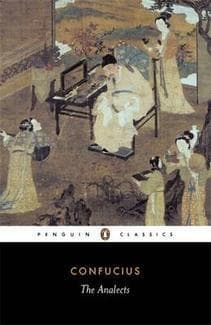
The Analects cover
Archivist's Choice

The Analects

Confucius

Genre

History / Spirituality / Philosophy

Reading Time

240 min

Key Themes

See below

Track Your Reading

Sign in to track this book

Confucius challenges us to pursue moral perfection, not for reward, but because the Way is its own recompense.

Core Idea

The Analects presents a philosophy focused on building moral character and a harmonious society through ethical behavior. Confucius argues that true human flourishing (Ren) comes from a lifelong commitment to learning, self-mastery, and following Li (ritual propriety), which guides social interaction and respect. He states that governance should rely on moral example, not force. Leaders should embody virtue to inspire their subjects, creating a stable, just society rooted in filial piety, loyalty, and understanding one's community role.
Reading time
240 min
Difficulty
Medium
✓ Read this if...
You are interested in ancient Chinese philosophy, ethical leadership, personal virtue, or the foundational texts of East Asian thought.
✗ Skip this if...
You are looking for a linear narrative, a systematic philosophical treatise with extensive argumentation, or a text focused on individualistic achievement over social harmony.

Core idea

The central argument and framework that powers the entire book.

The Analects presents a philosophy focused on building moral character and a harmonious society through ethical behavior. Confucius argues that true human flourishing (Ren) comes from a lifelong commitment to learning, self-mastery, and following Li (ritual propriety), which guides social interaction and respect. He states that governance should rely on moral example, not force. Leaders should embody virtue to inspire their subjects, creating a stable, just society rooted in filial piety, loyalty, and understanding one's community role.

At a glance

Reading time

240 min

Difficulty

Medium

Read this if...

You are interested in ancient Chinese philosophy, ethical leadership, personal virtue, or the foundational texts of East Asian thought.

Skip this if...

You are looking for a linear narrative, a systematic philosophical treatise with extensive argumentation, or a text focused on individualistic achievement over social harmony.

Key Takeaways

1

Cultivating Ren (Benevolence)

The cornerstone of moral character and societal harmony.

Quote

The Master said, 'It is Ren to master oneself and return to ritual propriety. If for a single day one can master oneself and return to ritual propriety, all under Heaven will return to Ren.'

Confucius places 'Ren' (benevolence, humaneness, or authoritative conduct) at the center of his ethical system. It is an active, cultivated state of being shown through actions and interactions. Ren involves empathy, compassion, and understanding one's connection to others. It is the ability to 'love others' and treat them as one wishes to be treated. Achieving Ren is a lifelong effort, needing constant self-reflection and adherence to ritual propriety, which expresses and reinforces inner virtue. Without Ren, rituals are empty, and g...

Supporting evidence

Many passages emphasize Ren, such as 'Is Ren really far away? As soon as I want Ren, Ren is here.' This implies Ren is not an external goal but an inherent potential within each individual, waiting to be actualized through conscious effort.

Apply this

Practice empathy daily. Before acting, consider how your words and deeds will impact others. Engage in 'do not do to others what you would not want done to yourself.' Actively seek to understand perspectives different from your own and respond with compassion, even when challenging.

renbenevolencemoral-character
2

The Power of Li (Ritual Propriety)

Structured conduct as a path to inner virtue and social order.

Quote

The Master said, 'If one is not respectful in office, not careful in mourning, and not generous in sacrifice, how can I bear to look on?'

Li, or ritual propriety, is more than just etiquette or ceremony for Confucius. It includes all proper conduct, from state rituals to daily interactions, and is the external sign of inner virtue. Li gives a framework for human behavior, guiding individuals to act with respect, humility, and appropriateness. By following Li, people show their moral cultivation and help maintain social harmony. Through consistent practice of Li, one trains their will and refines their character, making virtue a habit.

Supporting evidence

Confucius stresses the importance of performing rituals with genuine feeling, not just mechanically. He criticizes those who 'perform the rites without reverence.' This shows that Li is not just about external form but also about the internal attitude that accompanies it.

Apply this

Consciously practice respectful interactions in all aspects of life – listening attentively, speaking courteously, and observing social norms. Recognize that small acts of politeness and consideration contribute to a more harmonious environment. Treat every interaction as an opportunity to practice self-control and respect.

liritual-proprietysocial-order
3

The Junzi (Noble Person)

The ideal individual who embodies virtue and inspires others.

Quote

The Master said, 'The Junzi is concerned with the Way, not with his livelihood.'

The Junzi, or 'noble person,' is Confucius's ideal human. This is not a birthright but a status earned through moral self-cultivation. The Junzi is known for their commitment to Ren, their understanding and practice of Li, their pursuit of knowledge, and their integrity. Unlike the 'petty person' driven by self-interest, the Junzi focuses on moral principles and others' well-being. They are humble yet firm, adaptable yet principled, and their virtuous conduct inspires those around them. The path to becoming a Junzi is demanding, requi...

Supporting evidence

Confucius frequently contrasts the Junzi with the 'xiaoren' (petty person), noting, for example, that 'The Junzi understands what is moral. The petty person understands what is profitable.' This highlights the Junzi's prioritization of virtue over personal gain.

Apply this

Strive for continuous self-improvement, focusing on character development over material success. Take responsibility for your actions and their impact. Seek knowledge and wisdom not just for personal gain, but to better serve others and uphold moral principles. Act with integrity even when it's difficult.

junzinoble-personself-cultivation
4

The Rectification of Names

Ensuring words align with reality to maintain social order.

Quote

The Master said, 'If names are not correct, language is not in accordance with the truth of things. If language is not in accordance with the truth of things, affairs cannot be carried on to success.'

The 'rectification of names' is a key concept for Confucius, stressing that language must accurately reflect reality and individuals must fulfill their roles. If a 'ruler' is not just, or a 'father' is not paternal, their names are not rectified, and society declines. This is a call for moral accountability. When names are correct, and people act according to their roles, communication is clear, expectations are met, and social order is maintained. It shows that clear definitions and moral performance are essential for a working socie...

Supporting evidence

When asked what he would do first if he were in charge of a state, Confucius famously replied, 'The rectification of names!' This highlights its fundamental importance to good governance and social stability.

Apply this

Be precise and honest in your communication. Ensure your actions align with your titles and responsibilities (e.g., if you are a leader, lead; if you are a friend, be supportive). Call out discrepancies between words and deeds, not to criticize, but to encourage integrity and clarity.

rectification-of-nameslanguagesocial-order
5

Filial Piety (Xiao)

The foundational virtue of respect and care for family.

Quote

The Master said, 'While his parents are alive, a son should not travel far; if he travels, he must have a fixed direction.'

Filial piety, or 'Xiao,' is the foundation of all other virtues. It is the deep respect, care, and obedience children owe to their parents and elders. This virtue includes emotional support, honoring their memory, and upholding the family name through one's own good conduct. By mastering filial piety within the family, individuals learn fundamental principles of respect, hierarchy, and responsibility, which then extend to wider society. A person who is not filial is unlikely to be benevolent or loyal in other relationships, making Xia...

Supporting evidence

Confucius states that 'Filial piety and fraternal submission are the root of Ren.' This explicitly links family virtues to the supreme virtue of benevolence, showing its foundational role.

Apply this

Regularly express gratitude and respect to your parents and elders. Offer practical and emotional support as needed. Strive to live a life that would make them proud, embodying the values they instilled. Prioritize family relationships and maintain open communication.

filial-pietyxiaofamily-values
6

Learning and Self-Improvement

A continuous, joyful pursuit of knowledge and moral refinement.

Quote

The Master said, 'To learn and at due times to repeat what one has learned, is that not also a pleasure?'

Confucius emphasizes learning not as a means to an end, like status or wealth, but as a lifelong, rewarding process of self-cultivation. True learning involves both gaining knowledge and internalizing it through reflection and practice. It is about 'studying broadly and holding fast to purpose,' engaging with diverse ideas while keeping a clear moral compass. The joy in learning comes from continuously refining one's character and understanding how knowledge deepens one's ability to act virtuously. This process is never finished; Conf...

Supporting evidence

Confucius frequently lamented his own perceived shortcomings in learning and virtue, stating, 'I am not someone who was born with knowledge. I am someone who loves antiquity and is diligent in seeking it.' This highlights the continuous nature of his own learning journey.

Apply this

Embrace a growth mindset. Dedicate time to reading, reflecting, and discussing ideas. Seek out opportunities to learn new skills or deepen existing knowledge, not just for professional advancement, but for personal enrichment and moral growth. Don't be afraid to admit what you don't know.

learningself-improvementknowledge
7

Governance by Moral Example

Leaders inspire virtue through personal conduct, not coercion.

Quote

The Master said, 'Lead them by means of regulations and keep order among them by means of punishments, and the people will evade them and will have no sense of shame. Lead them by means of virtue and keep order among them by means of ritual, and they will have a sense of shame and moreover will become upright.'

Confucius differs from purely legalistic or authoritarian views of governance. He argues that effective leadership comes from the ruler's moral integrity. A virtuous ruler, embodying Ren and observing Li, will inspire subjects to follow their example, leading to a harmonious society. Coercion and punishment, though sometimes needed, only create outward compliance without fostering inner moral development. True governance is a form of moral education, where the ruler acts as a moral example, teaching a sense of shame and propriety amon...

Supporting evidence

Confucius stated, 'If a ruler himself is upright, all will go well even without his giving orders. But if he himself is not upright, even though he gives orders, they will not be obeyed.' This directly links a ruler's personal virtue to their effectiveness.

Apply this

If in a position of leadership, focus on embodying the values you wish to see in your team or community. Lead by example, demonstrating integrity, fairness, and compassion. Foster a culture where moral conduct is valued and encouraged, rather than relying solely on rules and sanctions.

governancemoral-leadershipvirtue
8

The Importance of Friendship

Cultivating virtuous relationships for mutual moral growth.

Quote

The Master said, 'There are three kinds of friendship that are beneficial and three kinds that are harmful. Friendships with the upright, with the trustworthy, and with the well-informed are beneficial. Friendships with the obsequious, with those who are merely agreeable, and with the glib-tongued are harmful.'

Confucius recognized that companions greatly influence moral development. He advised choosing friends who are virtuous, trustworthy, and knowledgeable, as these relationships offer mutual encouragement, constructive criticism, and shared learning. Such friendships are not just pleasant; they are essential for self-improvement, helping individuals see their flaws and strive for higher moral standards. Conversely, associating with insincere or superficial people can lead one astray, hindering moral progress. Friendships, like other rela...

Supporting evidence

Confucius often discussed the importance of learning from others and seeking out those who can offer wise counsel. His emphasis on beneficial friendships is a practical application of this principle, ensuring one's social environment supports moral growth.

Apply this

Actively seek out friends who embody virtues you admire and who challenge you to be a better person. Be a good friend yourself by offering honest, constructive feedback and unwavering support. Reflect on your current friendships and consider whether they contribute positively to your moral and personal development.

friendshipvirtuous-relationshipsmutual-growth
9

The Way as Its Own Reward

Virtue is pursued for its inherent value, not external gain.

Quote

The Master said, 'The Junzi is distressed by his lack of ability, not by the fact that others do not know him.'

A striking part of Confucian philosophy is the emphasis on pursuing the Way (Dao) for its own sake, without expecting external rewards, recognition, or an afterlife. Perfecting one's moral character, living out Ren and Li, is presented as inherently valuable. The Junzi finds satisfaction in self-cultivation and fulfilling duties, regardless of whether others acknowledge their efforts. This stoic yet humane perspective frees individuals from seeking fame or fortune, allowing them to focus on becoming their best selves. The reward is th...

Supporting evidence

Confucius often expressed indifference to personal recognition, stating, 'I do not murmur against Heaven, nor grumble against men. I study what is below and penetrate to what is above.' This highlights his focus on understanding the Way rather than seeking external validation.

Apply this

Focus on developing your character and acting with integrity, irrespective of whether you receive praise or recognition. Find satisfaction in the process of doing what is right and contributing positively to the world. Detach your self-worth from external achievements or others' opinions.

the-wayintrinsic-valuevirtue-ethics

Critical analysis

Notable Quotes

Is it not a pleasure, having learned something, to try it out at due intervals?

Opening lines, reflecting on the joy of learning and practice.

To learn without thinking is labor lost; to think without learning is perilous.

Emphasizing the balance between study and reflection.

The Master said, 'A man who is not a True Gentleman cannot long tolerate adversity, nor can he long enjoy prosperity.'

Describing the steadfastness of a 'True Gentleman' (junzi).

Do not do to others what you would not want done to yourself.

A classic statement of the Golden Rule.

He who rules by moral force is like the North Star, which remains in its place while all the other stars revolve around it.

Illustrating the power of virtuous leadership.

The True Gentleman is not a tool.

Meaning a junzi is not limited to a single function or expertise, but has broad understanding.

When you know a thing, to hold that you know it; and when you do not know a thing, to allow that you do not know it—this is knowledge.

Defining true knowledge as self-awareness of one's understanding and limitations.

In ancient times men learned for their own improvement; nowadays men learn to impress others.

Lamenting the shift from internal cultivation to external show.

I will not be concerned at others' not knowing me; I will be concerned at my own lack of ability.

Focusing on self-improvement rather than external recognition.

To see what is right and not to do it is want of courage.

Highlighting the importance of acting on one's moral convictions.

Study as if you were never to master it; hold it as if you were in fear of losing it.

Encouraging diligent and persistent effort in learning.

The True Gentleman cherishes virtue; the inferior man cherishes land. The True Gentleman cherishes fairness; the inferior man cherishes favors.

Contrasting the values of the junzi with those of the common or petty man.

At fifteen I set my heart upon learning. At thirty, I had planted my feet firm upon the ground. At forty, I no longer suffered from perplexities. At fifty, I knew what were the biddings of Heaven. At sixty, I heard them with a docile ear. At seventy, I could follow the dictates of my own heart; for what I desired no longer overstepped the boundaries of what was right.

Confucius's reflection on his life's journey and stages of wisdom.

Respect the spirits, but keep them at a distance.

Advising a pragmatic approach to the supernatural, focusing on human affairs.

Quiz

Test Your Knowledge

Ready to see how well you understood this book? Take our interactive quiz with 10 questions.

10
Questions
~5
Minutes
?
Best Score

Key Questions (FAQ)

The Analects is a collection of sayings and ideas attributed to Confucius, a renowned Chinese philosopher who lived from 551 to 479 B.C. Compiled by his students after his death, it serves as the foundational text for Confucianism, outlining principles for moral character and societal harmony.

About the author

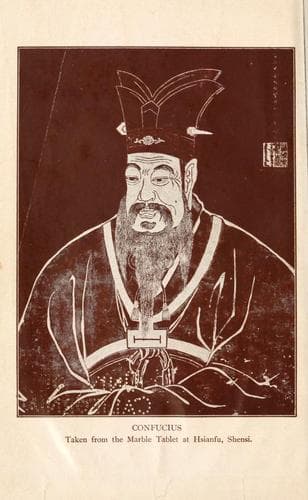
Confucius

Confucius was an influential Chinese philosopher and teacher whose teachings, compiled in "The Analects," profoundly shaped East Asian thought and culture. His ethical and moral system, emphasizing personal virtue, righteousness, and social harmony, continues to be studied and revered globally. His ideas have had a lasting impact on governance, education, and social philosophy.