BookBrief
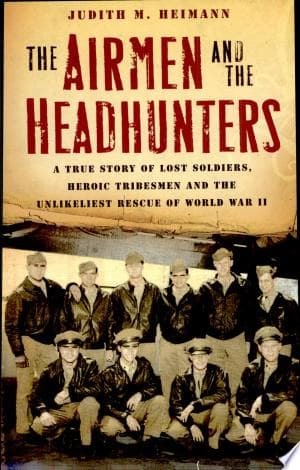
The Airmen and the Headhunters cover
Archivist's Choice

The Airmen and the Headhunters

Judith M. Heimann (2009)

Genre

History

Reading Time

450 min

Key Themes

See below

Track Your Reading

Sign in to track this book

In Japanese-occupied Borneo, a downed B-24 crew's survival depends on enigmatic Dayak tribesmen, blurring the lines between 'civilized' and 'savage' during wartime.

Core Idea

In "The Airmen and the Headhunters," Judith M. Heimann recounts the true story of an American B-24 bomber crew shot down in Borneo during World War II. Their rescue by indigenous Dayak tribes, some with a history of headhunting, shows how extreme environments can erase conventional ideas of civilization. Both the technologically advanced airmen and the native people formed a complex, interdependent relationship based on shared humanity and desperation. The book reveals how determination and covert alliances helped them overcome great challenges, questioning the biases of the time and the moral complexities of jungle warfare.
Reading time
450 min
Difficulty
Medium
✓ Read this if...
You are fascinated by World War II history, survival stories, anthropology, or the complex moral dilemmas of war, especially in unconventional settings.
✗ Skip this if...
You prefer books with a fast-paced, action-only narrative and are not interested in detailed historical context, cultural exploration, or the psychological aspects of survival.

Core idea

The central argument and framework that powers the entire book.

In "The Airmen and the Headhunters," Judith M. Heimann recounts the true story of an American B-24 bomber crew shot down in Borneo during World War II. Their rescue by indigenous Dayak tribes, some with a history of headhunting, shows how extreme environments can erase conventional ideas of civilization. Both the technologically advanced airmen and the native people formed a complex, interdependent relationship based on shared humanity and desperation. The book reveals how determination and covert alliances helped them overcome great challenges, questioning the biases of the time and the moral complexities of jungle warfare.

At a glance

Reading time

450 min

Difficulty

Medium

Read this if...

You are fascinated by World War II history, survival stories, anthropology, or the complex moral dilemmas of war, especially in unconventional settings.

Skip this if...

You prefer books with a fast-paced, action-only narrative and are not interested in detailed historical context, cultural exploration, or the psychological aspects of survival.

Key Takeaways

1

The Jungle as an Unforgiving Equalizer

Borneo's dense ecosystem stripped away the airmen's technological advantage, forcing a primal struggle for survival.

Quote

The jungle quickly became the true enemy, more immediate and relentless than any Japanese soldier. It was a world where their training and technology were largely useless, and their very existence depended on skills they didn't possess.

The American airmen, used to their B-24 bomber's technology, became vulnerable in the Bornean jungle. The environment itself was a main antagonist, forcing the well-equipped soldiers into a state of basic survival. Their machinery and training were useless against the rainforest's diseases, lack of paths, unfamiliar food, and constant hidden dangers. This environmental challenge made them face their limits and depend on outside help, shifting their view from sky conquerors to desperate ground survivors.

Supporting evidence

The initial struggles of the airmen to find food, navigate without maps, and combat jungle rot and malaria, which quickly incapacitated several crew members, illustrating the jungle's immediate and profound impact on their physical and mental states.

Apply this

When facing an overwhelming challenge, first assess the fundamental environmental factors at play. Understand what resources and skills are truly relevant to the immediate surroundings, rather than relying solely on pre-conceived notions or past successes. Adaptability to the 'terrain' is paramount.


survival-in-natureenvironmental-challengesprimal-survival
2

Redefining 'Civilized' and 'Savage'

The Dayak tribes, initially perceived as 'primitive,' demonstrated a sophisticated moral code and strategic intelligence that challenged Western biases.

Quote

The Dayaks, with their loincloths and blowpipes, proved themselves to be not only formidable warriors but also keepers of a complex social structure and a deep understanding of their environment, far exceeding the 'civilized' expectations of the airmen.

Heimann skillfully challenges the ethnocentric views held by the American airmen and the reader. The Dayak tribes, often called 'headhunters,' were far from savage. They showed strategic thinking, complex social structures, deep knowledge of their ecosystem, and a strong sense of loyalty. Their decision to help the airmen, despite the danger from the Japanese, came from a calculated assessment of alliances, a desire for self-preservation against a common enemy, and tribal hospitality. This reversal of expectations makes us question wh...

Supporting evidence

The Dayaks' intricate communication network, their ability to move unseen through the jungle, their knowledge of medicinal plants, and their strategic decision-making in forming alliances with the Allied forces, particularly Major Tom Harrisson, all demonstrated a level of sophistication the airmen initially underestimated.

Apply this

Challenge your own preconceived notions about cultures or groups different from your own. Seek to understand their systems, values, and knowledge before applying labels. True understanding often reveals complexity and wisdom where prejudice sees only simplicity.

ethnocentrismcultural-relativismindigenous-wisdom
3

The Unsung Heroes of Covert Warfare

Indigenous populations were crucial, often uncredited, allies in the Pacific Theater, providing intelligence and manpower.

Quote

The story of the downed airmen is inextricably linked to the 'secret war' waged by the Dayaks, a war of stealth, intelligence, and local knowledge that was ultimately vital to the Allied effort in Borneo.

This point highlights the important, but often overlooked, role of indigenous people in World War II, especially in the Pacific. The Dayaks were not just passive helpers; they were active, essential participants in the Allied war effort. Their knowledge of the terrain, ability to track and evade the Japanese, and willingness to provide intelligence and support were invaluable. This 'secret war' fought by local communities shows the limits of conventional military operations in certain environments and the impact of integrated local su...

Supporting evidence

The Dayaks' establishment of intelligence networks, their role in guiding the airmen to safety, their participation in raids against Japanese outposts, and later, their direct involvement in the construction of the secret airstrip and the subsequent attack on Japanese strongholds.

Apply this

Recognize and value the contributions of all parties, especially those often marginalized or unseen, in any collaborative effort. In leadership, seek out and integrate local expertise and knowledge, as it often holds the key to success in unfamiliar or complex environments.

covert-operationsguerrilla-warfareindigenous-resistance
4

The Power of a Single, Determined Individual

Major Tom Harrisson's eccentric brilliance and commitment were pivotal in orchestrating the rescue and resistance.

Quote

Harrisson was a force of nature, a man driven by an almost manic energy and a deep, if unconventional, understanding of the Dayaks. Without his unique blend of academic curiosity, military pragmatism, and sheer audacity, the 'Airmen and the Headhunters' story might have had a very different, far grimmer, ending.

The story would be incomplete without mentioning Major Tom Harrisson. An eccentric British anthropologist who became a military operative, Harrisson's respect for Dayak culture allowed him to form alliances where others would have failed. His unconventional methods, often clashing with military bureaucracy, were necessary in the chaotic jungle. His drive to find the airmen, organize resistance, and build a secret airstrip in enemy territory shows how one person's vision and courage can change events. He connected Western military goal...

Supporting evidence

Harrisson's solitary parachuting into Borneo, his rapid assimilation into Dayak society, his persuasive abilities to gain their trust and cooperation, his meticulous planning for the airstrip, and his persistent communication with Allied command despite immense challenges.

Apply this

Identify and empower individuals who possess unique blends of expertise, passion, and unconventional thinking, especially in complex or uncharted situations. Don't be afraid to challenge conventional wisdom if a visionary leader presents a more effective, albeit unorthodox, path.

unconventional-leadershipcultural-brokerindividual-impact
5

Ingenuity Born of Desperation

The construction of the secret Bario airstrip exemplifies human resourcefulness under extreme pressure.

Quote

The Bario airstrip was a testament to the fact that when human lives hang in the balance, ingenuity knows no bounds. It was an impossible feat, carved out of the jungle with sheer will and the most rudimentary tools, yet it became a lifeline.

The Bario airstrip's creation is a compelling example of human ingenuity and teamwork under pressure. Built by Dayak laborers and Allied personnel with only hand tools, often at night and under constant threat, this airstrip was a logistical marvel. It represented a collective refusal to accept defeat, turning a remote rice paddy into a vital strategic asset. This point shows that extreme circumstances often bring out unexpected creativity and problem-solving. The 'impossible' task was achieved through grit, communal effort, and a sha...

Supporting evidence

Detailed descriptions of the Dayaks clearing the dense jungle, leveling the ground, and creating a functional runway for Dakota transport planes using only axes, parangs, and their bare hands, all while maintaining secrecy from the Japanese.

Apply this

When faced with seemingly insurmountable obstacles, break down the problem into its most basic components. Leverage available resources, no matter how humble, and foster a collaborative spirit. Innovation often emerges from constraints, not abundance.

innovation-under-duressresourcefulnesscollective-action
6

The Psychological Toll of Isolation and Uncertainty

Beyond physical threats, the airmen grappled with profound mental and emotional challenges in the jungle.

Quote

The constant gnawing fear, the uncertainty of rescue, and the sheer alienness of their surroundings began to erode the airmen's morale as much as any physical hardship. The jungle was not just a physical threat, but a psychological one.

While the physical dangers of the jungle and the Japanese were immediate, Heimann also explores the psychological impact on the downed airmen. Isolation, the constant threat of discovery, lack of communication, and the disruption of routines took a heavy toll. Morale varied, and each man's mental resilience was severely tested. This point reminds us that survival stories are not just about overcoming physical adversity, but also about the psychological battle against despair, paranoia, and loss of hope. The human mind, without its fam...

Supporting evidence

The descriptions of the airmen's periods of depression, the arguments that broke out among them, their struggles with boredom and the feeling of being forgotten, and the immense relief they felt upon making contact with Harrisson and the Dayaks.

Apply this

In any high-stress, isolated situation, prioritize mental well-being as much as physical safety. Establish clear communication channels, foster a sense of purpose, and create opportunities for connection to combat feelings of isolation and despair.

psychological-resilienceisolation-effectswartime-trauma
7

Morality in the Gray Zones of War

The extreme circumstances blurred conventional lines between right and wrong, forcing pragmatic and often uncomfortable choices.

Quote

In the Borneo jungle, the rules of conventional warfare, and even conventional morality, often dissolved. Survival dictated actions, and alliances were forged out of shared necessity, not always shared values.

The book illustrates how war's harsh realities, especially in remote, lawless environments like Japanese-occupied Borneo, force people into moral gray zones. The Dayaks, while helping the Allies, were traditionally 'headhunters,' a practice Westerners found horrifying. Yet, their actions were often guided by a code of honor and practicality for their survival. Similarly, Allied operatives, including Harrisson, made difficult decisions that might seem unethical in peacetime but were necessary for the mission and the airmen's lives. Thi...

Supporting evidence

The Dayaks' willingness to engage in combat with the Japanese, sometimes resulting in headhunting (though largely suppressed by Harrisson for Allied collaboration), and the pragmatic decisions made by Harrisson to leverage Dayak customs and beliefs for military advantage.

Apply this

When navigating complex ethical dilemmas, especially in high-stakes environments, consider the immediate context and the potential long-term consequences. Understand that 'right' and 'wrong' can be subjective and culturally influenced, requiring nuanced judgment rather than rigid adherence to singular codes.

wartime-ethicsmoral-dilemmascultural-clash
8

The Enduring Legacy of Human Connection

Despite vast cultural differences, mutual respect and shared humanity ultimately forged unbreakable bonds.

Quote

What began as a desperate alliance forged by circumstance evolved into something deeper: a profound respect and even affection between men from vastly different worlds, united by shared hardship and a common enemy.

Beyond strategic alliances and survival, "The Airmen and the Headhunters" focuses on the unexpected human connections formed. The initial fear between the airmen and Dayaks turned into mutual respect and, in some cases, friendship. This point shows that shared adversity can cross cultural barriers, revealing a basic human capacity for empathy and loyalty. The Dayaks risked their lives for strangers, and the airmen learned to trust those they initially saw as 'savage.' This powerful story shows the universal desire for belonging and wh...

Supporting evidence

The Dayaks' unwavering protection of the airmen, the airmen's growing appreciation for Dayak skills and hospitality, and the emotional farewells exchanged when the airmen were finally evacuated, indicating deep personal relationships formed.

Apply this

Actively seek common ground and shared purpose with individuals from diverse backgrounds. Understand that empathy and shared experiences are powerful tools for building trust and lasting relationships, even when cultural norms differ dramatically.

intercultural-connectionshared-humanityempathy-building

Critical analysis

Notable Quotes

The jungle was a green wall, thick and impenetrable, a world unto itself.

Describing the challenging terrain the airmen faced after bailing out.

They were not just fighting a war; they were fighting the very earth beneath their feet.

Reflecting on the dual struggle against the enemy and the unforgiving natural world.

The line between friend and foe blurred in the vast, indifferent wilderness.

Highlighting the complexities of alliances and dangers in remote areas.

For the indigenous people, the war was a distant thunder, yet its ripples touched their lives profoundly.

Discussing the impact of World War II on the isolated tribes of Borneo.

Hope was a fragile thing, easily shattered by the constant threat of starvation and capture.

Illustrating the psychological toll on the downed airmen.

The headhunters, for all their fearsome reputation, proved to be pragmatic allies when their own interests aligned.

Describing the unexpected partnerships formed between the airmen and local tribes.

Language barriers were immense, yet a common humanity often bridged the divide.

Referring to the interactions between the American airmen and the Dayak people.

Every rustle in the leaves, every distant call, could mean salvation or doom.

Emphasizing the constant state of alert and uncertainty in the jungle.

Their ingenuity, born of desperation, was often their greatest weapon.

Speaking about the airmen's resourcefulness in dire circumstances.

The maps were useless, mere approximations of a world that defied cartography.

Highlighting the navigational challenges in the uncharted Borneo interior.

In the heart of the jungle, the modern world seemed a distant, almost forgotten dream.

Reflecting on the isolation and primitive conditions faced by the airmen.

Courage was not the absence of fear, but the decision to act despite it.

A general observation on the bravery displayed by both the airmen and their rescuers.

The story of their survival was not just about endurance, but about the unexpected bonds forged in extremity.

Summarizing the core theme of the book regarding human connection.

Borneo held its secrets close, but sometimes, by necessity, it yielded them to those who dared to enter.

A poetic reflection on the mysterious nature of the island and its interactions with outsiders.

Quiz

Test Your Knowledge

Ready to see how well you understood this book? Take our interactive quiz with 10 questions.

10
Questions
~5
Minutes
?
Best Score

Key Questions (FAQ)

This book tells the true story of a downed B-24 bomber crew in Japanese-occupied Borneo during WWII. It chronicles their survival in the jungle and their unexpected encounters and alliances with the indigenous Dayak tribesmen, who were known for headhunting.

About the author