BookBrief
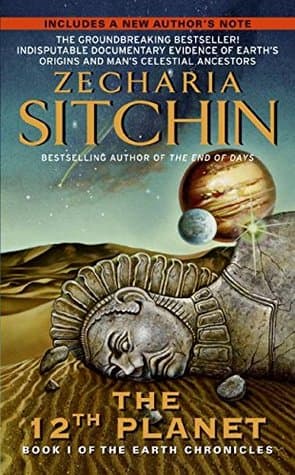
The 12th Planet cover
Archivist's Choice

The 12th Planet

Zecharia Sitchin (1976)

Genre

History / Spirituality / Mystery / Science

Reading Time

10-15 hours (based on 438 pages)

Key Themes

See below

Track Your Reading

Sign in to track this book

Sitchin reinterprets ancient myths and biblical stories as historical accounts. He says humanity was made by advanced extraterrestrials from the planet Nibiru, who visited Earth long ago.

Core Idea

Zecharia Sitchin's "The 12th Planet" says that ancient Sumerian and other Mesopotamian texts are not myths. Instead, they are historical records showing an advanced alien race, the Anunnaki, came from a twelfth planet in our solar system, Nibiru. Sitchin claims these beings, seen as gods by early humans, genetically engineered humanity to create a slave race to mine gold. He says they started civilization and were involved in major biblical events like the Flood. The book challenges common historical and scientific ideas by reinterpreting old evidence to support a story of alien involvement in human evolution and history. It suggests Nibiru and its inhabitants will return.
Reading time
10-15 hours (based on 438 pages)
Difficulty
Medium
✓ Read this if...
You are fascinated by ancient mysteries, alternative histories, and theories involving extraterrestrial influence on human civilization, and are open to reinterpreting religious and mythological texts through a 'paleo-contact' lens.
✗ Skip this if...
You prefer mainstream historical and archaeological interpretations, are skeptical of theories lacking conventional scientific consensus, or are not interested in speculative narratives about alien intervention in human origins.

Core idea

The central argument and framework that powers the entire book.

Zecharia Sitchin's "The 12th Planet" says that ancient Sumerian and other Mesopotamian texts are not myths. Instead, they are historical records showing an advanced alien race, the Anunnaki, came from a twelfth planet in our solar system, Nibiru. Sitchin claims these beings, seen as gods by early humans, genetically engineered humanity to create a slave race to mine gold. He says they started civilization and were involved in major biblical events like the Flood. The book challenges common historical and scientific ideas by reinterpreting old evidence to support a story of alien involvement in human evolution and history. It suggests Nibiru and its inhabitants will return.

At a glance

Reading time

10-15 hours (based on 438 pages)

Difficulty

Medium

Read this if...

You are fascinated by ancient mysteries, alternative histories, and theories involving extraterrestrial influence on human civilization, and are open to reinterpreting religious and mythological texts through a 'paleo-contact' lens.

Skip this if...

You prefer mainstream historical and archaeological interpretations, are skeptical of theories lacking conventional scientific consensus, or are not interested in speculative narratives about alien intervention in human origins.

Key Takeaways

1

Ancient Texts as Historical Records

Sumerian myths are not allegories but factual accounts of extraterrestrial visitation.

Quote

The Sumerian texts are not myths but historical and scientific documents that describe actual events.

Sitchin changes how we understand ancient mythology. He says the creation stories, gods, and heroes in Sumerian, Akkadian, and Babylonian texts should be read as true historical records, not symbolic stories. He believes these texts, often seen as simple ways to explain nature, have detailed accounts of advanced beings, their technology, and their interactions with early humans. This idea challenges common archaeology and history. It suggests the 'gods' of old were not supernatural but actual aliens, the Anunnaki, whose actions were c...

Supporting evidence

Sitchin's extensive translations and interpretations of Sumerian cuneiform tablets, particularly the Enuma Elish (Babylonian Creation Epic) and the Epic of Gilgamesh, which he argues detail the Anunnaki's arrival and activities on Earth.

Apply this

Approach ancient myths and religious texts with a critical eye, considering the possibility that they may contain a kernel of literal truth or historical record, rather than solely symbolic meaning.


sumerian-cuneiformancient-astronaut-theorymyth-as-history
2

Nibiru: The 12th Planet

A rogue planet beyond Pluto is the home world of the Anunnaki.

Quote

The 'planet of the crossing' – Nibiru – was the home planet of the Anunnaki, whose periodic returns to our solar system brought them to Earth.

A main part of Sitchin's idea is the planet Nibiru, which he calls the '12th planet' (counting the Sun, Moon, and ten planets including Pluto). He says ancient Sumerian cosmology correctly showed our solar system with an extra, huge planet in a very oval orbit. This orbit brings it into the inner solar system about every 3,600 years. This planet, Nibiru, is said to be the home of the Anunnaki. Sitchin argues that ancient texts like the Enuma Elish are not just creation myths but detailed astronomy papers describing how our solar syste...

Supporting evidence

Sitchin's interpretation of Sumerian cylinder seals (like VA 243) and cosmological texts, which he asserts depict a solar system with an extra large planet between Mars and Jupiter, and the Enuma Elish's description of a celestial battle forming Earth.

Apply this

Maintain an open mind regarding the completeness of current scientific models, particularly in fields like astronomy, and consider alternative interpretations of ancient data.

nibiruanunnakiplanetary-cosmologyenuma-elish
3

Anunnaki: The Astronaut-Gods

Advanced extraterrestrials who colonized Earth for its mineral resources, particularly gold.

Quote

The Nefilim – 'those who came down from the heavens to Earth' – were the Anunnaki, extraterrestrial beings who arrived on Earth for its gold.

Sitchin says the 'gods' worshipped by ancient civilizations were the Anunnaki – advanced aliens from Nibiru. He translates ancient terms like 'Nefilim' (often called giants) as 'those who came down from the heavens to Earth.' Sitchin says these beings arrived on Earth about 450,000 years ago to mine gold. This gold was supposedly needed to fix Nibiru's atmosphere. The Anunnaki set up mining operations, especially in southern Africa, and built settlements that became the first cities of Sumerian civilization. Their advanced technology ...

Supporting evidence

Sitchin's interpretation of Sumerian texts describing the Anunnaki's arrival, their initial labors, and the establishment of settlements, alongside archaeological evidence of ancient gold mining in Africa that predates conventional historical timelines.

Apply this

Re-evaluate traditional religious narratives and mythical figures, considering the possibility of a non-supernatural, extraterrestrial origin for certain 'divine' attributes or actions.

anunnakinefilimextraterrestrial-miningancient-gods
4

Genetic Engineering of Humanity

Humans were created as a slave race through Anunnaki genetic manipulation.

Quote

Man was not created by evolution alone, but was fashioned by the Anunnaki as a 'primitive worker' through genetic engineering.

The most debated part of Sitchin's theory is where humans came from. He says Homo sapiens did not come from only natural evolution. Instead, when Anunnaki mining became too hard, their scientists (led by Enki and Ninhursag) genetically engineered a 'primitive worker' (Lulu Amelu). They did this by mixing the genes of an existing hominid (Homo erectus) with Anunnaki DNA. This act, described in Sumerian texts like the Atra-Hasis epic, explains the 'missing link' in human evolution, the sudden rise in intelligence, and the biblical story...

Supporting evidence

Sitchin's analysis of the Atra-Hasis epic, which describes the creation of man from clay and the 'blood of a god,' interpreted as genetic material. Also, the rapid, unexplained cognitive leap in human evolution.

Apply this

Consider alternative hypotheses for human origins that incorporate non-terrestrial influences, and critically examine the gaps in the conventional evolutionary timeline.

human-originsgenetic-engineeringlulu-ameluatra-hasis
5

The Deluge and the Anunnaki's Role

The Great Flood was a natural catastrophe exacerbated by Anunnaki political decisions.

Quote

The Deluge was not a divine punishment, but a natural cataclysm – the melting of the Antarctic ice sheet – which the Anunnaki knew was coming and chose to let happen to humanity.

Sitchin reinterprets the Great Flood story. He says it was not a punishment but a natural disaster: a huge tidal wave caused by Nibiru's regular approach, which made the Antarctic ice sheet unstable. He says the Anunnaki knew the disaster was coming and discussed whether to save humanity. The ruling council, led by Enlil, decided against it, seeing humans as a problem and too numerous. However, Enki, humanity's creator, secretly told Noah (Utnapishtim in Sumerian texts) to build an ark, saving some people and animals. This story shows...

Supporting evidence

Sitchin's comparative analysis of the Sumerian Epic of Gilgamesh (Utnapishtim's account) and the biblical Genesis account of Noah's Ark, highlighting the striking similarities and the Anunnaki's internal debates.

Apply this

Analyze cross-cultural myths for common themes that might point to shared historical events, and question the motives attributed to 'divine' beings in these narratives.

great-flooddeluge-mythenlilenkiutnapishtim
6

Sumerian Civilization: Anunnaki Legacy

Sumerian advancement was a direct result of Anunnaki tutelage and infrastructure.

Quote

The sudden emergence of Sumerian civilization with its advanced knowledge was not spontaneous, but a gift from the Anunnaki.

The fast and sudden rise of Sumerian civilization in Mesopotamia, called the 'cradle of civilization,' is unusual. Sitchin says this sudden growth of knowledge – including writing, math, astronomy, complex irrigation, and city planning – came directly from the Anunnaki. He suggests that after the Flood, the Anunnaki helped humanity rebuild and shared important knowledge. They established the first city-states as centers for their ongoing work. The Sumerian gods, with their ranks and specific jobs, reflect the Anunnaki's own social and...

Supporting evidence

The advanced nature of Sumerian technology and knowledge that seemingly appeared 'out of nowhere' around 3500 BCE, including their sophisticated calendar, astronomical observations, and intricate legal codes, all interpreted as Anunnaki gifts.

Apply this

Question the conventional timeline of human technological and social development, considering the possibility of external influences or 'lost knowledge' in ancient history.

sumerian-civilizationmesopotamiazigguratanunnaki-influence
7

The Tower of Babel Misunderstood

The Tower of Babel was an Anunnaki-initiated spaceport, not a challenge to God.

Quote

The Tower of Babel was not a monument to human hubris, but an Anunnaki-built spaceport or launch tower, misinterpreted by later generations.

Sitchin gives a new interpretation of the biblical Tower of Babel story. He says the 'tower' was not just a tall building humans built out of pride. It was a launch pad or spaceport built by the Anunnaki, or under their supervision, for space travel. He suggests the confusion of languages was a deliberate act by Anunnaki leaders to stop humans from getting too much knowledge or access to their technology, especially spaceflight. This act was a response to humanity's growing independence and the Anunnaki's disagreements about how much ...

Supporting evidence

Sitchin's interpretation of the original Hebrew and Sumerian terms, where 'Babel' is linked to 'Gate of the Gods' and descriptions of the structure suggest a functional, rather than purely symbolic, purpose. He also connects it to texts describing Anunnaki 'sky-chambers' and launch facilities.

Apply this

Examine biblical narratives and other religious texts for potential technological or scientific interpretations that diverge from traditional theological explanations.

tower-of-babelspaceportanunnaki-technologylanguage-confusion
8

Cyclical Nature of History

Human history is shaped by the periodic returns of Nibiru and the Anunnaki.

Quote

History on Earth is not linear, but cyclical, driven by the orbital periodicity of Nibiru and the subsequent arrivals and departures of the Anunnaki.

Sitchin suggests history is cyclical. He says major changes in human civilization – like the rise of Sumer, big technology jumps, and disasters like the Flood – are directly tied to Nibiru's return to the inner solar system every 3,600 years. These returns bring the Anunnaki's arrivals and departures, starting periods of strong interaction, knowledge sharing, and large building projects, followed by less direct involvement. This idea suggests human progress is not just self-driven but is marked and pushed by alien actions. It implies ...

Supporting evidence

The recurring themes of divine intervention, catastrophic events, and sudden leaps in civilization across various ancient cultures, which Sitchin correlates with the 3,600-year orbital cycle of Nibiru.

Apply this

Consider macro-historical patterns and look for potential external drivers or influences that might explain recurring themes or sudden shifts in human development over long periods.

cyclical-historynibiru-cycleanunnaki-interventioncosmic-influence
9

Reinterpreting Religious Texts

Biblical narratives are distorted retellings of Sumerian accounts of the Anunnaki.

Quote

The Old Testament, rather than being divinely inspired, is a later, often distorted, retelling of much older Sumerian and Mesopotamian accounts of the Anunnaki.

A main point of Sitchin's work is that major biblical stories, like Creation, the Garden of Eden, the Flood, and the Tower of Babel, are not unique revelations. Instead, they are later, often simpler or symbolic, versions of older Sumerian and Mesopotamian myths. He says the 'God' or 'Lord' in these texts often refers to specific Anunnaki individuals (e.g., Enlil, Enki) or the Anunnaki council. This view makes religious texts less mysterious. It removes their supernatural claims and puts them in context as historical records of alien ...

Supporting evidence

Sitchin's detailed comparison of biblical stories with their Sumerian and Akkadian counterparts (e.g., Genesis vs. Enuma Elish, Epic of Gilgamesh, Atra-Hasis), highlighting linguistic parallels and thematic congruence.

Apply this

Engage in comparative mythology and religious studies, seeking commonalities and potential source material for widely held spiritual beliefs across different cultures.

biblical-reinterpretationsumerian-genesiscomparative-mythologyanunnaki-in-bible
10

Challenging Academic Orthodoxy

Established academia ignores or dismisses compelling evidence for extraterrestrial influence.

Quote

The academic establishment, bound by conventional paradigms, has consistently ignored or dismissed the overwhelming evidence within ancient texts that points to an extraterrestrial presence.

Sitchin often criticizes mainstream archaeology, history, and theology. He says they are unwilling or unable to consider his interpretations. He argues that academic groups are too stuck in old ideas – like simple evolution and ancient texts being purely mythical – to fairly look at evidence for alien involvement. He accuses scholars of picking and choosing interpretations, ignoring unusual findings, and not fully translating or understanding what ancient Sumerian means. This point shows a tension between accepted scientific ideas and...

Supporting evidence

Sitchin's consistent referencing of specific Sumerian texts and archaeological finds that he argues are misinterpreted or ignored by mainstream scholars, and his direct appeals for a re-evaluation of these materials.

Apply this

Approach all academic and scientific consensus with a healthy dose of skepticism, encouraging critical thinking and the exploration of alternative theories, particularly when anomalies exist.

academic-orthodoxyparadigm-shiftscientific-skepticismalternative-history

Critical analysis

Notable Quotes

The Sumerians knew of the existence of all the planets of our solar system, including the outermost ones, which were discovered only in modern times.

Sitchin argues that ancient Sumerian texts contain advanced astronomical knowledge.

The Anunnaki came to Earth from a planet called Nibiru, which orbits our sun every 3,600 years.

Central claim about extraterrestrial beings influencing human history.

Man was created by the gods as a primitive worker to serve them.

Interpretation of Sumerian creation myths as describing genetic engineering by aliens.

The Great Flood was not a divine punishment but a natural catastrophe predicted by the Anunnaki.

Reinterpretation of the biblical and Mesopotamian flood narratives.

The pyramids and other ancient monuments were built with knowledge imparted by the Anunnaki.

Explanation for advanced ancient engineering feats.

The 'gods' of old were not mythological but flesh-and-blood astronauts.

Sitchin's core thesis redefining ancient deities as extraterrestrials.

The solar system once had a catastrophic collision that formed Earth and the asteroid belt.

Astronomical theory based on Sumerian texts to explain planetary formation.

The zodiac and its ages were devised by the Anunnaki to measure time in relation to Nibiru's orbit.

Claim about the origins of astrological systems.

Gold was the primary reason the Anunnaki came to Earth—to mine it for their planet's atmosphere.

Motivation attributed to the alien visitors in Sitchin's narrative.

The concept of kingship was instituted by the Anunnaki to rule humans through intermediaries.

Interpretation of the rise of ancient monarchies and divine right.

The Epic of Gilgamesh is not mere myth but a record of a search for immortality granted by the Anunnaki.

Analysis of one of the oldest known literary works.

Ancient maps, like the Piri Reis map, show coastlines known only after modern exploration, proving advanced ancient knowledge.

Evidence cited for pre-modern global awareness from alien sources.

The wars among the gods described in myths were actually conflicts between different factions of Anunnaki.

Secular explanation for mythological battles and divine rivalries.

Humanity's leap from hunter-gatherer to civilization occurred suddenly due to Anunnaki intervention.

Theory explaining the rapid development of early civilizations like Sumer.

Quiz

Test Your Knowledge

Ready to see how well you understood this book? Take our interactive quiz with 10 questions.

10
Questions
~5
Minutes
?
Best Score

Key Questions (FAQ)

The 12th Planet presents Zecharia Sitchin's theory that ancient Sumerian texts describe an advanced extraterrestrial race called the Anunnaki from a planet called Nibiru, who genetically engineered humans as a slave species and influenced early human civilization.

About the author