BookBrief
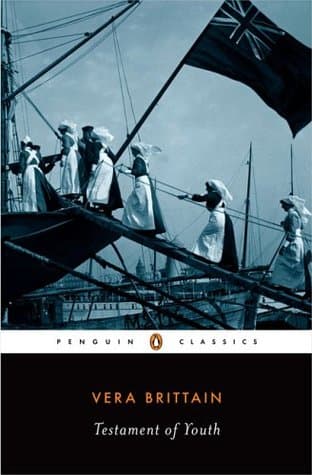
Testament of Youth cover
Archivist's Choice

Testament of Youth

Vera Brittain (1933)

Genre

Biography / Memoir / History

Reading Time

15-20 hours (approx. 688 pages at 45 pages/hour)

Key Themes

See below

Track Your Reading

Sign in to track this book

Vera Brittain's "Testament of Youth" is a memoir that follows her journey from Oxford student to wartime nurse, detailing personal losses and the impact of World War I on her generation.

Core Idea

Vera Brittain's "Testament of Youth" is a memoir that shows how World War I affected a generation, especially educated women, through her personal experiences of loss, disillusionment, and survival. It argues that the war not only destroyed individual lives and futures but also shattered the social and moral certainties of Edwardian England, leaving a lasting scar on those who lived through it. Brittain details how the war changed her from an aspiring Oxford student into a pacifist, illustrating the personal cost of a conflict that demanded sacrifice and offered little in return but grief. The book states that the war's true legacy is not just its political results but the stories of individual suffering and the struggle to find meaning in a world changed by destruction. It shows the strength of the human spirit in the face of trauma, while also exposing the injustices of a conflict that required women's participation and sacrifice without giving them equal recognition.
Reading time
15-20 hours (approx. 688 pages at 45 pages/hour)
Difficulty
Medium
✓ Read this if...
You want an intimate, powerful, and deeply moving first-person account of the human cost of World War I, particularly from a woman's perspective, and are interested in the social history of the early 20th century.
✗ Skip this if...
You prefer a purely military history of WWI, are sensitive to prolonged descriptions of grief and loss, or find dense, detailed memoirs challenging to sustain over a long reading period.

Core idea

The central argument and framework that powers the entire book.

Vera Brittain's "Testament of Youth" is a memoir that shows how World War I affected a generation, especially educated women, through her personal experiences of loss, disillusionment, and survival. It argues that the war not only destroyed individual lives and futures but also shattered the social and moral certainties of Edwardian England, leaving a lasting scar on those who lived through it. Brittain details how the war changed her from an aspiring Oxford student into a pacifist, illustrating the personal cost of a conflict that demanded sacrifice and offered little in return but grief.

The book states that the war's true legacy is not just its political results but the stories of individual suffering and the struggle to find meaning in a world changed by destruction. It shows the strength of the human spirit in the face of trauma, while also exposing the injustices of a conflict that required women's participation and sacrifice without giving them equal recognition.

At a glance

Reading time

15-20 hours (approx. 688 pages at 45 pages/hour)

Difficulty

Medium

Read this if...

You want an intimate, powerful, and deeply moving first-person account of the human cost of World War I, particularly from a woman's perspective, and are interested in the social history of the early 20th century.

Skip this if...

You prefer a purely military history of WWI, are sensitive to prolonged descriptions of grief and loss, or find dense, detailed memoirs challenging to sustain over a long reading period.

Key Takeaways

1

The Shattering of Edwardian Innocence

War irrevocably destroys the pre-war worldview of a generation.

Quote

It was as though the world had turned over, and the comfortable, familiar things had fallen away, leaving us clinging to the bare rock of existence.

Vera Brittain's early life, marked by a privileged upbringing and intellectual ambition, contrasts sharply with the reality of World War I. The book shows how the war not only disrupted individual lives but shattered the collective innocence and optimism of an entire generation. Pre-war certainties of progress, patriotism, and social order crumbled under the weight of violence and loss. Brittain's journey, from a sheltered, aspiring Oxford student to a war nurse, shows this societal change, revealing how the war removed 'comfortable, ...

Supporting evidence

Brittain's detailed descriptions of her early life, her aspirations for Oxford, and the initial jingoistic fervor for war, juxtaposed with the grim realities of the front lines and the casualty lists.

Apply this

Recognize how societal upheavals can fundamentally reshape individual and collective worldviews, fostering empathy for those who live through such transitions.


edwardian-eraloss-of-innocenceworld-war-i
2

The Personal Cost of War

War's true horror lies in the cumulative, devastating loss of loved ones.

Quote

I felt that I had died, too, with each one of them, and that only a ghost walked the earth in my place.

Beyond battle narratives, Brittain documents the personal and cumulative toll of war. Her narrative lists her losses: her fiancé Roland Leighton, her brother Edward, her friends Victor Richardson and Geoffrey Thurlow. This repeated bereavement, experienced as ongoing, relentless attrition, forms the emotional core of the book. It shows how war systematically dismantles an individual's support system, future plans, and sense of self. Brittain's feeling of being a 'ghost' highlights the psychological scarring from such widespread person...

Supporting evidence

The successive telegrams and letters informing her of the deaths of Roland, Edward, Victor, and Geoffrey, each detailed with personal grief and impact.

Apply this

Consider the individual human stories behind historical conflicts to grasp the full emotional and psychological impact of war, rather than just statistics.

griefbereavementpsychological-traumawar-casualties
3

The Paradox of Wartime Service

Even in horror, service can provide purpose and a sense of belonging.

Quote

To be useful was the only thing that mattered; to feel that one was contributing, however humbly, to the vast, desperate effort.

Despite immense suffering, Brittain's decision to leave Oxford and serve as a V.A.D. (Voluntary Aid Detachment) nurse shows a complex paradox of wartime experience. Her nursing duties exposed her to horrors—wounds, suffering, the stench of death—but also gave her a sense of purpose and belonging. In a world turned upside down, 'to be useful' became a vital anchor. This active participation, rather than passive waiting, offered a form of agency and camaraderie that eased individual pain. Her service, though emotionally difficult, allow...

Supporting evidence

Her detailed accounts of nursing in London, Malta, and Étaples, highlighting both the gruesome tasks and the sense of duty and solidarity among the nurses.

Apply this

Reflect on how finding purpose and contributing to a collective effort, even in dire circumstances, can offer resilience and meaning.

nursing-historywartime-servicepurpose-in-adversitycamaraderie
4

The Gendered Experience of War

Women's roles and suffering in WWI were distinct yet equally profound.

Quote

We were not 'on the front,' but the front came to us, in the form of shattered bodies and minds, and we had to meet it, day after day.

Brittain's memoir is important for showing the distinct, yet equally devastating, experience of women during World War I. While not fighting in the trenches, women like Brittain served in vital roles, mainly as nurses, bringing them into direct contact with the war's consequences. They faced different dangers, exhaustion, and psychological trauma, often in overcrowded, unsanitary conditions. The quote 'the front came to us' captures this experience: women dealt with the aftermath of combat, witnessing the destruction of human bodies a...

Supporting evidence

Her graphic descriptions of treating wounded soldiers with horrific injuries, managing limited resources, and enduring the constant emotional strain in hospitals far from home.

Apply this

Broaden understanding of historical conflicts to include the diverse experiences and contributions of all genders, recognizing the varied forms of sacrifice and resilience.

women-in-wargender-roles-wwinursing-historytrauma
5

The Enduring Scars of Survival

Survival often means carrying the profound, lasting wounds of loss.

Quote

For years afterwards, the ghost of the past walked beside me, always just out of reach, reminding me of what had been and what could never be again.

Brittain's 'Testament of Youth' is not just a record of wartime, but an exploration of its aftermath. Surviving the war, for her, was not an escape but a sentence to live with deep, unhealable scars. The 'ghost of the past' represents the pervasive grief for her lost generation—her fiancé, brother, and friends—whose futures were ended. This lingering presence of absence highlights survivor's guilt and the weight of memory. The book conveys that the war did not end when the fighting stopped; its psychological and emotional consequences...

Supporting evidence

Her post-war struggles with grief, depression, and finding meaning in a world so drastically altered, as well as her dedication to memorializing the lost.

Apply this

Acknowledge that 'survival' in the context of profound trauma often entails a lifelong process of coping with loss and altered identity.

survivor-guiltpost-traumatic-stressmemory-and-traumagrief
6

The Power of Memoir as History

Personal narratives provide essential, visceral insights into historical events.

Quote

I wrote this book because I felt that the world needed to know, not just the facts of war, but the truth of what it did to individual human beings.

Vera Brittain's 'Testament of Youth' is more than autobiography; it is a historical document. Her memoir provides an intimate, visceral understanding of World War I that statistics and official histories often miss. By grounding history in her personal experiences of loss, fear, duty, and disillusionment, Brittain makes the abstract horror of war real. Her writing was driven by a belief that future generations needed to understand 'the truth of what it did to individual human beings,' not just the 'facts.' This emphasis on personal te...

Supporting evidence

The book's lasting impact and recognition as a seminal work on WWI, often cited alongside historical analyses, demonstrating its unique contribution to understanding the era.

Apply this

Seek out and value personal narratives and memoirs when studying history to gain a more comprehensive and empathetic understanding of past events.

memoir-writingoral-historyhistorical-narrativeeyewitness-accounts
7

Disillusionment and the Search for Meaning

Post-war, a generation grappled with shattered ideals and a search for new purpose.

Quote

We had been promised a better world, a world made safe for democracy, but all we found was a hollow echo and the ruins of our youth.

The idealism that fueled the war effort—promises of a 'war to end all wars' and a 'world made safe for democracy'—gave way to disillusionment for Brittain and her peers. The post-war period was not a triumphant return to normalcy, but a struggle to reconcile immense sacrifice with what felt like an inadequate, damaged peace. Brittain's 'hollow echo and the ruins of our youth' reflects the pervasive sense of betrayal and futility. This takeaway highlights the psychological aftermath of war, where the promised 'meaning' of their sufferi...

Supporting evidence

Brittain's post-war political activism, her commitment to peace, and her struggle to re-engage with academic and social life after witnessing such devastation.

Apply this

Understand how grand political narratives can fail to align with lived experience, leading to disillusionment and a re-evaluation of personal values.

post-war-disillusionmentpacifismlost-generationexistentialism
8

The Interruption of Personal Growth

War steals not just lives, but also the natural trajectory of youth and ambition.

Quote

The war took from us not only our friends, but the very possibility of becoming the people we might have been.

Brittain's narrative shows how the war interrupted personal growth, education, and the formation of adult identities. Her own promising academic career at Oxford was put on hold, and for many of her peers, it was permanently ended. The loss of friends like Roland, an aspiring poet, represents not just individual deaths but the silencing of countless potential contributions to art, science, and society. The quote 'the very possibility of becoming the people we might have been' captures this theft of potential. The war did not just end ...

Supporting evidence

Her pre-war intellectual ambitions and literary discussions with Roland, contrasted with the abrupt shift to nursing and the subsequent difficulty in resuming her studies.

Apply this

Consider the multifaceted losses of war, including the less tangible impact on individual development, potential, and societal progress.

lost-potentialyouth-and-warinterrupted-educationidentity-formation
9

The Enduring Legacy of Grief

Grief for a lost generation shapes future advocacy for peace.

Quote

My generation, the survivors, carried a sacred trust: to ensure that such a holocaust should never again be visited upon the world.

Vera Brittain's 'Testament of Youth' is not just a record of past suffering but a call to action born from grief. The cumulative loss she experienced transformed her into a lifelong advocate for peace and international understanding. The 'sacred trust' she felt as a survivor was the need to prevent future generations from enduring a similar 'holocaust.' Her personal sorrow became the catalyst for a broader political and ethical commitment. This takeaway highlights how personal trauma can become a public legacy, driving individuals to ...

Supporting evidence

Brittain's subsequent career as a writer, lecturer, and prominent pacifist, actively campaigning against war and fascism in the interwar period.

Apply this

Reflect on how personal experiences of suffering can inspire powerful, long-term commitments to social justice and peace advocacy.

pacifism-activismpeace-advocacyintergenerational-traumalegacy-of-war

Critical analysis

Notable Quotes

War is not a adventure. It is a crime.

Vera's early realization about the true nature of war, contrasting with the initial patriotic fervor.

The price of my own freedom was their death.

Reflecting on the loss of her brother, fiancé, and friends, and the survivor's guilt she carried.

How will you ever know how much I love you?

A poignant question from Roland Leighton in one of his letters to Vera, highlighting their deep affection.

The world had broken faith with me.

Vera's profound sense of betrayal and disillusionment after the war and the deaths of her loved ones.

I was haunted by the faces of young men, some known, some unknown, who had died in the war.

The lingering psychological impact of the war on Vera, seeing the faces of the fallen everywhere.

We were all young, we were all in love, and we were all going to die.

A stark summary of the fate awaiting her generation during World War I.

The only way to endure the unendurable was to write about it.

Vera's motivation for writing 'Testament of Youth' as a means of processing her grief and trauma.

I belonged to a generation who were accustomed to being told what to do.

Describing the societal expectations and constraints placed upon young women of her era before the war.

The glory of the trenches became the shame of the hospitals.

Contrasting the initial romanticized view of war with the horrific reality of its aftermath and the suffering of soldiers.

I had left my youth behind on the battlefields of France.

Vera's feeling that the war had stolen her youth and innocence, leaving her irrevocably changed.

The peace, when it came, was not a healing balm, but an aching void.

Her experience of the post-war period, finding no solace or joy in the end of hostilities, only emptiness.

I never quite recovered from the shock of discovering that I could be so happy and so miserable at the same time.

Reflecting on the emotional turmoil of wartime, where moments of joy were intertwined with profound sorrow.

We were all living on borrowed time.

The pervasive feeling among those living through the war, a constant awareness of impending death.

It was not the war that was wonderful, but the love that survived it.

An underappreciated quote emphasizing the enduring power of human connection amidst the devastation of war.

The greatest tragedy of the war was not the death of individuals, but the death of hope.

Vera's broader reflection on the long-term impact of the war, beyond personal losses, on the spirit of a generation.

Quiz

Test Your Knowledge

Ready to see how well you understood this book? Take our interactive quiz with 10 questions.

10
Questions
~5
Minutes
?
Best Score

Key Questions (FAQ)

'Testament of Youth' is a poignant memoir by Vera Brittain recounting her experiences during World War I. It details her abandonment of Oxford studies to serve as a nurse and the profound personal losses she endured, reflecting on a generation irrevocably changed by war.

About the author