BookBrief
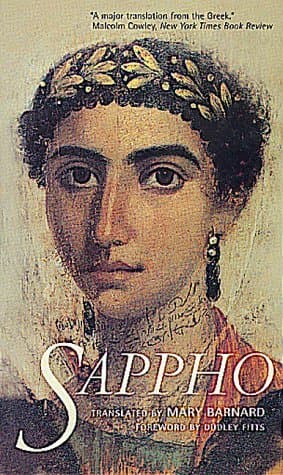
Sappho cover
Archivist's Choice

Sappho

Sappho (1887)

Genre

History

Reading Time

90 min

Key Themes

See below

Track Your Reading

Sign in to track this book

Barnard's clear translations bring Sappho's surviving poetry to life, showing the timeless passion and skill of ancient Greece's greatest lyric poet.

Core Idea

Sappho's fragmented poetry, though incomplete, shows the lasting power of human emotion, especially love, desire, and loss, through a distinctly female voice. Her work is direct and simple, removing pretense to present an intimate look at the inner world, nature, and life's fleeting beauty. Reading her fragments asks readers to help rebuild meaning, highlighting her themes' lasting relevance and her enduring place as a foundational lyrical poet.
Reading time
90 min
Difficulty
Medium
✓ Read this if...
You are fascinated by the origins of lyric poetry, ancient female voices, or the enduring power of fragmented texts to convey deep emotion and human experience.
✗ Skip this if...
You prefer complete narratives, extensive historical context over poetic introspection, or find incomplete texts frustrating.

Core idea

The central argument and framework that powers the entire book.

Sappho's fragmented poetry, though incomplete, shows the lasting power of human emotion, especially love, desire, and loss, through a distinctly female voice. Her work is direct and simple, removing pretense to present an intimate look at the inner world, nature, and life's fleeting beauty. Reading her fragments asks readers to help rebuild meaning, highlighting her themes' lasting relevance and her enduring place as a foundational lyrical poet.

At a glance

Reading time

90 min

Difficulty

Medium

Read this if...

You are fascinated by the origins of lyric poetry, ancient female voices, or the enduring power of fragmented texts to convey deep emotion and human experience.

Skip this if...

You prefer complete narratives, extensive historical context over poetic introspection, or find incomplete texts frustrating.

Key Takeaways

1

The Enduring Power of Fragments

Even in their brokenness, Sappho's poems convey profound emotional depth and artistic mastery.

Quote

Although the surviving works of Sappho are largely fragments, they reveal the immense power and beauty of her lyric poetry.

Sappho's surviving work shows art's resilience, even against time. Many of her poems exist only as fragments—a few lines, a single word—yet these pieces carry great emotional weight and show a strong command of language and rhythm. This fragmented state adds to their mystery, inviting readers to fill in the gaps and consider the lost verses, making reading a collaborative effort. The brevity often sharpens the impact, forcing a concentrated focus on the precise imagery and feeling conveyed. It is a strong reminder that completeness is...

Supporting evidence

The vast majority of the poems in the collection are presented as fragments, some as short as a single phrase like 'some say cavalry...' or '...and to love you'.

Apply this

Embrace imperfection and incompleteness in creative endeavors. Recognize that even small, focused expressions can carry significant weight and impact. Allow for ambiguity and invite interpretation rather than striving for absolute closure.

lyric-poetryfragmentationclassical-literature
2

A Voice Uniquely Female

Sappho's poetry offers an unparalleled window into the emotional landscape of women in ancient Greece.

Quote

Sappho sang of love, desire, jealousy, and the beauty of women, offering a perspective rarely preserved from the ancient world.

Sappho stands out in ancient literature for her personal and openly female perspective. While male poets often focused on heroic deeds, epic battles, or philosophy, Sappho explored personal relationships, the pain of unrequited love, the joy of companionship, and nature's fleeting beauty, all from a distinctly female viewpoint. Her poems include references to female beauty, desire for other women, and emotional bonds within her circle, likely her thiasos (a kind of school or religious group). This makes her work valuable for understan...

Supporting evidence

Poems explicitly address other women ('Anaktoria', 'Atthis'), describe female beauty ('some say cavalry...', '...but the most beautiful thing'), and express same-sex desire ('...burning in my breast').

Apply this

Actively seek out and amplify diverse voices and perspectives, especially those historically marginalized. Recognize the unique insights that come from different lived experiences and how they enrich our understanding of humanity.

feminist-literaturequeer-studiesancient-greece
3

Love's Ecstasy and Agony

Sappho explores the full spectrum of eros, from passionate longing to heartbreaking loss.

Quote

Love shook my heart / like a wind on the mountain / rushing over the oak trees.

Sappho is, above all, a poet of love. Her verses capture love's overwhelming power with an honesty that resonates across millennia. She describes love not just as affection but as a force that can 'shake the heart,' 'burn' within, or cause 'green sickness' and physical distress. Her depictions of desire are vivid and strong, detailing blushing, trembling, and speechlessness in the beloved's presence. But she also explores the pain of separation, the bitterness of jealousy, and the quiet ache of absence. This complete portrayal of love...

Supporting evidence

Poem 31 (often called 'Ode to a Jealous Man') details physical symptoms of love/jealousy: 'my tongue has broken / a delicate fire runs under my skin / I can't see anything with my eyes / my ears are ringing'. Other fragments express longing and absence.

Apply this

Allow yourself to feel the full range of emotions associated with love, without judgment. Recognize that intense emotional experiences, both joyous and painful, are fundamental to the human condition and can be sources of profound insight and creativity.

erosemotional-intelligencehuman-condition
4

The Poet's Craft: Simplicity and Directness

Mary Barnard's translations highlight Sappho's lean, incisive style, making her accessible to modern readers.

Quote

Mary Barnard's translations are lean, incisive, direct—the best ever published. She has rendered the beloved poet's verses... more authentically than anyone else in English.

A significant part of Sappho's lasting appeal in this collection comes from Mary Barnard's translation philosophy. Barnard avoids overly ornate or old-fashioned language, choosing instead a direct, simple style that reflects the supposed clarity and immediacy of Sappho's original Greek. This approach lets the raw emotion and striking imagery of Sappho's poetry show through without being hidden by translation choices. The 'lean, incisive' quality makes the ancient poet feel strikingly contemporary, showing that deep truths and beautifu...

Supporting evidence

The translations themselves are short, direct, and use contemporary English, such as 'Some say cavalry and some infantry and some ships are the most beautiful thing...' or '...burning in my breast'.

Apply this

In communication and creative work, strive for clarity and directness. Remove unnecessary jargon or embellishments to allow your core message or emotion to be conveyed powerfully and authentically. Prioritize impact over complexity.

translation-theorypoetic-styleconciseness
5

Nature as a Mirror of Emotion

The natural world in Sappho's poetry serves as a powerful backdrop and metaphor for human feeling.

Quote

The moon has set, / and the Pleiades; / it is midnight, / the hour is passing, / but I lie in bed alone.

Sappho's poetry is deeply connected to the natural world, especially the landscape and celestial phenomena of ancient Lesbos. The moon, stars, flowers, wind, and sea are not just decorations but are essential to conveying emotional states. A setting moon or fading stars can symbolize loneliness; blooming hyacinths or roses, beauty and desire; a rushing wind, love's disruptive force. This integration of nature gives her verses a timeless quality, connecting human experience to the earth and sky's cyclical rhythms. It also grounds her i...

Supporting evidence

Frequent mentions of 'moon,' 'Pleiades,' 'stars,' 'roses,' 'hyacinths,' 'wind,' 'rivers,' 'springs.' The fragment 'Like the sweet apple reddening on the topmost branch...' uses nature as a simile for a girl's untouched beauty.

Apply this

Pay close attention to your natural surroundings. Use natural imagery and metaphors to articulate complex emotions or ideas, recognizing how the external world can reflect and amplify internal states. Cultivate a deeper connection with nature for personal reflection.

nature-poetrysymbolismancient-greek-culture
6

Beauty's Ephemeral Grace

Sappho frequently contemplates the fleeting nature of beauty and the longing for its preservation.

Quote

What country girl / in her country clothes / charms your heart / when she doesn't know / how to pull her dress / over her ankles?

A recurring theme in Sappho's work is the appreciation and sorrow for beauty, especially female beauty, and its fleeting quality. She celebrates physical attractiveness and youthful charm but also implicitly acknowledges their impermanence. There is a poignant awareness that beauty, like a flower, will eventually fade. This gives a melancholic tone to some of her most joyful descriptions, as if praise is also a memorialization. Her poems often contrast refined beauty with rustic simplicity, suggesting that true charm lies not just in ...

Supporting evidence

The 'country girl' fragment highlights both a preference for refined beauty and a subtle critique of its absence. Other fragments describe specific physical attributes or compare girls to flowers that will eventually wither.

Apply this

Cultivate an appreciation for beauty in all its forms, while also recognizing its impermanence. Focus on cultivating inner qualities and skills that endure beyond superficial appearances. Practice mindfulness to savor beautiful moments as they occur.

aestheticsmortalityancient-greek-philosophy
7

The Power of Memory and Legacy

Sappho's desire for remembrance speaks to the human need for lasting impact.

Quote

Someone, I tell you, in another time / will remember us.

Despite her work's fragmented nature, Sappho's poetry shows a deep awareness of legacy and the desire to be remembered. The famous line 'Someone, I tell you, in another time / will remember us' shows her belief in art and human connection's lasting power to transcend time. This is not just personal vanity but a deeper understanding of how art can create immortality, allowing voices and experiences to echo through generations. Her very existence as a celebrated poet, despite most of her work being lost, proves her own prophecy. It emph...

Supporting evidence

The fragment 'Someone, I tell you...' directly expresses the theme of remembrance. The fact that her name and fragments survived for millennia also serves as meta-evidence.

Apply this

Consider what kind of legacy you wish to leave behind, not just for yourself but for those you care about. Engage in activities that create lasting value or foster enduring connections. Document your experiences and thoughts for future generations.

immortalitylegacyhistorical-memory
8

Lesbos: A Cultural Hub

Sappho's poetry reflects a vibrant, perhaps unique, cultural environment on the island of Lesbos.

Quote

Sappho was associated with a thiasos, a group of young women dedicated to the Muses and Aphrodite, fostering a unique cultural and educational environment.

Sappho's poetry offers glimpses into ancient Lesbos's distinct cultural environment, a place that, at least through her lens, seems to have encouraged rich female artistic expression and intimate social bonds. The existence of her 'thiasos'—a circle of young women she taught and with whom she shared deep emotional connections—suggests a space where women could develop their talents, engage in religious rituals, and form passionate relationships, largely independent of direct male oversight. This unique setting likely contributed to he...

Supporting evidence

References to groups of girls, specific female names (Atthis, Anaktoria), and activities like weaving garlands or singing hint at a communal female environment. Historical context points to Lesbos as a place where women had more freedom than in other Greek city-states.

Apply this

Recognize the importance of creating supportive, nurturing communities for marginalized groups to thrive creatively and emotionally. Challenge historical narratives by seeking out evidence of diverse social structures and gender roles in the past. Foster environments that encourage artistic and personal development.

ancient-greek-culturesocial-historygender-studies
9

The Music of Language

Sappho's verses were meant to be sung, emphasizing the inherent musicality and rhythm of her poetry.

Quote

The Greeks considered Sappho to be their greatest lyric poet, a term that originally implied a connection to the lyre and musical performance.

To truly appreciate Sappho, one must remember that her 'lyrics' were meant to be sung, accompanied by the lyre. This means her poetic structure, meter, and word choices were intrinsically linked to musicality and performance. Even in translation, a skilled rendering like Barnard's tries to keep a sense of rhythm and flow, allowing the reader to 'hear' the underlying music. This oral tradition emphasizes her work's immediate, emotional impact, designed to captivate an audience through both words and melody. It highlights how ancient po...

Supporting evidence

The very term 'lyric poetry' derives from 'lyre.' Historical accounts confirm Sappho performed her poems. The rhythmic quality of even the translated fragments suggests a careful metrical construction.

Apply this

When engaging with poetry, try to read it aloud to appreciate its sonic qualities. In creative writing, pay attention to the rhythm, cadence, and sound of your words. Explore the intersection of different art forms to enrich your understanding and expression.

lyric-poetryprosodyoral-tradition
10

The Timelessness of Human Emotion

Despite millennia, Sappho's raw depiction of human feelings remains profoundly resonant.

Quote

Though she lived millennia ago, Sappho's voice speaks directly to the universal human experiences of love, loss, and longing.

The most striking takeaway from Sappho's work is the enduring, universal nature of human emotion. Even across two and a half millennia, the feelings she expresses—the overwhelming flush of new love, the sharp pang of jealousy, the quiet ache of loneliness, the joy of companionship, the sorrow of parting—are instantly recognizable and deeply relatable. Her poetry transcends its ancient context, proving that humanity's core emotional experiences have remained remarkably consistent. This timelessness is a powerful reminder of our shared ...

Supporting evidence

The direct, unadorned emotional expressions in nearly every fragment, such as 'I don't know what to do' or 'I am not a girl anymore', resonate immediately with modern readers.

Apply this

Recognize and empathize with the shared emotional experiences of others, both past and present. Use literature and art as a bridge to connect with different cultures and historical periods, finding common ground in human feeling. Cultivate self-awareness of your own emotional landscape.

universal-themesempathyhuman-psychology

Critical analysis

Notable Quotes

Some say the fairest thing on the dark earth is a host of horsemen, others a host of foot-soldiers, and others a fleet of ships, but I say it is what one loves.

Fragment 16, often considered one of her most complete and famous poems, discussing different views on what constitutes beauty or greatness.

Come, divine lyre, speak to me and be a voice for me.

Fragment 118, an invocation to her instrument, highlighting her connection to music and poetry.

And you, Atthis, were hateful to me, for you went to Andromeda.

Fragment 131, revealing a moment of jealousy or resentment towards another woman who has left her for someone else.

I have not heard what you are saying, but a soft wind stirs the leaves.

Fragment 129, an evocative image of nature's subtle movements, possibly implying distraction or a deeper connection to the natural world.

Eros shook my soul, a wind on the mountain rushing over the oaks.

Fragment 47, a powerful simile describing the overwhelming and disruptive force of love.

Truly, I wish I were dead. She was leaving me and with many tears she said this: 'Oh, how dreadful our suffering, Sappho; I leave you against my will.'

Fragment 94, depicting a painful farewell between lovers, expressing deep sorrow and reluctance to part.

The moon has set, and the Pleiades; it is midnight, the hour passes, and I sleep alone.

Fragment 168B, a poignant reflection on loneliness and the passage of time, often referred to as the 'Midnight Poem'.

You burn me.

Fragment 38, a very short but intense expression of the effect of another person's presence or gaze.

Raise high the roof-beam, O carpenters! Hymen! This bridegroom is coming, taller than Ares!

Fragment 111, part of a wedding song, celebrating the arrival of a tall and impressive groom.

I have a beautiful child, Cleïs, like a golden flower, my darling.

Fragment 132, a tender expression of maternal love and pride for her daughter.

And she honored me beyond all others.

Fragment 55, a brief but significant statement of feeling deeply valued and respected by someone.

Someone, I say, will remember us in the future.

Fragment 147, a hopeful assertion of enduring fame and remembrance through her poetry.

You came, and you did well; I yearned for you, and you cooled my soul that was burning with desire.

Fragment 48, expressing relief and satisfaction upon the arrival of a desired person, calming her intense longing.

For the one whose heart is pure, no sacrifice is too great.

Fragment 148, a statement about the virtue and dedication of a sincere heart.

Quiz

Test Your Knowledge

Ready to see how well you understood this book? Take our interactive quiz with 10 questions.

10
Questions
~5
Minutes
?
Best Score

Key Questions (FAQ)

Sappho's poetry is historically significant because she was one of the earliest known female poets and her work provides invaluable insights into ancient Greek life, culture, and personal emotion, particularly from a female perspective. Her innovative use of meter and vivid imagery profoundly influenced subsequent Greek and Roman lyric poetry.

About the author