BookBrief
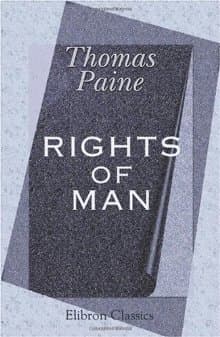
Rights of Man cover
Archivist's Choice

Rights of Man

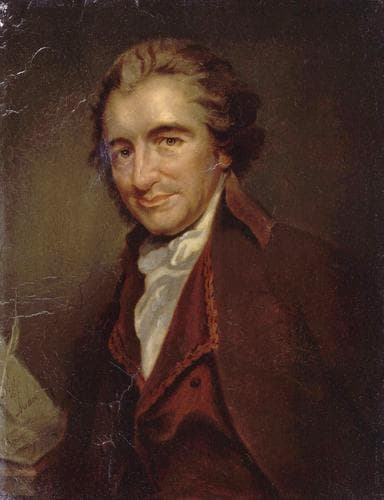
Thomas Paine (1791)

Genre

Politics / History / Philosophy

Reading Time

240 min

Key Themes

See below

Track Your Reading

Sign in to track this book

In 'Rights of Man,' Thomas Paine passionately champions the French Revolution, arguing for universal human rights, radical social reforms like worker's social security, and an egalitarian society where government serves the will of the people.

Core Idea

Thomas Paine's "Rights of Man" is a strong defense of the French Revolution and a key text for modern republicanism. It argues that government gets its authority only from the people's consent, not from inherited power or old traditions. Paine states that individuals have natural rights that exist before any government, and government's main role is to protect these rights. He believes that when a government fails to uphold these rights or acts against the people's will, revolution is a valid and necessary step to create a system based on reason, equality, and universal principles. The book systematically breaks down monarchical and aristocratic systems, advocating for a representative republic where all citizens are equal under the law, inherited titles are abolished, and a social welfare system ensures everyone's well-being. Paine imagines a world where nations, united by republican principles, would promote peace and trade instead of war, emphasizing human connection and the universal application of rights across all societies.
Reading time
240 min
Difficulty
Medium
✓ Read this if...
You are interested in the philosophical underpinnings of modern democracy, the American and French Revolutions, or the historical arguments against monarchy and hereditary power.
✗ Skip this if...
You prefer contemporary political analysis, are not interested in 18th-century political philosophy, or find historical polemics difficult to engage with.

Core idea

The central argument and framework that powers the entire book.

Thomas Paine's "Rights of Man" is a strong defense of the French Revolution and a key text for modern republicanism. It argues that government gets its authority only from the people's consent, not from inherited power or old traditions. Paine states that individuals have natural rights that exist before any government, and government's main role is to protect these rights. He believes that when a government fails to uphold these rights or acts against the people's will, revolution is a valid and necessary step to create a system based on reason, equality, and universal principles.

The book systematically breaks down monarchical and aristocratic systems, advocating for a representative republic where all citizens are equal under the law, inherited titles are abolished, and a social welfare system ensures everyone's well-being. Paine imagines a world where nations, united by republican principles, would promote peace and trade instead of war, emphasizing human connection and the universal application of rights across all societies.

At a glance

Reading time

240 min

Difficulty

Medium

Read this if...

You are interested in the philosophical underpinnings of modern democracy, the American and French Revolutions, or the historical arguments against monarchy and hereditary power.

Skip this if...

You prefer contemporary political analysis, are not interested in 18th-century political philosophy, or find historical polemics difficult to engage with.

Key Takeaways

1

Government by Consent, Not Succession

Legitimacy derives from the living, not the dead; power must be continually re-authorized by the governed.

Quote

Every age and generation must be as free to act for itself, in all cases, as the ages and generations which preceded it. The vanity and presumption of governing beyond the grave, is the most ridiculous and insolent of all tyrannies.

Paine challenges the idea of inherited government, whether monarchy or aristocracy, calling it an absurd and oppressive imposition of the past on the present. He states that no generation or individual has the right to bind future generations or dictate their government. Each generation has an inherent, unchangeable right to establish and change its own constitution and laws. This idea supports popular sovereignty and ongoing consent, where government legitimacy is not inherited but constantly renewed by the will of the living. Accept...

Supporting evidence

Paine critiques Edmund Burke's defense of hereditary succession, specifically Burke's assertion that the English people had forever bound themselves and their posterity to a particular line of succession. Paine argues this is 'the most ridiculous and insolent of all tyrannies' and a violation of the rights of the living.

Apply this

Actively participate in democratic processes, understanding that our consent is what legitimizes government. Advocate for constitutional reforms or amendments that reflect contemporary societal values, rather than blindly adhering to antiquated structures solely due to tradition.

popular-sovereigntysocial-contracthereditary-tyranny
2

Natural Rights Precede Government

Human rights are inherent and universal, not granted by or dependent on government, which merely secures them.

Quote

Rights are not gifts from government, but are inherent in humanity. Government is instituted not to create rights, but to protect those which already exist.

Paine clearly differentiates between natural rights and civil rights. Natural rights, such as liberty, security, and property, belong to every individual because they are human; they exist before government and cannot be taken away. Civil rights, on the other hand, are natural rights exchanged or changed within a social agreement to achieve greater collective security and effectiveness. For example, an individual might give up the natural right to be their own judge in exchange for a fair legal system. The key point is that government...

Supporting evidence

Paine's argument against Burke centers on this point: Burke views rights as 'inheritances' granted by historical precedent and charters, whereas Paine insists they are universal and 'natural' to all people, regardless of their lineage or national history.

Apply this

Critically evaluate government actions and policies through the lens of natural rights. Support legislation and movements that expand or protect fundamental human rights globally, recognizing their universal applicability, and resist any attempts to define rights as privileges granted by the state.

natural-rightscivil-rightsstate-of-nature
3

Revolution as a Legitimate Recourse

When government fails to secure natural rights and becomes despotic, the people have a right to revolt and establish a new order.

Quote

What is called a revolution in France, is not a revolt against a government, but a revolt against the despotism of government.

Paine strongly defends the French Revolution not as lawless rebellion, but as a necessary and justified response to systemic oppression. He argues that when a government stops representing the people's interests, actively violates their natural rights, and becomes an instrument of oppression, the people are not only justified but morally obligated to change or abolish it. This right to revolution is an extension of popular sovereignty and the ultimate check against government overreach. It is a re-assertion of the people's fundamental...

Supporting evidence

Paine's entire work is a defense of the French Revolution, contrasting it with the English Glorious Revolution of 1688. He argues the French Revolution was a more profound and legitimate overturning of a despotic system, rather than a mere change of monarchs.

Apply this

Understand the historical context and philosophical underpinnings of revolutionary movements, distinguishing between legitimate struggles against tyranny and mere insurrections. Support peaceful and democratic means of change, but recognize the ultimate right of a people to resist oppression when all other avenues are exhausted.

right-to-revolttyrannypopular-sovereignty
4

Society is a Blessing, Government a Necessary Evil

Humanity's natural inclination is towards cooperation; government's role is minimal, to secure against the few who deviate.

Quote

Society is produced by our wants, and government by our wickedness; the former promotes our happiness positively by uniting our affections, the latter negatively by restraining our vices.

Paine distinguishes between society and government. Society, he argues, naturally comes from human needs and affections; people are inherently social and cooperative, leading to mutual support and collective happiness. Government, however, is a 'necessary evil' put in place to control the 'vices' of a small minority who might otherwise disrupt society's peace and order. This view suggests that the best government governs least, allowing society's natural harmony and productivity to grow. Overly complex or intrusive government is seen ...

Supporting evidence

Paine uses the example of early American settlers and their ability to self-organize and govern effectively before formal, complex governmental structures were fully established, demonstrating the inherent capacity of society to function.

Apply this

Advocate for limited government intervention where social structures and individual responsibility can achieve desired outcomes. Support community-led initiatives and mutual aid networks, recognizing the inherent capacity of society to solve many of its own problems without top-down governmental mandates.

limited-governmentsocial-harmonyindividual-liberty
5

Abolition of Hereditary Titles and Privileges

Titles of nobility and inherited power are artificial distinctions that corrupt society and violate equality.

Quote

Titles are but nicknames, and every nickname is a title. The thing is a burlesque. It is an insult to common sense.

Paine criticizes inherited titles and aristocratic privileges as absurd and unfair. He argues that true merit and virtue are personal qualities, not transferable by birth. Granting someone power, wealth, or status based only on their lineage denies the natural equality of all individuals and perpetuates an artificial hierarchy that has no basis in reason or usefulness. These distinctions create arrogance in the privileged and resentment in common people, ultimately harming society. Paine sees their abolition as a crucial step toward c...

Supporting evidence

Paine specifically targets the British system of peerage and nobility, ridiculing the idea that 'wisdom and integrity can be transmitted from father to son like an estate.' He views the French Revolution's abolition of titles as a rational and necessary reform.

Apply this

Challenge and dismantle systems of inherited privilege in modern society, whether they be through wealth concentration, nepotism, or unearned social status. Advocate for merit-based systems and equal opportunities, rather than allowing accidents of birth to determine life outcomes.

egalitarianismmeritocracyaristocracy-critique
6

Progressive Taxation and Social Welfare

A just society uses progressive taxation to fund social programs, alleviating poverty and promoting general welfare.

Quote

The produce of the earth, without the aid of society, would be no more than an annual subsistence. It is the value of the improvements only, and not the earth itself, that is individual property. Every proprietor, therefore, owes to the community a ground-rent for the land which he holds.

Paine proposes a radical social welfare system, centuries ahead of its time. He argues that land and natural resources are humanity's common property. While individuals can own improvements made to land, they owe a 'ground-rent' to the community for using the land itself. This, combined with progressive taxation on inherited wealth and income, would fund a comprehensive social safety net. His proposals include universal education, pensions for the elderly, assistance for the poor and disabled, and public works programs to provide empl...

Supporting evidence

Paine lays out detailed plans for a progressive tax system, including a graduated tax on inheritances and income, to fund specific social programs such as a 'national fund' for the poor and elderly, universal education, and public employment for the unemployed.

Apply this

Support and advocate for progressive taxation policies and robust social safety nets, including universal basic services, pensions, and unemployment benefits. Recognize the ethical imperative for society to provide for its most vulnerable members and to ensure a baseline of dignity and opportunity for all.

progressive-taxationsocial-welfareuniversal-basic-income-precursor
7

Peace Through Republicanism

Republics, governed by popular will, are inherently less prone to war than monarchies driven by dynastic ambition.

Quote

Monarchical governments, by their very nature, are addicted to war. Republican governments, on the contrary, are disposed to peace.

Paine suggests a direct link between the form of government and its tendency for war. Monarchies, he argues, are inherently warlike because their rulers often engage in conflicts driven by personal ambition, family rivalries, or a desire for territorial expansion, without bearing the direct costs or suffering the consequences of war. The people, who pay the taxes and shed the blood, have little say. In contrast, republican governments, where power rests with the people, are naturally inclined toward peace. The people, being the ones w...

Supporting evidence

Paine contrasts the constant wars of European monarchies with the (then nascent) American Republic's stated aim of peace and commerce. He argues that the 'balance of power' rhetoric used by monarchies is merely a pretext for perpetual conflict.

Apply this

Advocate for democratic governance globally as a means of promoting international peace and stability. Support diplomatic solutions over military interventions, recognizing that governments accountable to their citizens are less likely to engage in aggressive warfare.

republicanismdemocratic-peace-theory-precursoranti-monarchy
8

The Fallacy of 'Ancient Constitutions'

Blind adherence to tradition over reason hinders progress and perpetuates injustice; constitutions must be living documents.

Quote

Government by precedent, without principle, is a despotism. It is a government of the dead over the living.

Paine criticizes the reverence for 'ancient constitutions' and historical precedents, especially as argued by Burke. He states that laws and government structures established in a different era, under different circumstances, are not necessarily suitable for the present. Blindly following tradition simply because it is old means valuing the decisions of past generations over the reasoning and needs of the current one. This 'government of the dead over the living' stops progress, perpetuates injustices, and prevents society from adapti...

Supporting evidence

Paine directly refutes Burke's veneration of the British constitution as an ancient, unalterable inheritance. He points out the arbitrary and often oppressive nature of many historical laws and institutions, questioning why they should be preserved merely out of tradition.

Apply this

Question the status quo and critically examine long-standing institutions and laws. Advocate for constitutional reform and legal updates that align with modern ethical standards and societal needs, rather than preserving outdated systems out of mere reverence for tradition.

constitutionalismreason-over-traditionlegal-reform
9

Universal Rights and the Brotherhood of Man

Nationality and class are artificial divisions; all humanity shares universal rights and a common interest in justice.

Quote

My country is the world, and my religion is to do good.

Paine promotes a deeply cosmopolitan worldview. He asserts that humanity's fundamental rights are universal, going beyond national borders, social classes, or religious affiliations. The artificial divisions of nation-states, monarchical rivalries, and aristocratic hierarchies obscure the shared humanity and common interests of people worldwide. He envisions a future where nations cooperate based on republican principles and mutual benefit, rather than engaging in constant conflict driven by narrow self-interest or family ambition. Th...

Supporting evidence

Paine's critique of European monarchies and their constant wars highlights his belief that these conflicts are artificial and serve only the rulers, not the common people, who share more in common with each other across borders than with their own rulers.

Apply this

Promote international cooperation and human rights initiatives, recognizing that global challenges require collective action based on shared values. Challenge xenophobia and nationalism, fostering a sense of global citizenship and solidarity among diverse peoples.

cosmopolitanismhuman-rightsglobal-citizenship
10

The Dangers of Secrecy and Opacity in Government

Transparency is essential for republican government; secrecy breeds corruption and undermines public trust.

Quote

When a government is compelled to hide its actions, it is a sure sign that those actions are not for the public good.

Paine, while not explicitly detailing this as a separate chapter, implicitly and repeatedly argues for government transparency throughout Rights of Man. He views the secretive nature of monarchical and aristocratic governments, with their hidden treaties, clandestine negotiations, and opaque financial dealings, as a primary source of corruption and a way to exploit the populace. A truly republican government, founded on popular sovereignty, requires open debate, accessible records, and public accountability. Secrecy, in Paine's view...

Supporting evidence

Paine's critique of the 'mystery and secrecy' surrounding European courts and their foreign policies, which he argues leads to unnecessary wars and burdens on the people, is a recurring theme. He contrasts this with the ideal of open deliberation in a republic.

Apply this

Demand governmental transparency and accountability from elected officials. Support open records laws, freedom of information acts, and investigative journalism that sheds light on governmental actions and expenditures. Actively participate in public discourse to ensure decisions are made in the open.

government-transparencyaccountabilitypublic-trust

Critical analysis

Notable Quotes

The mind, in a state of corruption, sees every thing else as corrupt.

Paine's critique of the British government and its perceived corruption.

Whatever is my right as a man, is also the right of another; and it becomes my duty to guarantee as well as to possess.

Paine's argument for universal human rights and the duty to uphold them for others.

When we survey the wretched condition of man under the monarchical and hereditary systems of government, dragged from his home by one power, or driven by another, and impoverished by all, we cannot but be struck with a conviction, that these systems are bad.

Paine's condemnation of monarchical and hereditary forms of government.

Government is nothing more than a national association acting on the principles of society.

Paine's definition of government as a social contract and a tool for societal benefit.

Every age and generation must be free to act for itself, in all cases, as the age and generation which preceded it.

Paine's rejection of hereditary rule and the idea that one generation can bind future generations.

The true and only independence of a nation is in its government.

Paine emphasizing that a nation's true independence stems from its self-governance, not from external powers.

Man has no property in man; neither has any generation a property in the generations which are to follow.

Paine's assertion against slavery and hereditary claims of power over future generations.

It is not because a man is a king that he is a king. He is a king because he is a man.

Paine arguing that a king's authority, if any, derives from his humanity, not from divine right or inherent superiority.

Reason, and not habit, is the governor of man.

Paine advocating for rational thought and deliberation over tradition and inherited customs in governance.

The American Revolution, a total change of the principles and practice of government, has already opened a new era in the political world.

Paine highlighting the profound impact of the American Revolution as a model for political change.

To say that a king can do no wrong, is to say that government is not necessary.

Paine's satirical critique of the doctrine of royal infallibility, implying that if kings are perfect, government oversight is superfluous.

The present age will hereafter merit to be called the Age of Reason, and the present generation will appear to the future as the Adam of a new world.

Paine expressing optimism about the potential for enlightenment and progress in his own time.

The more perfect civilization is, the less occasion has it for government, because the more does it regulate its own affairs, and govern itself.

Paine suggesting that a highly civilized society would require minimal government intervention, as its citizens would be self-governing.

Quiz

Test Your Knowledge

Ready to see how well you understood this book? Take our interactive quiz with 10 questions.

10
Questions
~5
Minutes
?
Best Score

Key Questions (FAQ)

'Rights of Man' argues for the defense of the French Revolution against critics like Edmund Burke, asserting that government should be based on reason and natural rights rather than tradition or hereditary succession. Paine champions the idea that individuals possess inherent rights that no government can legitimately infringe upon.

About the author