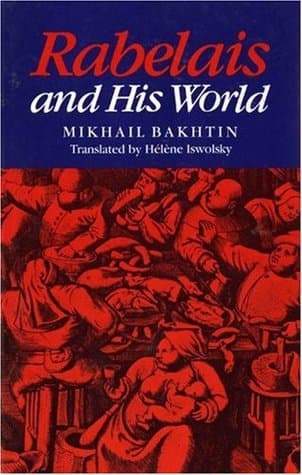
The Carnivalesque as a Counter-Culture
Carnival isn't just a festival; it's a profound, temporary inversion of social order, a realm of freedom and collective renewal.
Quote
Carnival is not a spectacle seen by the people; they live in it, and everyone participates because its very idea embraces all the people.
Bakhtin argues that the carnivalesque is a distinct, parallel world to the official, hierarchical culture. It is a temporary suspension of all social ranks, privileges, norms, and prohibitions. During carnival, the 'truth' of the world is not found in official dogma or rigid class structures, but in the joyous, collective experience of the people. This temporary liberation allows for a 'second life' for people, where all are equal, and interaction is free and familiar. It is a space where the official worldview is mocked, dethroned, a...
Supporting evidence
Bakhtin meticulously analyzes various forms of medieval and Renaissance folk humor, such as feast-day celebrations, marketplace gatherings, and especially carnival pageants, where kings were crowned and then dethroned, and official rituals were parodied. He points to the Feast of Fools and the Feast of the Ass as specific examples of ecclesiastical carnivalesque.
Apply this
Recognize moments in contemporary culture where official narratives are subverted or parodied by popular, informal expressions. Engage with art, humor, and social movements that challenge established power structures and promote collective liberation, even if temporary. Consider how 'safe spaces' for dissent and inversion can foster renewal.