BookBrief
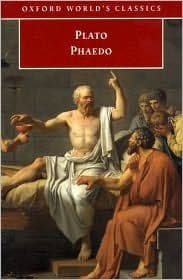
Phaedo cover
Archivist's Choice

Phaedo

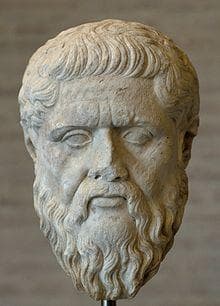
Plato

Genre

History / Philosophy

Reading Time

180 min

Key Themes

See below

Track Your Reading

Sign in to track this book

On his deathbed, Socrates discusses the soul's immortality, leaving a lasting impact on Western philosophy.

Core Idea

Plato's Phaedo argues for the soul's immortality. It suggests that philosophers prepare for death by detaching from bodily pleasures and focusing on eternal Forms. Through conversations on Socrates' last day, the book explores proofs for the soul's survival after the body dies, including the cyclical nature of life and death, recollection, and the soul's connection to unchanging Forms. It concludes that philosophy is the practice of dying, leading the soul to its eternal home.
Reading time
180 min
Difficulty
Hard
✓ Read this if...
You are interested in the philosophical foundations of the soul's immortality, classical arguments for an afterlife, or the Socratic method in action regarding ultimate questions.
✗ Skip this if...
You prefer modern, empirical approaches to consciousness and death, or find extensive metaphysical arguments without empirical grounding unconvincing.

Core idea

The central argument and framework that powers the entire book.

Plato's Phaedo argues for the soul's immortality. It suggests that philosophers prepare for death by detaching from bodily pleasures and focusing on eternal Forms. Through conversations on Socrates' last day, the book explores proofs for the soul's survival after the body dies, including the cyclical nature of life and death, recollection, and the soul's connection to unchanging Forms. It concludes that philosophy is the practice of dying, leading the soul to its eternal home.

At a glance

Reading time

180 min

Difficulty

Hard

Read this if...

You are interested in the philosophical foundations of the soul's immortality, classical arguments for an afterlife, or the Socratic method in action regarding ultimate questions.

Skip this if...

You prefer modern, empirical approaches to consciousness and death, or find extensive metaphysical arguments without empirical grounding unconvincing.

Key Takeaways

1

The Philosopher's Practice of Dying

True philosophers embrace death as a liberation of the soul from the body.

Quote

For the body is a source of endless trouble to us by reason of the mere requirement of food, and is liable to diseases which overtake and impede us in the search after truth: it fills us full of loves, and lusts, and fears, and fancies of all kinds, and endless foolery, and in fact, as men say, takes away from us the power of thinking at all. Whence come wars, and factions, and battles? Whence but from the body and the lusts of the body?

Socrates says a philosopher's life prepares them for death. The body, with its desires and distractions, holds the soul back from pure knowledge. By ignoring bodily pleasures, philosophers cleanse their souls, making them ready to understand the Forms—eternal truths known through intellect. Death is not an end but a release, letting the soul achieve its goal: to think about truth without hindrance. This view changes death from something to fear into the desired end of a life spent seeking wisdom.

Supporting evidence

Socrates's calm acceptance of his own impending death, contrasted with the grief of his disciples, serves as the ultimate demonstration of this principle. He consistently downplays the suffering of his execution, focusing instead on the philosophical implications.

Apply this

Cultivate a disciplined detachment from excessive material desires and bodily comforts. Prioritize intellectual and spiritual pursuits over sensory gratification. Reflect on the transient nature of physical existence to foster a greater appreciation for enduring truths.
body-soul-dichotomyasceticismforms
2

The Cyclical Argument for Immortality

Life and death are part of an endless cycle, implying the soul's continuous existence.

Quote

Are not all things which have opposites generated out of their opposites? For instance, out of the strong comes the weak, and out of the swift the slow, and out of the evil the good, and out of the just the unjust?

Socrates argues that everything comes from its opposite. Just as waking comes from sleeping, and sleeping from waking, life must come from death, and death from life. If death were final, the universe would stop moving and living. Since life continues, it means souls go from the living to the dead, and then return from the dead to the living. This constant cycle requires the soul to exist before and after life, supporting its immortality.

Supporting evidence

Socrates uses examples like the process of falling asleep and waking up, or becoming stronger after being weaker, to illustrate how opposites generate each other in a continuous loop.

Apply this

View cycles in nature and life not as endings but as transformations. Recognize that every 'end' is a potential 'beginning.' This perspective can alleviate fear of change and foster resilience in the face of loss, seeing it as part of a larger, ongoing process.

reincarnationdialecticopposites
3

Recollection as Proof of Pre-existence

Learning is not acquiring new knowledge, but remembering truths the soul knew before birth.

Quote

Then, if we acquired knowledge before we were born, and were born having it, then we knew, both before and at the time of birth, not only the equal, or the greater, or the less, but all other ideas of the same kind.

Socrates presents the theory of Anamnesis, or recollection. He argues that we have innate knowledge of perfect ideas like absolute equality, beauty, or justice, which we cannot get only from imperfect sensory experiences. When we see two sticks as 'equal,' we are not learning equality from the sticks (which are never perfectly equal), but are 'remembering' a perfect Form of Equality that our soul knew before it was in a body. This act of remembering means the soul existed before birth and met these perfect Forms in a disembodied state...

Supporting evidence

The famous example of the uneducated slave boy in the Meno (though not in Phaedo, it's a core Platonic concept that underlies this argument) who, when guided by Socrates's questions, 'recollects' geometrical truths he was never taught.

Apply this

Approach learning not as passive reception, but as active engagement and critical inquiry designed to 'uncover' inherent truths. Trust your intuition for fundamental principles, and seek to clarify rather than merely memorize. Engage in Socratic questioning to draw out underlying knowledge.

anamnesisepistemologyinnate-knowledge
4

The Affinity of the Soul to the Divine

The soul's invisible, unchanging nature aligns it with the eternal Forms, distinct from the body's transient physicality.

Quote

And the soul is most like the divine, and the immortal, and the intelligible, and the uniform, and the indissoluble, and the unchangeable; and the body is most like the human, and the mortal, and the unintelligible, and the multiform, and the dissoluble, and the changeable.

Socrates separates two types of existence: visible and invisible. The visible world is always changing, complex, and mortal—this is the body. The invisible world is unchanging, simple, and immortal—this is where the Forms are, and the soul is like them. Because the soul can understand these eternal, invisible Forms through reason, it must also be invisible and immortal. The body, being complex, can break down, but the soul, being simple and god-like, cannot be destroyed and is thus immortal. This 'affinity argument' directly links the...

Supporting evidence

Socrates's distinction between things that are seen and things that are not seen, and how the soul operates primarily with the latter when it engages in true philosophical inquiry.

Apply this

Spend time in contemplation and reflection, seeking to understand fundamental principles rather than getting lost in superficial details. Prioritize activities that engage your intellect and moral compass over those that merely satisfy fleeting sensory desires. Cultivate an inner life that is independent of external circumstances.

dualismmetaphysicsdivine-nature
5

The Danger of Misology

Skepticism born from failed arguments can lead to a hatred of reason itself.

Quote

For there is no greater evil than misology. And misology and misanthropy are generated in the same way; for both arise from a want of skill in the use of words, and yet trusting in them; and then, after a while, they are found to be false, and then at last they come to hate them and all argument.

Socrates warns against misology, or hating arguments, comparing it to hating people. Just as someone might hate people after being deceived repeatedly, they might hate reason after hearing arguments that seem right but are later proven wrong. This leads to intellectual laziness and despair, a refusal to think further, assuming all arguments are unreliable. Socrates urges his friends to examine arguments carefully and not lose faith in reason, even if some arguments fail.

Supporting evidence

The immediate context is Simmias and Cebes's doubts about the soul's immortality, which could lead them to give up on philosophical inquiry altogether. Socrates actively encourages them to present their strongest counter-arguments.

Apply this

When encountering flawed arguments or intellectual setbacks, critically analyze the reasoning rather than dismissing the entire field of inquiry. Maintain intellectual humility and a willingness to revise beliefs. Engage in constructive debate to refine understanding, rather than to 'win.'

critical-thinkingskepticismreason
6

The Harmony Argument Refuted

The soul is not merely a harmony of bodily elements but a distinct, independent entity.

Quote

Then, if the soul is a harmony, it is clear that it can never be at variance with itself, or with the body, or with anything else; but it is always in harmony.

Simmias suggests the soul might be like the harmony of a lyre—an invisible, beautiful arrangement that stops existing when the instrument (body) breaks. Socrates refutes this. He argues that harmony cannot exist before the lyre's parts, but the soul is shown to exist before the body through recollection. Also, harmony cannot oppose its parts, yet the soul often opposes bodily desires, guiding them. This shows the soul's separate will and superiority over the body, proving it is not just an emergent property but an independent substanc...

Supporting evidence

Socrates points out that the soul often 'rules' or 'chastises' the body and its passions, which a mere harmony could not do, as harmony is always subservient to its components.

Apply this

Recognize that your 'self' is more than the sum of your physical parts or environmental influences. Cultivate self-discipline and moral agency, understanding that your will can override instinctual urges. Seek to understand your core values and act in accordance with them, rather than being solely driven by external stimuli.

emergent-propertyagencysoul-body-problem
7

The Cloak Argument and Its Flaw

While a soul may outlive many bodies, it doesn't guarantee immortality.

Quote

For if a man were to say that the soul is more lasting than the body, and that it may put on and cast off many bodies, and yet at last must perish, like a weaver who outlives many cloaks and at last perishes himself, he would be right.

Cebes introduces the 'cloak argument,' suggesting that while the soul might outlive many bodies (like a weaver outliving many cloaks), it might still eventually wear out and die. This is a significant challenge, as earlier arguments only showed the soul's pre-existence and ability to survive some deaths, not its absolute immortality. Socrates accepts the strength of this objection, recognizing that simply lasting longer than the body does not mean eternal. This pushes for a deeper, more rigorous argument about the soul's inherent na...

Supporting evidence

Cebes's analogy of the weaver and his cloaks is the central point. The weaver is more durable than his cloaks, but he is not immortal.

Apply this

Be wary of arguments that prove only partial truths. Always question whether a conclusion truly addresses the full scope of the problem. Seek out the strongest counter-arguments to your own beliefs to test their robustness and refine your understanding.

fallacy-of-compositionmortalitymetempsychosis
8

The Theory of Forms as the Ultimate Proof

The soul's participation in the Form of Life makes it essentially deathless.

Quote

And when death attacks a man, the mortal part of him may die, but the immortal part retires and is preserved safe and sound.

Socrates' final and strongest argument for the soul's immortality relies on the Theory of Forms. He says Forms are causes; for example, a beautiful object is beautiful because it shares in the Form of Beauty. Similarly, the soul, by its nature, brings life wherever it is. Therefore, the soul must share in the Form of Life. Just as the Form of Odd cannot include Evenness, and the Form of Cold cannot include Heat, the Form of Life cannot include Death. If the soul essentially embodies life, it cannot admit its opposite, death. Thus, whe...

Supporting evidence

Socrates uses examples like fire always bringing heat and snow always bringing cold, and how these essences cannot admit their opposites. He then applies this principle to the soul and the Form of Life.

Apply this

Understand that certain core aspects of reality and existence are defined by their essential nature, not merely by their observable properties. Seek to grasp these underlying essences in your understanding of the world. Recognize that your own essence, your 'self,' may possess inherent qualities beyond its temporary physical manifestation.

theory-of-formsessentialismcausality
9

The Myth of the Afterlife as Moral Imperative

The detailed description of the afterlife provides a powerful ethical framework for living justly.

Quote

Wherefore, Simmias, seeing that these things are so, we ought to do our utmost to acquire virtue and wisdom in this life; for the prize is noble, and the hope great.

Socrates ends the dialogue not with a final proof, but with a myth of the afterlife, describing souls' journeys, judgments, and destinations based on their lives. This myth, presented as a 'noble risk' rather than absolute fact, serves an important philosophical purpose: it provides a moral framework. The idea of rewards for the good and punishments for the bad in the afterlife motivates a philosophical and just life. It emphasizes that our actions have eternal consequences, making virtue not only good in itself but also necessary for...

Supporting evidence

The vivid description of the 'true Earth,' the rivers of the underworld (Acheron, Styx, Cocytus, Pyriphlegethon), and the different fates awaiting souls based on their purity or impiety.

Apply this

Live with a long-term perspective, considering the ethical implications of your actions beyond immediate gratification. Cultivate virtues like justice, temperance, and wisdom, seeing them as investments in your ultimate well-being. Reflect on the kind of legacy you wish to leave, both in this life and potentially beyond.

eschatologyethicsmoral-philosophy
10

The Stoic Ideal of Socrates

Socrates embodies philosophical serenity in the face of death, a model for rational living.

Quote

And he who has lived a just and pious life, when his time comes, will depart to a place of blessedness.

The entire Phaedo dialogue takes place during Socrates' final hours, showing his remarkable calm and clear thinking as he faces execution. His calm manner, his continued philosophical questioning, and his gentle comfort to his grieving friends embody a stoic ideal. He shows that a life devoted to reason and virtue frees one from the fear of death. His final act of drinking the hemlock, after a bath and a last talk, is shown not as a tragedy, but as a dignified and successful end to his philosophical journey, solidifying his place as t...

Supporting evidence

Socrates's refusal to mourn, his insistence on bathing before the hemlock so his friends wouldn't have to wash a corpse, and his final words to Crito about the cock to Asclepius, all demonstrate his serene and rational acceptance.

Apply this

Cultivate inner peace and resilience through philosophical reflection, especially in challenging circumstances. Approach life's inevitable end with dignity and purpose, focusing on what is within your control (your thoughts and actions) rather than what is not (external events). Strive to live a life so aligned with your values that you can face any outcome with equanimity.

stoicismvirtue-ethicsexistentialism

Critical analysis

Notable Quotes

The unexamined life is not worth living.

Socrates's defense speech, though often attributed to the Apology, reflects his philosophical stance reiterated in Phaedo.

For I deem that the true votary of philosophy is in training for dying and death.

Socrates explaining why philosophers should not fear death.

And when real philosophers are found to be willing to die, that is not strange, for they are confident that when they have departed from the body they will there find the objects of their desire and wisdom.

Socrates linking the philosopher's pursuit of wisdom to their readiness for death.

Is not purification the separating, as much as possible, the soul from the body, and the habituating it to collect and concentrate itself from all parts of the body, and to dwell, so far as it can, in solitude with itself, and in the present life, and also in the future, to be freed from the body as from a prison?

Socrates defining purification as a philosophical practice.

And the soul is in the very likeness of the divine, and immortal, and intellectual, and uniform, and indissoluble, and unchangeable.

Socrates describing the nature of the soul.

And if the soul is immortal, it demands our care not only for this present time, but for all time.

Socrates emphasizing the eternal importance of caring for one's soul.

It seems that while we are in the body, and the soul is contaminated with the evils of the body, our desire will not be satisfied, and that is our desire for truth.

Socrates explaining the hindrance the body poses to the soul's pursuit of truth.

For the body is a source of endless trouble to us by reason of the mere requirement of food; and is liable to diseases which overtake us and impede us in the search after truth.

Socrates detailing the many ways the body distracts from philosophical pursuit.

And true philosophers are always striving to release the soul from the partnership of the body.

Socrates summarizing the goal of philosophical practice.

True courage is wisdom, and temperance is not a matter of fear and desire, but of wisdom and knowledge.

Socrates distinguishing true virtues from conventional ones.

The soul of man is immortal and imperishable, and will one day return to the gods.

Socrates asserting the ultimate destiny of the human soul.

How can a man be happy who is the slave of pleasure?

Socrates arguing against the pursuit of bodily pleasures as a path to happiness.

For I am confident that there truly is such a thing as living again, and that the living come from the dead, and that the souls of the departed are in existence.

Socrates presenting the argument for the cyclical nature of life and death, and the pre-existence of souls.

And the true lovers of wisdom, Cebes, are conscious that when philosophy receives them, their soul is simply fastened and welded into the body and can only view reality through the bars of a prison, and not in herself.

Socrates using the metaphor of a prison to describe the soul's confinement within the body.

No man should bring children into the world who is unwilling to persevere to the end in their nurture and education.

Socrates making a point about parental responsibility, albeit in a discussion about a different topic.

Quiz

Test Your Knowledge

Ready to see how well you understood this book? Take our interactive quiz with 10 questions.

10
Questions
~5
Minutes
?
Best Score

Key Questions (FAQ)

Plato's Phaedo primarily recounts the final hours and execution of Socrates, focusing on his philosophical arguments for the immortality of the soul. It explores themes of death, the nature of the soul, and the pursuit of true knowledge through philosophy.

About the author

Plato

Biography coming soon.