BookBrief
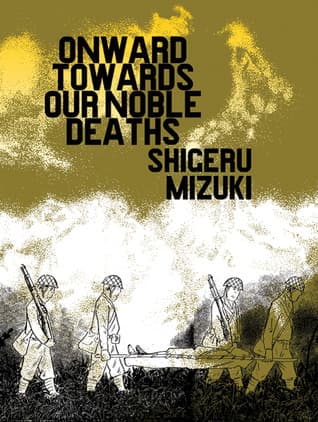
Onward Towards Our Noble Deaths cover
Archivist's Choice

Onward Towards Our Noble Deaths

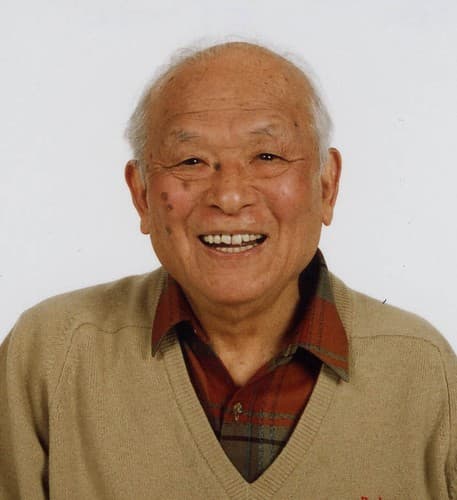
Shigeru Mizuki (2011)

Genre

History

Reading Time

240 min

Key Themes

See below

Track Your Reading

Sign in to track this book

In the harrowing, semi-autobiographical graphic novel, 'Onward Towards Our Noble Deaths,' Shigeru Mizuki plunges readers into the final, futile weeks of a Japanese infantry unit in World War II, where soldiers are condemned to a 'glorious' death in battle or execution for daring to survive.

Core Idea

Shigeru Mizuki's "Onward Towards Our Noble Deaths" is a harrowing graphic novel that shows the brutal reality behind the idea of 'noble death' in wartime, specifically within the Imperial Japanese Army during WWII. Through the story of a doomed infantry unit ordered to charge an overwhelming American force, Mizuki, a veteran himself, exposes the absurdity and moral failure of commands that value abstract honor over human life. The book argues that such sacrifices are not glorious; they are the result of indifferent leadership and a deluded cultural story, leaving survivors scarred by the trauma of watching their comrades die for a cause that proved meaningless.
Reading time
240 min
Difficulty
Medium
✓ Read this if...
You are interested in a raw, unflinching, and deeply personal account of the Pacific War from the Japanese perspective, especially if you appreciate the graphic novel format for conveying historical trauma and anti-war themes. Essential for those who want to understand the psychological impact of war and the absurdity of 'noble sacrifice'.
✗ Skip this if...
You prefer traditional historical analyses without personal narrative, are sensitive to graphic depictions of war, or are looking for a heroic or glorifying portrayal of military conflict. This book offers no comfort or easy answers.

Core idea

The central argument and framework that powers the entire book.

Shigeru Mizuki's "Onward Towards Our Noble Deaths" is a harrowing graphic novel that shows the brutal reality behind the idea of 'noble death' in wartime, specifically within the Imperial Japanese Army during WWII. Through the story of a doomed infantry unit ordered to charge an overwhelming American force, Mizuki, a veteran himself, exposes the absurdity and moral failure of commands that value abstract honor over human life. The book argues that such sacrifices are not glorious; they are the result of indifferent leadership and a deluded cultural story, leaving survivors scarred by the trauma of watching their comrades die for a cause that proved meaningless.

At a glance

Reading time

240 min

Difficulty

Medium

Read this if...

You are interested in a raw, unflinching, and deeply personal account of the Pacific War from the Japanese perspective, especially if you appreciate the graphic novel format for conveying historical trauma and anti-war themes. Essential for those who want to understand the psychological impact of war and the absurdity of 'noble sacrifice'.

Skip this if...

You prefer traditional historical analyses without personal narrative, are sensitive to graphic depictions of war, or are looking for a heroic or glorifying portrayal of military conflict. This book offers no comfort or easy answers.

Key Takeaways

1

The Absurdity of 'Noble Death'

The book exposes the dehumanizing logic of forced, suicidal charges in war.

Quote

The officers kept yelling, 'Onward towards our noble deaths!' But all I saw was a bunch of terrified men being sent to die for nothing.

Mizuki clearly shows the falsehood of a 'noble death' in wartime, especially within the Japanese Imperial Army's 'gyokusai' (shattering like a jewel) doctrine. He portrays a stark reality where soldiers are not heroes willingly sacrificing themselves, but rather terrified, exhausted men forced into suicidal charges with the threat of execution if they retreat. The constant talk of 'noble death' becomes a cynical command tool, stripping soldiers of their free will and reducing them to expendable resources. The story highlights the deep...

Supporting evidence

The repeated orders for 'banzai charges' and 'gyokusai' against overwhelming Allied forces, where soldiers are explicitly told their mission is to die, not to win. The fear of being shot by one's own officers for retreating is a constant undercurrent.

Apply this

Recognize and question rhetoric that glorifies sacrifice without acknowledging the human cost. Be wary of systems that devalue individual lives for abstract ideals, especially in contexts of power imbalance.
gyokusaibanzai-chargedehumanization-of-war
2

Survival as a Form of Rebellion

Escaping death, even through 'cowardice,' becomes an act of defiance against a suicidal command.

Quote

I just wanted to live. Even if it meant being a 'coward' in their eyes, I wanted to see tomorrow.

In a military culture that demanded death over surrender or retreat, Mizuki's personal experience of survival, and his depiction of characters who cling to life despite suicidal orders, is a quiet, powerful act of rebellion. The book champions the innate human will to live against the imposed, unnatural will to die. Soldiers are shown scrounging for food, hiding, or simply being lucky enough to avoid certain death, not out of heroism but out of a basic biological need. This perspective changes the usual war narrative, suggesting that ...

Supporting evidence

Mizuki's own survival, despite suffering severe injuries and losing an arm, contrasts sharply with the fates of his comrades. The narrative frequently shows soldiers trying to find ways to avoid direct combat or prolong their lives, such as feigning illness or finding cover.

Apply this

Value the instinct for self-preservation, particularly when faced with destructive or irrational demands. Understand that 'courage' can manifest not only in facing death but also in resisting it when it's imposed senselessly.

will-to-liveindividual-resistancehuman-spirit-in-war
3

The Illusion of Glorious Sacrifice

The reality of combat is brutal, messy, and devoid of the honor promised by propaganda.

Quote

There was no glory in it. Just mud, blood, and the smell of death.

Mizuki's clear portrayal of the battlefield removes any romanticism surrounding war. He depicts combat as a chaotic, terrifying, and often meaningless affair, far removed from the heroic stories spread by the state. Soldiers do not die with dignity; they die in agony, fear, and confusion. The 'honor' they are promised is never realized in their final moments, only suffering. The book emphasizes the raw, ugly truth of war—the hunger, the disease, the constant fear, and the sheer randomness of death—making it clear that the gap between ...

Supporting evidence

Detailed scenes of soldiers succumbing to malaria, starvation, and random artillery fire, often without ever seeing the enemy. The constant lamentations about lack of food and medicine, and the sheer exhaustion of the men.

Apply this

Critically evaluate any narrative that glorifies war or military sacrifice. Seek out primary accounts to understand the true, unvarnished experiences of those involved in conflict.

anti-war-narrativecombat-realitypropaganda-vs-reality
4

The Indifference of Command

Officers are depicted as detached, often cruel, and more concerned with protocol than human lives.

Quote

Our officers seemed to live in a different world, barking orders for us to die while they ate better and stayed safe.

A recurring theme is the stark contrast between the suffering of the foot soldiers and the often-indifferent, sometimes actively cruel, behavior of their commanding officers. Mizuki illustrates a rigid hierarchy where officers, seemingly disconnected from the immediate horrors of the front line, issue suicidal orders from relative safety. They enforce brutal discipline, prioritize abstract military objectives over the well-being of their men, and often appear to view their soldiers as mere statistics or tools. This portrayal highlight...

Supporting evidence

Officers are shown enjoying better rations while soldiers starve, beating subordinates for minor infractions, and issuing impossible orders for 'banzai charges' with no strategic value, only to ensure 'honor.' The officer who shoots his own men for retreating is a grim example.

Apply this

Question authority, particularly when it appears to be detached from the consequences of its decisions. Advocate for leadership that prioritizes the well-being and lives of those under their command.

military-hierarchyabuse-of-powercommand-and-control-problems
5

The Weight of Moral Compromise

Soldiers are forced into morally reprehensible acts, blurring the lines of right and wrong.

Quote

We were told we had to do it. But every time, a part of me died too.

The book explores the moral compromises soldiers are forced to make in a desperate war zone. From scavenging from the dead to obeying orders that lead to certain, senseless death, the line between 'right' and 'wrong' becomes incredibly blurred. Mizuki shows how the constant pressure to survive and obey, under threat of severe punishment, can push individuals to actions they would never consider in peacetime. This is not about grand ethical debates, but the immediate choices made under duress, highlighting the psychological scars left ...

Supporting evidence

The soldiers' desperation leading them to steal from civilians or scavenge from fallen comrades, and the internal conflict some characters experience when ordered to participate in suicidal charges or execute prisoners (though less explicit on the latter, the general atmosphere implies such pressures).

Apply this

Understand the immense psychological pressure and moral dilemmas faced by individuals in extreme situations. Foster systems that support ethical conduct rather than forcing compromise.

moral-dilemmapsychological-trauma-of-warethical-compromise
6

The Shared Human Experience of Suffering

Despite national allegiances, the pain and fear of war are universally understood.

Quote

No matter who you were fighting, the fear was the same. The hunger was the same.

While focusing on the Japanese experience, Mizuki's story goes beyond national boundaries by illustrating the universal aspects of human suffering in war. The fear of death, the gnawing hunger, the despair of being cut off from home, and the sheer exhaustion are feelings that resonate across all combatants, regardless of their uniform or ideology. The book suggests that the commonality of these experiences, if recognized, could undermine the very foundations of conflict. By focusing on the raw, unadorned human condition, Mizuki highli...

Supporting evidence

The detailed descriptions of hunger, thirst, disease, and fear that are common to all soldiers in such conditions. While the enemy is rarely seen directly, the shared experience of being under bombardment or facing the elements emphasizes this universality.

Apply this

Cultivate empathy for those affected by conflict, recognizing the shared humanity beneath political divides. Seek to understand the human cost of war beyond nationalistic narratives.

universal-sufferingempathy-in-conflicthuman-condition-of-war
7

The Scars of Survival

Mizuki's own injuries underscore the lifelong burden carried by those who endure war.

Quote

Even after the war ended, the war never really left me. It was always there, an arm missing, a memory haunting.

Mizuki's personal experience of losing an arm in the war is not just a biographical detail; it is a metaphor for the lasting scars carried by survivors. The physical injury is a constant, visible reminder of the conflict, but the book also speaks to the invisible wounds—the psychological trauma, the moral burdens, and the haunting memories that persist long after the fighting stops. Survival is not an escape from war's consequences but rather a transition into a different, often difficult, phase of grappling with its aftermath. This t...

Supporting evidence

Mizuki's status as an amputee from his war service. While the book focuses on the war itself, his very act of drawing it, and his survival, frames the narrative with the understanding that he lived through this horror.

Apply this

Support veterans and survivors of conflict, recognizing that their struggles often continue long after the fighting ceases. Understand that trauma is a lasting consequence of war.

post-traumatic-stressveteran-supportlong-term-effects-of-war
8

The Power of Testimony

Mizuki's manga serves as a crucial historical document and a powerful anti-war statement.

Quote

I drew this so people would remember, so they would truly see what it was like.

As a semi-autobiographical work, 'Onward Towards Our Noble Deaths' is an invaluable piece of historical evidence. Mizuki, using the accessible and impactful medium of manga, provides a visceral, ground-level account of a Japanese soldier's experience in WWII, a perspective often underrepresented or sanitized in official histories. His work does not just recount events; it conveys the emotional and psychological realities of war with a directness that prose sometimes struggles to achieve. This makes the book not only a poignant persona...

Supporting evidence

The book's status as a 'landmark publishing event' and its critical acclaim (e.g., Angoulême Heritage Essential Award) attest to its significance as a historical and artistic document. Mizuki's personal involvement as a soldier lends authenticity.

Apply this

Seek out diverse historical accounts and personal testimonies to gain a comprehensive understanding of historical events. Support and value artistic expressions that document difficult truths.

historical-memorymanga-as-historyanti-war-literature
9

The Mundanity Amidst Madness

Even in extreme circumstances, human beings cling to ordinary routines and thoughts.

Quote

Even as we faced death, we still talked about food, complained about the heat, and dreamt of home.

Despite the constant threat of death and the overwhelming horror, Mizuki's soldiers often engage in remarkably mundane activities and conversations. They complain about rations, fantasize about food, grumble about their superiors, and recall trivial details from home. This juxtaposition of the mundane with the horrific highlights the enduring human capacity to find small moments of normalcy, even in the most abnormal and desperate situations. It shows that humans do not instantly transform into heroic figures in war; they remain indiv...

Supporting evidence

Numerous scenes where soldiers discuss their hunger in detail, dream of specific foods, complain about the heat or insects, or talk about their families and pre-war lives, even right before a suicidal charge.

Apply this

Recognize the resilience of the human spirit in finding normalcy amidst chaos. Appreciate the significance of small, everyday comforts and routines, especially during times of crisis.

human-resiliencecoping-mechanismseveryday-life-in-war
10

The Legacy of Unanswered Questions

The book leaves readers to grapple with the profound 'why' of such senseless suffering.

Quote

Why? Why did we have to die like that? I've never stopped asking.

Mizuki's story, while vividly depicting the 'what' and 'how' of the soldiers' final days, implicitly asks the enduring 'why.' The futility of the 'noble deaths,' the waste of young lives, and the sheer scale of the suffering are presented without easy answers or justifications. The book does not preach, but rather allows the horror to speak for itself, forcing the reader to confront the profound questions about leadership, ideology, and the human capacity for self-destruction. This open-endedness ensures the book's message resonates l...

Supporting evidence

The cyclical nature of the suicidal charges, the lack of strategic gains, and the constant, often despairing, internal monologues of the soldiers about their fate, without ever receiving a satisfactory explanation from their superiors.

Apply this

Engage in critical thinking about historical events and contemporary conflicts. Demand accountability from leaders and question narratives that rationalize mass suffering or sacrifice.

futility-of-warmoral-responsibilityhistorical-reflection

Critical analysis

Notable Quotes

Are we ready to die for the Emperor?

A common rhetorical question posed to soldiers, highlighting the pervasive propaganda.

The Emperor is a god, and we are his loyal servants.

A core belief instilled in Japanese soldiers, justifying their absolute obedience.

Better to die with honor than live in shame.

A recurring theme emphasizing the cultural value placed on an honorable death over surrender.

Even if we are defeated, we must make sure the enemy pays a high price.

Reflecting the 'gyokusai' (shattering like a jewel) mentality of fighting to the last man.

The food here is terrible. I miss my mother's cooking.

A moment of human vulnerability and longing amidst the harsh realities of war.

Another day, another battle. Will it ever end?

A soldier's weariness and questioning of the endless conflict.

We are just pawns in a game played by men far away.

A growing sense of disillusionment among the soldiers about their role.

The sound of the planes... it never leaves you.

Describing the constant threat and psychological impact of air raids.

They told us we would be welcomed as heroes. It's just more jungle.

The stark contrast between propaganda and the grim reality faced by soldiers.

I just want to go home and see my family again.

A simple, heartfelt wish for an end to the war and a return to normal life.

The officers eat well, while we starve.

Highlighting the class disparity and unfairness within the military hierarchy.

Even in the darkest moments, there is a flicker of hope, however small.

A rare moment of resilience or internal reflection amidst despair.

The jungle itself is an enemy, as deadly as any soldier.

Emphasizing the harsh and unforgiving environment as a major adversary.

To be forgotten after such a sacrifice... that is the true tragedy.

A reflection on the ultimate fate of many soldiers and the meaning of their deaths.

Quiz

Test Your Knowledge

Ready to see how well you understood this book? Take our interactive quiz with 10 questions.

10
Questions
~5
Minutes
?
Best Score

Key Questions (FAQ)

'Onward Towards Our Noble Deaths' is a semi-autobiographical manga by Shigeru Mizuki that recounts the desperate final weeks of a Japanese infantry unit at the end of World War II. It depicts soldiers ordered to die for their country, facing execution if they return alive, and explores the devastating consequences and moral depravity of war.

About the author