BookBrief
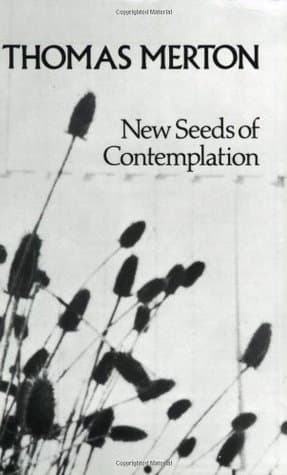
New Seeds of Contemplation cover
Archivist's Choice

New Seeds of Contemplation

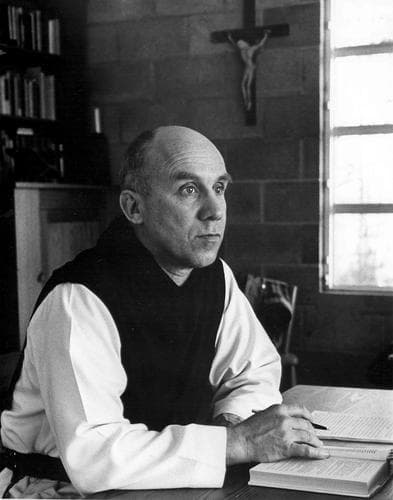
Thomas Merton (1962)

Genre

Spirituality / Philosophy

Reading Time

9-12 hours

Key Themes

See below

Track Your Reading

Sign in to track this book

Merton's "New Seeds of Contemplation" urges readers to rediscover the forgotten mystical depths within the Western soul, guiding them toward a contemplative awakening.

Core Idea

Thomas Merton argues that contemplative practice is necessary to find the 'True Self' beyond ego and material distractions. He states that this inner journey, marked by presence, silence, and self-emptying, leads to a unified awareness of God and an understanding of love as life's essence. This change is not an escape but a deeper engagement with the world, where the ordinary becomes sacred, and action flows from inner freedom and compassion, dissolving the illusion of separateness.
Reading time
9-12 hours
Difficulty
Hard
✓ Read this if...
You are seeking a profound spiritual journey, are open to Christian mysticism, or want to understand the nature of contemplation and inner peace beyond religious dogma.
✗ Skip this if...
You prefer practical self-help, are looking for a light read, or are averse to dense theological and philosophical exploration of spirituality.

Core idea

The central argument and framework that powers the entire book.

Thomas Merton argues that contemplative practice is necessary to find the 'True Self' beyond ego and material distractions. He states that this inner journey, marked by presence, silence, and self-emptying, leads to a unified awareness of God and an understanding of love as life's essence. This change is not an escape but a deeper engagement with the world, where the ordinary becomes sacred, and action flows from inner freedom and compassion, dissolving the illusion of separateness.

At a glance

Reading time

9-12 hours

Difficulty

Hard

Read this if...

You are seeking a profound spiritual journey, are open to Christian mysticism, or want to understand the nature of contemplation and inner peace beyond religious dogma.

Skip this if...

You prefer practical self-help, are looking for a light read, or are averse to dense theological and philosophical exploration of spirituality.

Key Takeaways

1

The True Self Beyond Illusion

Discovering the authentic self hidden beneath social constructs and ego.

Quote

For me to be a saint means to be myself. Therefore the problem of sanctity and salvation is in fact the problem of finding who I am and of discovering my true self.

Merton argues that modern life, driven by external validation, separates us from our 'true self.' This true self is not an achievement but a divine spark within each person, often hidden by the 'false self'—the persona we create. Contemplation is not about adding but removing layers of illusion to reveal what is always there. This process requires honesty and a willingness to face the emptiness often beneath our busy lives. The 'true self' is not a concept but a state of being to be experienced, a direct connection to the divine that ...

Supporting evidence

Merton frequently references the paradox of losing oneself to find oneself, echoing scriptural themes, and uses the metaphor of stripping away masks to reveal the authentic face underneath. He describes the 'false self' as a 'manufactured self' designed for worldly success and approval.

Apply this

Engage in regular periods of silence and solitude. Practice 'un-doing' rather than 'doing' – consciously disengage from goal-oriented thinking and simply 'be.' Reflect on moments when you feel most authentic, free from the need to impress or perform. Journal about the motivations behind your actions: are they driven by genuine desire or by external pressures?
true-selffalse-selfegoauthenticity
2

Contemplation as Radical Presence

Beyond mere thought, contemplation is an active, receptive state of being fully present.

Quote

Contemplation is not a psychological trick. It is not an esoteric technique. It is a way of being fully human, fully alive, fully present to God and to the world.

Merton redefines contemplation as more than just meditation or intellectual thought. For him, it is a radical state of presence, a deep attention to reality—both inner and outer—that allows for an immediate, non-conceptual understanding of the divine. It is a 'gap' in ordinary consciousness, a moment of pure receptivity where the mind is quiet, and the heart is open. This is not about escaping the world but engaging with it deeply, seeing the sacred in the mundane. It requires discipline, not in forcing thoughts, but in letting go of ...

Supporting evidence

He contrasts active meditation, which involves thinking about God, with contemplation, which he describes as a 'simple gaze' or a 'passive reception' of divine reality. Merton frequently uses the imagery of light, silence, and emptiness to convey the nature of this experience.

Apply this

Practice 'mindful' activities like walking, eating, or listening, focusing entirely on the sensory experience without judgment or internal commentary. Dedicate short, regular periods to silent sitting, not trying to achieve anything, but simply being present to whatever arises. Observe nature with deep attention, allowing its beauty and complexity to speak to you without immediate analysis.

presencemindfulnessreceptivitysilence
3

The Desert Within

Embracing solitude and inner emptiness as fertile ground for spiritual growth.

Quote

The desert is the furnace of purification, the place where we are stripped of our illusions and forced to confront our true selves.

Merton champions solitude not as an escape but as a necessary journey into the 'desert within.' This inner desert is a place of emptiness, where usual distractions are removed, forcing us to confront anxieties, attachments, and the 'nothingness' beneath our ceaseless activity. Though uncomfortable at first, this emptiness is fertile ground. Here, without external noise, the true self can emerge, and the voice of God can be heard. It is a place of purification and change, where the ego's hold weakens, and a deeper, more authentic relat...

Supporting evidence

Merton draws heavily on the tradition of desert fathers and hermits, emphasizing their radical commitment to solitude and its transformative power. He describes the initial discomfort and 'dark night' that often accompanies the entry into this inner desert, followed by profound peace.

Apply this

Schedule regular, uninterrupted periods of solitude, even if just for an hour or two. Turn off all devices. Practice 'digital detoxes.' Find a quiet space where you can simply sit without distraction. During these times, resist the urge to fill the silence with activity or thought; allow the emptiness to be present. Reflect on what arises when you are truly alone.

solitudeemptinesspurificationhermitage
4

Love as the Essence of Being

Understanding love not as an emotion, but as the fundamental reality and purpose of existence.

Quote

Love is our true destiny. We do not find the meaning of life by ourselves alone – we find it with another.

For Merton, love is not just an emotion; it is the essence of God and, thus, the deepest reality of our being. To truly 'be' is to love. This love extends beyond romantic or family bonds to include universal compassion for all humanity and creation. It is an active, self-giving force that breaks down false self barriers and connects us to others and to God. Contemplation, by stripping away the ego, opens us to this capacity for love. When we find our true self, we find our capacity for boundless love, recognizing the divine image in e...

Supporting evidence

Merton frequently connects love with the divine nature, stating that 'God is love' is not just a theological statement but a profound truth about reality. He emphasizes that genuine self-knowledge leads directly to a greater capacity for love for others.

Apply this

Practice 'loving-kindness' meditation, extending well wishes first to yourself, then to loved ones, then to neutral persons, then to difficult persons, and finally to all beings. Seek opportunities for genuine, selfless service without expectation of reward. Cultivate empathy by actively listening to others and trying to understand their perspectives, even those with whom you disagree.

agapecompassionempathydivine-love
5

The Ordinary as Sacred

Finding the divine presence not just in grand moments, but in everyday life.

Quote

Every moment and every event of every man's life on earth plants something in his soul. For just as the wind carries thousands of seeds, so each moment brings with it possibilities of spiritual growth.

Merton challenges the separation of sacred and secular. He insists that the divine is not limited to churches or 'spiritual' activities but fills all existence. Ordinary, mundane, and often overlooked moments of daily life are full of spiritual meaning. A simple task, a walk, a conversation—all can become ways to meet God if approached with awareness and an open heart. This view changes how we see the world, making every moment an opportunity for grace and connection. It means contemplation is not just for hermits; it is a way of livi...

Supporting evidence

He often describes the beauty of nature – trees, birds, landscapes – as direct manifestations of God's presence. Merton also reflects on the spiritual potential of manual labor and simple routines in monastic life.

Apply this

Approach routine tasks (washing dishes, commuting, making coffee) with full attention, treating them as small rituals. Take a few moments each day to consciously appreciate something ordinary – the taste of food, the warmth of the sun, the sound of rain. Keep a 'gratitude journal' focusing specifically on the simple, everyday blessings often taken for granted.

sacred-ordinarymindful-livingimmanencegratitude
6

Action Born of Contemplation

True spiritual action flows from a deep well of interior silence, not frantic activity.

Quote

The contemplative life is not a flight from the world, but a deepening of one's presence in it.

Merton rejects the idea that contemplation is an escape or a passive state. Instead, he argues that authentic action in the world must come from deep interiority and contemplative awareness. Without this foundation, actions risk being superficial, driven by ego, or perpetuating the problems they aim to solve. Contemplation provides the clarity, wisdom, and compassion needed to act effectively and justly. It allows us to discern what truly needs to be done, rather than just reacting to external pressures. This combines the 'Martha and ...

Supporting evidence

Merton himself, a monk, was deeply engaged with social justice issues, peace activism, and interfaith dialogue. He saw his contemplative life as the source of his capacity for these engagements, not a barrier to them. He critiques 'activism for activism's sake.'

Apply this

Before engaging in any significant action or decision, take a few minutes for silent reflection or prayer to center yourself and seek clarity. After completing a task, pause to reflect on its impact and your internal state. Cultivate a practice of discernment, asking whether your actions are truly aligned with your deepest values and intentions, or if they are driven by external demands.

discernmentspiritual-activisminner-workintegration
7

The Illusion of Separateness

Recognizing our profound interconnectedness with all beings and the divine.

Quote

We are not isolated fragments. We are parts of a whole, and the whole is God. We are all members of one another.

One of Merton's insights is the removal of the illusion of separateness. The ego-driven false self thrives on distinguishing 'me' from 'you,' fostering competition, judgment, and alienation. Contemplation, by dissolving the ego, reveals a deep interconnectedness, a mystical unity with all creation and with God. This realization fosters compassion and responsibility for others, as their suffering becomes our own. It challenges human-centered views and encourages reverence for all life. This unity is not a concept but a lived experience...

Supporting evidence

Merton frequently speaks of the 'cosmic Christ' and the divine presence in all beings, a theme that resonates with Eastern spiritual traditions. His reflections on the unity of humanity and the breaking down of racial and national barriers are central to his social thought.

Apply this

Practice empathy by actively imagining yourself in another person's shoes, especially someone different from you. Engage in activities that foster community and connection, recognizing the shared humanity in everyone you meet. Reflect on how your actions, even small ones, impact the wider web of life and other people.

interconnectednessunityonenesscompassion
8

Beyond Concepts and Words

The ultimate spiritual experience transcends intellectual understanding and linguistic expression.

Quote

The highest form of prayer is not to think about God, but to be aware of Him.

Merton emphasizes that the deepest spiritual truths cannot be fully grasped by intellect or language. Contemplation moves beyond concepts, doctrines, and images of God into a direct, non-dualistic experience of the divine. Words, while useful, ultimately fail to capture the ineffable. This 'cloud of unknowing' is not ignorance but a profound knowing that goes beyond the rational mind. It requires letting go of our need to define and understand, embracing mystery instead. This is not anti-intellectualism but a recognition of thought's ...

Supporting evidence

He frequently references apophatic theology, which describes God by negating attributes rather than affirming them, and the mystical traditions that speak of an experience of God beyond words or images. Merton uses phrases like 'dark knowledge' or 'naked intent' of the will.

Apply this

Engage in silent prayer or meditation without specific words or images, simply resting in awareness. Read sacred texts not just for intellectual understanding, but for their ability to evoke a deeper, non-conceptual experience. When reflecting on spiritual matters, acknowledge the limits of your own understanding and embrace the mystery.

apophaticmysticismineffableunknowing
9

The Cross as Radical Acceptance

Embracing suffering and vulnerability as pathways to profound spiritual transformation.

Quote

The Cross is the sign of the perfect integration of man, the perfect harmony of his spirit and his body, the perfect union of his will with the will of God.

Merton interprets the Christian Cross not just as a historical event but as a spiritual principle: the acceptance of suffering, loss, and vulnerability as essential to transformation. It represents the death of the false self and ego, allowing the true self to rise. This is not a morbid embrace of pain but a recognition that growth often comes from brokenness, and true strength is found in surrender, not control. The Cross signifies willingness to let go of attachments, comfort, and our ideas of how things 'should be,' opening ourselv...

Supporting evidence

Merton's monastic life, with its vows of poverty, chastity, and obedience, embodies a form of radical self-surrender. He often reflects on the paradox of strength in weakness, drawing from Christian theology and the lives of saints.

Apply this

When faced with difficult situations or personal suffering, try to approach them with an attitude of acceptance rather than immediate resistance. Reflect on past challenges and how they ultimately led to growth or new understanding. Practice letting go of control in areas of your life where you tend to cling tightly, allowing for vulnerability and openness.

sufferingvulnerabilitysurrendertransformation
10

The Call to Interior Freedom

Cultivating inner liberty from external pressures and internal compulsions.

Quote

To be free is not to be able to do whatever you want, but to be able to do what you ought.

Merton defines true freedom not as license but as an inner state of liberation from desires, fears, and external expectations. This 'interior freedom' is a result of contemplation, where the true self, aligned with divine will, is no longer enslaved by the false self's need for approval or material gain. It is the ability to act from genuine authenticity and love, rather than compulsion or anxiety. This freedom allows one to choose wisely, love unconditionally, and respond creatively to life's challenges. It is a deep peace that remai...

Supporting evidence

Merton's own journey from a secular intellectual life to a Trappist monk exemplifies a radical choice for interior freedom over worldly success. He often discusses the 'yoke' of societal pressures and the liberation found in choosing a path less traveled.

Apply this

Identify areas in your life where you feel compelled or enslaved by external expectations or internal habits. Practice consciously choosing a different response, even in small ways. Reflect on what truly brings you peace and aligns with your deepest values, and make choices that support these, even if unpopular. Cultivate detachment from outcomes.

inner-freedomdetachmentautonomyvocation

Critical analysis

Notable Quotes

No man is an island, entire of itself; every man is a piece of the continent, a part of the main.

Merton often reflects on the interconnectedness of humanity, echoing John Donne, and the need for compassion.

The more we are 'ourselves,' the more we are in union with God.

Emphasizes that true self-discovery and authenticity lead to a deeper spiritual connection.

If you want to identify yourself with Christ, you must love the poor, the sick, the ignorant, the despised.

Highlights the practical and compassionate demands of Christian discipleship.

To be a saint means to be myself. Therefore the problem of sanctity and salvation is in fact the problem of finding out who I am and discovering my true self.

Merton redefines sanctity not as conformity but as radical authenticity and self-realization.

The beginning of love is the will to let those we love be perfectly themselves, the resolution not to twist them to fit our own image.

A profound insight into the nature of true, selfless love that respects the other's autonomy.

We are not at peace with others because we are not at peace with ourselves, and we are not at peace with ourselves because we are not at peace with God.

Explores the hierarchical nature of peace, originating from within and from one's spiritual center.

Happiness is not a matter of intensity but of balance, order, rhythm and harmony.

Offers a contemplative perspective on happiness, moving beyond fleeting pleasures to a more stable inner state.

There is a false self that is not our true self. We must lose it to find our true self.

A central theme in Merton's spirituality, distinguishing between the ego and the authentic self.

Contemplation is the highest expression of man's intellectual and spiritual life. It is that life itself, fully awake, fully active, fully aware that it is alive.

Defines contemplation not merely as an activity but as an awakened state of being.

The contemplative life is not a heaven on earth. It is a purgatory on earth. It is a purification.

Merton realistically portrays the contemplative path as challenging and transformative, involving purification.

Love is our true destiny. We do not find the meaning of life by ourselves alone—we find it with another.

Emphasizes the relational aspect of discovering life's meaning, particularly through love.

The solitary life is not an escape from the world but a confrontation with the true self and, through it, with God.

Challenges the common misconception of solitude as avoidance, framing it as a profound encounter.

Our job is to love others without stopping to inquire whether or not they are worthy. That is not our business and, in fact, it is nobody's business.

Advocates for unconditional love, removing judgment from the act of loving.

Grace and nature are not opposed but complementary. Grace perfects nature.

Explains the relationship between divine grace and human nature, showing how grace elevates and completes humanity.

Quiz

Test Your Knowledge

Ready to see how well you understood this book? Take our interactive quiz with 10 questions.

10
Questions
~5
Minutes
?
Best Score

Key Questions (FAQ)

The main purpose is to awaken the dormant spiritual depths within individuals, particularly in Western society, and to cultivate a profound contemplative and mystical dimension in their spiritual lives. It serves as a guide to understanding and practicing a deeper, more internal spirituality.

About the author