“The gods have a strange way of testing us, don't they?”
— Nefertiti reflecting on the challenges of her life and the political landscape.

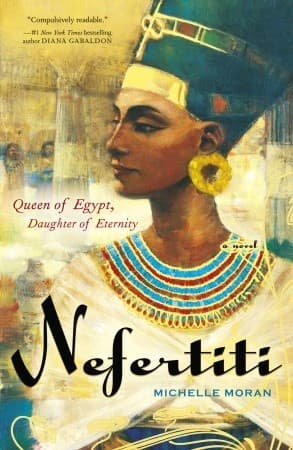
Michelle Moran (2007)
Genre
History / Historical Fiction / Romance
Reading Time
525 min
Key Themes
See below
Sign in to track this book
A queen's ambition to reshape Egypt clashes with her sister's desire for a quiet life, as ancient gods and political schemes threaten to shatter their world.
The story begins with Princess Nefertiti and her younger sister, Mutnodjmet, traveling to Thebes, Egypt's capital. Nefertiti is to marry the young Pharaoh Amunhotep, a marriage arranged to strengthen her family's power and bring stability to the volatile pharaoh. Mutnodjmet, more reserved, sees her sister's immediate popularity with the Theban people, who are charmed by Nefertiti's beauty. The city is busy with wedding preparations, and the sisters are immersed in the court's grandeur and political tensions, especially the growing conflict between Amunhotep and the powerful priests of Amun.
Nefertiti's marriage to Amunhotep is celebrated with grand ceremonies, and she quickly becomes Great Royal Wife. However, the initial joy is soon overshadowed by Amunhotep's radical religious agenda. He openly challenges traditional polytheistic beliefs, especially the worship of Amun, and begins promoting Aten, a single sun god. This alienates the powerful priests of Amun, who hold significant influence over the people and state wealth. Nefertiti, initially supportive and trying to moderate his extremism, is caught between her husband's zeal and the growing discontent of the religious establishment.
As Amunhotep's devotion to Aten grows, he renames himself Akhenaten, showing his full commitment to the new god. He then declares his intention to build a new capital city, Akhetaten (Horizon of Aten), far from traditional power centers and the Amun priesthood's influence. This move is met with awe and fear. Nefertiti, though hesitant about the drastic steps, publicly supports her husband, understanding the political need for a united front. The royal court, including Mutnodjmet, must move to the barren new city, a huge undertaking that further strains the kingdom's resources and patience.
Despite Nefertiti's beauty and the couple's strong bond, the biggest challenge for the royal family is the lack of a male heir. Nefertiti gives birth to several daughters, but the pharaoh needs a son to secure his lineage and the stability of his new religious order. This failure creates immense pressure on Nefertiti, and the court whispers about potential rival queens or a change in divine favor. Mutnodjmet observes her sister's growing anxiety and the political vulnerability this situation creates, as the lack of an heir emboldens Akhenaten's enemies and weakens his position.
Away from the direct political spotlight, Mutnodjmet finds comfort and love with General Nakhtmin, a loyal military leader. Their relationship develops quietly amidst the upheaval of Akhenaten's reign. Mutnodjmet longs for a life with Nakhtmin, away from court intrigues. However, as Nefertiti's position becomes more uncertain due to the lack of a male heir and growing opposition to Akhenaten, she decides Mutnodjmet must marry for political advantage, not love. This creates a painful conflict for Mutnodjmet, forcing her to choose between her personal desires and her loyalty to her sister and family.
The radical religious changes and the building of Akhetaten lead to widespread unhappiness among the people and, more dangerously, consolidate the opposition of the powerful Amun priesthood. Led by figures like the High Priest of Amun, these groups work to undermine Akhenaten's authority, spreading rumors and exploiting the people's hardships. Mutnodjmet, with her sharp observational skills, sees the shifting political climate and the danger to her sister and brother-in-law. She tries to warn Nefertiti, but the queen, focused on her duties and the pharaoh's vision, often dismisses how serious the threats are.
Egypt is hit by a devastating plague, which spreads through the new capital and the land, causing immense suffering and death. Many interpret this natural disaster as a sign of the gods' anger with Akhenaten's rule, further fueling opposition against him. The plague weakens the kingdom's infrastructure and military, making it even more vulnerable to internal and external threats. Nefertiti and Mutnodjmet, along with the royal family, are deeply affected, experiencing personal losses and witnessing the tragic impact on their people, adding another layer of crisis to their already precarious situation.
With no male heir and the kingdom in chaos, a mysterious figure named Smenkhkare emerges as a co-regent to Akhenaten. Smenkhkare's identity is unclear, leading to speculation and intrigue at court. Some believe Smenkhkare is a son of Akhenaten by a lesser wife, while others suspect a more complex political maneuver. This further destabilizes the succession, as Nefertiti's influence lessens and the future of the Atenist religion hangs in the balance. Mutnodjmet observes these schemes with growing alarm, understanding the threat they pose to her family's survival.
Akhenaten's health steadily declines, possibly due to his fanaticism, the stresses of his reign, and ongoing political and religious conflicts. His death leaves a massive power vacuum and plunges Egypt into further uncertainty. The Atenist religion, so fiercely supported by Akhenaten, immediately faces challenges from the re-emerging Amun priesthood. Nefertiti is left to navigate the treacherous political landscape, trying to protect her daughters and her husband's legacy, while Mutnodjmet prepares for the inevitable backlash against the royal family and the Atenist experiment.
Following Akhenaten's death, the court must abandon Akhetaten and return to Thebes, the traditional capital. This move symbolizes the reversal of Akhenaten's reforms. The priests of Amun quickly regain their immense power and begin systematically dismantling Akhenaten's legacy. Aten's temples are destroyed, his name erased from monuments, and the old gods are reinstated. Nefertiti and her daughters face immense pressure and danger, as they are seen as symbols of the deposed religious order. Mutnodjmet, having foreseen this backlash, tries to guide her sister through the dangerous transition.
In the chaotic aftermath of Akhenaten's death and the return to Thebes, Nefertiti, desperate to secure her family's future, insists that Mutnodjmet marry for political alliance. However, Mutnodjmet, having endured years of court intrigue and seen the fragility of power, finally defies her sister. She chooses to marry General Nakhtmin, her true love, for personal happiness and loyalty rather than political gain. Nakhtmin, despite the shifting political tides, remains steadfast in his devotion to Mutnodjmet and, by extension, to the struggling royal family, offering a much-needed source of strength and stability.
The young Tutankhamun, a son of Akhenaten by a lesser wife (or possibly Nefertiti's own son later removed from records), ascends to the throne. Under the strong influence of General Horemheb and High Priest Ay, Tutankhamun fully restores the worship of Amun and rejects his father's religious revolution. Nefertiti's role and fate after this point are shrouded in historical mystery. The book shows her fading from public life, her influence diminished, while Mutnodjmet, now married to Nakhtmin, finds a quieter, more stable existence, though still connected to her sister's turbulent legacy and the Atenist era.
The Protagonist
From a politically astute queen navigating the court, she transforms into a devoted, albeit increasingly beleaguered, supporter of Akhenaten's religious revolution, ultimately facing the tragic downfall of her family's power.
The Protagonist/Narrator
She evolves from a reluctant observer of court politics to a woman who asserts her own desires and finds personal happiness amidst the collapse of her sister's reign.
The Antagonist/Supporting
From a zealous reformer, he becomes an increasingly isolated and beleaguered ruler, whose grand vision ultimately crumbles, leading to his kingdom's instability and the erasure of his legacy.
The Supporting
He remains a steadfast and honorable figure throughout the changing political landscape, ultimately achieving personal happiness with Mutnodjmet.
The Supporting/Antagonist
He maintains his powerful position through various political shifts, demonstrating his adaptability and opportunistic nature.
The Supporting/Antagonist
He rises from a powerful general to a key figure in the restoration of traditional Egypt, ultimately becoming pharaoh himself.
The Antagonist
Initially challenged and seemingly defeated, he ultimately oversees the restoration of Amun's worship and the dismantling of Akhenaten's legacy.
The Mentioned/Supporting
He ascends the throne as a child and, under the influence of powerful advisors, becomes the pharaoh who officially restores the old religion.
The novel explores the dangers of imposing radical societal and religious change from the top. Akhenaten's devotion to Aten, though perhaps sincere, causes widespread unrest, alienates powerful groups like the Amun priesthood, and destabilizes Egypt. The forced move to Akhetaten and the suppression of traditional worship show how sudden shifts can divide a society, leading to resentment and ultimately, the undoing of reforms. Mutnodjmet's observations often highlight the human cost of Akhenaten's inflexible vision, such as the suffering caused by the plague in the new, less established capital.
““The Pharaoh's vision was grand, but the stones of Akhetaten were built on the broken traditions of a thousand years.””
The complex relationship between Nefertiti and Mutnodjmet is the emotional center of the novel, showing the sacrifices power and loyalty demand within a family. Nefertiti's ambition drives her to embrace the throne, often at the cost of her personal desires and, at times, her sister's happiness. Mutnodjmet, in contrast, longs for a simpler life, yet is constantly drawn into political turmoil by her devotion to Nefertiti. Conflict arises when Nefertiti demands Mutnodjmet marry for political gain, forcing Mutnodjmet to choose between her loyalty and her own happiness. Their bond is tested by the immense pressures of the court, highlighting the personal cost of royal duty.
““My sister embraced the sun, while I longed for the shade. Yet, our fates were bound by the same desert wind.””
The novel illustrates how history is written, unwritten, and rewritten by those in power. Akhenaten's attempt to erase the gods of Amun and establish Aten as the sole deity is a central conflict. After his death, his own legacy is systematically dismantled: his name carved from monuments, his city abandoned, and his religious revolution suppressed. This theme explores the fragility of human achievements against political and religious change. The eventual rise of Tutankhamun and the full restoration of Amun worship serve as a stark reminder that even the most ambitious legacies can be deliberately forgotten, leaving only shadows and mysteries.
““A pharaoh's name could be carved in stone, but it could also be chipped away, as if he had never been.””
This theme is most clearly shown through Mutnodjmet's character arc. She struggles with the expectation to fulfill her family duty by marrying for political alliance, a common demand for royal women. However, her heart belongs to General Nakhtmin, representing a love that goes beyond political advantage. Her struggle highlights the tension between personal happiness and the obligations imposed by one's position and family. Ultimately, her decision to defy Nefertiti and marry Nakhtmin is a powerful statement about prioritizing authentic connection over the cold calculations of power, even in a world where such choices are rare and dangerous.
““My heart knew its own pharaoh, and he was not one crowned with gold, but with truth.””
The story is told through the eyes of Nefertiti's younger sister, Mutnodjmet.
This device provides an intimate and often more objective perspective on the dramatic events unfolding around Nefertiti. Mutnodjmet, being less ambitious and more observant than her sister, offers a detached yet deeply personal viewpoint on the political machinations, Akhenaten's religious fervor, and Nefertiti's struggles. Her internal thoughts and reflections allow the reader to witness the grandeur and the peril of the court without being fully swept away by Nefertiti's charisma or Akhenaten's zeal. It also allows for a focus on the personal impact of historical events on those close to power.
Nefertiti's inability to produce a son creates a central source of dramatic tension and political vulnerability.
This historical fact serves as a major plot driver, constantly increasing the pressure on Nefertiti and Akhenaten. In ancient Egypt, a male heir was crucial for dynastic stability and divine favor. Nefertiti's succession of daughters fuels court whispers, emboldens Akhenaten's enemies (especially the Amun priesthood), and creates a desperate need for a solution, leading to the mysterious figure of Smenkhkare and ultimately, Tutankhamun. This device highlights the precariousness of power, even for a Great Royal Wife, and underscores the patriarchal demands of the era.
The clash between Akhenaten's monotheistic Aten cult and the traditional polytheistic worship of Amun.
This conflict is the foundational driver of the novel's external plot, creating immense political, social, and personal upheaval. Akhenaten's radical religious reforms directly challenge the entrenched power of the Amun priesthood, leading to a bitter struggle for control of Egypt. This device generates the core antagonism, forcing characters to choose sides, shaping their destinies, and ultimately leading to the downfall of Akhenaten's reign. It reflects a pivotal and historically accurate period of religious revolution in ancient Egypt, demonstrating its far-reaching consequences.
The creation and abandonment of Akhenaten's capital city, Akhetaten.
Akhetaten serves as a potent symbol within the narrative. Initially, it represents Akhenaten's grand vision, his break from tradition, and his total devotion to Aten. Its construction is a testament to his power but also a drain on resources and a source of discontent. Its eventual abandonment and decay after his death symbolize the failure of his radical reforms and the swift erasure of his legacy. The city acts as a physical manifestation of the rise and fall of Akhenaten's dream, providing a tangible setting for the dramatic shifts in power and ideology.
“The gods have a strange way of testing us, don't they?”
— Nefertiti reflecting on the challenges of her life and the political landscape.
“A woman's power is often in her silence, in her ability to observe and to wait.”
— Mutnodjmet, Nefertiti's sister, offering advice on navigating the royal court.
“Sometimes, the greatest love is not the one that burns brightest, but the one that endures.”
— Nefertiti contemplating her relationship with Akhenaten amidst political turmoil.
“To change a nation, one must first change its gods.”
— Akhenaten expressing his revolutionary religious beliefs to Nefertiti.
“Sorrow, like joy, is a fleeting emotion. What remains is duty.”
— Ay, a high-ranking official, advising Nefertiti on her responsibilities as queen.
“A queen must be more than beautiful; she must be wise, and she must be strong.”
— The Queen Mother Tiye imparting wisdom to a young Nefertiti.
“The desert holds secrets that the river cannot wash away.”
— Mutnodjmet musing on the enduring nature of secrets and the landscape of Egypt.
“Love can be a weapon, sharper than any blade, if wielded correctly.”
— Nefertiti realizing the power of her influence over Akhenaten.
“Even the mightiest pharaoh is but a mortal man, bound by the sands of time.”
— An observation on the transient nature of power and human existence.
“There are some truths that are better left unspoken, especially in a palace.”
— Mutnodjmet advising caution in revealing information within the royal court.
“The gods demand sacrifice, but sometimes, the greatest sacrifice is oneself.”
— Nefertiti grappling with the personal cost of her royal duties and Akhenaten's reforms.
“History is written by the victors, but the truth often whispers from the dust.”
— A reflection on the biased nature of historical records and the search for truth.
“To be forgotten is a fate worse than death for a pharaoh.”
— Akhenaten's concern about the legacy of his reign and his religious changes.
“Ambition is a dangerous mistress, capable of both great creation and terrible destruction.”
— Ay observing the ambitious nature of those around him, including Akhenaten.
Ready to see how well you understood this book? Take our interactive quiz with 10 questions.

Biography coming soon.

Michael S. Heiser
4.5

Winston S. Churchill
4.5

Will Durant
4.4

Sigurd F. Olson
4.4

Thomas Sowell
4.4

Emmanuel Guibert
4.3

W.E.B. Du Bois
4.3

Joseph Campbell
4.3