BookBrief
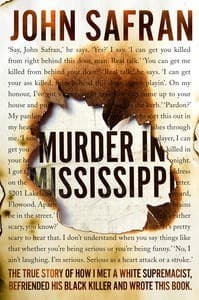
Murder in Mississippi cover
Archivist's Choice

Murder in Mississippi

John Safran (2013)

Genre

Memoir / History / Mystery

Reading Time

8-10 hours

Key Themes

See below

Track Your Reading

Sign in to track this book

An Australian filmmaker, haunted by the murder of a white supremacist he once interviewed, travels to the Deep South, uncovering a complex web of race, sex, and secrets that challenges his understanding of truth and prejudice.

Core Idea

John Safran investigates the unsolved 1964 murder of civil rights worker James Chaney in Mississippi. The crime was officially blamed on the KKK, but doubts and other theories remain. Through immersive, often confrontational, and personal journalism, Safran tries to uncover what happened. He also exposes the complex, often contradictory, racial and social stories that hide the truth. The book argues that truth, especially for historical injustices, is not a single fact, but a changing story built by many people. It is greatly shaped by individual identity, community memory, and the powerful, sometimes tricky, role of media.
Reading time
8-10 hours
Difficulty
Medium
✓ Read this if...
You are fascinated by true crime, the complexities of racial history in America, the ethical dilemmas of journalism, or enjoy a narrative that blends investigative reporting with personal memoir and dark humor.
✗ Skip this if...
You prefer straightforward historical accounts without authorial intrusion, are uncomfortable with morally ambiguous characters, or dislike journalistic methods that involve pushing boundaries and sometimes playing the fool.

Core idea

The central argument and framework that powers the entire book.

John Safran investigates the unsolved 1964 murder of civil rights worker James Chaney in Mississippi. The crime was officially blamed on the KKK, but doubts and other theories remain. Through immersive, often confrontational, and personal journalism, Safran tries to uncover what happened. He also exposes the complex, often contradictory, racial and social stories that hide the truth. The book argues that truth, especially for historical injustices, is not a single fact, but a changing story built by many people. It is greatly shaped by individual identity, community memory, and the powerful, sometimes tricky, role of media.

At a glance

Reading time

8-10 hours

Difficulty

Medium

Read this if...

You are fascinated by true crime, the complexities of racial history in America, the ethical dilemmas of journalism, or enjoy a narrative that blends investigative reporting with personal memoir and dark humor.

Skip this if...

You prefer straightforward historical accounts without authorial intrusion, are uncomfortable with morally ambiguous characters, or dislike journalistic methods that involve pushing boundaries and sometimes playing the fool.

Key Takeaways

1

The Elusive Nature of Truth

Truth in true crime is rarely a singular, objective reality, but rather a mosaic of conflicting narratives and subjective interpretations.

Quote

The more I talked with them, the less simple the crime, and the world, seemed.

Safran's investigation into Richard Barrett's murder shows that 'truth' is hard to pin down. Everyone involved—white supremacists, black campaigners, lawyers, and the killer—has a piece of the story, seen through their own biases and experiences. Safran does not just present these different accounts; he lives among them. He shows how personal history, racial tensions, and local stories change memories and reasons. The book is less about finding a single truth and more about showing that it is impossible to do so, especially in a place...

Supporting evidence

Safran meticulously details interviews with various parties, highlighting contradictions in their statements regarding Barrett's character, the circumstances of the murder, and the killer's motivations. For instance, the differing accounts of Barrett's sexuality – from staunch homophobe to secretly gay with a preference for black men – illustrate how personal identity and public perception clash.

Apply this

When evaluating any 'true' story, especially those with high emotional or political stakes, question the source and their potential biases. Recognize that a single, definitive truth is often unattainable, and instead, strive to understand the various perspectives that contribute to a complex event.

subjectivity-of-truthnarrative-constructionbias-in-reporting
2

The Performance of Identity

Individuals, particularly those with extreme views, often perform an identity that masks complex inner lives and contradictions.

Quote

Could the infamous racist actually have been secretly gay, with a thing for black men?

Richard Barrett, the murdered white supremacist, had a public image as an outspoken racist and homophobe. This sharply contrasts with rumors about his private life. Safran explores the uncomfortable idea that Barrett, who called himself a 'race warrior,' might have secretly had sexual relationships with black men. This contrast makes us rethink how deep-seated prejudices can exist alongside personal desires that go against those very prejudices. It shows that extreme beliefs can be a cover, a denial, or even a strange sign of deeper, ...

Supporting evidence

The central mystery surrounding Barrett's alleged secret gay life and relationships with black men, which became a significant motive debated during the trial, directly challenges his public image as a virulent white supremacist. Safran interviews individuals who provide conflicting testimony about Barrett's sexual orientation and activities.

Apply this

Be wary of judging individuals solely on their public declarations or affiliations, especially when dealing with polarizing figures. Recognize that people are often more complex and contradictory than their outward performances suggest, and that extreme views can sometimes mask profound internal struggles.

identity-politicshypocrisysocial-performancecognitive-dissonance
3

The Stain of History on the Present

The historical legacy of racism and violence in the American South continues to shape contemporary events and individual perspectives.

Quote

Taking us places only he can, Safran paints an engrossing, revealing portrait of a dead man, his murderer, the place they lived and the process of trying to find out the truth about anything.

Safran's trip to Mississippi is more than a true-crime investigation; it is a deep dive into the strong racial tensions that still exist in the Deep South. The murder of Richard Barrett, a white supremacist, by a black man, becomes a way to examine how slavery, Jim Crow, and the Civil Rights movement still affect things. Safran shows that the past is not just history but a living force that shapes the prejudices, doubts, and stories of everyone he meets. The legal system, community reactions, and even personal relationships are all cl...

Supporting evidence

Safran consistently references historical events and figures related to Mississippi's racial past, from the Civil Rights era to earlier instances of racial violence. He notes how these historical narratives are invoked by both black and white residents to explain current events and justify their perspectives on the murder and its players.

Apply this

When trying to understand complex social or criminal events, especially in regions with fraught histories, always consider the historical context. Recognize that past injustices and conflicts often cast long shadows over contemporary issues and individual behaviors.

racial-historysouthern-gothiclegacy-of-slaverysystemic-racism
4

The Journalist's Intrusive Role

The act of investigation is inherently intrusive, transforming the journalist from observer to participant and influencing the unfolding narrative.

Quote

Seizing his Truman Capote moment, he jumped on a plane to cover the trial.

Safran, a filmmaker known for putting himself into his stories, fully takes on the role of an active participant in 'Murder in Mississippi'. He does not just report; he gets involved, forming relationships with the murder victim's friends, the killer, and their communities. This involvement gives great access and insight, but it also raises ethical questions about how much a journalist affects the story. Safran's presence, his questions, and his being an outsider likely influenced the answers and actions of those he interviewed. He be...

Supporting evidence

Safran's direct interactions with white supremacists, his visits to their homes, his attempts to understand their worldview, and especially his engagement with the killer, all illustrate his deep immersion. His self-awareness about his own impact and the ethical tightrope he walks is a recurring theme.

Apply this

When consuming media, particularly true crime or investigative journalism, consider the role of the journalist. How might their presence, background, or methods have influenced the story being told? Be critical of claims of pure objectivity.

immersive-journalismjournalistic-ethicsobserver-effectnarrative-influence
5

Empathy as a Tool of Understanding, Not Endorsement

Engaging with the perspectives of those with abhorrent views can reveal deeper human complexities without condoning their ideologies.

Quote

And the more he talked with them, the less simple the crime, and the world, seemed.

One of the hardest parts of Safran's approach is his willingness to talk directly and empathetically with white supremacists and others whose views are morally wrong. He does not avoid their racism or bigotry but tries to understand the people behind the ideology. This is not about making their hate acceptable; it is about looking at the psychological, social, and historical reasons for such beliefs. By treating them as complex people rather than stereotypes, Safran finds surprising contradictions and moments of shared humanity, along...

Supporting evidence

Safran spends significant time with white supremacists, attending their gatherings, listening to their justifications, and even developing a strange rapport with some. His discussions with them, while often frustrating, are never dismissive, aiming to understand their internal logic and personal histories.

Apply this

When confronted with extreme or hateful ideologies, strive to understand the underlying human factors and motivations, rather than simply dismissing or demonizing the proponents. This doesn't mean endorsing their views, but rather gaining insight to better address the root causes of such extremism.

understanding-extremismmoral-relativismhuman-complexitycritical-empathy
6

The Mundanity of Evil

Extreme prejudice and violence often emerge from seemingly ordinary lives and mundane circumstances, rather than purely monstrous origins.

Quote

Murder in Mississippi is a brilliantly innovative true-crime story.

Safran's portrayal of Richard Barrett and his friends shows that even strong white supremacy is often mixed with everyday life. Barrett, despite his hateful beliefs, had neighbors, routines, and personal problems. The murder itself, though racially charged, also involved normal arguments over money and sex. This challenges the common idea that 'evil' is always an outside, monstrous force. Instead, Safran shows how deep-seated prejudice can exist with, and even be caused by, everyday frustrations, personal failures, and local conflicts...

Supporting evidence

Safran details the small-town setting, the everyday interactions of the characters, and the seemingly petty disputes that escalated into violence. The discussions around Barrett's financial troubles and alleged sexual encounters with the killer highlight how commonplace issues become entangled with his extreme ideology.

Apply this

Recognize that extreme ideologies and acts of violence don't always stem from overtly monstrous figures, but can arise from a confluence of ordinary human flaws, frustrations, and ingrained prejudices within everyday communities. Be vigilant for the normalization of intolerance in seemingly benign contexts.

banality-of-evilsocial-normalizationeveryday-racismextremism-origins
7

Justice as a Social Construct

The outcome of a criminal trial is heavily influenced by social narratives, racial dynamics, and the performance of legal professionals, rather than solely objective facts.

Quote

Could this be the story of a lifetime? Seizing his Truman Capote moment, he jumped on a plane to cover the trial.

Safran's detailed coverage of the trial shows that 'justice' is far from an objective process. The legal proceedings are a fight between different stories, where racial stereotypes, local prejudices, and the lawyers' speaking skills play a big part. The prosecution and defense each build a story meant to appeal to the jury, often using existing racial tensions and community beliefs. The 'truth' presented in court is a carefully chosen version, not necessarily the full, raw reality. This shows how fragile the justice system is and how ...

Supporting evidence

Safran meticulously details the courtroom proceedings, highlighting the strategies of the prosecution and defense, their attempts to frame the narrative, and the reactions of the jury and community members. He observes how racial dynamics implicitly and explicitly influenced arguments and perceptions of guilt or innocence.

Apply this

When following legal cases, especially those with high public interest or social implications, critically analyze the narratives presented by both sides. Understand that legal 'truth' is often a constructed reality, influenced by factors beyond pure evidence, and that systemic biases can profoundly impact outcomes.

legal-narrativejudicial-biasracial-justicecourtroom-drama
8

The Media's Role in Shaping Perception

Media coverage, even well-intentioned, inevitably frames and simplifies complex events, influencing public understanding and memory.

Quote

Did Safran have the last footage of him alive? Could this be the story of a lifetime?

Safran knows his own role as a media creator and the power he has in shaping the story. He documents his initial excitement for a 'story of a lifetime' and the later challenges of showing such a complex reality. The book suggests that media, by choosing, framing, and building stories, can simplify complicated human dramas into easy-to-understand, often dramatic, narratives. Safran's self-aware approach, where he questions his own reasons and impact, acts as a comment on the whole true-crime genre. He reveals that even with the best in...

Supporting evidence

Safran frequently interjects with his own thoughts on the reporting process, his ethical dilemmas, and how his previous footage of Barrett might be interpreted. He discusses the media circus surrounding the trial and how different outlets framed the story, often with simplified racial angles.

Apply this

Be a critical consumer of media, especially true-crime stories. Question the narrative choices, the angles emphasized, and the potential biases of the creators. Recognize that any story is a curated selection of facts, not the entirety of a complex reality.

media-biasnarrative-framingtrue-crime-genremedia-ethics
9

The Uncomfortable Nuance of Humanity

Humans, regardless of their public personas or ideologies, are often a tangle of contradictions, motivations, and unexpected depths.

Quote

The more he talked with them, the less simple the crime, and the world, seemed.

Throughout the book, Safran finds uncomfortable details in every person he meets. Richard Barrett, the strong racist, might be a closeted gay man. The killer, D'Allen Johnson, is not a simple villain but a person with his own history, struggles, and relationships. His actions come from a complex mix of personal situations and societal pressures. Even the other characters—white separatists, black activists, lawyers—are shown as more than their labels suggest. Safran makes the reader sit with the discomfort of these contradictions, chal...

Supporting evidence

The entire book serves as evidence, as Safran systematically peels back layers of public perception and stereotypes to reveal the messy, contradictory realities of each individual involved in the murder. From Barrett's alleged secret life to the killer's background and the varied reactions of the community, no character remains a simple archetype.

Apply this

Resist the urge to categorize people into neat boxes of 'good' or 'evil.' Strive to understand the multifaceted nature of human beings, acknowledging that even those with abhorrent views or who commit heinous acts are often a product of complex personal histories and societal influences.

human-conditionmoral-ambiguitypsychological-depthcharacter-complexity
10

The Enduring Power of Place

The geographical and cultural landscape of a place profoundly shapes the lives, beliefs, and narratives of its inhabitants.

Quote

Safran got deeper and deeper into the South, becoming entwined in the lives of those connected with the murder.

Mississippi itself is a main character in Safran's story. Its history, its distinct cultural rules, its racial divisions, and its unique mix of Southern hospitality and suspicion all greatly affect the murder and the investigation. Safran fully experiences the specific details of the Deep South, showing how the land, the weather, the social structures, and the collective memory of a place shape the identities and actions of its people. The book argues that you cannot truly understand the crime or its players without understanding the ...

Supporting evidence

Safran's descriptions of Mississippi's towns, landscapes, local dialects, and social customs are vivid. He frequently ties the behavior and beliefs of the individuals he meets back to the specific cultural and historical context of the region, showing how 'the South' is not just a location but a powerful determinant of identity and worldview.

Apply this

When analyzing human behavior or societal issues, always consider the specific geographical and cultural context. Recognize that place is not merely a backdrop but an active force that shapes individuals and communities, influencing everything from beliefs to actions.

cultural-geographysense-of-placeregional-identitysouthern-culture

Critical analysis

Notable Quotes

The past isn't dead. It isn't even past.

Safran reflects on the enduring legacy of historical injustices in Mississippi.

In Mississippi, the truth is often buried deeper than the bodies.

Discussing the difficulty of uncovering facts about cold cases decades later.

Sometimes you have to go back to understand why people are still looking forward in fear.

Explaining his motivation for investigating a decades-old murder.

The silence was so heavy, you could almost hear the unspoken words of generations.

Describing the atmosphere in a small Mississippi town resistant to discussing its past.

It’s easy to judge from a distance, but harder to understand the choices made under duress.

Considering the complex motivations of individuals involved in historical events.

Every town has its secrets, but some towns wear theirs like a shroud.

Observing the pervasive sense of hidden history in some Southern communities.

My job wasn't to solve the murder, but to understand why it was never solved.

Clarifying his role as a journalist and investigator.

The weight of history isn't just in the big events, but in the small, everyday acts of complicity.

Reflecting on the role of ordinary people in maintaining oppressive systems.

To talk about the past is to risk reopening wounds, but to not talk about it is to let them fester.

Discussing the dilemma of confronting painful historical truths.

In Mississippi, the road to justice is often unpaved and full of detours.

Metaphorically describing the challenges in achieving justice for historical crimes.

The past is a foreign country, but sometimes it sends us postcards.

Safran's reflection on how historical events continue to impact the present.

You can't dig up the truth without disturbing some ghosts.

Acknowledging the emotional and social repercussions of his investigation.

The stories people tell, and the stories they don't, are equally important.

Highlighting the significance of both spoken narratives and silences in his research.

Sometimes the most shocking thing isn't the crime itself, but how long everyone was okay with it.

Expressing dismay at the societal acceptance and cover-up of historical violence.

Quiz

Test Your Knowledge

Ready to see how well you understood this book? Take our interactive quiz with 10 questions.

10
Questions
~5
Minutes
?
Best Score

Key Questions (FAQ)

John Safran's 'Murder in Mississippi' is a true-crime memoir where he investigates the murder of a white supremacist he previously filmed. The book delves into the complex racial, social, and personal dynamics of the Deep South as Safran tries to uncover the truth behind the crime, which proves to be far more intricate than initial appearances.

About the author