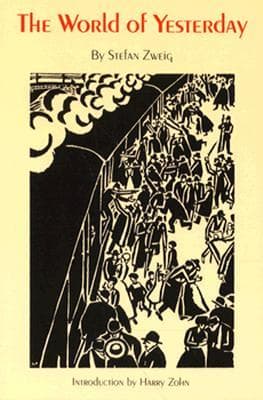
The Golden Age of Security
Zweig's Vienna epitomized a pre-WWI European illusion of unshakeable stability and progress.
Quote
Before 1914, the world believed in an uninterrupted ascent, a perpetual peace, and the triumph of reason. This was the golden age of security.
Zweig shows Vienna, the capital of the Austro-Hungarian Empire, as a place of comfort, culture, and a simple belief in progress. From about 1880 to 1914, people had many freedoms, economic growth, and a growing art scene. He describes a society where passports were rare, travel was open, and educated people felt a shared European identity, despite national feelings. This feeling of security, however, was weak. World War I destroyed it, an event Zweig saw as the end of an era and the start of deep disappointment. His story shows how st...
Supporting evidence
Zweig's detailed descriptions of pre-WWI Viennese society, the lack of border controls, and the general optimistic sentiment among the populace.
Apply this
Reflect on how modern societies might harbor similar illusions of stability, and how historical perspective can temper such optimism in the face of unforeseen global shifts.