BookBrief
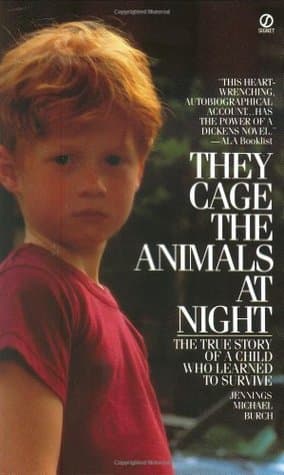
They Cage the Animals at Night cover
Archivist's Choice

They Cage the Animals at Night

Jennings Michael Burch (1985)

Genre

Psychology / Biography / Memoir

Reading Time

6 hours

Key Themes

See below

Track Your Reading

Sign in to track this book

Abandoned to the isolating currents of the foster care system, a young Jennings Michael Burch navigates a desolate childhood, clinging to the fragile hope of connection as he bravely learns to ask for the love he was so often denied.

Core Idea

Jennings Michael Burch's memoir, "They Cage the Animals at Night," shows the lasting psychological effects of childhood institutionalization and abuse. His personal story of living in many orphanages, foster homes, and psychiatric facilities in 1940s New York reveals how a system meant to protect often causes trauma. It takes away children's identity, security, and the experience of stable love. The book argues that despite great difficulty and system failures, the human spirit's strength, the effect of even brief moments of kindness, and the hope for belonging can help a child through hard times. These experiences shape an adult's search for identity and connection. The core message is that 'caging' children, both physically and emotionally, leaves deep scars. It shows the need for stable, loving environments for healthy development. Burch's story is about the quiet strength needed to survive neglect and abuse. It shows how these early experiences affect a person's lifelong search for self-worth, a sense of home, and healing.
Reading time
6 hours
Difficulty
Medium
✓ Read this if...
You are interested in the psychological impact of childhood trauma, the failures of institutional care, or powerful true stories of resilience and survival.
✗ Skip this if...
You prefer lighter reads or are sensitive to detailed descriptions of child abuse, neglect, and institutional cruelty.

Core idea

The central argument and framework that powers the entire book.

Jennings Michael Burch's memoir, "They Cage the Animals at Night," shows the lasting psychological effects of childhood institutionalization and abuse. His personal story of living in many orphanages, foster homes, and psychiatric facilities in 1940s New York reveals how a system meant to protect often causes trauma. It takes away children's identity, security, and the experience of stable love. The book argues that despite great difficulty and system failures, the human spirit's strength, the effect of even brief moments of kindness, and the hope for belonging can help a child through hard times. These experiences shape an adult's search for identity and connection.

The core message is that 'caging' children, both physically and emotionally, leaves deep scars. It shows the need for stable, loving environments for healthy development. Burch's story is about the quiet strength needed to survive neglect and abuse. It shows how these early experiences affect a person's lifelong search for self-worth, a sense of home, and healing.

At a glance

Reading time

6 hours

Difficulty

Medium

Read this if...

You are interested in the psychological impact of childhood trauma, the failures of institutional care, or powerful true stories of resilience and survival.

Skip this if...

You prefer lighter reads or are sensitive to detailed descriptions of child abuse, neglect, and institutional cruelty.

Key Takeaways

1

The Scars of Instability

Constant displacement fractures a child's sense of self and belonging.

Quote

Each new place was a new beginning, but also a new ending, a severing of the fragile roots I had just begun to put down.

Burch's early life shows the psychological damage caused by constant instability. Moving between many orphanages and foster homes, he lacked consistent caregivers and a stable environment. This constant movement kept him from forming secure bonds, leading to a deep fear of abandonment and an inability to trust. He developed ways to cope, like emotional detachment and being guarded. These protected him in the short term but later made it hard for him to connect with others and experience real love. The story shows that a child's sense ...

Supporting evidence

Burch's repeated experiences of being moved from one institution or foster home to another, often without warning or explanation, and the resulting emotional shutdowns and difficulty forming attachments with new caretakers or peers.

Apply this

Recognize the critical importance of stability and consistent care in child development. For children experiencing displacement, prioritize creating a sense of permanence and belonging, even amidst change, through dedicated support systems and therapeutic interventions to address attachment issues.


attachment-theorychildhood-traumaemotional-neglect
2

The Power of Small Kindness

Even fleeting moments of compassion can offer a lifeline in profound loneliness.

Quote

Sometimes, a single act of kindness, a moment of shared humanity, was enough to make the unbearable just a little more bearable.

Amidst the neglect and harshness of his institutional life, Burch often remembers small acts of kindness that left a deep impression. A sympathetic look from a matron, a shared secret with another child, or a rare moment of warmth from an adult gave him important, though temporary, relief from his loneliness and despair. These moments show how much human connection, however brief, can offer hope and confirm a child's worth when systems dehumanize them. They show that even in the worst situations, empathy and compassion can be anchors,...

Supporting evidence

The memory of Mrs. Henderson, a kind matron who showed him genuine affection, or the fleeting friendships he formed with other boys in various homes, like the boy who shared his candy.

Apply this

Be intentionally kind and empathetic, especially towards those who seem isolated or struggling. Understand that a simple gesture or a moment of genuine attention can profoundly impact someone's emotional well-being, providing comfort and a sense of being valued.

empathyhuman-connectionresilience
3

Survival Through Self-Reliance

Forced independence can foster strength but also deep emotional isolation.

Quote

I learned to depend on no one but myself, a skill that saved me countless times but also built walls around my heart.

Burch's difficult experiences made him develop a strong sense of self-reliance at a young age. He learned to manage social groups, protect himself from bullies, and find comfort in his own thoughts. This forced independence was a way to survive, needed to endure the unpredictable and often cruel places he lived. While it made him strong, it also created emotional barriers. Trusting others became very hard, and showing weakness felt like a threat. This self-reliance, born from need, made it harder for him to accept love and support whe...

Supporting evidence

His ability to adapt to new homes, understand the unspoken rules of institutions, and his internal monologue as a source of comfort and strategy, rather than seeking external support.

Apply this

Recognize that extreme self-reliance in trauma survivors often masks a deep need for connection. Approach such individuals with patience and consistent reassurance, gradually building trust rather than expecting immediate openness. Support their independence while gently encouraging healthy interdependence.

autonomytrauma-responsecoping-mechanisms
4

The Search for a Name

Identity is intrinsically linked to belonging, and a name is a symbol of both.

Quote

To be called by my name, to have someone know who I was, felt like a miracle.

Throughout his journey, Burch struggles with the importance of his own name and the lack of a stable identity. In institutions, children are often just numbers or labels, losing their individuality. For Burch, someone remembering his name, or even asking for it, was a deep confirmation of his existence and humanity. It meant he was a unique person, not just another nameless child in the system. The desire for belonging often shows in wanting to be known and called by one's name. This means a personal connection and a place in society....

Supporting evidence

His joy and surprise when a new adult actually uses his name, or the way he clings to the idea of his name as one of the few things that truly belongs to him.

Apply this

Always use people's names, especially children's, with respect and intention. Understand that for many, particularly those who have experienced marginalization, being acknowledged by name is a powerful act of validation and a building block for identity and belonging.

identity-formationself-worthbelonging
5

The Silent Language of Abuse

Children internalize abuse, often blaming themselves and struggling to articulate their pain.

Quote

The worst part was not the beatings, but the feeling that I deserved them, that I was somehow bad.

Burch's story quietly but strongly reveals the hidden nature of childhood abuse, both physical and emotional. He shows how children often blame themselves for their suffering, thinking they are 'bad' or deserve the mistreatment. This self-blame is a terrible psychological result. It makes it hard for them to report abuse or even recognize it. Without a safe place to process their pain, the trauma becomes deeply ingrained. It appears as behavior problems, emotional issues, and deep shame. His story is a reminder that the most damaging ...

Supporting evidence

His internal monologues where he questions his own goodness after being punished unfairly, or his reluctance to speak out against abusive caretakers, fearing further retribution or believing it was his fault.

Apply this

Be vigilant for signs of internalized blame or shame in children. Create safe, non-judgmental spaces where children feel empowered to share their experiences without fear. Educate children that abuse is never their fault and provide resources for reporting and healing.

child-abuseinternalized-shametrauma-bonding
6

Finding Family in Unexpected Places

Love and belonging can be forged through shared vulnerability, not just blood.

Quote

Family wasn't just blood; it was the people who saw you, who cared for you, even when they didn't have to.

Despite his biological family's abandonment and his many foster homes, Burch eventually finds 'family' in unexpected relationships. These are not always traditional family units but connections made through shared vulnerability, mutual support, and real care. This shows the human ability to create bonds of belonging outside of usual structures. His story shows that family means emotional connection, trust, and consistent presence, not just genetic ties or legal status. These found families, whether with a kind friend, a compassionate ...

Supporting evidence

His deep connection with other boys in the orphanages, such as his friend Billy, and later, the loving relationship he develops with his wife, who provides the unconditional love he never experienced as a child.

Apply this

Actively cultivate chosen families and support networks. Recognize that individuals may find their strongest support systems outside of their biological families. Foster environments that encourage deep, authentic connections based on mutual respect and care.

chosen-familysocial-supportbelonging
7

The Enduring Hope for Love

Despite profound trauma, the human spirit retains a persistent yearning for love and connection.

Quote

Even when I thought I was beyond repair, a tiny ember of hope for love still flickered inside me.

Perhaps the most touching part of Burch's memoir is the strong hope for love that stays with him through his difficult journey. Despite repeated rejections, betrayals, and the constant threat of abandonment, he never completely gives up the desire for real affection and belonging. This human need for connection drives his quiet observations, his brief attempts at friendship, and his courage to reach out later in life. It speaks to the strength of the human spirit—that even when love is denied, the basic desire for connection remains. ...

Supporting evidence

His quiet observations of families, his longing glances at other children with their parents, and his eventual decision to marry and build his own family, actively seeking the love he was denied.

Apply this

Never underestimate the power of hope and the innate human desire for love and connection. Provide consistent opportunities for genuine connection and empathy, even for those who seem most resistant, understanding that beneath layers of defense, the longing for belonging persists.

resiliencehuman-spirithope
8

The Long Road to Healing

Healing from childhood trauma is a lifelong process of courage and vulnerability.

Quote

The past never truly disappears, but you can learn to carry it, to understand it, and to not let it define your future.

Burch's story is about survival and the long, hard journey of healing. He does not magically get over his past. Instead, he learns to make his traumatic experiences part of his identity, finding ways to cope and eventually do well. This process takes great courage to face painful memories, vulnerability to let others into his life, and an effort to stop the cycle of abandonment and distrust. Healing is shown as a path with ups and downs, leading to a more complete and kind self. His story shows that while trauma leaves permanent marks...

Supporting evidence

His adult struggles with intimacy and trust, his reflections on his childhood, and his eventual decision to write his memoir, which is a therapeutic act of processing and sharing his story.

Apply this

Support individuals in their healing journeys by recognizing that trauma recovery is ongoing. Encourage therapy, self-reflection, and healthy relationships. Emphasize that healing is about integration and growth, not erasure of the past, and that vulnerability is a strength.

trauma-recoverypost-traumatic-growthvulnerability
9

The System's Failures

Institutional care, even with good intentions, can inadvertently perpetuate trauma.

Quote

The rules were meant to keep us safe, but mostly, they just kept us isolated.

Burch's memoir strongly criticizes the failures in the child welfare system of his time. While institutions were supposed to protect and care for children, they often caused more trauma through neglect, strict rules, lack of personal attention, and frequent moves. Many children, along with too few staff and a lack of psychological understanding, meant that individual needs were often missed. Children like Burch were processed instead of nurtured. This led to a dehumanizing experience that made their initial trauma worse. This takeaway...

Supporting evidence

The constant rotation of staff, the depersonalized environment of the orphanages, the arbitrary punishments, and the lack of consistent emotional support or advocacy for the children.

Apply this

Advocate for systemic reforms in child welfare, focusing on trauma-informed care, stability, individualized support, and reducing the frequency of placement changes. Prioritize policies that support family preservation and provide robust resources for foster families.

child-welfare-systeminstitutionalizationsystemic-neglect

Critical analysis

Notable Quotes

The worst part of being in an orphanage wasn't the food, or the beds, or even the loneliness. It was the feeling of not belonging, of being an outsider looking in on a world that didn't want you.

Reflecting on the emotional toll of institutional life.

I was always searching for someone to love me, someone to care. And every time I thought I found them, they were gone.

A recurring theme of Jennings's longing for affection and the constant disappointment he faced.

They cage the animals at night, not because of what they might do, but because of what might be done to them.

The titular quote, a metaphor for the children in institutions and their vulnerability.

Sometimes I wondered if I was invisible. No one ever seemed to notice me, not really.

Jennings's feeling of being overlooked and unheard in the various homes he lived in.

Hope was a dangerous thing in a place like this. It could build you up, only to tear you down harder.

His perspective on maintaining optimism in a harsh and unpredictable environment.

I learned to be quiet. To make myself small. To not make waves. It was safer that way.

Describing his coping mechanism to survive in often hostile or indifferent environments.

Every time I started to get comfortable, to think maybe, just maybe, I was safe, something would happen to remind me I wasn't.

Illustrating the constant instability and insecurity that defined his childhood.

The only thing worse than being alone was being with people who made you feel more alone.

His experience of isolation even when surrounded by others in institutions.

I wanted a family. A real one. Not just people who were paid to look after me.

Expressing his deep yearning for genuine familial love and connection.

Sometimes, the strongest people are the ones who smile through tears, cry behind closed doors, and fight battles nobody knows about.

A reflection on the hidden strength and struggles of individuals, particularly children in difficult circumstances.

I learned that love wasn't something you could count on. It came and went, like the seasons.

His cynical view of love, shaped by repeated abandonment and disappointment.

Even a small act of kindness could feel like a miracle in that place.

Highlighting the rarity and profound impact of compassion in his harsh environment.

The world was a big, confusing, often cruel place, and I was just a little boy trying to find my way.

A summary of his overwhelming feelings about the world as a child.

I didn't want to be forgotten. That was my biggest fear.

His deep-seated anxiety about being erased or left behind, a common fear for abandoned children.

Quiz

Test Your Knowledge

Ready to see how well you understood this book? Take our interactive quiz with 10 questions.

10
Questions
~5
Minutes
?
Best Score

Key Questions (FAQ)

'They Cage the Animals at Night' is a poignant memoir by Jennings Michael Burch, chronicling his tumultuous childhood spent in various orphanages and foster homes. It explores his profound feelings of abandonment, his struggle for connection, and his eventual journey to find love and belonging despite the systemic failures he experienced.

About the author