BookBrief
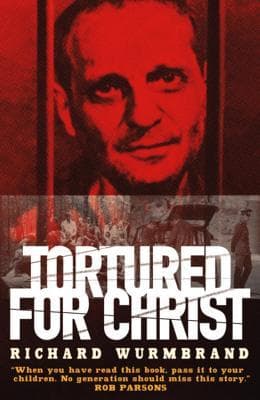
Tortured for Christ cover
Archivist's Choice

Tortured for Christ

Richard Wurmbrand (1940)

Genre

Biography / Memoir / History / Spirituality

Reading Time

90 min

Key Themes

See below

Track Your Reading

Sign in to track this book

Imprisoned and tortured for 14 years under Communist rule, Pastor Richard Wurmbrand's faith shows the endurance of the underground church in Romania.

Core Idea

Richard Wurmbrand's "Tortured for Christ" is a story of faith surviving persecution under communist regimes. Wurmbrand says true Christian faith is not just beliefs but an active commitment to Christ that lives on even when stripped of comforts and faced with torture. He shows, through personal testimony, how suffering can deepen spiritual conviction and reveal the power of forgiveness and love. The book asks readers to consider the cost of following Christ and recognize the strength of the human spirit when anchored in faith. It also exposes the dehumanizing effects of totalitarian ideology and the struggles of the underground church.
Reading time
90 min
Difficulty
Medium
✓ Read this if...
You are seeking a powerful, first-hand account of faith enduring extreme persecution, want to understand the realities of religious oppression, or are looking for inspiration on resilience and forgiveness in the face of suffering.
✗ Skip this if...
You are sensitive to detailed descriptions of torture and suffering, or prefer books with a more academic or theological analysis over personal memoir.

Core idea

The central argument and framework that powers the entire book.

Richard Wurmbrand's "Tortured for Christ" is a story of faith surviving persecution under communist regimes. Wurmbrand says true Christian faith is not just beliefs but an active commitment to Christ that lives on even when stripped of comforts and faced with torture. He shows, through personal testimony, how suffering can deepen spiritual conviction and reveal the power of forgiveness and love. The book asks readers to consider the cost of following Christ and recognize the strength of the human spirit when anchored in faith. It also exposes the dehumanizing effects of totalitarian ideology and the struggles of the underground church.

At a glance

Reading time

90 min

Difficulty

Medium

Read this if...

You are seeking a powerful, first-hand account of faith enduring extreme persecution, want to understand the realities of religious oppression, or are looking for inspiration on resilience and forgiveness in the face of suffering.

Skip this if...

You are sensitive to detailed descriptions of torture and suffering, or prefer books with a more academic or theological analysis over personal memoir.

Key Takeaways

1

The Indomitable Spirit of Faith

True faith is not merely intellectual assent but a profound commitment that withstands the most brutal persecution.

Quote

The torturers often said, 'We have broken many; we will break you too.' But something in me refused to break, something given by God.

Wurmbrand's account shows that genuine faith is more than beliefs; it is part of one's being that external forces cannot extinguish. His resolve, even after enduring physical and psychological torment, reveals a spiritual strength that goes beyond human capacity. This is about a deep, personal relationship with the divine that provides an anchor in the storm. The book asks readers to examine their own faith, questioning if it would endure similar trials. It says true faith is tested in suffering and, if genuine, gets stronger.

Supporting evidence

Wurmbrand's repeated refusal to recant his faith or betray fellow believers despite severe beatings, solitary confinement, and starvation, often stating, 'I cannot deny Christ.'

Apply this

Cultivate a faith that is deeply rooted in personal experience and conviction, rather than just tradition or societal norms. Regularly reflect on the core tenets of your beliefs and how they would sustain you in times of adversity. Engage in practices that strengthen spiritual resilience, such as prayer, meditation, or community involvement.


spiritual-resiliencepersecutionunwavering-faith
2

The Weaponization of Suffering

Communist regimes systematically used torture and psychological manipulation not just for information, but to annihilate the human spirit.

Quote

They wanted to break not just our bodies, but our souls, to make us deny not only our God but our very humanity.

The book details the communist regime's calculated cruelty, which went beyond physical pain. Wurmbrand describes a system designed to dismantle an individual's identity, morality, and will. This included sensory deprivation, sleep deprivation, forced confessions, and propaganda for brainwashing. The goal was to create not just compliant prisoners, but broken individuals who would renounce everything, serving as a warning to others. This systematic dehumanization shows the nature of totalitarianism, which seeks to control not just acti...

Supporting evidence

Descriptions of 'brainwashing' techniques, such as prisoners being forced to denounce their families and faith, the 'living graves' of solitary confinement, and the psychological torment of being told their families had abandoned them.

Apply this

Recognize and resist attempts by any ideology or system to control thought and belief. Develop critical thinking skills to discern propaganda and manipulation. Prioritize and protect individual autonomy and freedom of conscience in all aspects of life.

totalitarianismbrainwashingpsychological-torture
3

The Underground Church: A Model of Resilience

Persecution, rather than extinguishing faith, often drives it underground, fostering a more fervent and authentic community.

Quote

We learned to preach with our eyes, to pray with our hearts, and to worship in the silence of our cells. The church was not a building, but us.

Wurmbrand's story portrays the 'Underground Church' in Romania. Far from being destroyed by the state's repression, Christian faith adapted and lived on in secret. Meetings in basements, forests, and even within prison walls became places of worship and support. This forced secret existence removed superficiality, leaving only the most dedicated believers. It shows how adversity can strengthen a community, creating deeper bonds and a stronger commitment to shared values. The Underground Church is an example of the human need for spiri...

Supporting evidence

Stories of prisoners sharing Bible verses whispered through walls, creating makeshift communion in cells, and secret worship services held in the woods or private homes despite the constant threat of discovery and arrest.

Apply this

Foster deep, authentic community connections based on shared values and mutual support. Understand that true community is not dependent on physical structures or official recognition, but on the commitment of its members. Be prepared to adapt and innovate in expressing beliefs when faced with external pressures.

underground-churchcommunity-resiliencesecret-worship
4

The Power of Forgiveness and Love

Even in the face of unimaginable cruelty, the message of love and forgiveness remained central to the persecuted Christians' witness.

Quote

We were taught to love our enemies, to pray for those who persecuted us. This was the hardest command, but it was also our greatest strength.

One of the most surprising parts of Wurmbrand's testimony is the theme of love and forgiveness towards his tormentors. This commitment to Christian principles gave him a moral compass and an internal freedom the communists could never take away. This was not naive sentimentality but a radical act of will. Wurmbrand describes prisoners praying for their guards, and even trying to share the Gospel with them. This defiance through love was a spiritual victory, showing that the human spirit, when anchored in faith, can go beyond hatred an...

Supporting evidence

Wurmbrand's personal accounts of praying for his torturers, and stories of other prisoners attempting to minister to guards or expressing sorrow for their captors' spiritual blindness, rather than pure hatred.

Apply this

Actively practice forgiveness, even for those who have caused significant harm, understanding it as a release for oneself. Seek to understand, rather than merely condemn, those with opposing viewpoints. Cultivate empathy as a tool for personal and communal peace, even in contentious situations.

radical-forgivenesslove-thy-enemyspiritual-liberation
5

The Role of Ideology in Dehumanization

Communist ideology provided the philosophical justification for extreme cruelty, allowing perpetrators to rationalize their actions.

Quote

They believed they were building a perfect society, and anyone who stood in their way, even children, was an enemy of progress.

The book shows how a rigid, atheistic ideology like Communism can dehumanize populations. By calling Christians (and others) 'enemies of the people' or 'obstacles to progress,' the regime took away their worth, making their persecution permissible and, to the perpetrators, necessary. This framework allowed torturers to commit acts without remorse, convinced they were serving a higher purpose. Wurmbrand's experiences warn about the dangers of any ideology that puts abstract goals over individual human dignity, showing how such systems ...

Supporting evidence

The constant use of communist slogans and propaganda within the prisons, and the guards' unwavering belief in the 'scientific' justification for eliminating religious 'superstition' and 'reactionaries.'

Apply this

Critically examine any ideology that seeks to categorize or dehumanize groups of people. Be wary of narratives that justify harm in the name of progress, purity, or a utopian future. Prioritize human dignity and rights above all ideological constructs.

ideological-tyrannydehumanizationcommunist-persecution
6

The Price of Public Witness

Standing firm in one's convictions, especially in oppressive regimes, carries an immense personal cost but also a profound impact.

Quote

To preach Christ on the street corner was to sign one's death warrant, but silence was a spiritual death.

Wurmbrand's decision to preach Christ in Communist Romania was a deliberate act of defiance with severe consequences. His imprisonment and torture were direct results of his public witness. The book shows that while such actions demand personal sacrifice – years of freedom, physical suffering, and separation from family – they also inspire change. The 'crime' of these Christians was simply living out their beliefs openly, which the state saw as a direct challenge to its authority. This highlights the tension between personal convictio...

Supporting evidence

Wurmbrand's initial arrest for publicly preaching in Bucharest, and the accounts of other Christians who were imprisoned or executed for similar acts of overt religious expression.

Apply this

Identify the values and beliefs you are willing to stand for, even in the face of significant opposition. Understand that silence can be a form of complicity. Strategically choose moments for public witness that align with your convictions and maximize impact, while being aware of potential consequences.

public-witnessmoral-couragecost-of-conviction
7

The Resilience of Hope and Humor

Even in the darkest despair of prison, flashes of hope and unexpected humor provided vital sustenance for the human spirit.

Quote

Sometimes, a shared joke, a whispered prayer, or a moment of unexpected kindness was enough to keep the flame of hope from dying.

Amidst the accounts of torture and deprivation, Wurmbrand includes moments of hope, small acts of kindness, or even humor. These brief respites, whether a shared crust of bread, a whispered Bible verse, or a guard's unexpected compassion, were important for maintaining sanity and the will to live. They show the human capacity to find light in the darkest corners and to resist complete psychological subjugation. These moments are evidence of the human spirit's refusal to be utterly crushed, illustrating how tiny sparks of joy, connecti...

Supporting evidence

Stories of prisoners communicating through Morse code on walls, sharing food parcels, or finding humor in absurd situations, like a guard accidentally performing a 'baptism' with dirty water, which the prisoners found amusing.

Apply this

Actively seek and appreciate small moments of joy, connection, and humor, especially during difficult times. Cultivate gratitude for minor blessings. Understand the psychological importance of hope and maintaining a sense of humor as coping mechanisms.

resilience-of-hopecoping-mechanismshuman-spirit
8

The Global Church and Its Responsibilities

The suffering of persecuted believers calls the free world to action, awareness, and unwavering support.

Quote

The free world must know what is happening behind the Iron Curtain. Their silence is our death.

Wurmbrand's purpose in writing 'Tortured for Christ' was not just to share his story, but to awaken the conscience of the free world. He argues that the suffering of Christians in communist countries was often met with ignorance or indifference by those living in comfort and freedom. The book is an indictment against apathy, urging believers and non-believers to advocate for human rights, religious freedom, and to support those who are persecuted. It shows the interconnectedness of humanity and the moral obligation to speak out agains...

Supporting evidence

Wurmbrand's tireless efforts after his release to expose communist atrocities, testify before the U.S. Senate, and establish 'Voice of the Martyrs' to inform and mobilize support for persecuted Christians worldwide.

Apply this

Educate yourself about ongoing human rights abuses and religious persecution globally. Support organizations dedicated to advocating for and aiding persecuted communities. Use your voice and resources to speak out against injustice and promote religious freedom.

global-churchreligious-freedomhuman-rights-advocacy
9

The Intrinsic Value of Truth

In an environment of lies and deception, holding onto objective truth becomes an act of radical resistance and survival.

Quote

They could twist facts, rewrite history, but they could not erase the truth written on our hearts.

Communist regimes control narratives and manipulate truth to maintain power. Wurmbrand's prison experience was not just physical torture, but a constant barrage of ideological lies and forced confessions to distort reality. In this environment, simply acknowledging objective truth—whether about historical events, personal beliefs, or the nature of God—became a revolutionary act. The book shows that clinging to truth, even when dangerous, is essential for preserving one's identity, sanity, and moral compass. It highlights how totalitar...

Supporting evidence

The constant pressure on prisoners to confess to fabricated crimes, to denounce their faith as 'superstition,' and the regime's efforts to erase historical and religious narratives, which Wurmbrand and others resisted.

Apply this

Actively seek and defend objective truth in an age of disinformation and relativism. Develop intellectual rigor to discern fact from fiction. Understand that personal and societal freedom is deeply tied to the ability to speak and acknowledge truth, even when unpopular.

objective-truthdisinformationintellectual-integrity

Critical analysis

Notable Quotes

The greatest persecution of the church is not that which comes from pagans, but from those who call themselves Christians.

Wurmbrand reflecting on the hypocrisy and oppression within nominally Christian communist regimes.

When we are in prison, we are free. When we are free, we are in prison.

Describing the paradoxical spiritual freedom experienced under physical imprisonment versus the spiritual bondage of life under communism.

I have seen the power of God in the darkest places.

Wurmbrand's testimony of witnessing faith and miracles even in prison and torture chambers.

The communists did not torture us because we were Christians; they tortured us because we were not communists.

Explaining the ideological conflict that led to persecution of believers under atheist regimes.

Love your enemies. Do good to those who hate you.

Wurmbrand quoting Jesus to emphasize forgiveness and love even towards persecutors.

In prison, I learned that the Bible is not a book to be read, but a book to be lived.

Reflecting on how scripture became a practical reality during suffering and imprisonment.

The greatest weapon against communism is not guns, but the love of Christ.

Arguing for spiritual resistance over violent opposition to oppressive regimes.

We are not called to be successful, but to be faithful.

Encouraging perseverance in faith regardless of outward results or suffering.

The church is not a building; it is the people who love Jesus.

Defining the true nature of the Christian church beyond physical structures.

In the darkness of the prison, I saw the light of Christ more clearly than ever before.

Describing how extreme suffering deepened his spiritual insight and connection to God.

Prayer is the oxygen of the soul.

Emphasizing the vital importance of prayer for spiritual survival, especially in persecution.

They can take everything from us, but they cannot take our faith.

Asserting the inviolable nature of personal faith despite external oppression.

The cross is not a symbol of suffering, but a symbol of love.

Reinterpreting the meaning of the cross from pain to divine love and sacrifice.

We must be ready to suffer for Christ, as He suffered for us.

Calling Christians to embrace potential suffering as part of discipleship.

Quiz

Test Your Knowledge

Ready to see how well you understood this book? Take our interactive quiz with 10 questions.

10
Questions
~5
Minutes
?
Best Score

Key Questions (FAQ)

'Tortured for Christ' is a memoir by Romanian pastor Richard Wurmbrand detailing his 14 years of imprisonment, torture, and suffering under Communist persecution for his Christian faith. It chronicles the courage and endurance of the Underground Church in Romania and serves as a testament to religious persecution worldwide.

About the author