BookBrief
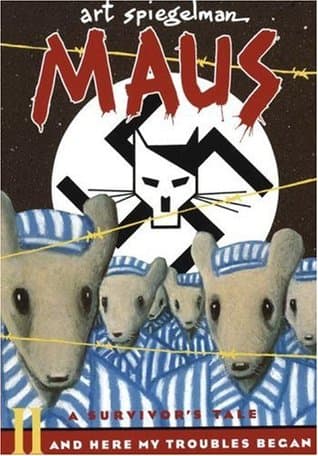
Maus II: A Survivor's Tale: And Here My Troubles Began cover
Archivist's Choice

Maus II: A Survivor's Tale: And Here My Troubles Began

Art Spiegelman (1991)

Genre

Biography / Memoir / History

Reading Time

120 min

Key Themes

See below

Track Your Reading

Sign in to track this book

In this graphic memoir's haunting conclusion, a son confronts his aging, Holocaust-survivor father's past in Auschwitz and their difficult present in the Catskills, grappling with inherited trauma through the unforgettable metaphor of mice and cats.

Core Idea

Maus II continues the story of Vladek Spiegelman's survival in Auschwitz and its lasting effect on his son, Art. It explores the relationship between a survivor and his child, the weight of inherited trauma, the challenges of showing historical atrocities, and the effort to make sense of suffering. The book also addresses the reception of the first volume, memory's nature, testimony's limits, and storytelling's power in witnessing the Holocaust.
Reading time
120 min
Difficulty
Medium
✓ Read this if...
You are interested in the intergenerational impact of trauma, the complexities of Holocaust memory, the ethics of historical representation, or the unique power of graphic novels as a medium for non-fiction storytelling.
✗ Skip this if...
You prefer traditional prose non-fiction, are not comfortable with anthropomorphic representation of human tragedy, or are looking for a straightforward, un-self-reflexive historical account.

Core idea

The central argument and framework that powers the entire book.

Maus II continues the story of Vladek Spiegelman's survival in Auschwitz and its lasting effect on his son, Art. It explores the relationship between a survivor and his child, the weight of inherited trauma, the challenges of showing historical atrocities, and the effort to make sense of suffering. The book also addresses the reception of the first volume, memory's nature, testimony's limits, and storytelling's power in witnessing the Holocaust.

At a glance

Reading time

120 min

Difficulty

Medium

Read this if...

You are interested in the intergenerational impact of trauma, the complexities of Holocaust memory, the ethics of historical representation, or the unique power of graphic novels as a medium for non-fiction storytelling.

Skip this if...

You prefer traditional prose non-fiction, are not comfortable with anthropomorphic representation of human tragedy, or are looking for a straightforward, un-self-reflexive historical account.

Key Takeaways

1

The Burden of Inheritance

Trauma isn't just experienced; it's passed down, shaping the lives of those who come after.

Quote

I know this is insane, but I somehow wish I had been in Auschwitz with my parents so I could really know what they went through!... I feel so inadequate trying to reconstruct a reality that was worse than my darkest dreams.

Art Spiegelman deals with the heavy psychological burden of being a child of Holocaust survivors. He feels inadequate in understanding his father's suffering, yet he also experiences a deep, almost inherited, trauma. This 'secondary trauma' shows up as guilt, anxiety, and a strained relationship with his father, Vladek. The book clearly shows how the past's horrors do not simply end; they echo through generations, affecting identity, family dynamics, and even creative work. Art's struggle highlights the complex psychological state of ...

Supporting evidence

Art's sessions with his therapist, Pavel, also a Holocaust survivor, where he discusses his guilt over his success and his inability to fully comprehend his parents' experiences. His constant struggle to reconcile his father's past with his present-day personality.

Apply this

Recognize that intergenerational trauma is real and can manifest in subtle yet profound ways within families. Seek understanding and empathy for those carrying such burdens, and if you are one, explore how past events might be shaping your present reactions and relationships.

intergenerational-traumasurvivor-guiltpost-memory
2

The Unreliable Narrator

Memory, especially of trauma, is fragmented and subjective, complicating the search for absolute truth.

Quote

It's impossible to get it all exactly right... my father is a difficult person. He's a survivor, but he's also a racist and a miser. How do I make him a character that's both true and sympathetic?

Vladek's story of survival is central, but Art Spiegelman constantly reminds the reader that it is not fully reliable. Vladek's memories are filtered through time, trauma, and his own personality (like his carefulness with money or his casual racism). Art, as the author and interviewer, faces the ethical challenge of showing his father accurately, including his less admirable traits, without downplaying the immense suffering he went through. This meta-narrative layer makes readers question the nature of historical truth, memoir, and s...

Supporting evidence

Art's direct commentary on Vladek's character flaws (e.g., his penny-pinching, his prejudices against Black people or Poles) which he includes despite his discomfort. The discrepancies or gaps in Vladek's recollections that Art notes.

Apply this

Approach historical accounts and personal narratives with a critical yet empathetic eye. Understand that memory is fallible, and even well-intentioned storytellers may present a subjective version of events. Seek multiple perspectives when possible.

memory-and-traumametafictionnarrative-ethics
3

The Banality of Evil and Survival

Amidst unimaginable horror, life in Auschwitz was often characterized by mundane struggles and moral compromises.

Quote

To die was easy... but you had to struggle for life. You had to have a will. You had to be clever. You had to be lucky.

Maus II vividly shows the contradiction of daily life in the death camps. While the overall reality was extermination, Vladek's story focuses on the constant, often ordinary, fight for survival: finding food, trading goods, avoiding 'selections,' and getting better work assignments. This is not a story of grand heroism, but of gritty, often morally unclear, cleverness. Vladek's willingness to use situations, his resourcefulness in bartering, and his constant focus on self-preservation reveal the 'ordinariness' of survival – the small,...

Supporting evidence

Vladek's detailed accounts of trading food rations for better clothes, bribing kapos with valuables, teaching English to a German guard for extra bread, and his meticulous planning to avoid being sent to the gas chambers.

Apply this

Recognize that extreme situations often force individuals into morally complex choices for survival. Avoid simplistic judgments of historical figures' actions in impossible circumstances, and instead seek to understand the pragmatic, often desperate, logic of their decisions.

holocaust-survivalmoral-compromisehuman-resilience
4

The Power of Storytelling (and its Limits)

Comics, as a medium, can uniquely convey the unspeakable, but no art form can fully capture the trauma.

Quote

The more I work on this book, the more I'm aware of how inadequate it is to portray the Holocaust. But what can I do? I have to tell his story.

Art Spiegelman's choice of the comic book format for Maus is groundbreaking. By showing Jews as mice, Nazis as cats, and Poles as pigs, he disarms the reader, forcing a new look at familiar, yet horrific, history. This allegorical approach allows the reader to engage with the story without the immediate emotional overload that realistic depictions might cause, making the unspeakable more accessible. However, Art is well aware of the medium's limits. He often breaks the fourth wall to express his self-doubt and the impossibility of tru...

Supporting evidence

The iconic animal allegory itself. Art's direct conversations with his therapist about the 'mask' he wears (a human mask over a mouse head) while drawing, symbolizing his own struggle with identity and representation. His anxieties about commercial success and trivializing the Holocaust.

Apply this

Consider how different mediums shape our understanding of complex events. Appreciate the unique strengths of visual storytelling in conveying emotion and information, while also acknowledging that no single narrative or artistic form can fully encapsulate a multifaceted reality.

graphic-novelallegorymeta-narrativeholocaust-representation
5

The Lingering Scars of Survival

Escaping the camps doesn't end the struggle; survivors carry deep psychological and emotional wounds for life.

Quote

He survived Auschwitz, and then he survived America.

Even after liberation, Vladek's life is deeply shaped by his Holocaust experiences. His carefulness, frugality to the point of stinginess, hoarding, and often difficult personality traits are direct results of the deprivation and trauma he endured. He struggles with trust, generosity, and even basic emotional expression. The book shows that 'survival' is not a single event but an ongoing process, where the past continues to dictate current behaviors and relationships. This offers important insight into the long-term psychological impa...

Supporting evidence

Vladek's arguments with Art over money, his constant need to save and reuse everything, his difficult relationship with Mala, and his general pessimism and distrust of others, all stemming from his camp experiences.

Apply this

Cultivate empathy for individuals who have experienced profound trauma, understanding that their coping mechanisms and behaviors, though sometimes challenging, are often deeply rooted in their past experiences. Avoid quick judgments and seek to understand the underlying causes of their actions.

post-traumatic-stresssurvivor-psychologycoping-mechanisms
6

The Complexity of Family Relationships

Trauma exacerbates the inherent difficulties in parent-child bonds, creating unique challenges and frustrations.

Quote

My father's story is impossible to tell, and yet I must tell it. But how do I deal with the fact that he's also a pain in the ass?

The relationship between Art and Vladek is filled with tension, love, frustration, and misunderstanding. Art struggles to accept the heroic survivor alongside the difficult, demanding, and sometimes biased old man. Vladek, in turn, often seems unaware of Art's emotional needs and struggles, focusing on his own practical concerns and past suffering. Their dynamic shows how trauma can create emotional distance and communication barriers, even within loving families. Art's journey to understand his father is also a journey to understand ...

Supporting evidence

Their arguments over trivial matters, Art's frustration with Vladek's racism, Vladek's disappointment in Art's career choices, and Art's feelings of guilt over his mother's suicide and his inability to 'save' his father from his loneliness.

Apply this

Recognize that family relationships are inherently complex, and trauma adds another layer of difficulty. Practice active listening, empathy, and set healthy boundaries. Understand that love can coexist with frustration, and that seeking to understand doesn't always mean agreeing.

parent-child-dynamicsfamily-traumacommunication-barriers
7

The Weight of Memory and Documentation

The act of recording and preserving survivor testimony is a vital, yet emotionally draining, responsibility.

Quote

I'm trying to make a record of what happened. I'm trying to make sense of it, for myself and for others. But it's so hard.

Art Spiegelman's project is not just a personal memoir but an important act of historical documentation. He carefully records Vladek's testimony, including details, dates, and the nuances of his Yiddish-accented English. This process is shown to be emotionally draining, as Art must constantly face the horrors his father experienced, often reliving them through Vladek's words. The book highlights the great responsibility of those who work to preserve the memories of genocide survivors. It shows the importance of first-hand accounts in ...

Supporting evidence

The detailed transcripts of Vladek's stories, the inclusion of photographs of Vladek and Anja, and Art's own emotional reactions and struggles as he listens to and draws his father's narrative.

Apply this

Support efforts to document and preserve historical testimonies, especially from marginalized or traumatized communities. Understand that the act of bearing witness, both for the storyteller and the listener, is a profound and often difficult responsibility with lasting societal importance.

oral-historyholocaust-memoryhistorical-documentation
8

The Quest for Closure (and its Elusiveness)

For survivors and their descendants, true closure for such profound trauma may be an unattainable ideal.

Quote

I can't feel it for them. I can't feel it for myself. I'm too numb. I just want to finish the book and move on.

Throughout Maus II, both Vladek and Art struggle with finding peace or resolution. Vladek, despite surviving, lives with the constant shadow of loss and trauma, never truly escaping the 'prisoner of the Holocaust' mindset. Art, in turn, hopes that finishing the book will bring him some understanding or release from his inherited burden. However, the story suggests that complete closure for such immense suffering might be an illusion. The book ends not with a neat resolution, but with a sense of the past's ongoing impact. This powerful...

Supporting evidence

Vladek's final words in the book, 'I'm tired from talking, Richieu, and it's enough stories for now.' (mistakenly calling Art by his deceased brother's name), indicating his weariness and the lingering presence of his lost son. Art's own continued anxieties and self-doubt even as the book concludes.

Apply this

Reframe expectations around healing from trauma. Understand that 'closure' might not mean forgetting or full emotional detachment, but rather learning to live with the impact in a way that allows for continued growth and meaning, even if pain persists.

trauma-recoverygrief-processunresolved-grief

Critical analysis

Notable Quotes

And here my troubles began.

The subtitle of the book, directly referencing Vladek's experience and the start of a new phase of hardship.

I can't make sense out of it... to make it flow. I need to force myself to remember!

Artie's internal struggle and frustration while trying to extract coherent narratives from Vladek.

It's impossible to get it all in! I just keep piling on the details. No matter how much I include, I'm always leaving something out.

Artie's anxiety about the incompleteness of his narrative and the burden of representing the Holocaust.

So… what do you want from me, Artie? Do you want me to feel guilty?

Vladek to Artie, after Artie presses him about his relationship with Mala and his current behavior.

More I don't need to tell you. We were in Auschwitz. And we were, in some ways, lucky.

Vladek's chilling statement about the relative 'luck' of surviving Auschwitz compared to others.

To die, it's easy… but you have to struggle for life.

Vladek's philosophy on survival, reflecting his constant fight against despair.

He got very agitated, and he started screaming. He told me that he was going to burn all my books.

Vladek's extreme reaction to finding Artie's comic strip 'Prisoner on the Hell Planet,' which depicted his mother's suicide.

I started to feel that I was being taken for granted. I didn't want to be just a tape recorder.

Artie's frustration with Vladek's expectations and his desire to be seen as more than just a transcriber.

He saved my life, this friend. I was so starved, so weak. And he brought me potatoes, a piece of bread.

Vladek recalling a moment of kindness and mutual aid in the concentration camp.

My father's story is only one of millions. The Holocaust was an unimaginable horror.

Artie reflecting on the broader scope of the Holocaust beyond his father's individual experience.

I know this is insane, but I somehow wish I had been in Auschwitz with my parents so I could know what they went through!

Artie's agonizing confession of 'survivor's guilt' by proxy, wishing to understand his parents' trauma directly.

One time I was in the gas chamber, and I smelled the gas.

A chilling and disturbing statement by Vladek, highlighting the psychological impact and vividness of his memories.

He was a very smart man, my father. And he was very, very careful.

Artie's summary of Vladek's character traits that contributed to his survival.

I want to be able to tell this story, but I don't know how to make it coherent.

Artie wrestling with the challenge of structuring and conveying the complex, fragmented narrative of the Holocaust.

Quiz

Test Your Knowledge

Ready to see how well you understood this book? Take our interactive quiz with 10 questions.

10
Questions
~5
Minutes
?
Best Score

Key Questions (FAQ)

Maus II continues Vladek Spiegelman's harrowing survival story, moving from the Auschwitz death camps to his post-war life. It also deepens the exploration of Art Spiegelman's complex and often tortured relationship with his aging father, grappling with the lasting impact of the Holocaust on both generations.

About the author

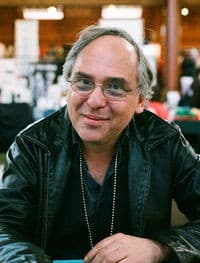
Art Spiegelman

Art Spiegelman is a Pulitzer Prize-winning artist and writer, best known for his graphic novel "Maus." This monumental work, which includes "Maus II: A Survivor's Tale: And Here My Troubles Began," chronicles the experiences of his father during the Holocaust, depicting Jewish people as mice and Nazis as cats. Spiegelman's innovative use of the graphic novel format to explore profound historical and personal themes has cemented his legacy as a significant figure in contemporary literature and art.