BookBrief
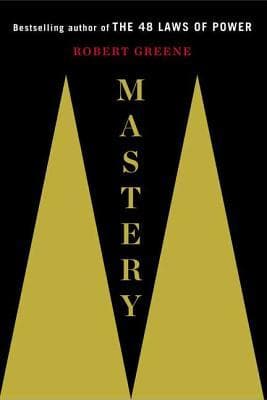
Mastery cover
Archivist's Choice

Mastery

Robert Greene (2012)

Genre

Business / Productivity / History / Philosophy / Self-Help

Reading Time

318 pages (approx. 10-12 hours)

Key Themes

See below

Track Your Reading

Sign in to track this book

Robert Greene's book explores the universal path to mastery, showing how anyone can develop their passion into skill and influence by debunking myths about genius.

Core Idea

Mastery is a learned process, not an innate talent. Anyone can achieve it by dedicating themselves to a field. This journey involves finding one's unique interests (the Life's Task), completing an intense apprenticeship to learn core knowledge and skills, developing social intelligence, and then innovating to shape the future of one's area. It demands deep focus, consistent effort, and a commitment to ongoing learning.
Reading time
318 pages (approx. 10-12 hours)
Difficulty
Medium
✓ Read this if...
You are ambitious, feel a strong calling towards a particular field, and are looking for a detailed, historical roadmap to achieving excellence and profound expertise in your chosen craft.
✗ Skip this if...
You prefer quick fixes, are looking for superficial productivity hacks, or are not interested in historical examples and philosophical reflections on human potential.

Core idea

The central argument and framework that powers the entire book.

Mastery is a learned process, not an innate talent. Anyone can achieve it by dedicating themselves to a field. This journey involves finding one's unique interests (the Life's Task), completing an intense apprenticeship to learn core knowledge and skills, developing social intelligence, and then innovating to shape the future of one's area. It demands deep focus, consistent effort, and a commitment to ongoing learning.

At a glance

Reading time

318 pages (approx. 10-12 hours)

Difficulty

Medium

Read this if...

You are ambitious, feel a strong calling towards a particular field, and are looking for a detailed, historical roadmap to achieving excellence and profound expertise in your chosen craft.

Skip this if...

You prefer quick fixes, are looking for superficial productivity hacks, or are not interested in historical examples and philosophical reflections on human potential.

Key Takeaways

1

The Life's Task

Discover your unique calling and align your career with your deepest inclinations.

Quote

The first step in attaining mastery is to choose a field that resonates with your deepest inclinations and passions.

Greene states that mastery starts when you find your 'Life's Task'—a deep, often forgotten, childhood interest that shows your unique talent. This is not just about finding a job you like, but about recognizing a strong pull toward a specific subject or activity. This initial interest, if cared for, drives lasting effort and resilience. Many masters, from Martha Graham to V.S. Ramachandran, link their lasting passion to an early, almost natural attraction to their field. Ignoring this inner voice for outside pressures or what seems 'p...

Supporting evidence

Greene highlights the early life of Charles Darwin, whose childhood fascination with collecting specimens and observing nature, though initially discouraged, ultimately led to his groundbreaking work in natural selection. This deep-seated curiosity was his Life's Task.

Apply this

Reflect on your childhood fascinations and recurring interests. What subjects or activities captivated you effortlessly? Consider how these inclinations might be integrated into your current work or lead you towards a new path, even if it requires unconventional thinking.


life-s-taskinnate-inclinationpassion-discovery
2

The Apprenticeship Phase

Embrace disciplined learning and humble observation to build foundational skills.

Quote

The apprenticeship is not a glamorous period, but it is the most critical for building the deep foundation of skills and knowledge necessary for true mastery.

The apprenticeship is a vital, often long, period of intense learning and skill development. Greene stresses that this phase is not about ego or quick rewards, but about humbly committing to the craft and a mentor. It has three main parts: careful observation, skill building, and trying new things. During this time, the apprentice must avoid trying to innovate too soon. Instead, they should focus on learning the basic rules and methods of their chosen field. This needs great patience, discipline, and a willingness to make mistakes and...

Supporting evidence

Benjamin Franklin's rigorous apprenticeship as a printer, where he meticulously learned every aspect of the trade from typesetting to writing, provided him with a practical education and discipline that served him throughout his diverse career.

Apply this

Identify areas where your foundational skills are weak. Seek out mentors or resources that can guide you through a structured learning process. Commit to deliberate practice, breaking down complex skills into smaller, manageable parts, and focusing on improvement rather than perfection.

apprenticeshipdeliberate-practiceskill-acquisitionmentorship
3

Mentorship as Accelerated Learning

Strategically choose and learn from masters to accelerate your journey.

Quote

A good mentor is not merely a teacher, but a guide who helps you see the terrain with new eyes and avoid the pitfalls they themselves encountered.

Greene emphasizes how important a mentor is for becoming a master. A mentor is more than just a source of facts; they represent the field's wisdom. They offer useful feedback, emotional support, and insights that books alone cannot give. The relationship, however, is a two-way street. The apprentice must show respect, a desire to learn, and a willingness to work hard. Greene points out that the best apprentices often 'steal' knowledge from their mentors, not in a bad way, but by closely watching, learning, and then changing what they ...

Supporting evidence

The relationship between composer Joseph Haydn and Wolfgang Amadeus Mozart, where Haydn served as a mentor, offering guidance and critique that profoundly shaped Mozart's development, even as Mozart eventually surpassed him.

Apply this

Actively seek out individuals who embody the mastery you aspire to. Offer your assistance, demonstrate your commitment, and be an eager, humble learner. Don't be afraid to ask questions, but also learn to observe and deduce independently.

mentorshiplearning-from-mastersaccelerated-growth
4

The Creative Active Phase

Move beyond imitation to innovate and reshape your field with original contributions.

Quote

True mastery is not merely about accumulating knowledge, but about transforming that knowledge into original creations.

After the intense learning of the apprenticeship, the master enters a 'creative active' phase. Here, they move past just copying others and start to experiment, innovate, and eventually change their field. This is where all the learned knowledge and skills are put together and used in new ways. It requires a willingness to challenge old ideas, take risks, and handle criticism. Greene says this phase is marked by a deep understanding of the field's basic rules. This allows the master to see new connections and possibilities that others...

Supporting evidence

Leonardo da Vinci's career, after his apprenticeship with Verrocchio, saw him constantly experimenting across various disciplines, combining art, science, and engineering in unprecedented ways, leading to innovations in painting, anatomy, and invention.

Apply this

Once you have a strong foundation, consciously seek opportunities to experiment and deviate from established methods. Question assumptions, look for connections between seemingly disparate ideas, and don't be afraid to propose new solutions, even if they seem unconventional.

creative-innovationoriginalitysynthesizing-knowledge
5

Social Intelligence and The Inner Circle

Navigate the social dynamics of your field to protect and advance your work.

Quote

The master understands that brilliance alone is not enough; one must also navigate the human element, the politics and jealousies that inevitably arise.

Greene emphasizes that mastery is not done alone; it is tied to social interactions. The master must develop sharp social skills to handle the politics, jealousies, and power struggles in any field. This means understanding people, figuring out their motives, and strategically building a group of supporters who believe in their vision. It also means finding and stopping potential saboteurs without getting caught up in conflict. Ignoring the social side can lead to excellent work being ignored or ruined, no matter how good it is. The m...

Supporting evidence

The political maneuvering and strategic alliances Benjamin Franklin cultivated throughout his diplomatic career were as crucial to his success as his scientific and intellectual achievements.

Apply this

Actively observe the social dynamics within your workplace or industry. Identify key influencers and potential detractors. Cultivate genuine relationships based on mutual respect and shared goals. Learn to communicate your ideas effectively, anticipating and addressing potential objections.

social-intelligencenetworkingcareer-strategypolitics-of-work
6

The Return to the Primal Mind

Access intuitive, holistic thinking by breaking free from conventional thought patterns.

Quote

The highest form of intelligence is not analytical, but intuitive—a return to the primal mind where connections are made effortlessly.

Greene suggests that true masters eventually move past usual, linear thinking to reach a 'primal mind.' This is a more intuitive, complete, and flexible way of understanding. It does not mean giving up logic, but combining it with a deeper, often subconscious, ability to see patterns. Through years of deep focus, the master develops an almost natural understanding of their field. This allows them to have sudden insights and see connections that others miss. This state involves strong focus and a blending of conscious and unconscious t...

Supporting evidence

Albert Einstein's famous 'thought experiments' and his ability to visualize complex physics problems are examples of this primal, intuitive thinking, allowing him to arrive at solutions that defied conventional logic.

Apply this

After deep study, practice stepping back from purely analytical thought. Engage in activities that encourage free association, daydreaming, or 'mind-wandering' related to your field. Trust your intuition more, and pay attention to 'aha!' moments that arise from seemingly unrelated thoughts.

intuitive-thinkingholistic-understandingpattern-recognitionsubconscious-intelligence
7

Overcoming Stagnation and Complacency

Continuously challenge yourself to avoid the pitfalls of success and maintain growth.

Quote

The greatest danger to a master is not failure, but the complacency that comes with success.

Success, Greene warns, can be a master's biggest challenge. Once a certain level of achievement is reached, it is tempting to relax, become satisfied, or just repeat past successes. This leads to stagnation and a loss of creative ability. True masters, however, keep challenging themselves and reinventing their work. They actively look for new problems, learn new skills, and even purposely put themselves in uncomfortable situations to force more growth. This means being willing to be a 'beginner' again in new areas. This keeps the mind...

Supporting evidence

The later career of musician Miles Davis, who continually reinvented his sound and embraced new musical forms, refusing to be confined by past successes and constantly pushing the boundaries of jazz.

Apply this

Once you achieve a goal, immediately set a new, more challenging one. Seek out new skills or areas of knowledge that complement or expand your existing expertise. Actively solicit critical feedback, even if it's uncomfortable, to identify areas for improvement.

continuous-improvementself-reinventionanti-complacencygrowth-mindset
8

The Mastery of Self

Cultivate emotional discipline and self-awareness to prevent internal obstacles.

Quote

Before you can master a field, you must first master yourself—your emotions, your weaknesses, your self-defeating patterns.

Greene states that external mastery is not possible without internal mastery. This means deeply understanding and carefully managing one's own emotions, biases, and psychological weaknesses. Uncontrolled emotions like envy, anger, impatience, or fear can ruin the long and hard path to mastery. They can lead to bad decisions, self-sabotage, and a loss of focus. The master learns to observe their inner state without bias, to separate from immediate emotional reactions, and to develop patience, resilience, and a strong commitment to thei...

Supporting evidence

The stoicism and emotional control displayed by figures like Abraham Lincoln, who, despite immense personal and political pressures, maintained a calm demeanor and rational decision-making ability, crucial for his leadership.

Apply this

Practice mindfulness and self-observation to identify your emotional triggers and recurring negative patterns. Develop strategies to manage stress and setbacks constructively. Cultivate patience and resilience, understanding that the path to mastery is long and fraught with challenges.

self-masteryemotional-intelligenceresilienceself-awareness
9

Embracing the Process, Not Just the Outcome

Find deep satisfaction in the journey of learning and creation itself.

Quote

True masters are not simply driven by the desire for recognition or wealth, but by the profound satisfaction found in the process of creation and continuous learning.

Ultimately, Greene shows that mastery is not an end point but an ongoing process. Those who achieve true greatness are not only motivated by external rewards like fame or money. They are driven by a love for the work itself—solving problems, learning, creating, and constantly improving their skills. This deep involvement with the process provides a lasting sense of purpose and satisfaction, making the difficult journey sustainable. When the focus shifts from the result to the process, setbacks become chances to learn, and the work its...

Supporting evidence

The relentless dedication of figures like Marie Curie, who pursued scientific discovery with an almost ascetic devotion, driven by the thrill of unraveling nature's secrets rather than personal gain or recognition.

Apply this

Shift your focus from purely outcome-driven goals to process-oriented ones. Find joy in the daily tasks, the challenges, and the continuous learning. Celebrate small victories in skill development and problem-solving, fostering an intrinsic love for your craft.

process-orientationintrinsic-motivationlove-of-craftlifelong-learning

Critical analysis

Notable Quotes

The future belongs to those who learn more skills and combine them in creative ways.

Introduction to the concept of mastery and the need for continuous learning.

The greatest danger you face is your own emotionality.

Discussing the importance of rationality and emotional control in the apprenticeship phase.

You must understand the following: In the game of life, you are not a passenger. You are the pilot.

Emphasizing personal agency and responsibility in shaping one's path to mastery.

The need to feel important, to feel loved, to feel superior, to feel appreciated, to feel secure, to feel free, to feel powerful, to feel that you are contributing something, to feel that you are making a difference—all of these are powerful drives.

Exploring the underlying human desires that fuel the pursuit of greatness.

Your most important task is to find a field that rouses your interest and best suits your inclinations.

Guidance on choosing the right path during the apprenticeship phase.

The master’s power is his ability to see the whole picture, to grasp the essence of things, to make connections that others miss.

Defining the core attributes of a true master.

The human brain is a pattern-seeking instrument. It seeks to make sense of the world by identifying recurring patterns and connections.

Explaining the cognitive basis for learning and developing intuition.

To conquer the world, you must first conquer yourself.

Highlighting the internal battle against self-doubt and distractions on the path to mastery.

The greatest masters are those who have maintained a childlike sense of wonder and curiosity throughout their lives.

Emphasizing the importance of curiosity and openness to new ideas even at advanced stages.

The creative power that you naturally possess is the most important element in your pursuit of mastery.

Underscoring the role of creativity in moving beyond mere technical skill.

You must be able to endure the pain of this process, the loneliness, the feeling of not knowing, the feeling of being overwhelmed.

Acknowledging the difficulties and challenges inherent in the journey to mastery.

True intelligence is the ability to adapt to new circumstances, to learn from experience, and to think critically.

Defining a practical and effective form of intelligence crucial for growth.

The goal of your apprenticeship is not to become a clone of your master, but to absorb their spirit, their methods, and then to find your own voice.

Advice on the purpose of mentorship and developing individuality.

Do not be afraid of the unknown. It is where you will find your greatest discoveries.

Encouraging exploration and stepping outside of comfort zones.

Quiz

Test Your Knowledge

Ready to see how well you understood this book? Take our interactive quiz with 10 questions.

10
Questions
~5
Minutes
?
Best Score

Key Questions (FAQ)

The core concept of 'Mastery' is that true power and fulfillment come from achieving mastery in a chosen field. Greene argues that this is an attainable process, not an innate talent, and involves deep learning, practice, and dedication over time.

About the author