BookBrief
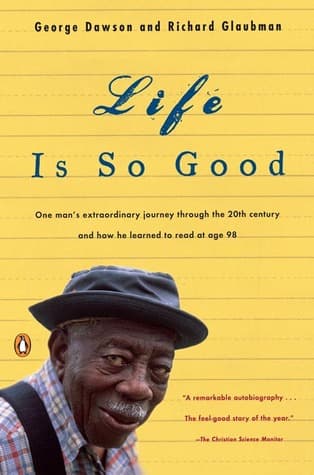
Life is So Good cover
Archivist's Choice

Life is So Good

George Dawson

Genre

Biography / Memoir / History

Reading Time

260 min

Key Themes

See below

Track Your Reading

Sign in to track this book

George Dawson's 'Life Is So Good' tells the inspiring story of a man, the grandson of a slave, who learned to read at 98, offering a firsthand look at a century of American history and showing how to find beauty and progress even in hardship.

Core Idea

George Dawson's 'Life Is So Good' is the true story of a man born to a slave, who, despite a life of hard manual labor and extreme racial prejudice, learned to read at 98. His memoir shows the strength of the human spirit, proving that education, resilience, and optimism can overcome any problem, regardless of age or situation. Dawson's story gives a direct view of American history from the late 1800s through the end of the 1900s, highlighting the dignity in hard work, the power of forgiveness, and life's simple joys.
Reading time
260 min
Difficulty
Easy
✓ Read this if...
You are looking for an inspiring true story about overcoming adversity, the lifelong value of learning, and maintaining a positive outlook despite immense challenges.
✗ Skip this if...
You prefer books with complex narratives or deep philosophical analyses over straightforward, heartwarming personal accounts.

Core idea

The central argument and framework that powers the entire book.

George Dawson's 'Life Is So Good' is the true story of a man born to a slave, who, despite a life of hard manual labor and extreme racial prejudice, learned to read at 98. His memoir shows the strength of the human spirit, proving that education, resilience, and optimism can overcome any problem, regardless of age or situation. Dawson's story gives a direct view of American history from the late 1800s through the end of the 1900s, highlighting the dignity in hard work, the power of forgiveness, and life's simple joys.

At a glance

Reading time

260 min

Difficulty

Easy

Read this if...

You are looking for an inspiring true story about overcoming adversity, the lifelong value of learning, and maintaining a positive outlook despite immense challenges.

Skip this if...

You prefer books with complex narratives or deep philosophical analyses over straightforward, heartwarming personal accounts.

Key Takeaways

1

Never Too Late to Learn

Age is just a number when it comes to acquiring new skills and knowledge.

Quote

I was 98 years old when I learned to read. Best thing I ever did.

George Dawson's most important lesson is the power of learning throughout life, shown by his decision to learn to read at 98. This was not a casual hobby; it was a personal and life-changing act that opened new worlds and allowed him to read for the first time. His story breaks the idea that certain skills are best learned in youth, proving that people can grow and adapt well into old age. It shows that curiosity, when encouraged, can lead to great personal enrichment at any point in life, changing one's view and opportunities.

Supporting evidence

Dawson's personal narrative of learning to read at 98, detailed throughout the book, including his initial struggles and eventual triumph.

Apply this

Identify one skill you've always wanted to learn but thought you were 'too old' for. Dedicate consistent, small blocks of time each day or week to begin learning it, embracing the process over immediate mastery.


lifelong-learningcognitive-plasticitypersonal-growth
2

Resilience in the Face of Hardship

Adversity shapes character but doesn't have to define one's spirit.

Quote

We had hard times, sure, but we always found a way to make it through. You just keep going.

Dawson's life covers a century marked by huge social changes and personal difficulties, including Jim Crow's systemic racism, the Great Depression, and two World Wars. Yet, his story is consistently one of resilience, not bitterness. He talks about hardships directly, focusing on how people adapted, supported each other, and found joy even when little was available. This shows the human ability to endure and even do well under great pressure, suggesting that a positive outlook and strong community ties are vital for handling life's pr...

Supporting evidence

His descriptions of growing up in poverty, working dangerous jobs from a young age, and experiencing segregation, yet maintaining a positive outlook and sense of purpose.

Apply this

When facing a personal challenge, consciously shift focus from the problem itself to potential solutions or lessons learned. Seek out community support and practice gratitude for what remains positive in your life.

resilienceadversitygritoptimism
3

The Power of a Positive Outlook

Cultivating gratitude transforms perception, even in difficult circumstances.

Quote

Life is so good. I do believe it's getting better.

Despite experiencing great injustices and personal losses, George Dawson's phrase, 'Life is so good,' is not naive optimism but a deep belief formed through experience. It shows a conscious choice to appreciate simple joys and progress, rather than focusing on past wrongs or current problems. This takeaway emphasizes that happiness is often a choice, a view developed through gratitude and a focus on small improvements. His ability to find goodness even when facing systemic oppression offers a strong example of how to keep inner peace ...

Supporting evidence

His consistent use of the phrase 'Life is so good,' even when discussing historical atrocities or personal struggles, and his focus on positive changes over time.

Apply this

Start a daily gratitude practice. Each day, list three specific things you are grateful for, no matter how small. Make it a habit to verbally express appreciation to others.

gratitudepositive-psychologymindsethappiness
4

History Through a Personal Lens

Firsthand accounts offer invaluable insights beyond textbooks.

Quote

I saw a lot of things change in this country. Some for the good, some not so much.

Dawson's memoir is a living history book, giving a unique, ground-level view of 20th-century America. His experiences show the deep impact of major historical events—from segregation and the Civil Rights Movement to the Great Depression and World Wars—on the lives of ordinary people, especially African Americans. This takeaway highlights how important oral histories and personal stories are for understanding the past. It shows how big historical trends become small realities, offering a richer, more detailed, and often more understand...

Supporting evidence

His detailed recollections of living under Jim Crow laws, his experiences with racial discrimination, and his observations of societal shifts over decades.

Apply this

Seek out and engage with oral histories or memoirs from individuals who lived through significant historical periods. Consider interviewing older family members or community elders to preserve their unique perspectives.

oral-historymemoirsocial-historyracial-justice
5

The Value of Simple Pleasures

Contentment often lies in appreciating the everyday and the fundamental.

Quote

A good meal, a warm bed, good company – that's all you really need.

In a world often focused on getting more, Dawson's life offers a refreshing different story. He finds deep satisfaction not in wealth or status, but in life's basic needs and simple joys: a warm meal, a comfortable home, meaningful work, and human connection. This takeaway shows that true contentment is not tied to material things but to appreciating basic comforts and relationships. His view encourages readers to rethink their own priorities and find joy in the present moment and the accessible parts of their lives, rather than alway...

Supporting evidence

His descriptions of enjoying simple meals, working hard and finding satisfaction in his labor, and cherishing time with family and friends.

Apply this

Take time each day to consciously appreciate a simple pleasure: a cup of coffee, a walk in nature, a conversation with a loved one. Reduce reliance on external stimuli for happiness.

minimalismcontentmentgratitudesimple-living
6

Work Ethic and Dignity

Hard work isn't just about survival, but about purpose and self-respect.

Quote

I always worked hard. It felt good to earn my keep.

Throughout his life, George Dawson did physically demanding labor, from farming to working in sawmills. His story consistently shows a strong work ethic, not as a burden, but as a source of dignity and purpose. He finds satisfaction in contributing, in earning his way, and in the clear results of his efforts. This takeaway highlights the often-overlooked psychological benefits of honest labor, suggesting that work, when done with integrity, can provide a deep sense of self-worth and meaning. It challenges modern ideas of work as just ...

Supporting evidence

His detailed accounts of various jobs he held throughout his life, his pride in his physical capabilities, and his consistent commitment to providing for his family.

Apply this

Approach your own work with a renewed sense of purpose, focusing on the quality of your effort and the value you create, rather than solely on the outcome or compensation. Find ways to contribute meaningfully, even outside of paid employment.

work-ethicdignity-of-laborpurposeself-worth
7

Forgiveness and Moving Forward

Releasing grudges is key to personal peace, even in the face of injustice.

Quote

No sense holding on to anger. It just hurts you more than anyone else.

Despite enduring systemic racism, personal insults, and great hardship, Dawson's story is notably free of bitterness or lasting anger. He acknowledges injustice but chooses not to dwell on it, instead focusing on moving forward and finding goodness. This takeaway shows the deep personal freedom that comes from forgiveness, not necessarily of the oppressor, but of oneself from the weight of resentment. His ability to let go of grudges allowed him to keep a positive spirit and enjoy his long life, offering a strong lesson on emotional r...

Supporting evidence

His calm and almost detached recounting of discriminatory experiences, without expressing deep-seated resentment, and his focus on positive changes over time.

Apply this

Identify a past grievance you are still holding onto. Practice active forgiveness, understanding that it is a gift to yourself, not necessarily an absolution for the other party. Focus on releasing the emotional burden.

forgivenessemotional-resilienceletting-goinner-peace
8

The Enduring Power of Family and Community

Strong connections provide essential support and meaning throughout life.

Quote

Family was everything. We always looked out for each other.

Throughout his life, George Dawson consistently emphasizes the central role of family and community in his survival, happiness, and overall well-being. From his childhood in a close, supportive home to his later years surrounded by children and grandchildren, these relationships provided a safety net, shared joy, and a sense of belonging. This takeaway highlights how essential human connection is, especially in times of scarcity and struggle. It argues that strong social bonds are not just pleasant additions to life, but fundamental s...

Supporting evidence

His frequent anecdotes about family gatherings, mutual support during hard times, and the joy he derived from his children and grandchildren.

Apply this

Prioritize nurturing your relationships with family and close friends. Actively participate in your community, offering and seeking support, and fostering a sense of belonging.

communityfamily-bondssocial-supportbelonging
9

Embrace Change and Progress

While acknowledging the past, celebrate societal advancements.

Quote

Things got better, slowly but surely. You gotta see that.

Having lived through the most dramatic social and technological changes in history, Dawson has a unique view on progress. He does not avoid talking about past injustices, especially racial segregation, but he also clearly states and celebrates the improvements he saw. This takeaway encourages a balanced view of history, acknowledging past wrongs while also recognizing and appreciating the hard-won advancements in civil rights, technology, and living standards. It reminds us that while perfection is hard to reach, progress is real and ...

Supporting evidence

His comparisons between life under Jim Crow and the civil rights era, his observations on technological advancements like cars and electricity, and his consistent belief that 'it's getting better.'

Apply this

Reflect on a specific area of societal progress you've witnessed in your lifetime. Actively support initiatives that aim for positive change, contributing to continued progress rather than succumbing to cynicism.

social-progresshistorical-perspectiveoptimismsocietal-change
10

The Richness of an Unconventional Life

Life's deepest lessons often come from experiences outside the mainstream.

Quote

I didn't go to no school, but I learned a lot from living.

George Dawson's life, mostly without formal education until late in life, shows the deep wisdom gained through experience. His 'education' came from hard work, observing people, handling challenges, and simply living for over a century. This takeaway challenges the idea that academic achievement is the only valuable kind of knowledge, suggesting that deep understanding and practical wisdom often come from direct engagement with the world. His story validates the intelligence and insight of those whose lives do not fit traditional mold...

Supporting evidence

His lack of formal schooling until age 98, yet his clear articulation of complex societal issues and profound life philosophies, all drawn from personal experience and observation.

Apply this

Seek out perspectives from individuals with vastly different life experiences than your own. Value 'street smarts' and practical wisdom as highly as academic knowledge. Engage in hands-on learning and new experiences regularly.

experiential-learningwisdomunconventional-pathslife-lessons

Critical analysis

Notable Quotes

Life is so good. I do not have a single regret. I am a happy man.

A overarching theme and concluding thought from George.

It's never too late to learn.

George's perspective on learning to read and write in his 80s.

I always told myself, 'If you're going to do something, do it right.'

George's work ethic and approach to various jobs throughout his life.

You got to keep moving, keep busy. That's how you stay young.

George's philosophy on staying active and engaged in life.

There's no use in being mad about something you can't change.

George's pragmatic approach to difficulties and injustices he faced.

I saw things change, slowly but surely. You just had to live long enough to see it.

Reflecting on the progress of civil rights and societal changes over his lifetime.

Treat people the way you want to be treated. It's simple as that.

George's fundamental belief in human decency and interaction.

I never had much, but I always had enough.

George's contentment with his simple life and lack of material possessions.

Education is important. It opens up doors.

George's realization of the value of literacy and education later in life.

A man's word is his bond. You say you're going to do something, you do it.

George's strong belief in integrity and keeping promises.

The good Lord has been good to me.

George's expression of faith and gratitude for his long life.

Don't let nobody tell you what you can't do.

George's message of self-belief and overcoming limitations.

Every day is a gift. You just got to appreciate it.

George's profound appreciation for each day of his long life.

Quiz

Test Your Knowledge

Ready to see how well you understood this book? Take our interactive quiz with 10 questions.

10
Questions
~5
Minutes
?
Best Score

Key Questions (FAQ)

George Dawson was a remarkable man, a grandson of a slave, who learned to read at the age of 98. His book, 'Life is So Good,' is a memoir and historical account where he reflects on his 103 years of life, sharing his firsthand experiences of 20th-century America and offering profound lessons on living.

About the author