BookBrief
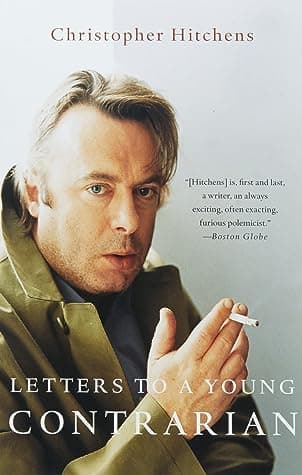
Letters to a Young Contrarian cover
Archivist's Choice

Letters to a Young Contrarian

Christopher Hitchens (2001)

Genre

Memoir / History / Spirituality / Creativity / Philosophy

Reading Time

120 min

Key Themes

See below

Track Your Reading

Sign in to track this book

Christopher Hitchens, in a series of letters, guides new rebels on the art of principled dissent, using history and his own wisdom to shape critical thinkers.

Core Idea

Christopher Hitchens' "Letters to a Young Contrarian" urges people to develop a skeptical, questioning, and independent mind. Through essays written as letters, Hitchens argues that true intellectual and moral growth comes from challenging established norms, dogmas, and power structures, not from conforming. He sees the contrarian as an important societal figure who, with reason, irony, and a commitment to free inquiry, prevents intellectual stagnation and authoritarianism, even if it means choosing integrity over popularity.
Reading time
120 min
Difficulty
Medium
✓ Read this if...
You are a young intellectual, student, or anyone seeking to develop a critical, independent, and skeptical worldview, and appreciate sharp prose and a challenging perspective on societal norms.
✗ Skip this if...
You prefer prescriptive self-help or comfort in established beliefs, or dislike confrontational arguments and a polemical style.

Core idea

The central argument and framework that powers the entire book.

Christopher Hitchens' "Letters to a Young Contrarian" urges people to develop a skeptical, questioning, and independent mind. Through essays written as letters, Hitchens argues that true intellectual and moral growth comes from challenging established norms, dogmas, and power structures, not from conforming. He sees the contrarian as an important societal figure who, with reason, irony, and a commitment to free inquiry, prevents intellectual stagnation and authoritarianism, even if it means choosing integrity over popularity.

At a glance

Reading time

120 min

Difficulty

Medium

Read this if...

You are a young intellectual, student, or anyone seeking to develop a critical, independent, and skeptical worldview, and appreciate sharp prose and a challenging perspective on societal norms.

Skip this if...

You prefer prescriptive self-help or comfort in established beliefs, or dislike confrontational arguments and a polemical style.

Key Takeaways

1

Embrace the Contrarian Spirit

Dissent is not merely an option, but a moral imperative for intellectual and societal progress.

Quote

The only way to be a contrarian is to be a contrarian all the way.

Hitchens says that true intellectual energy and societal progress depend on a willingness to dissent. Being a contrarian is not about being negative or argumentative; it is about taking a stand against accepted dogma, conventional wisdom, and easy agreement. This requires courage, an independent mind, and a commitment to truth over comfort. It means questioning authority, challenging orthodoxies, and refusing simple explanations. Hitchens suggests that human freedom and enlightenment have advanced because individuals dared to think an...

Supporting evidence

Hitchens frequently references historical figures like Emile Zola (Dreyfus Affair) and Rosa Parks, whose acts of principled dissent fundamentally altered their societies, demonstrating the profound impact of individual contrarianism against powerful establishments.

Apply this

Actively seek out dissenting opinions, even on issues you feel strongly about. Practice articulating arguments against your own deeply held beliefs to test their robustness. Don't shy away from polite but firm disagreement when you encounter intellectual laziness or moral complacency, whether in personal conversations or public discourse.
principled-dissentintellectual-couragequestioning-authority
2

The Dangers of Orthodoxy and Dogma

Unquestioning adherence to any ideology, religious or secular, stifles critical thought and invites tyranny.

Quote

Never be a spectator of unfairness or stupidity. Seek out argument and thought.

Hitchens warns against the appeal of orthodoxy, whether it is religious fundamentalism, political ideology, or cultural trends. He sees dogma as a mental prison, pre-packaging thoughts and stopping real inquiry. When individuals or societies stop questioning their basic beliefs, they become open to manipulation and intellectual stagnation. The book suggests that many historical atrocities come from unquestioning loyalty to a dogma, where 'the ends justify the means' and dissent is seen as betrayal. This applies not just to large polit...

Supporting evidence

Hitchens often points to the historical evils committed in the name of religious certainty or totalitarian political ideologies, like Stalinism or Nazism, as prime examples of the destructive power of dogma when critical thought is suppressed.

Apply this

Regularly examine the foundational assumptions of your own beliefs and those of groups you belong to. Be wary of any movement or ideology that demands absolute loyalty or demonizes dissent. Cultivate a 'heretical' mindset that prioritizes evidence and reason over tradition or group cohesion.

anti-dogmacritical-thinkingintellectual-freedom
3

The Indispensable Role of Irony and Humor

Wit and satire are potent weapons against pomposity, censorship, and the absurdities of power.

Quote

There are some things that one simply must not joke about. But almost everything else is fair game.

For Hitchens, irony and humor are not just extras but important tools for the contrarian. They allow one to expose hypocrisy, deflate self-important figures, and show the absurdities in dogmatic statements without just getting angry. Humor can bypass intellectual defenses, making uncomfortable truths easier to accept or, conversely, more obviously devastating. It shows intellectual agility and confidence, proving one can discuss serious subjects without taking oneself too seriously. Also, tyrannies and oppressive regimes often fear hu...

Supporting evidence

Hitchens's own writing style is replete with biting wit and ironic observations, demonstrating this principle through practice. He often cites figures like George Orwell, who masterfully used satire to expose totalitarianism.

Apply this

Cultivate a sense of humor, particularly about serious topics, and learn to use irony effectively in your own communication. Don't be afraid to laugh at absurdities, even those coming from powerful figures or institutions. Recognize humor as a form of intellectual resistance.

satirewitintellectual-weaponry
4

The Primacy of Free Speech

Unfettered expression, even of offensive ideas, is the bedrock of a healthy society and the only path to truth.

Quote

The defense of free speech is not a matter of defending certain opinions, but of defending the right to hold any opinion.

Hitchens is a strong supporter of absolute free speech, arguing that even the most offensive ideas must be allowed expression. His reason is not that all ideas are equally valid, but that the only way to test and defeat bad ideas is to expose them to public scrutiny and debate. Suppressing speech, even hateful speech, only drives it underground, where it grows without challenge. Who decides what speech is 'harmful' or 'offensive'? Hitchens fears that such power leads to censorship and the suppression of legitimate dissent. The marketp...

Supporting evidence

Hitchens's staunch defense of Salman Rushdie during the fatwa controversy is a prime example of his commitment to free speech, even when it involves defending speech that is deeply offensive to some. He points to historical instances where the suppression of ideas led to prolonged ignorance or injustice.

Apply this

Actively defend the right of others to express unpopular or even offensive opinions, even if you vehemently disagree with them. Engage with difficult ideas directly rather than advocating for their censorship. Understand that censorship, once allowed, rarely stops at the 'worst' ideas.

free-expressioncensorship-resistancemarketplace-of-ideas
5

The Importance of Reading and Learning

A well-stocked mind, forged through wide reading, is the contrarian's most formidable asset.

Quote

Reading is an active, not a passive, process. It is a conversation.

Hitchens stresses that being a contrarian is not about being ignorant or just having opinions; it requires a deep and broad understanding of history, philosophy, literature, and current events. A well-read person can recognize patterns, spot logical flaws, and express complex arguments. Reading widely exposes one to different perspectives, challenging old ideas and strengthening one's intellectual defense against propaganda and simplistic stories. Through serious intellectual engagement with others' works, one develops the ability for...

Supporting evidence

Hitchens frequently references a vast array of authors, from Orwell and Paine to Marx and Freud, demonstrating his own expansive reading and how these influences shaped his worldview and argumentative prowess.

Apply this

Commit to a lifelong habit of reading broadly and deeply, particularly works that challenge your existing perspectives. Don't just consume information; engage with it critically, taking notes, questioning assumptions, and forming your own conclusions. See reading as a dialogue with the greatest minds.

intellectual-curiositylifelong-learningcritical-reading
6

Beware the 'Good Intentions' Fallacy

Noble motives do not excuse intellectual dishonesty or shield one from the destructive consequences of bad ideas.

Quote

Good intentions are not enough. Indeed, they can be a positive menace.

Hitchens is very skeptical of arguments that rely only on 'good intentions' to justify policies or beliefs. He argues that even well-meaning actions can have terrible, unintended consequences if not carefully examined. This is especially true in politics and social engineering, where abstract ideals can cause real-world suffering. A contrarian must be willing to critique an idea's logic and likely outcomes, regardless of the perceived virtue of its supporters. The focus should always be on the truth of the claim and its demonstrable e...

Supporting evidence

Hitchens often critiques various utopian political movements, arguing that their initial 'good intentions' often devolved into tyranny and human rights abuses due to flawed underlying ideologies and a refusal to acknowledge negative outcomes.

Apply this

When evaluating policies or proposals, always look beyond the stated intentions and scrutinize the actual mechanisms and likely outcomes. Be wary of arguments that use emotional appeals or moral righteousness to bypass logical analysis. Demand evidence and accountability, not just promises.

unintended-consequencesskepticismconsequentialism
7

The Virtue of Internationalism

True contrarianism transcends nationalistic biases, embracing a global perspective on justice and human rights.

Quote

The internationalist is not a traitor to his country, but a loyal citizen of humanity.

Hitchens advocates for an international view, urging contrarians to look beyond national identity or tribal loyalties. He sees nationalism as a dangerous form of collective self-deception, often used to justify oppression and conflict. A true contrarian recognizes universal human rights and seeks justice for individuals regardless of their nationality or creed. This means being willing to criticize one's own country when it acts unjustly and to support oppressed people worldwide. It rejects 'my country, right or wrong' for a broader m...

Supporting evidence

Hitchens's consistent critique of various nationalistic movements and his unwavering support for human rights causes in different parts of the world (e.g., Kurdistan, Bosnia) exemplify this commitment to internationalism.

Apply this

Cultivate a global awareness by staying informed about international affairs. Challenge nationalistic rhetoric and policies that prioritize national interest over universal human rights. Recognize your shared humanity with people across borders and advocate for justice on a global scale.

global-citizenshipanti-nationalismhuman-rights
8

Integrity Over Popularity

The contrarian's ultimate loyalty must be to truth and principle, even if it means isolation or unpopularity.

Quote

Always try to make your argument, not your person, the subject of dispute.

Hitchens emphasizes that the contrarian path is often solitary. True dissent, by its nature, goes against the norm, making one unpopular with the majority or with powerful establishments. The temptation to conform, to seek approval, or to stay silent to avoid conflict is strong. However, Hitchens argues that sacrificing intellectual integrity for popularity is the ultimate betrayal of the contrarian spirit. One must be prepared to stand alone, to endure criticism, and to prioritize truth over social acceptance. This requires a strong ...

Supporting evidence

Hitchens's own career, marked by frequent public controversies and his willingness to take unpopular stances (e.g., his support for the Iraq War from a liberal perspective), serves as a testament to prioritizing integrity over popularity.

Apply this

Identify your core principles and commit to upholding them, even when it's uncomfortable or unpopular. Be prepared to articulate your dissenting views calmly and logically, without resorting to personal attacks. Understand that true intellectual growth often happens outside the comfort zone of consensus.

moral-courageauthenticityunpopularity
9

The Perpetual State of Doubt

A healthy skepticism and a willingness to revise one's own beliefs are hallmarks of intellectual honesty.

Quote

To be an atheist is not to be a know-all. It is to be a questioner.

The contrarian, according to Hitchens, does not have all the answers, but is always questioning. This means not only doubting what others say but also being skeptical of one's own beliefs. Intellectual honesty requires a willingness to change one's beliefs with new evidence or better arguments. Dogmatism, even in dissent, is still dogmatism. This constant state of doubt keeps the mind agile, open to new information, and resistant to rigid thinking. It is a commitment to ongoing inquiry rather than reaching final certainties.

Supporting evidence

Hitchens's own intellectual journey, where he evolved some of his political positions over time, demonstrates this willingness to re-evaluate and refine his beliefs based on experience and further thought.

Apply this

Actively seek out information that challenges your current understanding. Practice the art of self-correction and be open to admitting when you are wrong. Cultivate an attitude of epistemic humility, recognizing that certainty is often a barrier to truth.

skepticismepistemic-humilityintellectual-flexibility
10

Action Over Apathy

The contrarian's role extends beyond mere criticism to active participation in shaping a better world.

Quote

The greatest enemy of truth is very often not the lie – deliberate, contrived and dishonest – but the myth – persistent, persuasive and unrealistic.

While intellectual critique is important, Hitchens implies that the contrarian cannot be a passive observer. Insights gained through critical thought must eventually lead to action. Whether through writing, activism, or simply speaking out in one's community, the contrarian has a responsibility to challenge injustice and advocate for truth. Apathy is the opposite of the contrarian spirit; it allows myths and lies to continue unchallenged. This does not necessarily mean grand, revolutionary acts, but consistent, principled engagement w...

Supporting evidence

Hitchens's extensive career as a journalist, debater, and public intellectual, engaging directly with political and social issues, showcases his belief in the importance of active participation.

Apply this

Don't let your critical insights remain solely in your head. Find ways to articulate your views and contribute to public discourse, however small. Engage in civil activism, support causes you believe in, and refuse to be a silent spectator to injustice or irrationality.

activismcivic-engagementmoral-responsibility

Critical analysis

Notable Quotes

The only real radicalism in our time will come as it always has—from people who are willing to speak their minds.

On the importance of intellectual honesty and independent thought.

Never be a spectator of unfairness or stupidity. The grave will supply plenty of time for silence.

An exhortation to active engagement and protest against injustice.

To be a contrarian is not to be a nihilist or a cynic. It is to be someone who is prepared to think for themselves, and to challenge orthodoxy.

Defining the role and spirit of a contrarian.

Beware the man who has no enemies, and the woman who has no friends.

A warning about conformity and the value of genuine relationships.

Religion is the original and the worst totalitarianism.

A strong statement on the nature of religious authority and its implications.

The greatest crimes in the history of mankind have been perpetrated not by individuals, but by institutions.

Reflecting on the dangers of institutional power and collective action.

It's not what you say, it's what you do. And what you do has to be consistent with what you say.

Emphasizing the importance of integrity and consistency in actions and words.

The only way to be free is to learn to think for yourself.

Highlighting the core principle of intellectual independence as the path to freedom.

Don't just read the classics. Read the books that made the classics.

Advising a deeper engagement with literary and intellectual history.

The essence of the independent mind lies not in what it thinks, but in how it thinks.

Distinguishing between content and process in independent thought.

Always look for the source of the story, and the interest of the storyteller.

A crucial piece of advice for media literacy and critical analysis.

One of the saddest lessons of history is this: If we’ve been bamboozled long enough, we tend to reject any evidence of the superiority of truth.

Reflecting on human susceptibility to deception and resistance to truth.

The search for meaning is not a search for comfort.

Contrasting the pursuit of truth with the desire for reassurance.

Originality is a matter of mind, not merely a matter of material.

On the nature of creativity and the source of original thought.

Quiz

Test Your Knowledge

Ready to see how well you understood this book? Take our interactive quiz with 10 questions.

10
Questions
~5
Minutes
?
Best Score

Key Questions (FAQ)

The book serves as a guide to principled dissent and disagreement, encouraging readers to cultivate their own 'contrarian' spirit. Hitchens explores the importance of questioning established norms and engaging in critical thought for personal integrity and societal progress.

About the author

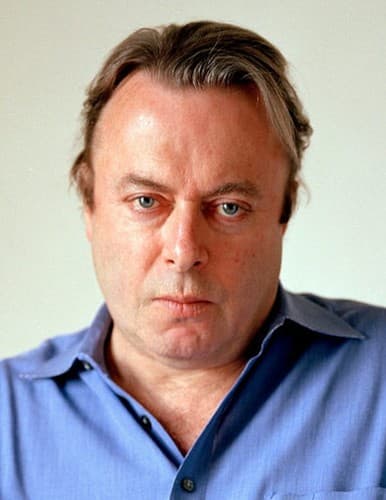
Christopher Hitchens

Christopher Hitchens was a prolific and provocative essayist, critic, and journalist known for his sharp wit and uncompromising stance against religion and political dogma. His notable works include "Letters to a Young Contrarian" and "Mortality," a poignant exploration of his terminal cancer diagnosis. A recipient of numerous accolades, Hitchens was celebrated for his intellectual rigor and eloquent prose across a wide range of subjects.