BookBrief
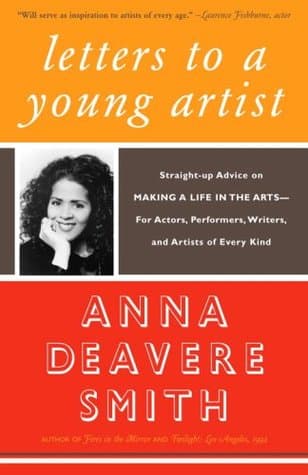
Letters to a Young Artist cover
Archivist's Choice

Letters to a Young Artist

Anna Deavere Smith (2006)

Genre

Memoir / Creativity / Philosophy

Reading Time

240 min

Key Themes

See below

Track Your Reading

Sign in to track this book

Anna Deavere Smith shares a lifetime of theater experience through letters to a young artist, offering direct advice on navigating the creative life's highs and lows, from self-doubt to making a social impact.

Core Idea

Anna Deavere Smith's "Letters to a Young Artist" contains personal, guiding messages that encourage artists to approach their craft and lives with broad engagement. Through stories, thoughts, and practical tips, Smith argues that good art comes from listening carefully, having strong empathy, and always seeking one's true 'American Character.' This happens while dealing with identity's contradictions and the failures that help artists grow. The book supports the artist as a social observer, pushing them to be fully present and build a 'company of allies' to support their ongoing journey of change.
Reading time
240 min
Difficulty
Medium
✓ Read this if...
You are an aspiring artist, performer, or writer seeking profound, humanistic guidance on creativity, identity, and social engagement, presented in an intimate, epistolary style.
✗ Skip this if...
You are looking for a highly structured, step-by-step guide to a specific artistic discipline, or prefer a more academic and less personal exploration of artistic philosophy.

Core idea

The central argument and framework that powers the entire book.

Anna Deavere Smith's "Letters to a Young Artist" contains personal, guiding messages that encourage artists to approach their craft and lives with broad engagement. Through stories, thoughts, and practical tips, Smith argues that good art comes from listening carefully, having strong empathy, and always seeking one's true 'American Character.' This happens while dealing with identity's contradictions and the failures that help artists grow. The book supports the artist as a social observer, pushing them to be fully present and build a 'company of allies' to support their ongoing journey of change.

At a glance

Reading time

240 min

Difficulty

Medium

Read this if...

You are an aspiring artist, performer, or writer seeking profound, humanistic guidance on creativity, identity, and social engagement, presented in an intimate, epistolary style.

Skip this if...

You are looking for a highly structured, step-by-step guide to a specific artistic discipline, or prefer a more academic and less personal exploration of artistic philosophy.

Key Takeaways

1

Embrace the 'Both/And' of Identity

Your multi-faceted self is your greatest artistic asset.

Quote

Your identity is not a single, fixed thing. It is a constellation of experiences, contradictions, and evolving perspectives.

Smith advises against simplifying or labeling one's identity, especially as an artist. She suggests that true artistic depth comes from embracing the 'both/and' — the simultaneous existence of seemingly conflicting traits, backgrounds, or goals. This inner complexity reflects the human condition and lets an artist inhabit a wider range of characters or explore more ideas. Trying to fit into a neat box limits potential and reduces the unique voice only you can offer. Your art will be more impactful when it comes from an authentic, comp...

Supporting evidence

Smith frequently refers to her own experiences navigating racial and gender identity in the performing arts, and how these perceived 'conflicts' became sources of strength and insight in her solo performances.

Apply this

Instead of trying to resolve perceived contradictions in your background or personality, explore how these elements can inform and enrich your artistic work. Journal about your 'both/and' qualities and consider how they might manifest in your creative output.

identity-complexityauthentic-voiceself-acceptance
2

The Discipline of Listening

Deep listening is the bedrock of profound art and social connection.

Quote

The greatest gift you can give as an artist, and as a person, is to truly hear another.

Smith stresses that listening is not just hearing but an active, disciplined practice essential for artists, especially those working with human stories. It means setting aside your own plans, biases, and judgments to truly take in the details of another's speech, body language, and underlying feelings. This deep listening builds empathy, helps develop characters, and lets an artist capture the real rhythms and views of the world. For Smith, listening is a political act, creating understanding across differences and forming the base f...

Supporting evidence

Her entire performance methodology for 'documentary theater' involves extensive interviews, where she meticulously records and then embodies the speech patterns and gestures of real people. She recounts specific instances where a subtle vocal inflection or pause revealed profound character insight during an interview.

Apply this

Practice active listening in your daily interactions. Try to paraphrase what others have said to ensure you've understood. In your artistic work, focus on capturing the authentic voices and perspectives of your subjects or inspirations, rather than imposing your own preconceived notions.

active-listeningempathy-buildingdocumentary-theater
3

Cultivate Radical Empathy

Step into the shoes of others, even those you disagree with.

Quote

To truly portray someone, you must find a way to love them, even if you hate their actions.

Smith challenges artists to go beyond surface understanding and develop a 'radical empathy' — the ability to deeply understand and even take on the perspectives of people who might be very different from, or even against, oneself. This does not mean excusing harmful actions, but rather seeking the human reasons, fears, and complexities that drive them. This empathetic immersion helps create characters and stories that have a deep, unsettling truth, going beyond simple stereotypes. It is a demanding, often uncomfortable process that ul...

Supporting evidence

Smith discusses the challenge of portraying figures involved in controversial events, like those in the Los Angeles riots, and the necessity of finding the 'humanity' in every voice, regardless of their role or viewpoint, to create a truthful composite.

Apply this

When developing characters or exploring themes, intentionally seek out perspectives that challenge your own. Read or listen to interviews with people you disagree with, trying to understand their underlying worldview without judgment. Practice embodying different viewpoints physically and vocally.

radical-empathycharacter-developmenthuman-condition
4

The Artist as Social Witness

Your art can illuminate and provoke societal dialogue.

Quote

Art is not just about beauty; it is about bearing witness, giving voice, and stirring the collective conscience.

Smith believes artists have an important role as 'social witnesses' — observers and interpreters of human experience, especially during conflict or social change. She encourages artists to engage directly with real-world issues, using their chosen medium to capture, reflect, and start conversations about complex social realities. This is not about creating propaganda, but about presenting detailed views and untold stories that can build greater understanding and inspire action. Your art, she suggests, can be a powerful tool for social...

Supporting evidence

Her groundbreaking works like 'Fires in the Mirror' (on the Crown Heights riot) and 'Twilight: Los Angeles, 1992' (on the Rodney King riots) exemplify this, where she performed multiple verbatim accounts from diverse individuals involved in these events, offering a multi-faceted, human perspective on conflict.

Apply this

Identify a social issue you care deeply about. Research it extensively, seeking out diverse voices and personal stories. Consider how your artistic practice could be used to illuminate aspects of this issue, not to preach, but to foster understanding and dialogue.

social-impact-artart-as-activismdocumentary-art
5

Embrace Failure as Fuel

Setbacks are not endings, but essential detours on your artistic journey.

Quote

Failure is not the opposite of success; it is a part of success. It is the raw material from which growth emerges.

Smith normalizes failure, seeing it not as a personal fault but as an unavoidable and even necessary part of the artistic process. She argues that artists must develop resilience and toughness, learning to gain lessons from rejection, criticism, and projects that do not work out. Each 'failure' provides valuable information, showing what does not work, refining one's approach, and deepening one's understanding of the craft and oneself. The fear of failure, she argues, is far more harmful than failure itself, often stopping artists fro...

Supporting evidence

She shares anecdotes of her own early struggles, rejections, and performances that didn't land, emphasizing how these experiences forced her to re-evaluate, refine her technique, and ultimately led to breakthroughs in her unique performance style.

Apply this

When facing a setback, consciously analyze what went wrong without self-blame. Identify specific lessons learned and how you can apply them to your next project. Cultivate a mindset where 'failure' is simply data for improvement, not a judgment of your worth.

resiliencegrowth-mindsetovercoming-rejection
6

The Necessity of Ritual and Discipline

Consistency, not just inspiration, sustains the artistic life.

Quote

Talent is not enough. The daily grind, the commitment to showing up, is what separates the dreamers from the doers.

Smith emphasizes that art is not just the result of occasional inspiration but of consistent, disciplined effort. She advocates for setting up daily routines that create space for creative work, even when motivation is low. This discipline includes not just creating, but also research, practice, and self-care. It is about building a sustainable artistic life rather than waiting for inspiration. This structure provides a psychological container for the often chaotic creative process, fostering focus, building momentum, and ensuring the...

Supporting evidence

She describes her rigorous schedule of interviews, transcriptions, vocal exercises, and physical training that underpins her solo performances, highlighting how this daily commitment is non-negotiable for her work.

Apply this

Identify a consistent time each day or week that you dedicate solely to your art, even if it's just 30 minutes. Create a small ritual around starting your work (e.g., making tea, listening to a specific piece of music). Treat this time as sacred and non-negotiable.

artistic-disciplinecreative-ritualsconsistent-practice
7

Build Your 'Company of Allies'

Surround yourself with a diverse, supportive network.

Quote

No artist thrives in isolation. You need a constellation of individuals who challenge, support, and inspire you.

Smith advises young artists to actively build a diverse network she calls their 'company of allies.' This is not just about professional contacts, but about forming real relationships with mentors, peers, and even those outside the arts who can offer different views. This network provides emotional support, critical feedback, opportunities, and a sense of belonging in what can often be a solitary and competitive field. The variety of this 'company' is key, ensuring you are exposed to a wide range of ideas and challenges, preventing is...

Supporting evidence

She recounts how specific individuals – teachers, fellow actors, community organizers, and even non-artists – played pivotal roles in her development, offering guidance, opening doors, and providing essential perspective during challenging times.

Apply this

Identify 3-5 people who could be part of your 'company of allies' (e.g., a mentor, a peer, someone from a different field). Schedule regular check-ins or conversations with them. Actively seek out opportunities to connect with new people in and outside your artistic community.

networkingmentorshipartistic-community
8

The Art of 'Being Present'

True connection and authenticity stem from radical presence.

Quote

To truly connect, whether with an audience or an individual, you must be fully, utterly present in the moment.

Smith highlights the importance of 'being present' — a state of heightened awareness and engagement that lets an artist truly connect with their material, fellow performers, and audience. This means letting go of distractions, worries about the past or future, and self-consciousness, to fully live in the 'now.' For Smith, presence is not just a performance technique but a way of being that unlocks authenticity and allows for real human connection. It is in these moments of strong presence that magic happens, where the artist becomes a...

Supporting evidence

She describes techniques actors use to achieve presence, such as focusing on breath, sensory details, and the immediate environment, and how this translates into compelling, authentic performances that transcend mere acting.

Apply this

Before engaging in creative work or important conversations, take a few minutes to practice mindfulness: focus on your breath, notice your surroundings, and consciously bring your attention to the present moment. Minimize distractions during your creative time.

mindfulnessauthenticityperformance-technique
9

Find Your 'American Character'

Explore the unique cultural tapestry that shapes your artistic voice.

Quote

What is the particularity of your voice, your experience, your 'American Character' that only you can bring to the world?

Smith challenges artists to explore their unique 'American Character' — not in a nationalistic way, but as a recognition of the specific cultural, historical, and personal influences that have shaped their identity and perspective within America's diverse landscape. This involves deep self-reflection on one's heritage, experiences, language, and the social forces that have molded them. Understanding this distinct 'character' lets an artist tap into a source of authenticity and originality, offering a perspective that is deeply persona...

Supporting evidence

She frequently discusses how her own background as an African American woman from Baltimore, with specific linguistic patterns and social observations, formed the unique foundation for her artistic exploration of identity and American society.

Apply this

Reflect on your personal history, family stories, regional influences, and significant cultural experiences. How have these shaped your way of seeing, speaking, and feeling? Consider how these unique elements could be woven into your artistic themes, characters, or style.

cultural-identitypersonal-narrativeartistic-voice
10

The Art of Reinvention

Stay curious and evolve; your artistic journey is never static.

Quote

The greatest artists are those who are not afraid to shed old skins and reinvent themselves, even many times over.

Smith advocates for continuous learning and regular change as vital for an artist's long-term health. She warns against becoming too comfortable or holding too tightly to a successful method. The world changes, and artists must remain curious, flexible, and willing to explore new forms, subjects, and even personal identities to keep their work fresh and relevant. This does not mean abandoning one's core artistic truth, but rather finding new ways to express it, taking risks, and embracing the discomfort of the unknown. Change shows an...

Supporting evidence

Smith herself has consistently evolved her performance style and subject matter, moving from earlier works to exploring themes of healthcare and justice in later projects, demonstrating a willingness to challenge her own artistic boundaries.

Apply this

Identify an area in your artistic practice where you feel stagnant or comfortable. Challenge yourself to learn a new skill, explore a different medium, or tackle a subject outside your usual comfort zone. Seek out new influences and perspectives regularly.

artistic-evolutionlifelong-learningcreative-growth

Critical analysis

Notable Quotes

The thing about being an artist is that you are always in the process of becoming.

On the continuous journey and evolution of an artist's identity.

Your voice is not just what you say, but how you say it, where you say it, and to whom.

Emphasizing the multifaceted nature of an artist's unique expression.

Don't just observe the world; interrogate it. Ask it questions it doesn't want to answer.

Encouraging a proactive, critical engagement with reality.

The work of an artist is to make the invisible visible, the inaudible audible.

Defining the core purpose of artistic creation.

Failure is not the opposite of success; it's part of success.

Reframing the concept of failure as an integral part of the creative process.

Listen more than you speak. Absorb more than you project.

Advising on the importance of deep listening and receptivity for artists.

Art is not a luxury; it's a necessity for understanding ourselves and our world.

Arguing for the fundamental importance of art in human experience.

Your greatest asset is your curiosity. Nurture it, feed it, let it lead you.

Highlighting curiosity as a driving force for artistic discovery.

The stage is not just a place for performance; it's a laboratory for human behavior.

Expanding the view of artistic spaces as sites for experimentation and study.

Don't just tell a story; embody it. Let it live in your bones.

Encouraging a deep, visceral connection to the narratives an artist explores.

The work of art is to hold a mirror up to nature, but also to hold a lamp.

Describing art's dual function of reflection and illumination.

Embrace ambiguity. Life, and art, are rarely black and white.

Advising acceptance of complexity and nuance in creative work.

Find your own language, even if it's a language nobody else speaks yet.

Encouraging the development of a unique artistic idiom.

Your body is your instrument. Learn its music.

Emphasizing the physical self as a fundamental tool for artists, especially performers.

Art is not about answers; it's about asking better questions.

Positioning art as a catalyst for deeper inquiry rather than definitive solutions.

Quiz

Test Your Knowledge

Ready to see how well you understood this book? Take our interactive quiz with 10 questions.

10
Questions
~5
Minutes
?
Best Score

Key Questions (FAQ)

'Letters to a Young Artist' is a non-fiction book by Anna Deavere Smith offering practical and philosophical advice to aspiring artists. Through anecdotal letters to a fictional mentee, BZ, Smith covers a wide range of topics pertinent to starting a career in the arts, from personal challenges like confidence and fear to professional aspects like networking and social impact.

About the author

Anna Deavere Smith

Anna Deavere Smith is an acclaimed actress, playwright, and professor whose work often explores issues of race, class, and identity in America. Her notable works include the groundbreaking one-woman plays 'Fires in the Mirror' and 'Twilight: Los Angeles, 1992,' which are compiled in her book 'Letters to a Young Artist.' Smith's unique documentary theater style, drawing from extensive interviews, has earned her numerous awards and recognition.