BookBrief
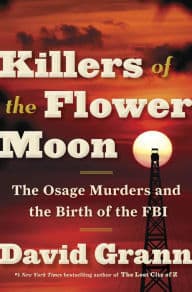
Killers of the Flower Moon: The Osage Murders and the Birth of the FBI cover
Archivist's Choice

Killers of the Flower Moon: The Osage Murders and the Birth of the FBI

David Grann (2017)

Genre

History / Mystery

Reading Time

12 Minutes

Key Themes

See below

Track Your Reading

Sign in to track this book

In the 1920s, a series of murders targeting the oil-rich Osage Nation leads a new FBI to send an undercover team into a web of greed and conspiracy to find those behind a terrifying period of violence.

Core Idea

David Grann's "Killers of the Flower Moon" unearths the horrifying true story of the systematic murders of wealthy Osage Nation members in 1920s Oklahoma, a series of crimes that exposed deep-seated racism, corruption, and the calculated exploitation of Indigenous people for their oil riches. The book meticulously reconstructs these 'Reign of Terror' killings, tracing how a cabal of white men, led by William Hale, conspired to inherit the Osage's headrights by marrying into their families and then murdering them off one by one. The narrative also chronicles the nascent FBI's first major homicide investigation, led by agent Tom White, as it grapples with a complex case rife with local complicity and a justice system ill-equipped or unwilling to protect Native American lives. Grann reveals not only the individual perpetrators but also the broader societal mechanisms that enabled such atrocities, leaving a lasting legacy of trauma and injustice for the Osage Nation.
Difficulty
Medium

Core idea

The central argument and framework that powers the entire book.

David Grann's "Killers of the Flower Moon" unearths the horrifying true story of the systematic murders of wealthy Osage Nation members in 1920s Oklahoma, a series of crimes that exposed deep-seated racism, corruption, and the calculated exploitation of Indigenous people for their oil riches. The book meticulously reconstructs these 'Reign of Terror' killings, tracing how a cabal of white men, led by William Hale, conspired to inherit the Osage's headrights by marrying into their families and then murdering them off one by one.

The narrative also chronicles the nascent FBI's first major homicide investigation, led by agent Tom White, as it grapples with a complex case rife with local complicity and a justice system ill-equipped or unwilling to protect Native American lives. Grann reveals not only the individual perpetrators but also the broader societal mechanisms that enabled such atrocities, leaving a lasting legacy of trauma and injustice for the Osage Nation.

At a glance

Difficulty

Medium

Key Takeaways

1

The Curse of Wealth: The Osage Reign of Terror

Unfathomable riches led directly to systemic exploitation and murder.

Quote

The Osage, who had once been among the poorest of tribes, were now, per capita, the wealthiest people in the world.

Grann shows how the Osage Nation's sudden wealth from oil became a death sentence. Instead of helping them, their money attracted white predators, like William K. Hale. He saw the Osage as obstacles to be removed. This highlights an irony: the system meant to secure their future—the headrights—became the reason for their deaths, as corrupt guardians and spouses murdered Osage people for their oil money. This history reminds us how greed and racial bias can corrupt society, turning a community's wealth into its biggest weakness.

Supporting evidence

The systematic murders of Mollie Burkhart's family (Anna Brown, Lizzie Q, Reta and Bill Smith) directly for their headrights, orchestrated by William K. Hale.

Apply this

Understand how power imbalances, especially economic, can create environments ripe for exploitation and how historical injustices are often rooted in the coveting of resources.


2

The Pervasive Web of Conspiracy

The murders were not isolated incidents but part of a vast, community-wide conspiracy.

Quote

It was as if the devil himself had been turned loose in the Osage Nation.

Grann's most unsettling point is not just the murders, but the size of the conspiracy. William K. Hale, 'King of the Osage Hills,' did not act alone. He set up a network of helpers, including his nephews Ernest and Bryan Burkhart, and many local doctors, lawyers, and even police. This was not a few bad people; it was a societal decay where many knew, gained, or actively took part in the killings. This created fear and mistrust. The book shows how a community can be involved through silence, fear, or action, making justice almost impos...

Supporting evidence

The complicity of local doctors in poisoning Osage victims, the intimidation of witnesses, and the difficulty the FBI faced in finding anyone willing to testify against Hale and his associates due to widespread fear.

Apply this

Recognize the dangers of unchecked power and the importance of independent oversight when local institutions are compromised. Consider how systemic corruption enables widespread injustice.

3

The Nascent FBI's Defining Challenge

The Osage case shaped the investigative methods and public image of the young FBI.

Quote

This was the first time in the history of the bureau that a major homicide investigation had been undertaken.

This book looks at the early days of the FBI under J. Edgar Hoover. Grann explains how the Osage murders, at first mishandled by corrupt local and federal agents, became an important moment for the bureau. Hoover, wanting to make his new agency legitimate, sent Tom White, an experienced Texas Ranger, to use modern investigation methods. White faced challenges—no forensic science, long distances, deep corruption, and racial bias. These challenges forced the FBI to adapt and invent, setting up how it would investigate organized crime la...

Supporting evidence

Tom White's strategic use of undercover agents, detailed record-keeping, and persistent, methodical investigation, which contrasted sharply with earlier, haphazard local efforts.

Apply this

Understand how foundational cases can define an organization's mission and methods. Appreciate the evolution of law enforcement and the importance of integrity in nascent institutions.

4

The Unseen Toll of Racial Prejudice

Racism normalized the Osage murders and hindered justice.

Quote

Many whites in Oklahoma considered the Osage 'redskins' who were 'puffed up with money.'

Grann argues that widespread racism against Native Americans in 1920s Oklahoma allowed the Osage murders to happen and be largely ignored or even accepted by many white residents. The belief that Osage lives were worth less, along with stereotypes about their inability to manage money, let the crimes continue for years. This deep prejudice meant local police often would not investigate properly, and white criminals felt confident they could act without punishment. This is the book's strongest point, showing how systemic racism support...

Supporting evidence

The initial lack of serious investigation by local authorities, the difficulty in prosecuting white perpetrators due to biased juries, and the general societal indifference to the deaths of Osage individuals.

Apply this

Reflect on how historical and ongoing systemic racism can dehumanize groups, making them targets for exploitation and violence, and hindering the pursuit of justice.

5

Mollie Burkhart: A Portrait of Resilience and Betrayal

At the heart of the horror lies Mollie's personal tragedy and quiet strength.

Quote

Mollie had learned to live with a certain amount of dread.

Mollie Burkhart is the emotional center of 'Killers of the Flower Moon.' Grann shows her journey from a wealthy Osage woman to a survivor watching her family be systematically killed. Her story is one of terrible betrayal, as her own husband, Ernest Burkhart, was involved in the murders of her sisters and mother. Mollie's lasting presence, her quiet suffering, and her eventual, though difficult, help with the FBI, show the huge personal cost of the conspiracy. Her strength in the face of such loss and betrayal makes her a memorable fi...

Supporting evidence

Mollie's deteriorating health from suspected poisoning, her profound grief over her family's deaths, and her eventual testimony against her husband and his uncle.

Apply this

Consider the individual human cost of large-scale historical injustices. Reflect on the strength required to survive profound betrayal and seek justice.

6

The Unfinished Business of Justice

Despite convictions, the full scope of the Osage murders remains shrouded in doubt.

Quote

Many Osage believed that the full truth about the Reign of Terror never came out.

While the FBI's investigation led to convictions for William K. Hale and his helpers, Grann's research shows a lingering unease and a strong belief among the Osage that many other murders went unsolved and many criminals unpunished. The book points out the limits of even careful investigations when faced with widespread corruption and a community unwilling or unable to speak. This challenges the idea of a 'closed case,' suggesting that official justice often does not achieve full historical accountability. This leaves descendants with...

Supporting evidence

The numerous unsolved Osage deaths that occurred during the same period, the difficulty in linking all deaths to Hale's conspiracy, and the oral histories passed down within the Osage Nation about other unpunished killers.

Apply this

Recognize that 'justice' can be multifaceted and often incomplete, especially in cases of systemic crime. Consider the importance of oral histories and community memory in understanding historical events.

7

The Power of Undercover Investigation

Tom White's innovative use of undercover tactics was crucial to cracking the case.

Quote

White decided that the only way to penetrate the conspiracy was to go undercover.

Grann highlights Tom White's smart use of undercover agents, a new method for the FBI then. White knew that fear and local corruption kept witnesses from speaking. So, he sent agents who blended into the Osage community, gathering information directly. This approach was risky and slow but gave the key evidence needed to expose Hale's network. The book shows how new investigation methods, made for a case's specific situation, can overcome big problems and find truth in a deeply compromised place.

Supporting evidence

The success of agents like John Burger and Frank Smith in infiltrating the community, gaining trust, and uncovering evidence directly linking Hale to the murders.

Apply this

Appreciate the ingenuity and courage required in complex investigations. Understand how unconventional methods can be necessary when traditional approaches fail due to systemic issues.

8

The Osage's Enduring Legacy

Despite the tragedies, the Osage Nation persevered and continues to thrive.

Quote

The Osage, though diminished, had survived.

Beyond the horror, Grann ends with a powerful look at the resilience of the Osage people. Despite the 'Reign of Terror' and the great losses, the Osage Nation did not disappear. They fought for their self-rule, managed their remaining resources, and kept their culture. The book's later parts subtly shift to the Osage's ongoing efforts to remember their history, seek more truths, and secure their future. This is important for context and hope, showing that even with terrible historical injustices, communities can last, rebuild, and pro...

Supporting evidence

The continued existence and self-governance of the Osage Nation, their efforts to preserve their language and culture, and their ongoing pursuit of historical understanding.

Apply this

Recognize the strength and enduring spirit of Indigenous communities in the face of historical trauma. Support efforts for self-determination and cultural preservation.

9

The Shadow of the Past: Generational Trauma

The Osage murders left a lasting scar of fear and distrust across generations.

Quote

The past was not dead; it was not even past.

Grann's story goes beyond the trials, looking at the long-term psychological and social effects of the 'Reign of Terror' on the Osage community. The constant threat of murder, betrayal by trusted people, and justice's failure to account for all crimes created deep trauma that passed down through generations. Descendants still deal with the legacy of fear, suspicion, and unresolved grief. This shows how historical terrible events have long-lasting effects, influencing social interactions, trust in institutions, and individual well-bein...

Supporting evidence

Grann's interviews with contemporary Osage descendants who recount stories of their elders' fear and suspicion, and the continued efforts to uncover more details about the unsolved murders.

Apply this

Understand the concept of generational trauma and its impact on communities. Advocate for historical reconciliation and support for communities affected by past injustices.

10

The Journalist's Role in Unearthing Hidden Histories

Grann's meticulous investigative journalism brings crucial, often overlooked, stories to light.

Quote

History is not a dead thing, but a living, breathing force that continues to shape our present.

This book is an example of strong investigative journalism, showing Grann's dedication to uncovering forgotten or hidden histories. His wide research, including old documents, FBI files, and interviews with Osage descendants, brought a complex and disturbing part of American history to more people. Grann does not just state facts; he builds a compelling story that gives a voice to the victims and exposes the systemic failures that allowed such terrible acts. This emphasizes the important role of dedicated journalists in holding power ...

Supporting evidence

Grann's discovery of additional, previously overlooked murders and his detailed exploration of the Osage perspective, which often goes beyond official FBI reports.

Apply this

Support and appreciate in-depth investigative journalism. Recognize the importance of seeking out diverse perspectives and challenging dominant historical narratives.

Critical analysis

Notable Quotes

Quiz

Test Your Knowledge

Ready to see how well you understood this book? Take our interactive quiz with 10 questions.

10
Questions
~5
Minutes
?
Best Score

Key Questions (FAQ)

Killers of the Flower Moon details the systematic murders of wealthy Osage Nation members in the 1920s after oil was discovered on their land. It chronicles the investigation into these crimes, which became one of the FBI's first major homicide cases.

About the author

David Grann

David Grann is a renowned nonfiction author and staff writer for The New Yorker. He is best known for his critically acclaimed books "Killers of the Flower Moon: The Osage Murders and the Birth of the FBI" and "The Wager: A Tale of Shipwreck, Mutiny and Murder." Grann's work often delves into compelling historical mysteries and true crime narratives with meticulous research and gripping storytelling.