BookBrief
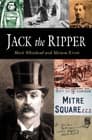
Jack the Ripper cover
Archivist's Choice

Jack the Ripper

Mark Whitehead (2001)

Genre

History / Mystery

Reading Time

3-4 hours

Key Themes

See below

Track Your Reading

Sign in to track this book

This book explores the fog-shrouded alleys of Victorian London, dissecting the Ripper's reign of terror by examining every victim and suspect, and the lasting impact of an unsolved mystery that still haunts history.

Core Idea

Mark Whitehead's "Jack the Ripper" examines the lasting myth of the infamous Victorian serial killer. It moves past sensationalism to look at the historical setting, the era's poor investigative methods, and how the press shaped public opinion and the story. The book argues that the 'unsolved' nature of the crimes, more than a historical detail, became a strong cultural event, showing much about Victorian society's worries, moral panics, and fascination with evil. Whitehead explores how the lack of a resolution created an industry of 'Ripperology,' where speculation often overshadows facts. He analyzes the many suspects, not to name the killer, but to show the limits of evidence and the human tendency to project fears onto an unknown figure. Ultimately, the book presents Jack the Ripper not just as a historical criminal, but as a mirror reflecting the dark side of a society dealing with poverty, prostitution, and the new power of mass media, all while looking at humanity's darker impulses.
Reading time
3-4 hours
Difficulty
Medium
✓ Read this if...
You are fascinated by the cultural impact and historical context of the Jack the Ripper case, rather than just seeking to identify the killer. This book is for those interested in Victorian society, media studies, and the psychology of crime fascination.
✗ Skip this if...
You are looking for a definitive solution to the Jack the Ripper mystery or a deep dive into forensic analysis. This book prioritizes historical and cultural analysis over crime-solving speculation.

Core idea

The central argument and framework that powers the entire book.

Mark Whitehead's "Jack the Ripper" examines the lasting myth of the infamous Victorian serial killer. It moves past sensationalism to look at the historical setting, the era's poor investigative methods, and how the press shaped public opinion and the story. The book argues that the 'unsolved' nature of the crimes, more than a historical detail, became a strong cultural event, showing much about Victorian society's worries, moral panics, and fascination with evil.

Whitehead explores how the lack of a resolution created an industry of 'Ripperology,' where speculation often overshadows facts. He analyzes the many suspects, not to name the killer, but to show the limits of evidence and the human tendency to project fears onto an unknown figure. Ultimately, the book presents Jack the Ripper not just as a historical criminal, but as a mirror reflecting the dark side of a society dealing with poverty, prostitution, and the new power of mass media, all while looking at humanity's darker impulses.

At a glance

Reading time

3-4 hours

Difficulty

Medium

Read this if...

You are fascinated by the cultural impact and historical context of the Jack the Ripper case, rather than just seeking to identify the killer. This book is for those interested in Victorian society, media studies, and the psychology of crime fascination.

Skip this if...

You are looking for a definitive solution to the Jack the Ripper mystery or a deep dive into forensic analysis. This book prioritizes historical and cultural analysis over crime-solving speculation.

Key Takeaways

1

The Enduring Myth of the Unsolved

Jack the Ripper's legacy is defined by the absence of a definitive answer, fueling endless speculation.

Quote

The very fact that his identity remains unknown is precisely why Jack the Ripper continues to fascinate and horrify over a century later.

The Jack the Ripper case is not just a historical crime; it is a cultural event, largely because the killer was never caught. This lasting mystery has created a space filled by many theories, fictional stories, and a permanent place in public memory. The lack of closure allows for constant re-imagining of the killer, making him a flexible figure onto whom society projects its fears and fascinations. This 'unsolved' status goes beyond historical curiosity, turning the Ripper into a classic bogeyman, a symbol of urban dread and the vuln...

Supporting evidence

Whitehead details the immediate failure of the Victorian police to apprehend a suspect and the subsequent proliferation of theories and suspects over the decades, highlighting that the 'unsolved' nature is central to the Ripper's mythos.

Apply this

When encountering historical mysteries, recognize how the lack of resolution can amplify their cultural impact and encourage critical analysis of the narratives that fill the void. Don't just seek answers, explore why the questions persist.
unsolved-mysterycultural-mythologyhistorical-fascination
2

Victorian London's Dark Underbelly

The Ripper's crimes exposed the brutal realities of poverty, misogyny, and social neglect in Whitechapel.

Quote

The East End of London in 1888 was a world of stark contrasts, where extreme poverty, disease, and desperation provided a fertile ground for such atrocities.

The Ripper murders were not isolated events but signs of a deeply troubled society. Whitechapel, where the crimes happened, was a place of poverty, crowded housing, widespread alcoholism, and prostitution. The victims, mostly poor women driven to sex work, were marginalized and vulnerable, their lives seen as less valuable by many. Poor policing, inadequate social services, and Victorian attitudes towards the poor and women created an environment where such brutal acts could happen easily, and where the victims' struggles were often m...

Supporting evidence

The book describes the grim living conditions in Whitechapel, the socio-economic status of the victims (Mary Ann Nichols, Annie Chapman, Elizabeth Stride, Catherine Eddowes, Mary Jane Kelly), and the societal attitudes towards 'unfortunates' and prostitutes prevalent in 1888.

Apply this

When studying historical events, look beyond the central narrative to understand the broader social, economic, and political context that shaped them. Recognize how societal inequalities can create vulnerabilities for certain groups.

victorian-povertysocial-inequalitywhitechapel-history
3

The Flawed Investigation

Victorian policing methods and inter-agency rivalries hampered the search for the killer.

Quote

The investigation was characterized by a lack of coordinated effort, rudimentary forensic techniques, and the conflicting jurisdictions of various police forces.

The Metropolitan Police's handling of the Ripper case showed the early and often disorganized state of Victorian law enforcement. Detectives lacked modern forensic tools, relying heavily on witness statements, which were often unreliable. Communication between different divisions, such as the CID and the local 'H' Division, was poor, leading to missed chances. The large number of false leads, anonymous letters, and public panic overwhelmed limited resources. Also, social attitudes meant that victims' testimonies, or their lives, were ...

Supporting evidence

Whitehead details the various police forces involved (Metropolitan Police, City of London Police), the lack of fingerprinting or DNA analysis, the reliance on rudimentary autopsies, and the overwhelming number of unsubstantiated tips and 'Ripper letters'.

Apply this

Appreciate the evolution of forensic science and police procedural methods. Understand how systemic issues and historical context can profoundly impact the effectiveness of a criminal investigation.

victorian-policingforensic-limitationscriminal-investigation
4

The Power of the Press

Sensationalist journalism fueled public panic and shaped the Ripper's enduring image.

Quote

The penny dreadfuls and daily newspapers seized upon the Ripper murders, transforming a series of brutal crimes into a terrifying narrative that captivated and horrified the nation.

The late Victorian era was a time of growth for mass media, and the Ripper murders became a huge sensation. Newspapers, wanting to sell copies, reported in a very sensational way, often adding details, guessing wildly, and publishing graphic accounts that both excited and scared the public. This media frenzy created widespread panic, especially in London, and greatly contributed to the myth-making around 'Jack the Ripper'—a name likely created by the press. The constant flow of articles, illustrations, and 'Ripper letters' (many of th...

Supporting evidence

The book discusses the role of newspapers like 'The Star' and 'Pall Mall Gazette' in disseminating information (and misinformation), the publication of the 'Dear Boss' letter, and the general public's insatiable appetite for the grisly details.

Apply this

Critically evaluate media portrayals of crime and sensational events. Understand how media narratives can shape public perception, create moral panics, and influence historical understanding.

sensationalismyellow-journalismmedia-influence
5

The Suspects: A Gallery of the Unproven

The sheer number of Ripper suspects highlights the difficulty of proof and the allure of attribution.

Quote

Almost everyone with a passing connection to the East End, or even just a peculiar habit, seemed to become a potential Ripper in the minds of the public and some investigators.

The book explores the long list of people suggested as Jack the Ripper, from royalty and doctors to obscure immigrants and local butchers. What is notable is not just the variety, but the lack of clear evidence for any of them. Each suspect usually has a strong, but ultimately circumstantial, case built around them, often based on a single piece of questionable testimony, a brief observation, or a later theory. This many suspects shows the frustrating nature of the case: without clear proof, every theory remains tempting yet unprovabl...

Supporting evidence

Whitehead summarizes popular suspects such as Aaron Kosminski, Prince Albert Victor, George Chapman, Montague John Druitt, Walter Sickert, and James Maybrick, detailing the often-flimsy evidence for each.

Apply this

Approach historical 'solutions' to cold cases with skepticism, particularly when multiple, equally plausible theories exist. Demand robust evidence before accepting a conclusion, and recognize the psychological drive to find an answer.

ripper-suspectscold-case-theoriescircumstantial-evidence
6

The Enduring Allure of Evil

The Ripper's mystique lies in his monstrous anonymity, allowing for endless cultural reinterpretation.

Quote

Jack the Ripper has transcended the historical crime to become a cultural archetype of pure, unadulterated evil.

More than a century later, Jack the Ripper remains a strong symbol of terror, not despite his anonymity, but because of it. Without a known face or reason, he becomes a blank canvas onto which society projects its deepest fears about the unknown, the hidden danger, and the capacity for inhuman brutality. This allows for his constant re-creation in literature, film, and popular culture, adapting to different eras' worries. He embodies the 'monster among us' idea, a chilling reminder that evil can walk unseen. The interest is not just i...

Supporting evidence

The book's section on the Ripper's fictional outings demonstrates how his character has been adapted and reinterpreted across various media, showcasing his enduring cultural impact as an embodiment of evil.

Apply this

Analyze how historical figures or events are reinterpreted through cultural lenses. Consider how anonymity or lack of resolution can amplify a narrative's power and its ability to represent broader societal fears.

cultural-archetypeanonymity-of-evilpsychological-horror
7

Victim Blaming and Moral Panic

The crimes exacerbated societal prejudices, leading to a moral panic that further stigmatized the victims.

Quote

The public discourse around the Ripper murders often devolved into a moralistic condemnation of the victims' lifestyles, rather than a genuine focus on their tragic deaths.

The Ripper murders, while terrible, also brought to light the deep-seated victim-blaming common in Victorian society. The fact that the victims were prostitutes allowed many to dismiss their deaths as consequences of their 'immoral' choices, rather than as terrible acts against vulnerable people. This moralistic view shifted attention from the systemic issues of poverty and exploitation that drove these women to sex work. The media, while sensationalizing the crimes, often reinforced these biases, contributing to a moral panic that fo...

Supporting evidence

The book discusses contemporary newspaper articles and police attitudes that often categorized the victims as 'unfortunates' or 'fallen women,' implicitly suggesting they were partly responsible for their fate due to their profession.

Apply this

Recognize and challenge victim-blaming narratives, both historical and contemporary. Understand how societal prejudices can impede justice and empathy, and advocate for compassionate responses to crime victims.

victim-blamingmoral-panicsocial-stigma
8

The 'Ripperologist' Phenomenon

The unsolved nature birthed a dedicated community of amateur and professional sleuths.

Quote

The enduring mystery of Jack the Ripper has fostered a subculture of 'Ripperologists' – individuals dedicated to meticulously re-examining every shred of evidence, often with passionate, yet conflicting, theories.

The Jack the Ripper case has created an entire group of dedicated researchers, authors, and enthusiasts known as 'Ripperologists.' This community carefully studies historical documents, police reports, and contemporary accounts, often bringing new ideas and applying modern analysis to old evidence. While some offer valuable insights, the field also has strong debates, competing theories, and a constant search for the 'definitive' answer. This phenomenon shows the human desire for closure and truth, even with centuries-old cold cases. ...

Supporting evidence

Whitehead acknowledges the significant body of work by Ripperologists, outlining how their persistent efforts have kept the case alive and introduced many of the popular theories and suspects.

Apply this

Engage with historical research critically, appreciating the efforts of dedicated researchers while also recognizing the potential for confirmation bias and the limitations of interpreting ambiguous historical data.

ripperologyhistorical-researchamateur-sleuths
9

The Legacy of Fear

The Ripper's crimes permanently altered perceptions of urban safety and the vulnerability of women.

Quote

The terror unleashed by Jack the Ripper left an indelible mark on the psyche of Londoners, fundamentally changing how they viewed the safety of their streets.

Beyond the immediate horror, the Jack the Ripper murders created a deep and lasting fear in Victorian London, especially among women. The idea of a phantom killer, striking seemingly at random and disappearing without a trace, shattered any feeling of safety in the busy city. It highlighted the extreme vulnerability of women, particularly those in unstable social positions, to male violence. The crimes increased existing worries about urban decay, immigration, and the breakdown of social order. This legacy of fear led to changes in pu...

Supporting evidence

The book details the widespread panic reported in newspapers, increased police patrols, and the general atmosphere of terror described by contemporary accounts in the East End and beyond.

Apply this

Reflect on how historical events of violence can shape collective consciousness and societal norms regarding safety, gender, and urban living. Consider how these historical fears might still influence contemporary anxieties.

urban-feargender-violencesocial-anxiety
10

The Uncomfortable Gaze on Humanity's Dark Side

The Ripper's enduring appeal forces a confrontation with the uncomfortable realities of human evil.

Quote

The fascination with Jack the Ripper is, ultimately, a fascination with the dark capabilities of humanity itself.

The ongoing interest in Jack the Ripper is not just about solving a puzzle; it is a deep, often uncomfortable, look into the darker parts of human nature. The brutality and methodical nature of the crimes force society to face the existence of pure, seemingly motiveless evil. His anonymity allows for a projection of universal worries about the 'other' and the potential for evil within anyone. The Ripper case is a grim mirror, reflecting humanity's morbid curiosity about violence, death, and psychological depths. It challenges us to co...

Supporting evidence

The book's overall narrative, which explores the crimes, the public reaction, and the subsequent cultural impact, implicitly suggests that the Ripper's story resonates due to its profound connection to fundamental human fears and curiosities about evil.

Apply this

Use historical crime narratives not just for entertainment, but as a lens to understand societal anxieties, human psychology, and the enduring questions surrounding the nature of evil and justice.

human-evilmorbid-curiositypsychology-of-crime

Critical analysis

Notable Quotes

The fog, thick and yellow, clung to the cobbled streets, a fitting shroud for the horrors that unfolded within its embrace.

Describing the atmosphere of Whitechapel during the murders.

He was a shadow among shadows, a phantom who stalked the gaslit alleys, leaving only terror and tragedy in his wake.

Reflecting on the elusive nature of Jack the Ripper.

Each victim, a life brutally extinguished, became another brick in the wall of fear that gripped the East End.

Discussing the impact of the murders on the community.

The police, overwhelmed and under-resourced, chased phantoms and rumors, their efforts often hampered by the very darkness they sought to penetrate.

Analyzing the challenges faced by the police investigation.

The sensationalism of the press, while fueling public fascination, often obscured the grim reality of the lives lost.

Examining the role of the media in the Ripper case.

Whitechapel, a crucible of poverty and desperation, provided a stark backdrop for the monstrous acts that unfolded.

Highlighting the social conditions of the area.

The 'canonical five' became a morbid shorthand for a series of crimes that defied conventional explanation.

Referring to the most widely accepted victims of Jack the Ripper.

Every whisper, every rumor, every frantic theory contributed to the growing mythology of the Ripper.

Discussing the proliferation of theories and speculation.

The killer’s audacity, his ability to vanish without a trace, only deepened the terror and the sense of helplessness.

Commenting on the Ripper's elusive nature.

The letters, some genuine, many hoaxes, added another layer of macabre intrigue to an already chilling saga.

Referring to the letters purportedly sent by Jack the Ripper.

Even today, the name 'Jack the Ripper' evokes a primal fear, a testament to the enduring power of an unsolved mystery.

Reflecting on the lasting legacy of the Ripper case.

The desperate struggle for survival in the slums often meant that the cries of the vulnerable went unheard.

Underlining the plight of the marginalized in Victorian London.

No definitive answer emerged from the labyrinth of clues, leaving a void that would be filled by endless speculation.

Concluding on the lack of a definitive solution to the case.

Quiz

Test Your Knowledge

Ready to see how well you understood this book? Take our interactive quiz with 10 questions.

10
Questions
~5
Minutes
?
Best Score

Key Questions (FAQ)

Jack the Ripper was the pseudonym given to an unidentified serial killer who terrorized the Whitechapel district of London in 1888. This book explores the historical context of his crimes, his victims, and the failed police investigation.

About the author