BookBrief
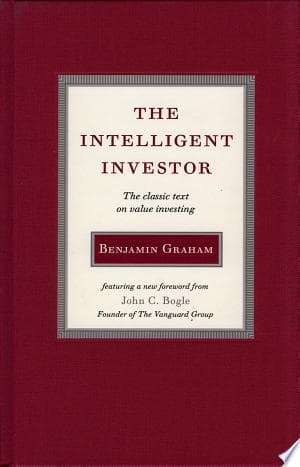
intelligent investor cover
Archivist's Choice

intelligent investor

Benjamin Graham (2005)

Genre

Finance

Reading Time

1200 min

Key Themes

See below

Track Your Reading

Sign in to track this book

Benjamin Graham's 'value investing' guide, updated for modern markets, helps investors navigate financial changes with classic strategies and disciplined long-term thinking.

Core Idea

The Intelligent Investor says successful long-term investing comes from a disciplined, value-focused approach, not speculation. It suggests treating stock ownership as a partial business stake, focusing on fundamental analysis, a 'margin of safety' against problems, and intrinsic value over market mood or short-term forecasts. Graham's 'Mr. Market' shows the market's irrationality, encouraging investors to use downturns as buying chances. The main point is that following these ideas helps even new investors achieve good returns with less risk, unlike the speculative mindset that often leads to losses.
Reading time
1200 min
Difficulty
Hard
✓ Read this if...
You want to build a foundational understanding of value investing principles, develop a disciplined long-term investment strategy, and learn to navigate market volatility without emotional decision-making.
✗ Skip this if...
You are looking for get-rich-quick schemes, day trading strategies, or highly speculative investment advice, or if you prefer a less dense and more contemporary investment guide without historical context.

Core idea

The central argument and framework that powers the entire book.

The Intelligent Investor says successful long-term investing comes from a disciplined, value-focused approach, not speculation. It suggests treating stock ownership as a partial business stake, focusing on fundamental analysis, a 'margin of safety' against problems, and intrinsic value over market mood or short-term forecasts. Graham's 'Mr. Market' shows the market's irrationality, encouraging investors to use downturns as buying chances. The main point is that following these ideas helps even new investors achieve good returns with less risk, unlike the speculative mindset that often leads to losses.

At a glance

Reading time

1200 min

Difficulty

Hard

Read this if...

You want to build a foundational understanding of value investing principles, develop a disciplined long-term investment strategy, and learn to navigate market volatility without emotional decision-making.

Skip this if...

You are looking for get-rich-quick schemes, day trading strategies, or highly speculative investment advice, or if you prefer a less dense and more contemporary investment guide without historical context.

Key Takeaways

1

Investor vs. Speculator

Understand your true role: an investor seeks value, a speculator chases trends.

Quote

An investment operation is one which, upon thorough analysis, promises safety of principal and an adequate return. Operations not meeting these requirements are speculative.

Graham clearly separates investing from speculating. An investor researches well, demands a margin of safety, and expects a reasonable return over time, prioritizing keeping their capital safe. They see stocks as owning a part of a business. A speculator, however, mainly tries to guess and profit from market price changes, often without deep analysis of the business's value. Speculators are driven by emotion, rumors, or short-term price moves, making their actions risky and often bad for long-term wealth. Graham says most people who t...

Supporting evidence

Graham contrasts the purchase of a bond, which promises fixed income and principal return, with the purchase of a growth stock at an inflated price, where the principal's safety and future returns are highly uncertain and dependent on market whims.

Apply this

Before making any investment, clearly define your objective. Are you buying a piece of a business at a fair price, or are you hoping to sell it quickly for more than you paid? If it's the latter, recognize it as speculation and allocate only capital you can afford to lose.

value-investingspeculationmargin-of-safety
2

Mr. Market is Your Servant, Not Your Master

Treat daily market fluctuations as opportunities, not directives.

Quote

Imagine that in some private business you own a small share that cost you $1,000. One of your partners, named Mr. Market, is a very obliging fellow in that he turns up every day and names a price at which he will either buy your share or sell you an additional one.

Graham's 'Mr. Market' story is perhaps his most famous and important idea. Mr. Market is your unpredictable business partner who daily offers to buy or sell your shares at wildly different prices, often based on his irrational excitement or deep sadness. The smart investor knows they don't have to accept Mr. Market's offers. Instead, they should use his irrationality: buy from him when he is sad and offers low prices, and sell to him when he is happy and offers high prices. This teaches investors to ignore daily market noise and inste...

Supporting evidence

Graham uses the example of Mr. Market's mood swings: some days he is euphoric and offers very high prices, other days he is deeply depressed and offers very low prices. The intelligent investor only transacts with Mr. Market when his price is favorable.

Apply this

When the market is down, resist panic selling. Instead, view it as a potential sale on quality assets. When the market is booming, resist the urge to chase overpriced stocks. Always evaluate the business, not just the stock price.

market-volatilityintrinsic-valuecontrarian-investing
3

The Margin of Safety

Buy assets for significantly less than their intrinsic value to protect against errors and misfortune.

Quote

The function of the margin of safety is, in essence, that of rendering unnecessary an accurate estimate of the future.

The margin of safety is the main idea of value investing. It means buying a stock at a price much lower than its calculated true value. This 'cushion' protects investors from unexpected business problems, analysis mistakes, and general market downturns. It acknowledges that forecasting the future is uncertain and provides a buffer against bad events. By asking for a big discount, investors reduce their risk of losing money permanently and increase their chance for long-term gains. It is not about perfect predictions, but about making ...

Supporting evidence

Graham illustrates this by comparing it to bridge construction: engineers don't just calculate the load a bridge must bear, they add a significant safety factor to account for unforeseen stresses and material imperfections.

Apply this

Only invest in companies when their market price is substantially below your conservative estimate of their intrinsic worth. For example, if you believe a company is worth $100 per share, only consider buying it when it trades at $60 or $70, allowing for a 30-40% margin of safety.

value-investingintrinsic-valuerisk-management
4

The Defensive Investor's Portfolio

Achieve financial security through diversification, simplicity, and rebalancing.

Quote

The defensive investor must confine himself to the shares of important companies with a long record of profitable operations and in strong financial condition.

Graham describes a strategy for the 'defensive investor' — someone looking mainly for safety and ease, rather than aggressive growth. This investor should build a portfolio of established, financially strong companies with a history of steady earnings and dividends. Spreading investments across 10-30 different industries is important. The portfolio should balance high-grade bonds and common stocks, usually rebalanced yearly to a 50/50 split, or adjusted between 25/75% based on market conditions. This approach reduces the need for cons...

Supporting evidence

Graham suggests a portfolio composed of a minimum of 10 and a maximum of 30 common stocks, alongside high-grade bonds, with a periodic rebalancing strategy to maintain a chosen asset allocation.

Apply this

Start with a diversified portfolio of index funds or ETFs that track broad market segments. Regularly rebalance your bond-to-stock allocation (e.g., annually) to ensure you're not overexposed to either asset class, selling winners and buying losers to return to your target percentages.

diversificationasset-allocationpassive-investingrebalancing
5

The Enterprising Investor's Opportunities

Seek out undervalued situations through diligent research beyond the obvious.

Quote

The enterprising investor must be prepared to devote a good deal of time and effort to the selection of common stocks.

For those willing to put in significant effort, the 'enterprising investor' can look for opportunities beyond the defensive approach. This means a more active and strict search for undervalued stocks. Graham points out several areas: buying into unpopular large companies (turnarounds), investing in financially strong but smaller, less-known companies, or using special situations like arbitrage or spin-offs. This requires deep fundamental analysis, a willingness to go against the crowd, and patience. The goal is to find situations wher...

Supporting evidence

Graham discusses identifying companies that are temporarily out of favor or undergoing restructuring but retain strong underlying assets or earnings potential, requiring careful analysis of financial statements and industry dynamics.

Apply this

If you have the time and expertise, research companies with low price-to-earnings (P/E) ratios, high dividend yields, or significant net current assets (net-nets) that are overlooked by the broader market. This requires reading annual reports, understanding business models, and assessing management quality.

value-investingfundamental-analysisarbitragespecial-situations
6

Beware of Growth Stocks at Any Price

High growth potential does not justify an infinitely high price; valuation still matters.

Quote

Obvious prospects for growth in a business do not translate into obvious profits for investors.

Graham warns against the appeal of 'growth stocks' bought at inflated prices. While a company's fast growth is attractive, the market often overpays for this potential, assuming optimistic future scenarios that might not happen. The smart investor knows that even the best company can be a bad investment if bought too expensively. The risk with growth stocks is paying for future earnings that are very uncertain, leaving little or no margin of safety. Real investment success comes from buying a good business at a fair or undervalued pri...

Supporting evidence

Graham points out that many 'glamour' stocks that experienced rapid growth in the past eventually disappointed investors who bought them at peak valuations, even if the underlying companies continued to grow.

Apply this

Always perform a valuation even for companies with strong growth prospects. Compare the stock's price to its current earnings, assets, and cash flow. Be skeptical of projections that require exponential, uninterrupted growth for decades into the future to justify the current price.

growth-investingvaluationovervaluation
7

The Importance of Financial History

Understand that market cycles and human behavior repeat; learn from the past.

Quote

The investor's chief problem – and even his worst enemy – is likely to be himself.

Graham emphasizes that while markets and technology change, human behavior and financial cycles stay the same. History shows patterns of speculative bubbles, crashes, and recoveries, driven by fear and greed. The smart investor studies these patterns to avoid repeating past mistakes. This historical view helps calm excitement during bull markets and keep resolve during bear markets. It reinforces the idea that real investment success is more about discipline, patience, and emotional control than about being smarter or timing the marke...

Supporting evidence

Zweig's commentary frequently updates Graham's historical examples (like the 1929 crash) with modern equivalents (like the dot-com bubble or 2008 financial crisis), demonstrating the cyclical nature of market psychology.

Apply this

Read financial history. Understand major bubbles and crashes, and the psychological factors that drove them. This will help you recognize similar patterns in the present and resist the urge to follow the crowd, whether in panic or euphoria.

market-cyclesbehavioral-financefinancial-history
8

Dollar-Cost Averaging and Rebalancing

Automate discipline and capitalize on market fluctuations without predicting them.

Quote

The investor who permits himself to be stampeded or unduly worried by simply taking a look at his holdings and finding that they have a substantial paper loss is making a costly mistake.

Graham supports strategies that remove emotion from investing. Dollar-cost averaging — investing a set amount of money regularly, no matter the market price — means you buy more shares when prices are low and fewer when prices are high, automatically lowering your average cost over time. Rebalancing your portfolio to keep your desired asset mix (e.g., 50% stocks, 50% bonds) makes you sell assets that have become too large (often those that did well) and buy assets that are too small (often those that did poorly). Both strategies are s...

Supporting evidence

While Graham doesn't explicitly use the term 'dollar-cost averaging,' his advice to buy more when prices are low and less when high, and to maintain a consistent investment approach, aligns perfectly with its principles. His rebalancing advice for defensive investors is a direct application.

Apply this

Set up automatic investments into your chosen diversified funds or stocks every month. Annually, review your portfolio's asset allocation and adjust it back to your target percentages. This means selling some of your best performers to buy more of your underperformers, which can feel counterintuitive but is highly effective.

dollar-cost-averagingrebalancingasset-allocationpassive-investing
9

Investment Management for the Layman

Simple, sound strategies are often superior to complex, active management for most investors.

Quote

The defensive investor can place his funds in a diversified list of leading common stocks or in a good common stock mutual fund.

Graham knew that not everyone has the time, desire, or skill to be an enterprising investor. For the 'layman' or defensive investor, he suggested simple, effective strategies that minimize effort while maximizing safety and reasonable returns. This includes investing in a diversified portfolio of high-quality, financially stable companies, or more practically today, using broad-market index funds or ETFs. He was doubtful of active fund managers who charge high fees but often perform worse than the market after costs. The key is to avo...

Supporting evidence

Graham's advice for defensive investors to stick to a diversified portfolio of leading companies or mutual funds, coupled with his critique of speculative behavior, underscores his belief in the power of simplicity for the average investor.

Apply this

For most individuals, investing in low-cost, broadly diversified index funds (like an S&P 500 fund) or target-date funds is the most effective strategy. Avoid trying to pick individual stocks unless you are truly dedicated to the enterprising investor's rigorous research.

index-fundspassive-investingdiversificationlow-cost-investing
10

Focus on Value, Not Forecasts

Base decisions on verifiable facts and intrinsic value, not speculative predictions.

Quote

The one thing that is certain is that the future is always uncertain.

A main idea of Graham's philosophy is that trying to predict short-term stock market moves or a company's exact future earnings is pointless. Instead, the smart investor focuses on facts: a company's current assets, earnings history, debt levels, and management quality. Investment decisions should be based on a business's current true value, calculated cautiously, and then bought with a margin of safety. Trying to forecast market timing or specific future events often backfires, leading to speculation and poor returns. By focusing on ...

Supporting evidence

Graham consistently criticizes relying on 'prophetic' forecasts of earnings or market direction, instead emphasizing analysis of a company's balance sheet and income statement for solid, historical data.

Apply this

When evaluating a company, scrutinize its financial statements and historical performance. Be wary of investment pitches that rely heavily on future projections or 'story stocks.' Focus on what the company is worth today based on conservative assumptions, not what it *might* be worth in five years if everything goes perfectly.

fundamental-analysisintrinsic-valuemarket-timingforecasting

Critical analysis

Notable Quotes

An investment operation is one which, upon thorough analysis, promises safety of principal and an adequate return. Operations not meeting these requirements are speculative.

Defining the core difference between investment and speculation.

The intelligent investor is a realist who buys from pessimists and sells to optimists.

Describing the contrarian mindset of a successful investor.

The investor's chief problem—and even his worst enemy—is likely to be himself.

Highlighting the role of emotional discipline in investing.

Confronted with a challenge to distill the secret of sound investment into three words, we venture the motto, MARGIN OF SAFETY.

Emphasizing the most crucial principle for protecting capital.

The market is a pendulum that forever swings between unsustainable optimism (which makes stocks too expensive) and unwarranted pessimism (which makes them too cheap).

Explaining market cycles through an analogy.

Obvious prospects for physical growth in a business do not necessarily translate into obvious profits for investors.

Warning against equating business growth with investment returns.

Never mingle your speculative and investment operations in the same account, nor in any part of your thinking.

Advising clear separation of investment and speculative activities.

The true investor... will do better if he forgets about the stock market and pays attention to his dividend returns and to the operating results of his companies.

Encouraging focus on business fundamentals over market fluctuations.

The most important single factor in determining a stock's value is not what the company earns, but what it *does* with those earnings.

Highlighting the importance of capital allocation and reinvestment.

To achieve satisfactory investment results is easier than most people realize; to achieve superior results is harder than it looks.

Setting realistic expectations for investment performance.

The investor who permits himself to be stampeded or unduly worried by unjustified market declines in his holdings is transforming his basic advantage into a basic disadvantage.

Cautioning against emotional reactions to market downturns.

The function of the margin of safety is, in essence, that of rendering unnecessary an accurate estimate of the future.

Explaining how margin of safety protects against forecasting errors.

Investment is most intelligent when it is most businesslike.

Encouraging investors to think like business owners.

Even the intelligent investor is likely to need considerable willpower to keep from following the crowd.

Acknowledging the difficulty of resisting herd mentality.

Quiz

Test Your Knowledge

Ready to see how well you understood this book? Take our interactive quiz with 10 questions.

10
Questions
~5
Minutes
?
Best Score

Key Questions (FAQ)

Value investing, as championed by Benjamin Graham, is an investment strategy focused on buying stocks for less than their intrinsic value. It emphasizes thorough research to identify companies trading below their true worth, providing a margin of safety against market fluctuations and potential errors.

About the author

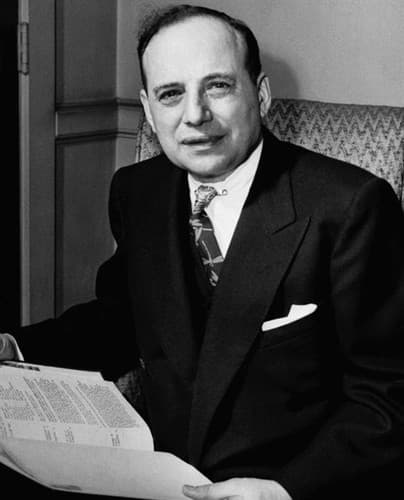
Benjamin Graham

Benjamin Graham was a renowned investor and writer, widely regarded as the father of value investing. His seminal works, "The Intelligent Investor" and "Security Analysis," introduced foundational principles for analyzing securities and making sound investment decisions. Graham's teachings profoundly influenced generations of investors, including Warren Buffett, and remain essential reading for anyone interested in financial markets.