BookBrief
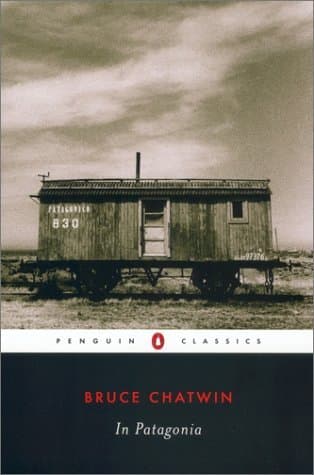
In Patagonia cover
Archivist's Choice

In Patagonia

Bruce Chatwin (1977)

Genre

Lifestyle / Biography / Memoir / History

Reading Time

240 min

Key Themes

See below

Track Your Reading

Sign in to track this book

Prompted by a childhood fascination with a piece of brontosaurus hide, Bruce Chatwin travels through Patagonia, finding forgotten stories, unique people, and the remnants of Butch Cassidy's hideout in a land still holding onto its wild past.

Core Idea

Chatwin's "In Patagonia" collects encounters, historical bits, and personal thoughts, all linked by a search for the unusual and the forgotten at the world's southern edge. It suggests Patagonia is a place where human stories, myths, and obsessions are shown, revealing a deep human desire for escape, change, and understanding a fading frontier. The book implies that truth in such remote, storied places changes, shaped by personal stories and the objects that hold their meaning.
Reading time
240 min
Difficulty
Medium
✓ Read this if...
You are fascinated by travelogues that blend history, personal encounters, and a deep sense of place, appreciating a fragmented, evocative narrative style over a linear plot.
✗ Skip this if...
You prefer a conventional travel guide with practical advice, a clear chronological story, or a straightforward historical account without digressions into myth and personal reflection.

Core idea

The central argument and framework that powers the entire book.

Chatwin's "In Patagonia" collects encounters, historical bits, and personal thoughts, all linked by a search for the unusual and the forgotten at the world's southern edge. It suggests Patagonia is a place where human stories, myths, and obsessions are shown, revealing a deep human desire for escape, change, and understanding a fading frontier. The book implies that truth in such remote, storied places changes, shaped by personal stories and the objects that hold their meaning.

At a glance

Reading time

240 min

Difficulty

Medium

Read this if...

You are fascinated by travelogues that blend history, personal encounters, and a deep sense of place, appreciating a fragmented, evocative narrative style over a linear plot.

Skip this if...

You prefer a conventional travel guide with practical advice, a clear chronological story, or a straightforward historical account without digressions into myth and personal reflection.

Key Takeaways

1

The Allure of the Edge

Patagonia as the ultimate destination for those seeking escape and reinvention.

Quote

The place was a magnet for misfits and dreamers, a land where one could disappear and be reborn.

Chatwin shows Patagonia not just as a place, but as a borderland—the 'uttermost part of the earth'—that draws people looking for refuge or a new start. This remote, often harsh environment becomes a test for self-discovery, where normal rules seem to vanish. Its appeal is in its distance and the chance for anonymity, allowing a complete rethinking of identity. It is a place where history feels both close and broken, filled with people who chose to live on the edges, each with their own interesting, often odd, story. This constant inte...

Supporting evidence

Chatwin's encounters with various hermits, exiles, and adventurers throughout his journey, each with a unique story of why they came to Patagonia and what they sought there.

Apply this

Consider what 'edge' or liminal spaces exist in your own life or ambitions. What could be gained by stepping outside of your comfort zone or familiar environments to explore new facets of yourself?

liminal-spacesidentity-reinventiongeographic-determinism
2

The Fabric of Story

Patagonia's history is a tapestry woven from myth, personal accounts, and fragmented facts.

Quote

Every man had a story, and in Patagonia, the stories were often grander and more outlandish than anywhere else.

Chatwin does not give a straightforward history of Patagonia; instead, he builds a collection of stories, local myths, historical notes, and personal accounts. He accepts that memory and oral tradition are not always accurate, but sees this as a key part of the region's character. The book itself reflects this style, mixing reporting with almost mythical storytelling. This approach suggests that the 'truth' of a place like Patagonia is not a fixed record, but a living story shaped by its people and the stories they choose to tell and ...

Supporting evidence

The numerous tales of outlaws like Butch Cassidy and the Sundance Kid, Welsh settlers, indigenous myths, and the often-conflicting accounts of local residents regarding historical events.

Apply this

When trying to understand a complex situation or place, seek out multiple perspectives and embrace the richness that comes from varied narratives, rather than relying solely on a singular 'official' account.

oral-historymyth-makingnarrative-truthcollective-memory
3

The Weight of Wanderlust

The book is a testament to the primal human urge to explore and the discomfort of settled life.

Quote

My grandmother had a piece of skin from a brontosaurus, and it was that which first put the idea of Patagonia into my head.

Chatwin's journey starts from a childhood interest, a real link to a fantasy past, showing how deep and often illogical the desire for adventure can be. His writing shows a restless energy, a clear discomfort with staying still. Traveling, constant movement and observation, seems to be his natural state. This is not just a physical journey but an intellectual and spiritual one, driven by a deep curiosity about the world and its people. The book subtly argues that being somewhat rootless can help understanding, offering a view that a s...

Supporting evidence

Chatwin's own biographical details (leaving his job at Sotheby's to embark on the trip), and the constant motif of movement and changing landscapes throughout the narrative.

Apply this

Identify a long-held curiosity or a place you've always wanted to visit. What small, actionable step can you take this week to move closer to fulfilling that wanderlust, even if it's just research?

nomadic-spiritexplorationchildhood-curiositytravel-as-philosophy
4

The Vanishing Frontier

Chatwin captures Patagonia at a pivotal moment, on the cusp of losing its wild, untamed essence.

Quote

The further south I went, the more I felt I was moving into a past that was rapidly disappearing.

Published in 1977, 'In Patagonia' is a tribute to a fading world. Chatwin understands that documenting this remote region helps bring it into the global world. He sees a landscape and a way of life that are both tough and fragile. The people he meets, the stories he gathers, and the untouched views he describes are all presented with a sense of urgency, as if he is racing to capture their essence before they change forever. This adds a touching layer to the story, making the reader aware of how precious such unique, isolated cultures ...

Supporting evidence

Descriptions of declining populations in remote settlements, the encroaching influence of modern industry, and the fading memories of older generations regarding the 'wilder' days.

Apply this

Recognize the unique qualities of local cultures and environments in your own area. Consider how you can support their preservation and appreciation before they are lost to homogenization.

cultural-preservationglobalization-impactenvironmental-fragilitylast-frontier
5

The Power of Objects

Inanimate artifacts serve as potent anchors for memory, history, and personal identity.

Quote

It was just a piece of skin, but it contained the whole world of my childhood imaginings.

From the 'brontosaurus skin' that started his journey to the details of a bandit's cabin, Chatwin gives objects great importance. These are not just inert items; they are paths to stories, memories, and even entire histories. He carefully describes their textures, origins, and the stories linked to them, showing how physical things can hold deep symbolic meaning. For people in remote areas, where written records might be few, these objects become important links to identity and the past. This highlights the human need to give meaning ...

Supporting evidence

The piece of Mylodon (not brontosaurus) skin, the details of Butch Cassidy's log cabin, specific photographs, and the various curiosities found in the homes of Patagonian residents.

Apply this

Reflect on a personal object that holds deep meaning for you. What story does it tell? How does it connect you to your past or your identity? Consider documenting its significance.

material-culturememory-objectssymbolic-meaningartifact-narrative
6

The Eccentricity of Isolation

Extreme remoteness fosters unique characters and unconventional ways of life.

Quote

In a land of such vast emptiness, the human mind often fills the void with extraordinary inventions and obsessions.

Patagonia, with its few people and difficult environment, acts as a filter, attracting unique individuals. Chatwin meets many distinct people: hermits, dreamers, disappointed Europeans, and descendants of various immigrant groups who have made singular lives. Their isolation does not always lead to loneliness, but often to a stronger sense of self-reliance, unusual hobbies, and strong beliefs. This suggests that while isolation can be hard, it can also be a place for individuality and the growth of rich, if unconventional, inner lives...

Supporting evidence

The descriptions of various characters Chatwin meets, such as the Welsh descendants maintaining their culture, the reclusive German settlers, and the often-paranoid or highly individualistic ranchers.

Apply this

Observe how environments shape the people within them. Consider how a change in your own environment might foster different aspects of your personality or encourage new interests.

social-isolationindividualismenvironmental-psychologycultural-quirks
7

The Elusive Nature of Truth

Chatwin challenges the reader to question definitive narratives, embracing ambiguity instead.

Quote

Every story had a dozen versions, and each man believed his own to be the truest.

Throughout 'In Patagonia,' Chatwin often presents different accounts of events, historical figures, and even geographical features. He does not try to fix these differences or say one version is right. Instead, he shows how subjective human experience and memory are. This way of telling the story makes the reader think critically about the information, recognizing that 'truth' in such a fluid and remote context is often complex and hard to pin down. It is a smart writing technique that reflects the complexity of the region itself, whe...

Supporting evidence

The differing accounts of Butch Cassidy's fate, the various origins of local place names, and the conflicting stories about indigenous populations and early settlers.

Apply this

When confronted with conflicting information or perspectives, resist the urge to immediately seek a single 'correct' answer. Instead, explore the nuances and consider what each perspective reveals.

epistemologysubjectivitypost-truthnarrative-ambiguity
8

The Legacy of Colonialism

Patagonia's present is deeply shaped by waves of European settlement and their impact.

Quote

The Welsh had come to build a new Wales, free from the English, only to find themselves in another kind of wilderness.

Chatwin clearly shows the lasting impact of various European immigrant groups—the Welsh, Germans, English, and others—who tried to put their cultures and goals onto the Patagonian landscape. He explores why they moved there, from ideal dreams to financial need, and the often unexpected results of their arrival for both the land and its native people. The book shows how these colonial efforts, while creating unique cultural pockets, also led to the displacement of native populations and changes to the natural environment. It is a nuanc...

Supporting evidence

The detailed accounts of the Welsh colony in Chubut, the German settlements, and the remnants of British ranching culture, alongside mentions of the diminished indigenous presence.

Apply this

Research the colonial history of your own region. How have past migrations and settlements shaped its current demographics, culture, and environmental landscape?

colonial-historycultural-assimilationindigenous-displacementdiaspora
9

Landscape as Character

The vast, indifferent Patagonian landscape is a powerful, shaping force in itself.

Quote

The wind was a constant companion, a sculptor of both rock and character.

Chatwin's descriptions of Patagonia's physical environment are not just pretty backgrounds; the landscape acts as a character, actively affecting the lives and minds of its people. The constant wind, the vast emptiness, the dramatic mountains, and the barren plains all contribute to a sense of isolation, toughness, and often, a strange form of madness or self-reflection among the people who live there. The land sets the terms for survival, shapes the local economy, and inspires both awe and despair. It is a strong reminder that human ...

Supporting evidence

Frequent and vivid descriptions of the Patagonian wind, the endless plains, the stark beauty of the mountains, and how these elements affect travel, settlement, and daily life.

Apply this

Spend time in a natural environment and observe how its specific features (weather, terrain, flora, fauna) might subtly influence your mood, thoughts, or actions.

environmental-influencesense-of-placegeographical-determinismnature-as-protagonist
10

The Quest for the Exotic

The book explores the human desire for the 'other' and the romanticization of the wild.

Quote

I had always wanted to go to Patagonia, and now I was here, searching for something I couldn't quite name.

Chatwin's journey is a classic search for the exotic, driven by a romantic idea of a land untouched by modern life. He embodies the Western interest in remote, 'wild' places, looking for legends, outlaws, and traces of a past era. However, the book does not simply approve of this romanticism; it subtly questions it, showing how the reality of Patagonia is often harsher, more complex, and less glamorous than the myths. This point highlights the tension between an idealized image of a place and its real life, and the often unspoken reas...

Supporting evidence

Chatwin's initial childhood fascination with the 'brontosaurus skin,' his pursuit of Butch Cassidy's cabin, and the general tone of wonder mixed with occasional disillusionment throughout his travels.

Apply this

When you find yourself drawn to an 'exotic' place or culture, take time to research its realities beyond the romanticized images. What are the complexities and challenges that exist alongside its allure?

orientalismromanticism-of-naturetravel-motivationcultural-projection

Critical analysis

Notable Quotes

I had a vision of a large, luminous, and empty space, where the wind blew and the grass grew, and where the sun shone down on the earth.

Describing his initial yearning for Patagonia and its vastness.

To be born in a place is to be bound to it, to have its dust in your blood and its sky in your eyes.

Reflecting on the strong connection people have to their birthplace, particularly in remote areas.

Truth is a chameleon, it changes its colours according to the light.

Discussing the difficulty of verifying stories and the subjective nature of truth in his travels.

The wind was a living thing, a malevolent spirit, tearing at the landscape and at the nerves.

Experiencing the harsh Patagonian wind, a recurring motif in the book.

Every journey, I told myself, is a kind of death.

Pondering the transformative and sometimes isolating nature of his travels.

The past is a foreign country; they do things differently there.

A famous quote, used when encountering individuals who embody older ways of life or beliefs.

All travel has its risks, but the greatest risk is staying at home.

Justifying his adventurous spirit and the importance of exploration.

He had a face like a fist, and eyes that had seen too much.

Describing a grizzled, world-weary character he encountered.

It was a land of mirages, where facts shimmered and dissolved.

Referring to the elusive nature of information and the prevalence of legends in Patagonia.

Nomads, I thought, were the last free men.

Reflecting on the lifestyle of itinerant people and their perceived freedom.

The great advantage of the journey was that it was a journey of elimination.

Describing how his travels stripped away the unnecessary, leaving only essentials.

A man's worth is measured by his stories.

Highlighting the importance of personal narratives and oral tradition among the people he met.

The silence was not empty, but full of the sound of the wind.

Capturing the unique auditory experience of the vast, quiet Patagonian landscape.

Quiz

Test Your Knowledge

Ready to see how well you understood this book? Take our interactive quiz with 10 questions.

10
Questions
~5
Minutes
?
Best Score

Key Questions (FAQ)

'In Patagonia' is Bruce Chatwin's acclaimed memoir and travelogue detailing his journey through the remote, southern tip of South America. It blends personal observations with historical anecdotes, local legends, and encounters with the region's diverse inhabitants.

About the author

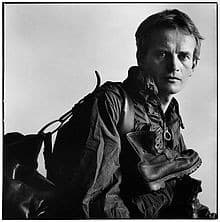
Bruce Chatwin

Charles Bruce Chatwin was an English travel writer, novelist and journalist. His first book, In Patagonia (1977), established Chatwin as a travel writer, although he considered himself instead a storyteller, interested in bringing to light unusual tales. He won the James Tait Black Memorial Prize for his novel On the Black Hill (1982), while his novel Utz (1988) was shortlisted for the Booker Prize. In 2008 The Times ranked Chatwin as number 46 on their list of "50 Greatest British Writers Since 1945."