BookBrief
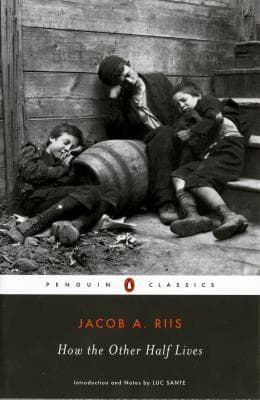
How the Other Half Lives cover
Archivist's Choice

How the Other Half Lives

Jacob A. Riis (1890)

Genre

History

Reading Time

360 min

Key Themes

See below

Track Your Reading

Sign in to track this book

Jacob Riis used investigative journalism and photography to show the desperate lives in New York City's tenements, making society confront its 'other half' and sparking urban reform.

Core Idea

Jacob Riis's "How the Other Half Lives" is an exposé of the poor living conditions in late 19th-century New York City, focusing on overcrowded, disease-ridden tenements and their impact on public health, morality, and social order. Through vivid writing and early flash photography, Riis argues that these slums are not caused by individual failures but by a social system created by greed, neglect, and indifference from the wealthy and city government. The book's main point is that societal progress and public health depend on the well-being of its most vulnerable citizens, requiring collective action and reform instead of blaming immigrants.
Reading time
360 min
Difficulty
Medium
✓ Read this if...
You are interested in the origins of social reform, the history of urban poverty in America, the power of photojournalism, or the Gilded Age's stark social inequalities.
✗ Skip this if...
You prefer modern sociological analyses over historical primary sources, or are sensitive to outdated language and perspectives common in late 19th-century social commentary.

Core idea

The central argument and framework that powers the entire book.

Jacob Riis's "How the Other Half Lives" is an exposé of the poor living conditions in late 19th-century New York City, focusing on overcrowded, disease-ridden tenements and their impact on public health, morality, and social order. Through vivid writing and early flash photography, Riis argues that these slums are not caused by individual failures but by a social system created by greed, neglect, and indifference from the wealthy and city government. The book's main point is that societal progress and public health depend on the well-being of its most vulnerable citizens, requiring collective action and reform instead of blaming immigrants.

At a glance

Reading time

360 min

Difficulty

Medium

Read this if...

You are interested in the origins of social reform, the history of urban poverty in America, the power of photojournalism, or the Gilded Age's stark social inequalities.

Skip this if...

You prefer modern sociological analyses over historical primary sources, or are sensitive to outdated language and perspectives common in late 19th-century social commentary.

Key Takeaways

1

The Slum as a Social Construct

Poverty is not an individual failing but a systemic outcome of environmental neglect.

Quote

When the tenement had had its day, and its 'day' was a very dark one indeed, the slum was born.

Riis changed the understanding of poverty, seeing it not as an individual moral failing but as a direct result of the physical and social environment. He argues that the 'slum' is not just a place where poor people live, but a creation of societal neglect and exploitative urban planning. The constant overcrowding, lack of sanitation, and absence of basic services in areas like the Lower East Side created a cycle of despair, disease, and crime. This environment prevented upward mobility and encouraged social problems, making it almost ...

Supporting evidence

Riis details the specific architectural features of tenements: airshafts that spread disease, lack of windows, and shared privies that overflowed. He describes how landlords maximized profits by cramming as many families as possible into decrepit buildings, often without adequate light, air, or sanitation, leading to rampant disease and high mortality rates.

Apply this

Modern urban planning must prioritize equitable access to clean environments, green spaces, and adequate housing, recognizing that these are fundamental to public health and social mobility. Advocating for policies that combat housing discrimination and ensure safe, affordable living conditions is crucial.

urban-planningsystemic-povertytenement-housingsocial-determinants-of-health
2

Photography as a Weapon for Change

Visual evidence possesses an unparalleled power to shock and galvanize public opinion.

Quote

The camera is an instrument that can be used to tell the truth, and to tell it so vividly that it cannot be ignored.

Riis was a pioneer of photojournalism, understanding that raw images could show the harsh reality of slum life in a way words alone could not. His use of flash photography, then a new technology, allowed him to capture the dimly lit interiors of tenements, revealing conditions previously hidden. These photographs were not just illustrations; they were proof, forcing middle and upper-class society to confront the suffering in their own city. The direct impact of seeing children sleeping on rags, families in single rooms, and widespread...

Supporting evidence

Riis's pioneering use of flash powder photography, which allowed him to capture images in the dark, cramped tenement rooms where natural light was scarce. His book is filled with stark, unflinching photographs of families, children, and living spaces that shocked contemporary audiences.

Apply this

When advocating for social justice, utilize visual storytelling and data visualization to make complex issues accessible and emotionally resonant. Support investigative journalism that employs powerful imagery to expose hidden truths.

photojournalismsocial-reformvisual-advocacymuckraking
3

The Children of the Tenements

Childhood in the slums was a brutal struggle for survival, not an innocent stage of life.

Quote

The street is their only playground, the gutter their only toy.

Riis focuses on the struggles of children, showing how the tenement environment took away their childhoods. Born into squalor, exposed to disease, violence, and neglect from infancy, these children had to grow up fast, often becoming earners or caregivers at young ages. His accounts paint a picture of child labor, homelessness, and crime. Riis argues that society's failure to protect these children was not only wrong but also a threat to its future, as these neglected youths were more likely to become poor or criminal. He challenges t...

Supporting evidence

Riis documents the existence of 'street Arabs,' homeless children who slept in alleys and fought for scraps, and describes children working in sweatshops or as street vendors. He also highlights the high rates of infant mortality in the slums.

Apply this

Prioritize policies that ensure child welfare, including access to quality education, safe housing, healthcare, and protection from child labor. Support organizations working to alleviate child poverty and provide safe spaces for youth in underserved communities.

child-povertychild-laborsocial-neglecturban-youth
4

The Dangers of Neglected Public Health

Poor sanitation and overcrowding in one part of the city threaten the health of all its inhabitants.

Quote

The slum is the hotbed of epidemics that sweep through the city, sparing none.

Riis makes a strong argument for public health as a connected system, showing that the unsanitary conditions of the slums were not isolated problems but a direct threat to the entire city. The lack of clean water, overflowing sewers, uncollected trash, and widespread disease in tenement districts created breeding grounds for epidemics like cholera, tuberculosis, and smallpox that spread beyond their areas. He argues that investing in sanitation and improving living conditions for the poor was not just charity but a matter of self-inte...

Supporting evidence

Riis details the prevalence of diseases like cholera, tuberculosis, and typhus in the tenements, linking them directly to unsanitary conditions, contaminated water, and inadequate ventilation. He cites statistics on death rates and disease outbreaks.

Apply this

Advocate for robust public health infrastructure, including universal access to clean water, sanitation, and affordable healthcare. Support policies that address environmental justice and reduce health disparities in marginalized communities.

public-healthsanitationepidemicsenvironmental-justice
5

Immigrants as Scapegoats and Victims

Newcomers were blamed for urban decay while simultaneously exploited by it.

Quote

They were not only the victims of the landlord's greed, but also the scapegoats for society's failures.

Riis documents how immigrant communities, especially from Eastern and Southern Europe, were mostly in the worst slums. While he sometimes reflects the anti-immigrant views of his time, his work ultimately shows them as victims of circumstance and exploitation, not the cause of urban decay. Landlords profited by cramming these newcomers into dilapidated tenements, charging high rents for uninhabitable spaces. Immigrants, often lacking language skills, social networks, and economic power, had little choice but to accept these conditions...

Supporting evidence

Riis dedicates chapters to specific immigrant groups—the Italians, the Jews, the Chinese—describing their living conditions and cultural practices. While his descriptions can be problematic, he shows how they were forced into the worst housing and exploited for cheap labor.

Apply this

Challenge xenophobia and anti-immigrant narratives by highlighting the systemic factors that contribute to their marginalization. Support immigrant rights organizations and policies that ensure fair housing, labor protections, and pathways to integration.

immigrationxenophobiaexploitationhousing-discrimination
6

The Power of Collective Action

Individual charity is insufficient; systemic problems demand systemic solutions.

Quote

It is not charity that is needed, but justice.

While Riis's immediate impact came from showing individual suffering, his message called for broad, collective action and structural reforms, not just charity. He understood that the problem in New York's slums was too big for individual kindness. Real change needed city action, new laws, and a shift in public policy. His work directly inspired tenement reform laws, the creation of parks, and improved sanitation systems, showing that when public outcry is strong enough, governments can be forced to act. This point emphasizes that addr...

Supporting evidence

Riis's book directly influenced Theodore Roosevelt (then NYC Police Commissioner), leading to tenement house reforms, the demolition of some of the worst slums, and the creation of small parks and playgrounds.

Apply this

Engage in civic participation, support political candidates committed to social justice, and advocate for legislative reforms that address systemic inequalities. Join or support community organizations working for large-scale social change.

social-activismlegislative-reformcivic-engagementcommunity-organizing
7

The Peril of Moral Indifference

Ignoring the suffering of others is a moral failing with tangible societal costs.

Quote

What are you going to do about it?

Riis's work criticizes the indifference among New York's wealthier classes. He argues that the comfortable ignorance of 'the other half's' suffering was not only wrong but also economically and socially short-sighted. This intentional blindness allowed exploitative practices to thrive and created a wound in the city, leading to crime, disease, and social unrest that eventually affected everyone. Riis's photographs and descriptions aimed to shatter this complacency, forcing readers to confront the human cost of their inaction. He impli...

Supporting evidence

Riis repeatedly contrasts the squalor of the slums with the opulence of Fifth Avenue, highlighting the stark disconnect and implying a moral responsibility on the part of the wealthy to address the conditions.

Apply this

Actively seek out information and perspectives from marginalized communities. Challenge personal biases and engage in empathetic listening. Support initiatives that bridge socio-economic divides and foster a sense of shared responsibility for societal well-being.

moral-responsibilitysocial-justiceempathyclass-divide
8

The Enduring Legacy of Tenement Life

The patterns of poverty and inequality exposed by Riis continue to shape modern urban landscapes.

Quote

The problem of the tenements is not solved, it is merely changed.

While Riis's work led to important reforms, the basic issues he exposed—housing insecurity, concentrated poverty, environmental injustice, and the exploitation of vulnerable people—remain relevant. Today's 'tenements' may look different, but the systemic forces that create and maintain slums continue in various forms, from overcrowded public housing to displacement due to gentrification and the growth of informal settlements globally. Riis's insights into how physical environments shape lives, how economic differences create social la...

Supporting evidence

Though written in 1890, the descriptions of landlords maximizing profit, the cycle of poverty, and the connection between poor housing and health resonate with modern issues like affordable housing crises, homelessness, and persistent urban decay in many cities.

Apply this

Analyze current urban policies and development projects through the lens of equity and social justice. Advocate for affordable housing initiatives, tenant protections, and community-led development that prioritizes the needs of marginalized residents.

urban-inequalitygentrificationhousing-crisissocial-stratification
9

Hope Amidst Despair

Even in the darkest corners, human resilience and the potential for reform offer glimmers of hope.

Quote

It is not in the nature of things that they can remain as they are.

Despite the grim realities he showed, Riis's story is not one of complete despair. Underlying his exposé is a belief in the possibility of reform and the strength of the human spirit. He highlights the efforts of reformers, philanthropists, and even self-organized immigrant communities to improve their own conditions. His act of publishing the book was an act of hope—a belief that if people truly saw and understood the suffering, they would be moved to act. The later impact of 'How the Other Half Lives' on public policy and urban deve...

Supporting evidence

Riis mentions the efforts of some charitable organizations, the establishment of settlement houses, and the work of individuals trying to make a difference. His own success in prompting reforms under Roosevelt is the ultimate evidence of hope.

Apply this

Remain optimistic and persistent in advocating for social change, even in the face of daunting challenges. Support and highlight stories of resilience, community empowerment, and successful reform efforts as inspiration for continued action.

social-progressresiliencehopereform-movements

Critical analysis

Notable Quotes

The one thing you shall not do is to go to bed. You may be dead, but you must not be in bed.

Describing the relentless pace and demands of tenement life, particularly for children and workers.

In the tenements all the sunlight that ever comes in is through the windows that open on the air-shaft, and that is not much.

Highlighting the lack of light and fresh air in the cramped, poorly designed tenement buildings.

The sea of a mighty population, held back from the land by the tenement, heaves and tosses itself in the streets.

Illustrating the overflow of life from the overcrowded tenements into the public streets, a common sight.

Long ago it was said that 'one half of the world does not know how the other half lives.' That was true then. It is not true now. The half that was in the dark has been dragged into the light.

Riis's direct statement of purpose, asserting that his book will expose the hidden realities of poverty.

The boundary line of the slum is not a geographical line. It is a social line.

Arguing that the definition of a slum is more about social conditions and human suffering than mere location.

The 'flat' is a tenement, be it ever so fine.

A critical observation that even seemingly better housing can share the fundamental flaws of tenement living if it lacks space, light, and proper facilities.

Where the whole family, father, mother, and half-grown children, work for a common wage, there is no home life, no privacy, and no moral restraint.

Describing the destructive impact of poverty and factory work on family structures and moral standards.

With the children of the tenements, life is a battle for the simplest things, a crust of bread, a warm corner, a dry spot to sleep.

Emphasizing the harsh realities and constant struggle faced by children growing up in poverty.

It is in the cellar tenement, the rear tenement, the alley tenement, that the worst conditions are found.

Pinpointing specific types of tenement housing that were particularly egregious in their lack of sanitation and safety.

The saloon is the poor man's club, his reading-room, his art gallery, his concert hall, his exchange, his place of worship.

Illustrating the central role of saloons in the social life of the poor, often due to lack of other options.

The baby's cradle and the coffin stand side by side, and the one is rarely empty of its tenant.

A stark and poignant image conveying the high infant mortality rates in the tenements.

The slum is the enemy of society, and the sooner we understand that, the sooner we shall be able to deal with it.

Riis's call to action, framing the slums as a threat to the entire social fabric that requires urgent intervention.

The remedy for the evils of the tenements is not to be found in tearing them down, but in making them fit for human habitation.

Arguing for reform and improvement of existing structures rather than mere demolition, advocating for practical solutions.

The moral character of the slum is written in its alleys, in its dark hallways, in its crowded rooms.

Suggesting that the physical environment of the slums directly reflects and influences the moral and social decay within them.

It is in the homes of the poor that we find the greatest waste of human life, the greatest suffering, and the greatest opportunities for good.

A complex statement acknowledging the immense suffering but also implying the potential for positive intervention and reform.

Quiz

Test Your Knowledge

Ready to see how well you understood this book? Take our interactive quiz with 10 questions.

10
Questions
~5
Minutes
?
Best Score

Key Questions (FAQ)

'How the Other Half Lives' is a groundbreaking non-fiction book by Jacob A. Riis, first published in 1890. It documents the appalling living conditions of the impoverished working class in New York City's tenements, using vivid descriptions and pioneering photojournalism to expose urban poverty.

About the author