BookBrief
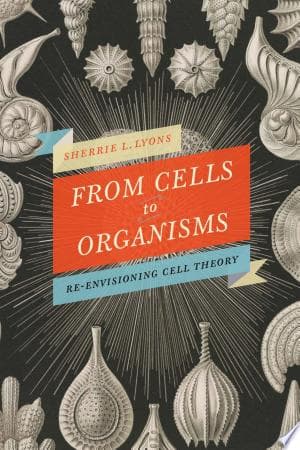
From Cells to Organisms cover
Archivist's Choice

From Cells to Organisms

Sherrie L Lyons (2020)

Genre

History / Science

Reading Time

12 Minutes

Key Themes

See below

Track Your Reading

Sign in to track this book

This book goes beyond a simple timeline, showing how philosophical beliefs and changing scientific ideas, from cell theory to genetics, shaped our understanding of heredity, development, and biological individuality.

Core Idea

Sherrie L. Lyons' "From Cells to Organisms" offers a comprehensive historical journey through the development of cell theory, tracing its evolution from early microscopic observations to its central role in modern biology. The book emphasizes that scientific progress is not a linear march but a complex interplay of technological advancements, conceptual shifts, and the contributions of numerous researchers across centuries. Lyons highlights how understanding the cell fundamentally transformed our comprehension of life itself, moving from a view of organisms as indivisible entities to complex systems built from fundamental units, thereby laying the groundwork for fields like genetics, developmental biology, and medicine.
Difficulty
Medium

Core idea

The central argument and framework that powers the entire book.

Sherrie L. Lyons' "From Cells to Organisms" offers a comprehensive historical journey through the development of cell theory, tracing its evolution from early microscopic observations to its central role in modern biology. The book emphasizes that scientific progress is not a linear march but a complex interplay of technological advancements, conceptual shifts, and the contributions of numerous researchers across centuries. Lyons highlights how understanding the cell fundamentally transformed our comprehension of life itself, moving from a view of organisms as indivisible entities to complex systems built from fundamental units, thereby laying the groundwork for fields like genetics, developmental biology, and medicine.

At a glance

Difficulty

Medium

Key Takeaways

1

Science as Interpretation, Not Pure Observation

Scientific findings are deeply colored by pre-existing ideas and philosophical frameworks.

Quote

Results are interpreted not only through the lens of a microscope, but also through the lens of particular ideas and prior philosophical convictions.

Lyons argues that scientific "truths" are never just from observation. Instead, they are shaped by the intellectual climate, philosophical beliefs, and personal biases of researchers. This is key to understanding biology's history. It shows why certain observations were highlighted or ignored, and how different groups interpreted the same data differently. For example, early cell theory debates were not only about what was seen under a microscope, but also about deeper philosophical questions on life and organization. This challenges ...

Supporting evidence

The book's overarching thesis, illustrated by how early biologists interpreted microscopic observations of cells through vitalist or mechanistic lenses.

Apply this

When evaluating scientific claims, consider the historical and philosophical context in which they were made. Question the underlying assumptions that might be influencing interpretation, rather than accepting findings as purely objective facts.

2

The Shifting Landscape of 'Generation'

Heredity and development, once unified, became distinct disciplines due to the rise of genetics.

Quote

Before the twentieth century, heredity and development were considered complementary aspects of the fundamental problem of generation, but later they became distinct disciplines with the rise of genetics.

This book's strongest insight shows a major shift in biological thought. Lyons explains how early biologists saw "generation" as one process, covering both how an organism developed from a single cell and how traits passed through generations. Genetics, with its focus on distinct inheritance units, broke apart this idea. While powerful for understanding heredity, this split likely led to less emphasis on the dynamic link between genetic information and development. Modern epigenetics and evo-devo are now rediscovering this. It shows t...

Supporting evidence

The historical analysis of how 'generation' was conceptualized before and after the rise of Mendelian genetics.

Apply this

Recognize that disciplinary boundaries in science are fluid and historically contingent. Seek interdisciplinary perspectives to bridge artificial divides and gain a more complete understanding of complex biological phenomena.

3

Cell Theory's Enduring Influence and Its Critics

Despite its foundational status, cell theory faced significant early and ongoing challenges.

Quote

Building upon the work of Thomas Huxley, an important early critic of cell theory, and more recent research from biologists such as Daniel Mazia, From Cells to Organisms covers ongoing debates around cell theory.

Lyons corrects the common idea that cell theory was a universally accepted belief from the start. She highlights the role of early critics like Thomas Huxley. He questioned if the cell was always the basic unit of life, pointing to structures like syncytia and emphasizing protoplasm's continuity. This criticism wasn't just obstruction; it pushed for a more detailed understanding of biological organization beyond single cells. Even in the 20th century, figures like Daniel Mazia continued to refine and challenge cell theory, showing tha...

Supporting evidence

The discussion of Thomas Huxley's early criticisms of cell theory and Daniel Mazia's later work challenging its tenets.

Apply this

Approach even well-established scientific theories with a critical, questioning mind. Understand that scientific progress often comes from challenging assumptions and refining existing frameworks, not just from accumulating confirming evidence.

4

Vitalism's Persistent Shadow

Vitalist ideas, though often dismissed, played a significant role in shaping biological inquiry.

Quote

Focusing on how cell theory shaped investigations of development, this book explores evolution, vitalism, the role of the nucleus, and the concept of biological individuality.

Lyons successfully reexamines vitalism, often seen as unscientific. She shows that vitalist ideas, which proposed a unique "life force" or organizing principle beyond physical and chemical laws, were serious philosophical attempts. They tried to explain the complexities of development and organization that mechanistic explanations struggled with. While modern biology has moved past explicit vitalism, its historical impact is clear. It led biologists to ask questions about emergent properties, self-organization, and life's holistic nat...

Supporting evidence

The exploration of how vitalist ideas influenced investigations into development and the role of the nucleus, particularly in explaining cellular self-organization.

Apply this

When studying historical scientific debates, avoid presentism. Understand the intellectual context of past ideas, even those now considered defunct, to appreciate their role in shaping subsequent scientific progress and the questions they attempted to answer.

5

The Enigma of Biological Individuality

Defining what constitutes an 'individual' organism is more complex than it appears.

Quote

From Cells to Organisms covers ongoing debates around cell theory and uses case studies to examine the nature of scientific practice, the role of prestige, and the dynamics of theory change.

The book shows that "biological individuality" is not a settled concept, especially with cell theory. Is an individual a single cell, a multicellular organism, a colony, or a symbiotic group? Lyons' historical view shows how this question has troubled biologists. Observations of colonial organisms, syncytia, and the microbiome complicated simple definitions. Cell theory defines the cell as a basic unit, but it doesn't automatically clarify what an "individual" is at higher levels. This ongoing debate shows the limits of purely reducti...

Supporting evidence

The discussion of how cell theory intersects with concepts of individuality, particularly in the context of colonial organisms and the debate over whether an organism is merely a collection of cells or something more.

Apply this

When considering complex biological systems, challenge assumptions about what constitutes a discrete 'individual.' Embrace the messy reality of symbiotic relationships and emergent properties that blur traditional boundaries.

6

The Nucleus: From Enigma to Command Center

The understanding of the nucleus evolved significantly, reflecting broader conceptual shifts.

Quote

Focusing on how cell theory shaped investigations of development, this book explores evolution, vitalism, the role of the nucleus, and the concept of biological individuality.

Lyons tracks the journey of how the nucleus, once an unknown part of the cell, became known as the main storage of hereditary information and the cell's control center. This change was not sudden. It involved decades of observation, experiments, and debate. Early ideas ranged from seeing it as a metabolic organelle to the cell's central "brain." The book explains how understanding nuclear division (mitosis), fertilization, and genetics confirmed its main role. This story shows how scientific knowledge builds up, often by combining dif...

Supporting evidence

The historical account of theories regarding the function of the nucleus, from early observations to its eventual recognition as the carrier of genetic material.

Apply this

Appreciate that scientific understanding of fundamental structures evolves over time. Recognize that today's established facts were once debated hypotheses, and this history informs current research directions.

7

Prestige and Power in Scientific Debates

The influence of prominent figures can profoundly shape the direction and acceptance of theories.

Quote

From Cells to Organisms covers ongoing debates around cell theory and uses case studies to examine the nature of scientific practice, the role of prestige, and the dynamics of theory change.

Lyons highlights science's social side. It's not just about data, but also about people and their influence. "Prestige" is a powerful, often unstated, factor in how theories are accepted or rejected. A theory from a respected figure like Thomas Huxley, even if critical of current views, held weight and needed serious thought. On the other hand, ideas from less known scientists, no matter how good, might struggle for recognition. This aspect of science shows it is a human activity, affected by social dynamics. Who supports a new idea c...

Supporting evidence

Case studies demonstrating how the opinions and arguments of influential figures (e.g., Huxley) impacted the reception and trajectory of cell theory debates.

Apply this

Be aware that scientific consensus is not purely data-driven; it also involves social and political dynamics within the scientific community. Critically evaluate arguments based on their merit, not solely on the prestige of their proponents.

8

Theory Change as a Dynamic Process

Scientific theories evolve through continuous debate, challenge, and reinterpretation, not sudden revolution.

Quote

From Cells to Organisms covers ongoing debates around cell theory and uses case studies to examine the nature of scientific practice, the role of prestige, and the dynamics of theory change.

The book offers strong evidence against a simple view of scientific progress as a linear accumulation of facts or sudden Kuhnian revolutions. Instead, Lyons shows theory change as an iterative, often complex, and continuous process of debate, refinement, and reinterpretation. Cell theory was not "discovered" and then universally accepted. It was constantly challenged, changed, and combined with new observations and ideas. This dynamic view emphasizes that even core theories are living things, always reevaluated as new technologies app...

Supporting evidence

The multiple 'ongoing debates' highlighted throughout the book regarding cell theory, vitalism, and the nucleus, showing how theories were continuously questioned and adapted.

Apply this

Embrace the dynamic and iterative nature of scientific understanding. Recognize that current scientific theories are the best explanations we have *for now*, subject to future refinement and even potential paradigm shifts.

9

The Interplay of Technology and Theory

Advances in microscopy were crucial but insufficient on their own to drive theoretical shifts.

Quote

More than a history, From Cells to Organisms delves into the nature of scientific practice, showing that results are interpreted not only through the lens of a microscope, but also through the lens of particular ideas and prior philosophical convictions.

While not a main theme, Lyons shows the link between technology and theory. The invention and improvement of the microscope were essential for cell theory. Without seeing cells, these theories couldn't have appeared. However, the book's main point that "results are interpreted... through the lens of particular ideas" reminds us that technology alone is not enough. Better vision just gives more data; it doesn't automatically dictate how it's interpreted. Early biologists saw the same microscopic structures but drew very different concl...

Supporting evidence

The historical context implies that observations enabled by microscopes were then subject to varied interpretations based on existing philosophical frameworks.

Apply this

When considering the impact of new technologies in science, remember that their influence is mediated by theoretical frameworks and human interpretation. Technology expands our view, but theory guides what we look for and how we make sense of it.

Critical analysis

Notable Quotes

Quiz

Test Your Knowledge

Ready to see how well you understood this book? Take our interactive quiz with 10 questions.

10
Questions
~5
Minutes
?
Best Score

Key Questions (FAQ)

'From Cells to Organisms' explores the nature of scientific practice, particularly how cell theory influenced investigations into development and heredity. It examines historical shifts in scientific thought and the dynamics of theory change.

About the author