BookBrief
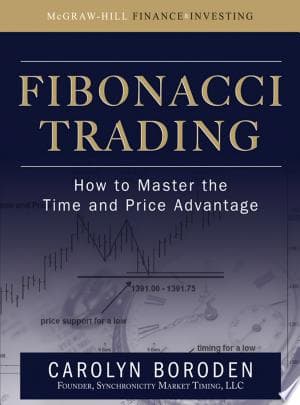
Fibonacci Trading: How to Master the Time and Price Advantage cover
Archivist's Choice

Fibonacci Trading: How to Master the Time and Price Advantage

Carolyn Boroden (2008)

Genre

Finance

Reading Time

12 Minutes

Key Themes

See below

Track Your Reading

Sign in to track this book

Learn to use the Golden Ratio through Fibonacci analysis to time the market and predict prices, helping you profit consistently in stocks, futures, and Forex.

Core Idea

Carolyn Boroden's 'Fibonacci Trading' introduces a systematic approach to financial market analysis and trading strategy, heavily leveraging the Fibonacci sequence's mathematical ratios. The central argument is that these ratios, when applied to both price and time, provide reliable points of support, resistance, and potential trend reversals, offering traders a significant 'time and price advantage.' Boroden emphasizes the importance of identifying specific Fibonacci retracement and extension levels for price targets, as well as Fibonacci time cycles for predicting market turning points. She argues that by mastering these tools, traders can anticipate market movements with greater precision, manage risk more effectively, and improve their overall trading profitability.
Difficulty
Medium

Core idea

The central argument and framework that powers the entire book.

Carolyn Boroden's 'Fibonacci Trading' introduces a systematic approach to financial market analysis and trading strategy, heavily leveraging the Fibonacci sequence's mathematical ratios. The central argument is that these ratios, when applied to both price and time, provide reliable points of support, resistance, and potential trend reversals, offering traders a significant 'time and price advantage.' Boroden emphasizes the importance of identifying specific Fibonacci retracement and extension levels for price targets, as well as Fibonacci time cycles for predicting market turning points. She argues that by mastering these tools, traders can anticipate market movements with greater precision, manage risk more effectively, and improve their overall trading profitability.

At a glance

Difficulty

Medium

Key Takeaways

1

The Golden Ratio's Market Resonance

Fibonacci sequences unveil predictable turning points in financial markets.

Quote

The Fibonacci number series holds a Golden Ratio that is universally found in nature and used by architects, plastic surgeons, and many others to achieve 'perfect' aesthetic proportions.

Boroden's main idea is that the same mathematical relationships seen in nature, especially the Golden Ratio from the Fibonacci sequence, appear as reliable patterns in financial markets. She argues these ratios set important support and resistance levels and predict turning points. The book suggests that price swings and time intervals in stocks, futures, and Forex often follow these ratios (e.g., 38.2%, 50%, 61.8%, 100%, 161.8%). This idea is useful because it means market movements are not random; they have an underlying mathematica...

Supporting evidence

The book details specific examples of price retracements and extensions aligning with Fibonacci ratios in various market charts, demonstrating how these levels frequently act as strong areas of reversal or continuation. Though no specific study is cited, the evidence is built upon numerous chart illustrations.

Apply this

Traders should overlay Fibonacci retracement and extension tools on their charts to identify potential support/resistance zones and price targets. This involves measuring previous significant price swings and projecting future levels based on the key Fibonacci percentages.

2

Time-Based Fibonacci Analysis

Beyond price, Fibonacci relationships can predict market turning points in time.

Quote

Fibonacci pattern studies can be used as an extremely effective method for achieving greater profitability in stocks, futures, and Forex markets.

The book's most unique idea is applying Fibonacci ratios to time, not just price. While price-based Fibonacci retracements are common, Boroden uses them to find possible market turning points on the calendar. By measuring how long past market swings or cycles lasted and applying Fibonacci ratios (e.g., 38.2%, 50%, 61.8%, 100%, 161.8%) to these times, traders can guess future dates when big reversals or accelerations might happen. This 'time advantage' adds a sophisticated layer of analysis, helping traders anticipate when a move might...

Supporting evidence

Boroden illustrates this with chart examples showing how market reversals or significant trend changes often occur precisely on dates projected by Fibonacci time extensions from previous market highs or lows.

Apply this

Measure the time duration between significant highs and lows on a chart. Apply Fibonacci ratios to these durations to project future dates that might coincide with market turning points. Combine this with price analysis for stronger signals.

3

The Four-Step Trading Formula

A structured approach to integrate Fibonacci analysis into a robust trading plan.

Quote

Fibonacci Trading also provides a four-step formula for applying the covered techniques in a highly effective approach.

Boroden offers a complete four-step plan for using her tools. This plan includes creating a solid trading method, a clear trading plan, a successful trading mindset, and a disciplined trading approach. This framework covers not only what to do (Fibonacci analysis) but also how and why to do it. This is the book's strongest insight into practical trading, recognizing that even the best analysis is useless without proper execution, risk management, and emotional control. It makes the book a complete trading manual, emphasizing consisten...

Supporting evidence

The book dedicates sections to each of these four steps, providing actionable advice and real-world scenarios for their implementation, moving from theoretical understanding to practical application.

Apply this

Before trading, define your specific Fibonacci setups (methodology), document your entry/exit/stop-loss rules (trading plan), practice emotional control (mindset), and consistently follow your plan (discipline).

4

Precision in Support and Resistance

Fibonacci levels offer highly dependable zones for strategic entry and exit.

Quote

Dependable guidance for determining important support and resistance levels, along with expert advice for using them to maximize profits and limit losses.

A main strength of Fibonacci analysis, as Boroden explains it, is its ability to find very specific support and resistance levels. Unlike subjective trend lines or moving averages, Fibonacci retracements and extensions give mathematically derived price points (e.g., 38.2%, 50%, 61.8%) that often act as strong barriers or magnets for prices. This accuracy helps traders place orders with more confidence, knowing where prices are likely to reverse or consolidate. This helps traders make the most profit by entering near support and exitin...

Supporting evidence

Numerous chart examples illustrate price action reacting consistently at Fibonacci retracement and extension levels, confirming their role as significant support and resistance zones across different markets and timeframes.

Apply this

Identify major price swings, then draw Fibonacci retracement levels. Look for confluence where multiple Fibonacci levels align, or where Fibonacci levels coincide with other forms of support/resistance for stronger signals.

5

Optimal Stop-Loss Placement

Fibonacci analysis guides intelligent risk management through strategic stop-loss orders.

Quote

Valuable tips for using Fibonacci analysis to establish optimal stop-loss placement.

Boroden stresses that Fibonacci levels are important for entries and targets, and also for good risk management, especially for placing stop-loss orders. By knowing where important support or resistance levels are based on Fibonacci ratios, traders can strategically place their stop-losses just beyond these points. This means a trade only stops out if a truly important market structure is broken, not just because of random market noise. This method helps protect capital while giving trades enough room to develop, balancing risk and re...

Supporting evidence

The book presents scenarios where stop-losses placed just below Fibonacci support or above Fibonacci resistance levels successfully prevented premature exits due to minor price fluctuations, while still protecting against larger trend reversals.

Apply this

When entering a long trade based on Fibonacci support, place your stop-loss just below that Fibonacci level. For a short trade from Fibonacci resistance, place it just above that level, respecting the market's natural barriers.

6

High-Percentage Pattern Roadmaps

Fibonacci relationships form reliable predictive patterns for market behavior.

Quote

Revealing coverage on how Fibonacci relationships can create a roadmap for the trader based on high percentage patterns.

Boroden argues that when multiple Fibonacci relationships come together, they create 'high percentage patterns' that guide traders. This means looking for confluence, where different Fibonacci measurements (e.g., a retracement from one swing and an extension from another) meet at the same price or time. These areas of confluence are strong prediction zones. This method moves beyond just finding individual Fibonacci levels to understanding how they work together to form a stronger signal. It suggests that the market, through these patt...

Supporting evidence

The book provides numerous chart examples where multiple Fibonacci levels from different swings converge, and the market consistently reacts strongly at these 'confluence zones,' validating their predictive power.

Apply this

Always look for confluence of Fibonacci levels from different swings or different timeframes. The more Fibonacci levels that converge at a specific price or time, the stronger the potential turning point.

7

Flexibility Across Markets and Styles

Fibonacci analysis is universally applicable to diverse financial instruments and trading approaches.

Quote

Flexible enough for all markets and trading styles, the formula helps you focus your newly developed knowledge and skill sets into a solid trading methodology.

A big benefit Boroden points out is how widely applicable Fibonacci analysis is. Whether trading stocks, futures, or Forex, and whether one is a day trader, swing trader, or long-term investor, the basic mathematical principles of the Golden Ratio stay the same. This flexibility means the method is not limited to one area; it offers a basic framework that can adapt to different market behaviors and personal trading styles. This broad usefulness makes the book's lessons very valuable to many self-directed investors, as they can use the...

Supporting evidence

The book showcases examples and charts from stocks, commodities, and currency pairs, demonstrating the efficacy of Fibonacci analysis across these diverse markets.

Apply this

Practice applying Fibonacci tools on different assets and timeframes within your own trading environment to confirm its adaptability and build confidence in its universal principles.

8

Beyond Indicators: A Structural Approach

Fibonacci provides insight into inherent market structure, not just lagging signals.

Quote

Fibonacci Trading provides a one-stop resource of reliable tools and clear explanations for both identifying and taking advantage of the trade setups naturally occurring in the markets.

Unlike many technical indicators that come from past price action and often lag, Boroden presents Fibonacci analysis as a tool that shows the market's natural structure and rhythm. It is not just about reacting to what happened, but understanding the basic mathematical proportions that control price and time movements. This structural method allows for more proactive trading decisions, anticipating possible turning points rather than just confirming them later. This difference is important; it makes Fibonacci a fundamental way to see ...

Supporting evidence

The book's emphasis on predicting future turning points in both price and time, rather than relying on lagging indicators, serves as evidence for its structural approach.

Apply this

Focus on identifying significant swings and applying Fibonacci ratios to understand the market's potential roadmap, rather than relying solely on momentum or volume indicators.

9

The Importance of Real-Time Experience

Theoretical knowledge must be grounded in practical, real-time market analysis.

Quote

The author's personal experience analyzing and setting up the markets in real time, which makes this practical volume invaluable to the self-directed investor.

Boroden always bases her Fibonacci method on her real-time experience analyzing and setting up markets. This practical focus is important, as just knowing Fibonacci ratios is not enough for successful trading. The book is full of real trading situations, setups, and scenarios, connecting abstract ideas to actionable plans. This commitment to practical use, supported by years of market observation, makes her claims very credible and the material truly valuable. It implicitly warns against purely academic approaches, stating that master...

Supporting evidence

The text is rich with 'actual trading situations, setups, and scenarios' and 'detailed charts and insightful graphics' that illustrate the concepts as they unfold in real market conditions.

Apply this

After learning the theoretical aspects, dedicate significant time to practicing Fibonacci analysis on live or simulated charts, observing how price and time react to these levels in real-time.

10

Mastering the 'Time and Price Advantage'

Combining Fibonacci price and time analysis offers a dual predictive edge.

Quote

Fibonacci Trading: How to Master the Time and Price Advantage.

The book's title itself explains its ultimate promise: mastering both the 'Time and Price Advantage' using Fibonacci analysis. This is the peak of Boroden's method, where traders learn to predict not only possible price levels for reversals or targets, but also the specific times when these events are likely to happen. This dual view offers a strong predictive edge, helping traders align their entries and exits with high-probability confluence zones in both areas. While hard to master, this combined approach gives a complete guide for...

Supporting evidence

The entire book builds towards this synergy, with chapters dedicated to both price and time analysis, culminating in examples where their combined application yields strong trading opportunities.

Apply this

Integrate both Fibonacci price retracements/extensions and Fibonacci time analysis into your trading plan. Look for instances where a Fibonacci price level coincides with a Fibonacci time projection for the highest probability setups.

Critical analysis

Notable Quotes

Quiz

Test Your Knowledge

Ready to see how well you understood this book? Take our interactive quiz with 10 questions.

10
Questions
~5
Minutes
?
Best Score

Key Questions (FAQ)

The Fibonacci sequence is a series of numbers where each number is the sum of the two preceding ones (e.g., 0, 1, 1, 2, 3, 5, 8...). In trading, these numbers and their ratios, particularly the Golden Ratio, are believed to represent natural patterns in price movements, helping traders identify potential support, resistance, and turning points.

About the author

Carolyn Boroden is a recognized financial technical analyst and the author of 'Fibonacci Trading: How to Master the Time and Price Advantage.' Her work focuses on applying Fibonacci ratios and sequences to financial markets, providing traders with strategies for identifying potential turning points and price targets. She is known for her practical approach to technical analysis, making complex concepts accessible to a wider audience.