BookBrief
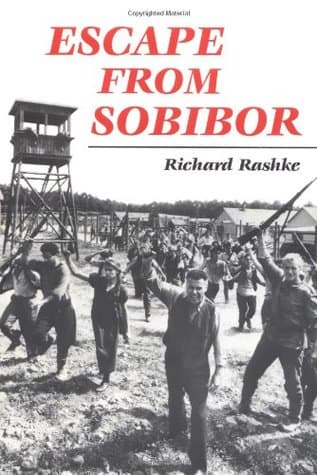
Escape from Sobibor cover
Archivist's Choice

Escape from Sobibor

Richard Rashke (1982)

Genre

Biography / Memoir / History

Reading Time

10-12 hours

Key Themes

See below

Track Your Reading

Sign in to track this book

Based on the accounts of eighteen survivors, "Escape from Sobibor" tells the story of the uprising and mass escape from the Nazi extermination camp.

Core Idea

Escape from Sobibor tells the true story of the most successful prisoner uprising and mass escape from a Nazi extermination camp during World War II. It shows how Jewish prisoners, facing certain death, came together through collective will, planning, and courage. The book argues that even within genocide, human action and the drive for freedom can lead to acts of resistance, showing the strength of the human spirit against evil. The story explains that Sobibor was a death factory, not a work camp, where deception was used to prevent panic. It details the systematic extermination, the psychological impact on victims and perpetrators, and the difficult choice prisoners faced: certain death or a nearly impossible fight for survival. It also covers the moral questions in such an escape, the leadership that emerged, and why survivor testimony matters for remembering resistance against the Holocaust.
Reading time
10-12 hours
Difficulty
Medium
✓ Read this if...
You want a detailed, unflinching account of one of the most significant acts of resistance during the Holocaust, focusing on the human spirit's capacity for defiance against overwhelming evil.
✗ Skip this if...
You prefer a less graphic or emotionally intense historical account, or are not interested in detailed narratives of World War II concentration camp experiences.

Core idea

The central argument and framework that powers the entire book.

Escape from Sobibor tells the true story of the most successful prisoner uprising and mass escape from a Nazi extermination camp during World War II. It shows how Jewish prisoners, facing certain death, came together through collective will, planning, and courage. The book argues that even within genocide, human action and the drive for freedom can lead to acts of resistance, showing the strength of the human spirit against evil.

The story explains that Sobibor was a death factory, not a work camp, where deception was used to prevent panic. It details the systematic extermination, the psychological impact on victims and perpetrators, and the difficult choice prisoners faced: certain death or a nearly impossible fight for survival. It also covers the moral questions in such an escape, the leadership that emerged, and why survivor testimony matters for remembering resistance against the Holocaust.

At a glance

Reading time

10-12 hours

Difficulty

Medium

Read this if...

You want a detailed, unflinching account of one of the most significant acts of resistance during the Holocaust, focusing on the human spirit's capacity for defiance against overwhelming evil.

Skip this if...

You prefer a less graphic or emotionally intense historical account, or are not interested in detailed narratives of World War II concentration camp experiences.

Key Takeaways

1

The Illusion of 'Work Camps'

Sobibor's true purpose was immediate extermination, not labor.

Quote

The vast majority of Jews arriving at Sobibor were immediately sent to the gas chambers, a chilling efficiency that belied any pretense of a labor camp.

Sobibor was one of the deadliest Nazi extermination camps, designed for the systematic murder of Jews as part of Operation Reinhard. Unlike some concentration camps where prisoners were used for forced labor, Sobibor's design focused on rapid extermination upon arrival. New transports were quickly deceived, leading victims directly to gas chambers disguised as showers. This immediate death sentence for most new arrivals shows the camp's single, horrifying purpose and disproves any idea of it being a place for 'work' or 'resettlement,'...

Supporting evidence

Rashke meticulously details the arrival process at Sobibor, where trains would pull directly into the camp, and victims were immediately separated, stripped, and herded into the gas chambers, with only a tiny fraction selected for specific camp labor.

Apply this

Understand the true nature of extermination camps to counter historical revisionism and appreciate the immense psychological pressure and lack of options faced by victims.


operation-reinhardextermination-campsholocaust-denial
2

The Architecture of Deception

Nazi meticulousness in designing a death factory under the guise of an ordinary facility.

Quote

Every detail, from the 'heaven' road to the 'showers,' was crafted to maintain the illusion until the very last moment.

The Nazis designed Sobibor with psychological manipulation, creating an environment to prevent panic and maintain order among arriving victims until it was too late. The 'Himmelfahrtstrasse' (Road to Heaven), a camouflaged path to the gas chambers, is an example of this deception. The gas chambers themselves were disguised as shower rooms, with fake showerheads. This deliberate design shows the calculated cruelty of the perpetrators, who knew that an illusion of normalcy or a benign purpose was key for the 'efficient' extermination of...

Supporting evidence

Survivors' testimonies vividly describe the 'dressing rooms' and 'showers' as the last facade before the gas, and the deliberate planting of flowers and signs to create a deceptive calm.

Apply this

Recognize how authoritarian regimes use propaganda and architectural design to control narratives and manipulate populations, even in extreme circumstances.

psychological-warfarenazi-propagandaarchitectural-control
3

The Power of Collective Will

The Sobibor uprising was a testament to organized resistance against impossible odds.

Quote

It was the sheer will to survive, combined with meticulous planning and extraordinary courage, that fueled the Sobibor revolt.

The Sobibor uprising, the largest successful prisoner escape from a Nazi extermination camp, was a carefully planned event involving different groups of prisoners. Led by Leon Feldhendler, a Polish Jew, and Alexander Pechersky, a Soviet POW, the revolt showed the power of collective will and organization under terrible conditions. The conspirators, knowing the alternative was certain death, risked everything, coordinating silent assassinations of SS officers and guards, seizing weapons, and starting a mass breakout. This act of defian...

Supporting evidence

Rashke details the formation of the 'Organization,' the meticulous planning including the timing of officer assassinations, the use of coded messages, and the precise execution of the revolt on October 14, 1943.

Apply this

Learn the importance of solidarity and strategic planning in overcoming overwhelming adversity, and the moral imperative to resist oppression, even when success seems improbable.

holocaust-resistancecollective-actionprisoner-revolts
4

Leadership Born of Desperation

Unlikely leaders emerged to guide the desperate escape attempt.

Quote

Pechersky and Feldhendler, from vastly different worlds, became the indispensable architects of freedom.

The Sobibor uprising shows how extreme circumstances can create unexpected leaders. Alexander Pechersky, a Soviet Jewish Red Army officer, brought military discipline and strategy to the plan, while Leon Feldhendler, a Polish Jew who understood the camp's inner workings and prisoner dynamics, provided local information and moral authority. Their unlikely partnership bridged cultural and experiential differences, showing that effective leadership in a crisis often needs a mix of skills and perspectives. Their ability to inspire hope an...

Supporting evidence

Rashke describes Pechersky's military background and his immediate impact on the prisoners' morale and planning, contrasting it with Feldhendler's quiet but essential organizational skills and knowledge of the camp's layout and guards.

Apply this

Recognize that leadership can emerge from unexpected places and that diverse skill sets are crucial for complex problem-solving and crisis management.

crisis-leadershipunlikely-heroescross-cultural-collaboration
5

The Brutality of Choice and Consequence

Escape from Sobibor meant confronting the minefields, guards, and the indifferent world outside.

Quote

Freedom was not a guarantee, but merely a new set of life-or-death challenges.

The escape from Sobibor was not an end to suffering but a brutal start to new dangers. Prisoners who broke out faced SS guards, Ukrainian auxiliary units, and the camp's surrounding minefields. Those who made it past the immediate perimeter then faced hostile forests, the threat of recapture, and the antisemitism of the local Polish population, many of whom would turn in Jews for reward or prejudice. Rashke's account describes the difficult journey of survival after the escape, emphasizing that 'freedom' was uncertain, often marked by...

Supporting evidence

Rashke recounts the immediate aftermath of the escape: the sounds of machine guns and explosions from the minefields, and the stories of survivors hiding in forests, battling hunger, disease, and the constant threat of betrayal by local inhabitants.

Apply this

Appreciate the multifaceted dangers faced by Holocaust victims, extending beyond the camps to the broader societal landscape, and the immense courage required for every step of survival.

post-escape-survivalantisemitism-polandminefields-holocaust
6

The Indelible Scars of Survival

Survivors carried the trauma of Sobibor long after the war ended.

Quote

The physical wounds healed, but the horrors of Sobibor etched themselves into the souls of the survivors, defining their lives forever.

Rashke's interviews with Sobibor survivors show that escaping the camp did not mean escaping the trauma. The psychological and emotional scars from witnessing atrocities, losing families, and facing constant death deeply affected their post-war lives. Many struggled with survivor's guilt, nightmares, and a deep mistrust of humanity. Their stories show the long-term impact of genocide, demonstrating that suffering goes beyond immediate violence, affecting generations. The book emphasizes that while they achieved an incredible feat, the...

Supporting evidence

Rashke shares specific anecdotes from survivors detailing their recurring nightmares, their difficulty in forming relationships, and their lifelong struggle to reconcile their past with their present, often feeling compelled to tell their stories despite the pain.

Apply this

Develop empathy for trauma survivors and understand the lasting psychological effects of extreme violence and persecution, advocating for mental health support and historical remembrance.

survivors-guiltholocaust-traumapost-traumatic-stress
7

The Importance of Witness Testimony

Survivor accounts are crucial for historical truth and justice.

Quote

The voices of the survivors are the most powerful antidote to denial and the most potent reminder of what was lost.

Richard Rashke's use of testimonies from eighteen Sobibor survivors is central to the book's power and historical importance. These first-hand accounts provide evidence of the atrocities at Sobibor and serve as a counter-narrative to Holocaust denial. The survivors' willingness to relive their experiences, often decades later, shows their commitment to truth and justice. Their individual stories, combined, create a human picture of the camp, the uprising, and the escape, ensuring that victims are remembered not just as statistics, but...

Supporting evidence

The entire book is built upon the direct interviews and recollections of eighteen Sobibor survivors, including their detailed descriptions of daily life, the planning of the revolt, and the escape itself.

Apply this

Support and preserve oral histories and survivor testimonies as crucial tools for education, historical accuracy, and combating misinformation, particularly regarding genocides.

oral-historyholocaust-educationhistorical-denial
8

The Legacy of Resistance

Sobibor stands as a powerful symbol of human defiance against unimaginable evil.

Quote

Sobibor remains a stark reminder that even in the darkest corners of human history, the spirit of resistance can ignite.

The escape from Sobibor is more than a historical event; it is a symbol of human resistance against evil. In a place designed for extermination, where hope was crushed, the prisoners' decision to fight back, to escape, and to seek justice represents an affirmation of human dignity and the will to live. The legacy of Sobibor challenges the idea of passive victimhood, showing that even those facing certain death could find the strength to resist. It inspires future generations to stand up against oppression and injustice, reminding us t...

Supporting evidence

The book concludes with Rashke describing the memorialization of the Sobibor site and the continued recognition of the escape as a significant act of resistance, solidifying its place in Holocaust history.

Apply this

Draw inspiration from historical acts of resistance to inform contemporary activism and movements against injustice, understanding that collective action can challenge even the most entrenched systems of power.

human-dignityresistance-movementsholocaust-memorials
9

The Banality of Evil's Enablers

The role of Ukrainian guards in facilitating mass murder at Sobibor.

Quote

The Ukrainian guards, often former Soviet POWs, became willing cogs in the Nazi death machine, executing orders with chilling efficiency.

Rashke's account details the role of the Ukrainian auxiliary guards, often called 'Trawniki men,' who were important in the daily operations and atrocities at Sobibor. These men, many of whom were former Soviet POWs recruited by the SS, were often depicted as brutal and eager in their duties, helping with mass murders and maintaining order in the camp. Their involvement highlights the complex reality of collaboration and how individuals, under various pressures or incentives, can participate in horrific crimes. This part of the story ...

Supporting evidence

Survivors frequently describe the direct brutality of the Ukrainian guards, their participation in the gassing process, and their role in hunting down escapees, as well as the specific names and actions of notorious guards like Ivan Demjanjuk.

Apply this

Examine the factors that lead to collaboration and the normalization of violence, fostering critical thinking about individual responsibility within systems of oppression.

trawniki-menbanality-of-evilcollaboration-ww2
10

Justice, Delayed but Not Denied

The long pursuit of accountability for Sobibor perpetrators.

Quote

Decades later, the echoes of Sobibor still demanded justice, even for the lowest-ranking perpetrators.

The book touches on the decades-long pursuit of justice for crimes at Sobibor, shown by the case of John Demjanjuk. Even years after the war, the commitment to holding perpetrators accountable remained strong. This pursuit, often facing legal challenges and the passage of time, demonstrates the moral need to seek justice for genocide victims, no matter how long it takes. It shows that crimes against humanity have no statute of limitations and that even those who were 'just following orders' are responsible for their actions. The Demja...

Supporting evidence

Rashke specifically references the ongoing legal proceedings against John Demjanjuk, accused of being a guard at Sobibor, showcasing the international effort to prosecute war criminals decades after the Holocaust.

Apply this

Support international justice efforts and understand the importance of prosecuting war crimes and crimes against humanity to prevent future atrocities and provide solace to victims.

nazi-hunterswar-crimes-justicejohn-demjanjuk

Critical analysis

Notable Quotes

For nearly a year the SS had used Sobibor as an extermination camp. It was a factory of death.

Describing the camp's primary function before the uprising.

The earth itself seemed to cry out, absorbing the blood of the innocent.

Evoking the horror and scale of the murders at Sobibor.

We knew we were marching to our deaths. But we would not go like sheep to the slaughter.

Reflecting on the prisoners' resolve to fight back, a famous quote from the book.

Every day was a struggle for survival, a constant dance with death.

Illustrating the daily life and psychological toll on prisoners.

The uprising was not just about escape; it was about reclaiming their humanity.

Explaining the deeper significance of the revolt beyond mere physical escape.

They had stripped them of everything, but they could not strip them of their will to live, their will to fight.

Highlighting the resilience of the human spirit in the face of extreme oppression.

The forest became their ally, offering both refuge and a new kind of terror.

Describing the challenges faced by escapees after breaking out of the camp.

Each swing of the axe, each knife thrust, was a blow against the monstrous evil.

Detailing the raw, visceral nature of the uprising and the prisoners' desperate fight.

Sobibor was a secret, meant to be erased from history, along with its victims.

Emphasizing the Nazi's attempts to hide the atrocities committed at the camp.

The silence that followed the uprising was deafening, a testament to the lives lost and the lives saved.

Reflecting on the aftermath of the revolt and its profound impact.

To forget would be to allow the perpetrators a final victory.

Underscoring the importance of remembering the Holocaust and its lessons.

They had built a world of death, and in one afternoon, it began to crumble.

Referring to the dramatic and sudden collapse of the camp's order during the revolt.

The greatest weapon they possessed was their unity, their shared will to be free.

Highlighting the crucial role of collective action and solidarity in the uprising.

They carried the scars, visible and invisible, for the rest of their days.

Discussing the long-term psychological and physical impact on the survivors.

The true measure of a man is not how he dies, but how he lives in the face of death.

A philosophical reflection on the courage and spirit of the prisoners.

Quiz

Test Your Knowledge

Ready to see how well you understood this book? Take our interactive quiz with 10 questions.

10
Questions
~5
Minutes
?
Best Score

Key Questions (FAQ)

Sobibor was one of the extermination camps operated by Nazi Germany during World War II, specifically designed for the mass murder of Jews. It was one of the smaller camps but tragically efficient in its purpose.

About the author