BookBrief
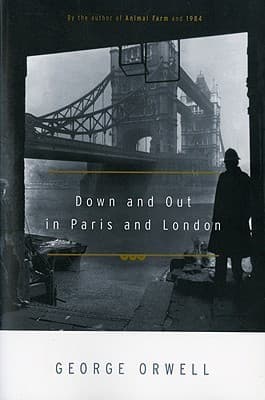
Down and Out in Paris and London cover
Archivist's Choice

Down and Out in Paris and London

George Orwell (1933)

Genre

Lifestyle / Biography / Memoir / History

Reading Time

240 min

Key Themes

See below

Track Your Reading

Sign in to track this book

Orwell exposes the truths of poverty in Parisian kitchens and among London tramps, using wit and a sharp eye for societal hypocrisy.

Core Idea

George Orwell's "Down and Out in Paris and London" is a first-person account that challenges common ideas about poverty. He lived as a dishwasher in Paris and a tramp in London, documenting the unseen workers who support society. He shows how systems cause poverty, not individual failings. Poverty, he argues, is a dehumanizing struggle that wears people down psychologically and physically, making survival the only concern. The book criticizes charity that often creates dependence instead of real help. It also reveals the arbitrary nature of class differences that lead to suffering. Orwell's main point is that poverty is a societal problem, not a personal choice, and it has deep psychological and physical effects. He shows how the working poor and the destitute are stuck in desperation, losing their dignity from hunger, exhaustion, and the threat of homelessness. By living among them, he confirms their experiences, showing the unexpected friendship among marginalized people and the tough lessons learned from living on the edges of society.
Reading time
240 min
Difficulty
Medium
✓ Read this if...
You are interested in the lived experience of poverty, social inequality, or the origins of Orwell's political thought. This book is for those who appreciate immersive, journalistic non-fiction that challenges societal norms and offers a stark look at the underbelly of urban life in the early 20th century.
✗ Skip this if...
You prefer a purely academic analysis of poverty, or if you are looking for a prescriptive solution to social issues. While deeply empathetic, the book is a descriptive memoir of suffering and observation, not a policy proposal.

Core idea

The central argument and framework that powers the entire book.

George Orwell's "Down and Out in Paris and London" is a first-person account that challenges common ideas about poverty. He lived as a dishwasher in Paris and a tramp in London, documenting the unseen workers who support society. He shows how systems cause poverty, not individual failings. Poverty, he argues, is a dehumanizing struggle that wears people down psychologically and physically, making survival the only concern. The book criticizes charity that often creates dependence instead of real help. It also reveals the arbitrary nature of class differences that lead to suffering.

Orwell's main point is that poverty is a societal problem, not a personal choice, and it has deep psychological and physical effects. He shows how the working poor and the destitute are stuck in desperation, losing their dignity from hunger, exhaustion, and the threat of homelessness. By living among them, he confirms their experiences, showing the unexpected friendship among marginalized people and the tough lessons learned from living on the edges of society.

At a glance

Reading time

240 min

Difficulty

Medium

Read this if...

You are interested in the lived experience of poverty, social inequality, or the origins of Orwell's political thought. This book is for those who appreciate immersive, journalistic non-fiction that challenges societal norms and offers a stark look at the underbelly of urban life in the early 20th century.

Skip this if...

You prefer a purely academic analysis of poverty, or if you are looking for a prescriptive solution to social issues. While deeply empathetic, the book is a descriptive memoir of suffering and observation, not a policy proposal.

Key Takeaways

1

The Invisible Laborers

Society's dirty work often goes unseen and unappreciated, yet it underpins daily life.

Quote

It is curious how, for a whole year, I somehow managed to be out of work, and yet never quite out of food.

Orwell's time as a dishwasher in Parisian restaurants shows a hidden hierarchy and a large, exploited workforce. The dishwashers and other kitchen staff work in hot, dirty conditions for long hours and low pay. They serve rich meals to people who do not notice them. This essential work is kept out of sight, helping maintain the idea that luxury appears magically. The physical demands and dehumanizing parts of the work show how economic desperation forces people into roles that take away their dignity, making them cogs in a system that...

Supporting evidence

Orwell's detailed descriptions of the suffocating heat, the endless piles of dishes, the crude sleeping arrangements, and the constant exhaustion experienced by the kitchen staff in high-end Parisian restaurants.

Apply this

Next time you dine out or consume any service, reflect on the often-unseen labor that makes it possible. Consider the working conditions and compensation of those at the bottom of the service chain and advocate for fair labor practices.


invisible-laborsocial-stratificationexploitation
2

The Myth of Individual Failure

Poverty is often a systemic issue, not merely a result of personal shortcomings.

Quote

The feeling of being an outcast, of being a pariah, is a dreadful thing.

Orwell shows that poverty is not just an individual's fault. Through his experiences, he illustrates how a single problem—a lost job, an illness, or bad luck—can quickly lead to destitution, no matter a person's character or work ethic. The Paris section shows how even skilled people can get stuck in low-wage, high-demand jobs with no way to advance. The London section highlights how uncertain life is for tramps, where a lack of resources creates endless homelessness and dependence on charity. This challenges the idea that poor people...

Supporting evidence

Orwell's initial struggle to find work in Paris, his subsequent reliance on the meager wages of a plongeur, and the vivid accounts of the 'spikes' (lodging houses) in London where tramps are subjected to dehumanizing routines, regardless of their past. He details how easily one can fall into this trap.

Apply this

Challenge personal biases about poverty. Instead of judging individuals, investigate the systemic causes of economic hardship and support policies that create more robust social safety nets and opportunities.

systemic-povertysocial-mobilityeconomic-inequality
3

The Dehumanizing Grind

Poverty strips individuals of their identity and reduces them to their most basic functions.

Quote

You have no time to think, no time to read, no time to do anything but work and sleep.

Orwell's time among the working poor and the destitute shows how dehumanizing poverty is. As a dishwasher, his life is reduced to washing dishes, sleeping, and eating, with no time or energy for personal growth. Among the tramps, he sees how constant hunger, exposure, and the shame of charity wear down self-respect and individuality. The 'spikes' in London, with their strict rules, treat people as a group problem to be managed, not as individuals. This dehumanizing process is not just about physical hardship; it also includes the psyc...

Supporting evidence

The detailed descriptions of the monotonous, physically demanding work in the Parisian kitchens, the inability of the workers to pursue any leisure or intellectual activities, and the institutionalized routines and lack of privacy in the London lodging houses that strip tramps of their personal dignity.

Apply this

Recognize that human dignity is essential, regardless of economic status. Advocate for working conditions and social services that respect individual autonomy and provide opportunities for personal growth, not just basic survival.

dehumanizationdignityalienation-of-labor
4

The Illusion of Charity

Charity often serves to control the poor rather than genuinely uplift them.

Quote

Charity is a cold, heartless business.

Orwell's experience with charitable groups in London reveals a truth: much charity is about social control and moral judgment, not just compassion. The 'spikes' and other lodging houses provide basic shelter, but under conditions that are often humiliating, restrictive, and meant to punish. Rules, forced labor, and the way tramps are treated as a burden show moral judgment. This system keeps people dependent and discourages self-sufficiency, ensuring the poor stay in a subordinate position. Orwell suggests that real help would empower...

Supporting evidence

The descriptions of the strict rules, mandatory chores, and poor food in the London spikes, where tramps are forced to perform menial tasks and are often treated with contempt by staff, despite relying on these institutions for survival.

Apply this

Critically evaluate charitable initiatives. Support organizations that prioritize empowerment, dignity, and long-term solutions over those that merely offer temporary relief with strings attached or reinforce a sense of shame.

charity-critiquesocial-controlpoverty-trap
5

The Camaraderie of the Marginalized

Even in the direst circumstances, solidarity and shared humanity persist.

Quote

You do not find many 'bad characters' among tramps.

Despite the harshness of their lives, Orwell often sees real friendship and support among the poor. In the Parisian kitchens, despite hard work, there is a sense of shared suffering and occasional moments of humor and unity among the staff. Among the tramps in London, he notes how they share what little they have, offer advice, and provide a sense of community in an otherwise lonely existence. This mutual aid, often missed by outsiders, shows human resilience and the need for connection, even when society has cast people aside. It sug...

Supporting evidence

The instances of kitchen workers sharing food or cigarettes, covering for each other, and the stories of tramps pooling their resources for a meal or sharing tips on the best lodging houses or begging spots.

Apply this

Seek out and foster communities of support, especially during challenging times. Recognize that shared experiences, even difficult ones, can build powerful bonds and offer resilience.

solidarityhuman-connectionresilience
6

The Psychological Burden of Poverty

Poverty impacts mental well-being as much as physical health, fostering anxiety and paranoia.

Quote

Poverty annihilates the future.

Beyond the physical discomforts of hunger, cold, and exhaustion, Orwell clearly shows the deep psychological effects of poverty. When food is scarce, it becomes an obsession, filling thoughts and conversations. The world shrinks to the next meal, the next chance to eat, and memories of past meals become very vivid. This constant focus on food affects mood, energy, and the ability to concentrate on anything else, showing that basic needs must be met before higher-level thinking can happen. Hunger is a constant, widespread force that sh...

Supporting evidence

Orwell's personal accounts of his own anxiety over money in Paris, the constant worry about eviction, and his observations of the tramps' preoccupation with finding food and shelter, often at the expense of any other thought or ambition.

Apply this

Recognize that mental health is deeply intertwined with economic security. Support initiatives that address both the material and psychological needs of those experiencing poverty, including access to mental health services.

mental-health-povertyanxietypsychological-impact
7

The Absurdity of Class Distinctions

Societal hierarchies are often arbitrary and based on superficial appearances.

Quote

The mass of the people are poor and always will be poor.

Orwell, who lived on both sides of the class divide (as a writer and as a poor laborer), shows how absurd societal class distinctions are. He notes that people who seem respectable and rich could be just a few bad breaks away from poverty, and that the 'down-and-outs' are often just as intelligent or capable as those in power. The contrast between rich restaurant dining rooms and the dirty kitchens that serve them, or between well-dressed Londoners and desperate tramps, highlights how arbitrary these divisions are. He suggests that mu...

Supporting evidence

Orwell's observation that many of the tramps he encountered were educated or had once held respectable jobs, and the stark contrast between the glamorous façade of the Parisian restaurants and the brutal reality of their kitchens.

Apply this

Challenge preconceived notions about class and status. Look beyond superficial appearances and recognize the inherent worth of all individuals, regardless of their economic standing or social position.

class-dividesocial-constructappearance-vs-reality
8

The Value of Experience

Direct experience of hardship provides invaluable, often uncomfortable, insights.

Quote

It is a good thing to be better acquainted with poverty.

Orwell's entire project in 'Down and Out' shows how direct experience changes understanding. By purposefully living in poverty, he gained knowledge that no amount of study or secondhand accounts could provide. This firsthand knowledge allowed him to correct false ideas, expose systemic injustices, and explain the true human cost of poverty with real authenticity. He argues that such experiences, though difficult, are important for building empathy, challenging old ideas, and truly understanding how society works. His journey shows the...

Supporting evidence

The entire narrative serves as evidence, particularly Orwell's explicit statements about what he learned from living as a plongeur and a tramp, and how his views on poverty and society changed as a result of these experiences.

Apply this

Seek out diverse experiences and perspectives, even if they are challenging. Engage directly with issues you care about, rather than relying solely on abstract knowledge, to foster deeper understanding and empathy.

experiential-learningempathyperspective-taking
9

The Cycle of Desperation

Poverty creates a self-perpetuating trap that is incredibly difficult to escape.

Quote

The tramp is a pariah, and he knows it.

Orwell shows that poverty is not a fixed state but a cycle that feeds itself. Lack of money leads to poor nutrition and health, which reduces one's ability to work. Living in bad conditions harms self-esteem and makes it harder to get a job. The social stigma of being poor further isolates people and limits opportunities. This creates a loop where each negative effect of poverty makes it harder to escape, trapping people in increasing desperation. The book clearly shows that breaking this cycle often requires more than just individual...

Supporting evidence

The constant struggle of the Parisian kitchen staff to save money, only to have it vanish due to illness or unexpected expenses, and the tramps' inability to secure stable employment due to their appearance, lack of address, and the stigma associated with their status.

Apply this

Advocate for comprehensive anti-poverty strategies that address multiple facets of the cycle, including healthcare, education, housing, and job training, recognizing that singular solutions are often insufficient.

poverty-cyclesystemic-barriersstigma-of-poverty
10

The Psychological Impact of Hunger

Constant hunger significantly alters perception, mood, and the very fabric of daily life.

Quote

It is a most extraordinary thing, but I have never forgotten a meal that I have eaten in a spike.

Orwell's descriptions of hunger are not just about physical discomfort; they explore its deep psychological effects. When food is scarce, it becomes an obsession, dominating thoughts and conversations. The world shrinks to the next meal, the next chance to eat, and the memory of past meals becomes very vivid. This constant focus on food affects mood, energy levels, and the ability to concentrate on anything else, reinforcing the idea that basic needs must be met before any higher-level functioning can occur. Hunger is a relentless, pe...

Supporting evidence

Orwell's detailed accounts of his own hunger pangs, the constant discussions about food among the tramps, and his vivid recollections of the meager meals served in the spikes, which stood out in memory due to their rarity and importance.

Apply this

Recognize food insecurity as a critical issue with far-reaching consequences beyond just physical health. Support food banks, community gardens, and policies that ensure access to nutritious food for all.

food-insecuritybasic-needspsychology-of-hunger

Critical analysis

Notable Quotes

It is a feeling of relief, almost of pleasure, at knowing yourself at last genuinely down and out. You have talked so often of going to the dogs—and well, here are the dogs, and you have reached them, and you can stand it. It takes off a lot of anxiety.

Orwell reflects on the psychological state of extreme poverty after losing his job in Paris.

The Paris slums are a gathering-place for eccentric people—people who have fallen into solitary, half-mad grooves of life and given up trying to be normal or decent.

Describing the inhabitants of the impoverished neighborhoods in Paris.

A plongeur is one of the slaves of the modern world. Not that there is any need to whine over him, for he is better off than many manual workers, but still he is no freer than if he were bought and sold.

Orwell's observation on the life of a dishwasher (plongeur) in a Paris hotel.

It is curious how people take it for granted that they have a right to preach at you and pray over you as soon as your income falls below a certain level.

Commenting on the condescending attitudes of the charitable towards the poor in London.

The mass of the rich and the poor are differentiated by their incomes and nothing else, and the average millionaire is only the average dishwasher dressed in a new suit.

Orwell's egalitarian view on human nature across social classes.

I shall never again think that all tramps are drunken scoundrels, nor expect a beggar to be grateful when I give him a penny, nor be surprised if men out of work lack energy.

Orwell's changed perspective after experiencing poverty firsthand.

The Paris working class is the most sceptical in the world. They have been cheated too often.

Observations on the political disillusionment among Parisian workers.

In a tramp's life, the worst hardship is the perpetual hunger, but the worst humiliation is the filth.

Describing the dual miseries of hunger and lack of hygiene in the life of a tramp.

The Paris restaurants are famous for their food, but the people who cook it are the most miserable slaves.

Highlighting the contrast between culinary luxury and kitchen workers' conditions.

It is a good thing to have had a glimpse of the underworld, if only to see what it is like.

Orwell's concluding reflection on the value of his experiences in poverty.

The great redeeming feature of poverty: the fact that it annihilates the future.

A paradoxical observation on how poverty simplifies life by removing long-term worries.

In England, the best thing one can do with the poor is to ignore them; in Paris, at least they are allowed to exist.

Comparing societal attitudes towards poverty in London versus Paris.

A man who has lived even a week in a lodging-house has some notion of what hell must be like.

Describing the squalid conditions of common lodging houses for the destitute.

The Paris plongeur is not a drudge, he is a artist in his way, though a very dirty one.

Finding dignity and skill in the most menial of kitchen jobs.

Quiz

Test Your Knowledge

Ready to see how well you understood this book? Take our interactive quiz with 10 questions.

10
Questions
~5
Minutes
?
Best Score

Key Questions (FAQ)

The book is a semi-autobiographical memoir based on George Orwell's own experiences living in poverty in Paris and London during the late 1920s. While it contains fictionalized elements and composite characters, it largely reflects Orwell's firsthand observations of working-class life.

About the author

George Orwell

Eric Arthur Blair, better known by his pen name George Orwell, was an English novelist, essayist, journalist, and critic. His work is characterised by lucid prose, social criticism, opposition to totalitarianism, and support of democratic socialism.