BookBrief
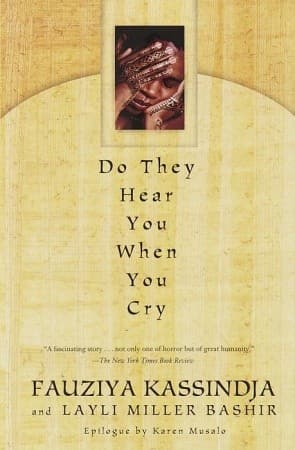
Do They Hear You When You Cry cover
Archivist's Choice

Do They Hear You When You Cry

Fauziya Kassindja (1998)

Genre

Biography / Memoir / History

Reading Time

12-15 hours

Key Themes

See below

Track Your Reading

Sign in to track this book

Fauziya Kassindja's memoir tells of her escape from forced marriage and genital mutilation in Togo, her fight for asylum in American detention, and a legal battle that changed human rights for women globally.

Core Idea

Fauziya Kassindja's memoir describes her escape from female genital mutilation (FGM) in Togo, only to face incarceration in the American asylum system. The book shows that while the U.S. claims to protect those fleeing oppression, its immigration policies and detention can resemble the injustices asylum seekers are escaping, especially for women seeking protection from gender-specific violence. Kassindja's case became a legal battle that redefined U.S. asylum law to include gender-based persecution as a valid reason for asylum.
Reading time
12-15 hours
Difficulty
Medium
✓ Read this if...
You are interested in immigration law, women's rights, the asylum process, or the intersection of cultural identity and legal systems. Also recommended for those seeking a powerful true story of resilience and the impact of advocacy.
✗ Skip this if...
You prefer light reading or are not comfortable with graphic descriptions of FGM, sexual assault, and the harsh realities of detention.

Core idea

The central argument and framework that powers the entire book.

Fauziya Kassindja's memoir describes her escape from female genital mutilation (FGM) in Togo, only to face incarceration in the American asylum system. The book shows that while the U.S. claims to protect those fleeing oppression, its immigration policies and detention can resemble the injustices asylum seekers are escaping, especially for women seeking protection from gender-specific violence. Kassindja's case became a legal battle that redefined U.S. asylum law to include gender-based persecution as a valid reason for asylum.

At a glance

Reading time

12-15 hours

Difficulty

Medium

Read this if...

You are interested in immigration law, women's rights, the asylum process, or the intersection of cultural identity and legal systems. Also recommended for those seeking a powerful true story of resilience and the impact of advocacy.

Skip this if...

You prefer light reading or are not comfortable with graphic descriptions of FGM, sexual assault, and the harsh realities of detention.

Key Takeaways

1

The Brutality of Kakia

Female Genital Mutilation as a cultural obligation, not a choice.

Quote

It is a ritual no woman can refuse.

Fauziya's story clearly shows the reality of female genital mutilation (FGM), called 'kakia' in her culture. This is not just a tradition; it is a violent practice enforced by societal pressure and family obligation, often with serious health risks and lasting trauma. The book explains that for women like Fauziya, refusing kakia is not only personal defiance but an act of rejecting their cultural identity, risking isolation and, in her case, requiring her to flee her homeland. It highlights the lack of power women have in cultures whe...

Supporting evidence

Fauziya's forced arranged marriage and the immediate demand for her to undergo kakia, despite her sheltered upbringing and personal revulsion, serves as the central catalyst for her flight.

Apply this

Understand how cultural norms, even those deemed barbaric externally, can be overwhelmingly powerful and inescapable for individuals within those societies. Advocate for global awareness and intervention against FGM, recognizing its roots in gender inequality and patriarchal control.


female-genital-mutilationcultural-traditiongender-violence
2

Asylum's Irony: From Persecution to Incarceration

Seeking safety in America only to find prison bars.

Quote

I was fleeing persecution only to be locked up in U.S. prisons.

Kassindja arrived in the United States, a symbol of freedom, but was incarcerated for 16 months in various detention centers. This turn of events reveals the harsh realities of the asylum system, where refugees fleeing danger are often treated as criminals rather than victims. Her experience shows the flaws and dehumanizing conditions in immigration detention. Here, individuals, often traumatized and vulnerable, are denied basic respect and legal help, increasing their suffering. This situation highlights the gap between the ideal of ...

Supporting evidence

Fauziya's detailed accounts of her 16-month detention in U.S. prisons, including the lack of understanding of her situation, the harsh conditions, and her isolation.

Apply this

Support reforms in immigration detention policies that prioritize human dignity, provide immediate access to legal representation for asylum seekers, and explore alternatives to incarceration for non-violent individuals awaiting asylum decisions. Challenge the narrative that asylum seekers are criminals.

asylum-seekerimmigration-detentionhuman-rights
3

The Power of Advocacy

One law student's empathy sparks a legal revolution.

Quote

Layli Miller Bashir became Fauziya's friend and advocate during her horrifying sixteen months behind bars.

Fauziya's case would likely have ended in deportation without the help of Layli Miller Bashir, then a law student, and later Karen Musalo, an expert in refugee law. This shows how much dedicated legal advocacy can do, especially for those most vulnerable and unheard within complex legal systems. Layli's initial connection, driven by empathy, became a legal challenge that saved Fauziya and set a new precedent. It highlights the important role of passionate individuals and pro-bono work in upholding justice and shaping human rights law.

Supporting evidence

Layli Miller Bashir's commitment, from befriending Fauziya to enlisting Karen Musalo and assembling a legal team, ultimately leading to the landmark asylum decision.

Apply this

Recognize the transformative power of individual advocacy and mentorship. Support organizations that provide legal aid to refugees and asylum seekers. Consider pro-bono work or volunteering in legal clinics to assist vulnerable populations.

legal-advocacyhuman-rights-lawpro-bono
4

Setting Legal Precedent

Fauziya's case redefined 'persecution' for asylum law.

Quote

In a landmark decision in immigration history, Fauziya Kassindja was granted asylum on June 13, 1996.

The Kassindja case was not just about one woman's freedom; it changed U.S. asylum law. The Board of Immigration Appeals' (BIA) decision recognized gender-based persecution, specifically FGM, as a valid reason for asylum. Before this, asylum claims often focused on political or religious persecution. Fauziya's victory created a path for many women fleeing similar abuses worldwide, acknowledging that cultural practices, even if not state-sponsored, can be persecution. This broadened protection and affirmed the U.S.'s commitment to inter...

Supporting evidence

The landmark BIA decision on June 13, 1996, which granted Fauziya asylum and established a precedent for gender-based persecution claims related to FGM.

Apply this

Understand the evolution of international law and how individual cases can drive significant legal and humanitarian progress. Support legal efforts that expand protections for vulnerable groups, recognizing that definitions of 'persecution' must adapt to changing global realities.

asylum-lawgender-based-persecutionlegal-precedent
5

The Weight of Cultural Identity

Fleeing tradition means severing roots, a profound sacrifice.

Quote

This is her story--told in her own words--of fleeing Africa just hours before the ritual kakia was to take place.

Fauziya's decision to flee took great courage, but it meant severing ties with her family, culture, and homeland. The book explores the complex emotional burden of such a choice. While escaping a horrific fate, she also lost her familiar world, her social support, and the chance to return to the life she knew. This highlights the psychological and emotional sacrifices demanded of refugees, who often trade one form of suffering for another: the pain of persecution for the pain of displacement and cultural loss.

Supporting evidence

Fauziya's personal narrative detailing her escape, her subsequent isolation, and the longing for her family and the life she left behind.

Apply this

Practice empathy for refugees and asylum seekers, recognizing that their journeys involve not just physical peril but also deep emotional and cultural loss. Support integration programs that help refugees build new community ties while honoring their cultural heritage.

cultural-identitydisplacementrefugee-experience
6

The Role of Education and Awareness

Ignorance perpetuates injustice; understanding fosters change.

Quote

Do They Hear You When You Cry is her unforgettable chronicle of triumph.

An important takeaway is the role of education and awareness, both in cultures that practice FGM and among those who decide on asylum claims. Many U.S. immigration officials initially did not understand FGM's severity and its non-consensual nature, leading to Fauziya's long detention. Similarly, within her own culture, a lack of education about the harms of kakia continues the practice. The book explains that bringing these issues to light, through personal stories and legal education, is vital for challenging harmful traditions and e...

Supporting evidence

The initial lack of understanding from U.S. immigration authorities regarding FGM and the need for Layli Miller Bashir and Karen Musalo to educate the courts on the practice.

Apply this

Educate yourself and others about global human rights issues, particularly those affecting women and children. Support initiatives that provide education and resources to communities where harmful traditional practices are prevalent, empowering individuals to make informed choices.

human-rights-educationglobal-awarenesssocial-justice
7

Resilience in the Face of Adversity

The indomitable human spirit endures unimaginable trials.

Quote

This is her story... of triumph.

Fauziya Kassindja's journey shows human resilience. Despite facing the trauma of FGM, the fear of flight, dehumanizing incarceration, and an uncertain future, she kept her will to survive and fight for freedom. Her story inspires by showing the strength needed to face such adversity. It reminds us that even in the darkest times, the hope for justice and the will to live with dignity can sustain a person through great difficulties.

Supporting evidence

Fauziya's persistence throughout her 16 months in detention, her refusal to give up, and her eventual collaboration with her legal team.

Apply this

Cultivate resilience in your own life by practicing mindfulness, seeking support systems, and focusing on long-term goals. Recognize and celebrate the resilience of others, particularly those who have faced significant trauma or injustice.

resiliencehuman-spiritovercoming-adversity
8

The Power of a Single Voice

One individual's story can ignite global change.

Quote

Do They Hear You When You Cry is her unforgettable chronicle.

Fauziya Kassindja's memoir shows how one person's voice, when heard, can have a wide impact. By sharing her personal and difficult story, she not only gained her own freedom but also became a symbol for many others. Her story led to a critical look at existing laws and cultural practices, contributing to the global movement against FGM and for women's rights. It shows the impact of personal testimony in driving social and legal reform.

Supporting evidence

The fact that her story became a landmark case, widely reported, and led to a change in asylum law, directly impacting how similar cases are handled.

Apply this

Understand the importance of listening to and amplifying marginalized voices. Recognize the power of personal narrative in shaping public opinion and policy. Support platforms and initiatives that empower individuals to share their stories for social change.

personal-narrativesocial-changewomen's-rights

Critical analysis

Notable Quotes

When you are in prison, you are not a human being. You are just a number. You have no rights, no dignity, no voice.

Reflecting on the dehumanizing nature of her imprisonment in Sudan.

I was just a girl who wanted to be free. I never imagined that my desire for freedom would lead me to such a dark place.

Early in the book, expressing her initial motivations and the unexpected consequences.

The worst thing about prison is the loneliness. You are surrounded by people, but you are completely alone.

Describing the emotional toll and isolation experienced in prison.

Every day was a struggle for survival. A struggle to hold on to my sanity, to my hope, to my belief that I would one day be free.

Detailing the daily challenges and mental fortitude required to endure her ordeal.

My body was in chains, but my spirit remained free. They could not break my spirit.

A powerful statement of defiance against her captors and the physical constraints.

The world outside seemed to forget about me. But I never forgot about the world outside.

Reflecting on the feeling of being abandoned by the outside world while still yearning for it.

I learned that even in the darkest of places, there can be glimmers of light. Small acts of kindness, a shared glance, a moment of understanding.

Finding solace and humanity amidst the harshness of prison life.

My trial was a farce. A show trial designed to punish me for daring to defy the regime.

Describing the injustice of her legal proceedings and the political motivations behind them.

They wanted to silence me, but they only made my voice stronger. They wanted to break me, but they only made me more determined.

A testament to her unwavering resolve and the unintended consequences of her oppressors' actions.

Freedom is not just the absence of chains. It is the ability to live your life on your own terms, to make your own choices, to have your own voice.

A profound definition of true freedom, beyond mere physical liberation.

I carry the scars of my past, but they do not define me. They are a reminder of what I have overcome.

Acknowledging the lasting impact of her experiences while asserting her identity beyond them.

To forgive is not to forget. It is to choose to move forward, to not let the past consume you.

Reflecting on the complex process of forgiveness and its role in personal liberation.

My story is not just my story. It is the story of many women who have been silenced, who have been oppressed, who have fought for their freedom.

Placing her personal narrative within a broader context of shared experiences and struggles.

The world must never forget what happened in those prisons. The world must remember the cries of those who were unheard.

A call for remembrance and accountability, emphasizing the importance of bearing witness.

Quiz

Test Your Knowledge

Ready to see how well you understood this book? Take our interactive quiz with 10 questions.

10
Questions
~5
Minutes
?
Best Score

Key Questions (FAQ)

'Kakia' is another term for female genital mutilation (FGM), a tribal ritual Fauziya was forced to undergo after her father's death. Her refusal to submit to this practice is the primary reason she fled Togo and sought asylum.

About the author