BookBrief
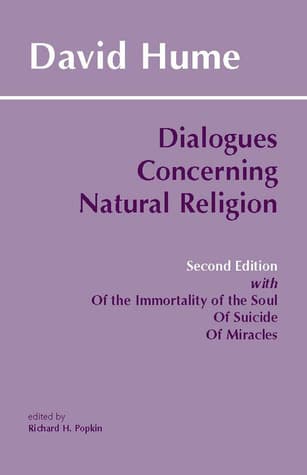
Dialogues Concerning Natural Religion cover
Archivist's Choice

Dialogues Concerning Natural Religion

David Hume (2017)

Genre

History / Spirituality / Philosophy

Reading Time

180 min

Key Themes

See below

Track Your Reading

Sign in to track this book

Hume examines the logical basis of religious belief, miracles, and the soul's immortality through dialogues and essays that question common ideas.

Core Idea

Hume's Dialogues break down the main arguments for God's existence and nature, especially the design argument, using three different philosophical viewpoints. The book looks at the logical jumps, poor comparisons, and human-like biases in trying to understand God's traits from the world. Ultimately, it suggests that human reason, limited by experience, cannot prove the existence of a perfect, infinite, or good God, which leads to skepticism about traditional religious claims.
Reading time
180 min
Difficulty
Hard
✓ Read this if...
You are interested in classical arguments against the existence of God, the foundations of empiricism, or a foundational text in the philosophy of religion. Also, if you enjoy philosophical debates presented in a literary, dialogue format.
✗ Skip this if...
You are looking for a defense of religious belief, prefer modern analytical philosophy over historical texts, or find sustained abstract argumentation tedious.

Core idea

The central argument and framework that powers the entire book.

Hume's Dialogues break down the main arguments for God's existence and nature, especially the design argument, using three different philosophical viewpoints. The book looks at the logical jumps, poor comparisons, and human-like biases in trying to understand God's traits from the world. Ultimately, it suggests that human reason, limited by experience, cannot prove the existence of a perfect, infinite, or good God, which leads to skepticism about traditional religious claims.

At a glance

Reading time

180 min

Difficulty

Hard

Read this if...

You are interested in classical arguments against the existence of God, the foundations of empiricism, or a foundational text in the philosophy of religion. Also, if you enjoy philosophical debates presented in a literary, dialogue format.

Skip this if...

You are looking for a defense of religious belief, prefer modern analytical philosophy over historical texts, or find sustained abstract argumentation tedious.

Key Takeaways

1

The Problem of Evil: A Divine Dilemma

If God is omnipotent, omniscient, and benevolent, why does evil exist?

Quote

Is he willing to prevent evil, but not able? then is he impotent. Is he able, but not willing? then is he malevolent. Is he both able and willing? whence then is evil?

Hume, through Philo, criticizes the problem of evil, arguing that suffering, disease, natural disasters, and moral wrongs in the world do not fit with a perfectly good, all-powerful, and all-knowing God. The amount and nature of evil, especially that which seems pointless, raise doubts about the goodness or ability of a divine creator. This is an observation that challenges the core of traditional monotheistic theology. Common religious responses, such as free will or a greater good, often seem insufficient when faced with widespread ...

Supporting evidence

Philo's arguments throughout Part X and XI of the Dialogues, where he systematically dissects the various attempts to reconcile evil with divine perfection, pointing to human and animal suffering, natural calamities, and the general 'misery of mankind' as empirical evidence against a benevolent creator.

Apply this

When evaluating claims about a benevolent creator, critically examine the presence and nature of evil in the world. Consider whether proposed solutions to the problem of evil truly resolve the contradiction or merely offer rhetorical appeasement. This encourages a more evidence-based approach to theological claims, rather than one based solely on faith or tradition.
problem-of-eviltheodicydivine-attributesphilosophical-theology
2

The Flawed Analogy of Design

The universe's design, if any, is not analogous to human artistry, making inferences about a divine architect tenuous.

Quote

The world, for all he knows, is a faulty experiment, the first rude essay of some infant deity, who afterwards abandoned it, ashamed of his lame performance.

Cleanthes' main argument for God's existence is the design argument, comparing the universe to a complex machine (like a watch) that must have an intelligent maker. Hume, through Philo, takes apart this comparison. He argues that the comparison is weak because we have no experience with making universes. We see human objects and infer human makers, but we have no similar experience of worlds being created to infer a divine one. Also, even if we accept some order, the comparison is not strong enough to infer an infinite, perfect, or si...

Supporting evidence

Philo's consistent critique of the design argument in Part II and subsequent parts, where he questions the validity of comparing an entire universe to human artifacts and points out the limitations of such analogies.

Apply this

When encountering arguments for God based on the 'design' or 'fine-tuning' of the universe, scrutinize the underlying analogies. Ask whether the comparison truly holds, or if it overextends familiar human experiences to cosmic scales where they may not apply. Consider alternative explanations for order and complexity that do not require an intelligent designer.

argument-from-designteleological-argumentanalogynatural-theology
3

Experience as the Sole Guide to Inference

Our knowledge of cause and effect is limited to what we observe, making inferences about unobservable divine causes problematic.

Quote

The only method of supporting divine properties is by showing them to be the best means of attaining some end; and till this be shown, you can never infer them from any work of nature.

Hume's empiricism supports his criticism of natural religion. He states that all our knowledge of cause and effect comes from repeatedly seeing them together. We see A consistently followed by B, and so we conclude a causal link. However, with the universe, we have no prior experience of worlds being created, nor do we have a basis for comparing different universes to find their creators. We have only this one universe, making any causal conclusion about its origin unique and thus unreliable by empirical standards. To conclude a divin...

Supporting evidence

Philo's repeated emphasis on the limits of human experience and the impropriety of extending causal reasoning beyond observable phenomena, particularly in Part II and V, where he discusses the uniqueness of the universe as an 'effect.'

Apply this

Approach claims about ultimate origins or unobservable entities with a critical eye, questioning whether the inferences are grounded in actual, repeatable experience or are extrapolations beyond what empirical data can support. Prioritize evidence derived from observation and experiment over speculative reasoning when forming beliefs about the world.

empiricismcausalityinferenceepistemologylimits-of-knowledge
4

The Fragility of Miracles as Evidence

Miracles are by definition violations of natural law, making testimony for them inherently unreliable compared to the uniform experience of nature.

Quote

A wise man, therefore, proportions his belief to the evidence.

In 'Of Miracles,' Hume argues against believing miraculous claims. He defines a miracle as a breaking of a law of nature. Laws of nature are established by consistent experience. Therefore, any report of a miracle must go against all universal human experience. It is always more likely that the witness is mistaken, fooled, or lying, than that a basic law of nature has been suspended. Hume lists several reasons why miracles are less believable: they are often reported by uneducated people, in distant times and places, and rarely by edu...

Supporting evidence

Hume's detailed logical framework in 'Of Miracles,' where he systematically compares the weight of testimony against the uniform experience of natural laws, and provides historical examples of false or dubious miraculous reports.

Apply this

When confronted with claims of the supernatural or miraculous, apply extreme skepticism. Prioritize the overwhelming evidence of natural laws over individual testimonies, especially those from distant pasts, culturally biased sources, or those promoting specific religious agendas. Demand extraordinary evidence for extraordinary claims.

miraclestestimonylaws-of-natureskepticismevidence
5

Anthropomorphism and the Humanization of God

Our conception of God is often a projection of human attributes, limiting our understanding of a truly transcendent being.

Quote

Why not stop at the material world? Its cause, if it has any, must be exactly proportioned to it.

Hume criticizes the tendency to give God human traits, especially in the design argument. When we speak of God's intelligence, will, or goodness, we are using human ideas and experiences. Philo argues that if we infer a designer from the universe, that designer's traits should exactly match the observed effects. We observe a world with flaws, suffering, and a mix of order and disorder. To then give the designer infinite perfection, goodness, or power goes far beyond what the evidence shows. This human-like description limits God to hu...

Supporting evidence

Philo's arguments in Part V and VI, where he questions the leap from a limited, imperfect world to an infinitely perfect, human-like creator, and suggests that if God is truly beyond human comprehension, then human analogies are inadequate.

Apply this

Be aware of the human tendency to project familiar attributes onto unfamiliar or transcendent concepts. When discussing or contemplating the divine, question whether the characteristics ascribed are truly inferred from evidence or are merely reflections of human desires, values, and cognitive biases. Strive for conceptual rigor over comforting familiarity.

anthropomorphismdivine-attributesprojectiontranscendencehuman-bias
6

The Futility of Abstract Theism

A God stripped of all human-like attributes becomes so abstract as to be meaningless and indistinguishable from natural forces.

Quote

A mind, a thought, an order, a design… These are words, which have a precise meaning when we have recourse to the experience of our own internal workings… But when we go beyond this, we are got into fairy land.

Hume, through Philo, presents a problem: if God has human traits, then God is limited and imperfect, like humans. But if God is stripped of all human-like traits (intelligence, will, personality) to keep divine superiority and perfection, then what remains is an abstract, unknowable force that is almost the same as the natural laws themselves. This 'abstract theism' offers no practical guidance, no moral rules, and no comfort. It becomes a mere philosophical idea, without religious meaning. The common religious need, Hume suggests, re...

Supporting evidence

Philo's conclusion in Part XII, where he argues that the most reasonable position is a 'sceptical doubt' about divine attributes, and that the only practical difference between a theist and an atheist in this abstract sense is 'merely verbal.'

Apply this

When evaluating theological concepts, consider the practical implications of their abstraction. Ask whether a highly abstract conception of God retains any meaningful connection to human experience, morality, or religious practice, or if it has become a mere intellectual exercise without substance. Conversely, be wary of over-specific or overly humanized divine descriptions.

abstract-theismdeismmeaninglessnesstranscendencereligious-language
7

Skepticism as the Only Consistent Stance

Given the limitations of human reason and experience, a moderate skepticism about ultimate religious truths is the most rational position.

Quote

To be a philosophical sceptic is, in a man of letters, the first and most essential step towards being a sound, believing Christian.

Hume, especially through Philo, ultimately supports a form of moderate skepticism about natural religion. He shows that neither reason nor experience can provide a strong basis for proving the existence or specific traits of the traditional monotheistic God. Arguments from design, first cause, or the problem of evil all fail under close examination. Since we cannot definitively prove or disprove these ultimate truths, the most reasonable position is to not make a judgment. This does not necessarily lead to atheism, but rather to an ac...

Supporting evidence

Philo's consistent dismantling of Cleanthes' and Demea's arguments throughout the Dialogues, leading to his final summary in Part XII that 'a total suspense of judgment' is the most reasonable outcome, at least philosophically.

Apply this

Cultivate intellectual humility and be comfortable with uncertainty regarding questions that lie beyond the scope of empirical verification or logical demonstration. Avoid dogmatic assertions about ultimate truths and remain open to revising beliefs in light of new evidence or arguments, even if it means acknowledging the limits of current knowledge.

skepticismagnosticismintellectual-humilitylimits-of-reasonfideism
8

The Social Utility of Religion (and its Dangers)

Religion's primary value might be its social function, rather than its truth claims, but it also carries significant risks.

Quote

The only point of theology, which ever pleased me, was the doctrine of eternal punishment.

While Hume mainly criticizes the rational basis of religion, he implicitly acknowledges its social and psychological roles. Religion often provides moral frameworks, social unity, and comfort in the face of death. However, Hume also points out its possible dangers, such as superstition, extreme belief, and the promotion of fear (like the idea of eternal punishment, as Demea stresses). The 'savage, barbarous, and bloody' parts of religious history are not ignored. He suggests that the fear of a punishing deity might be a stronger reaso...

Supporting evidence

While not a primary focus, the characters' discussions of human nature, fear, and the historical abuses of religion (e.g., Demea's emphasis on fear of judgment in Part I and Cleanthes' concerns about superstition in Part XII) hint at Hume's broader sociological observations.

Apply this

Beyond evaluating the truth claims of religion, consider its practical impact on individuals and societies. Analyze how religious beliefs influence morality, social structures, and political actions, both positively and negatively. Differentiate between the philosophical validity of religious claims and their observed social functions.

social-cohesionmoral-frameworkssuperstitionfanaticismsociology-of-religion
9

The Incompatibility of Reason and Revelation

Attempts to reconcile reason with revealed truths often lead to intellectual contortions or the abandonment of one for the other.

Quote

Our most holy religion is founded on Faith, not on Reason.

Hume's work, especially 'Of Miracles,' shows the deep conflict between the demands of reason and the principles of revealed religion. If reason states that a miracle is the least likely event, then belief in miracles must fundamentally rely on faith, not on rational thought or empirical proof. Similarly, the 'Dialogues' show how rational arguments for God's existence are not enough, leading to the conclusion that if one believes, it must be for reasons beyond reason. This is not necessarily a rejection of faith, but a clear distinctio...

Supporting evidence

The entire structure of 'Of Miracles,' which concludes that belief in miracles is irrational. Also, Philo's consistent refutation of rational arguments for God in the 'Dialogues,' forcing the conclusion that religious belief, if held, must be based on something other than philosophical proof.

Apply this

Clearly distinguish between beliefs derived from rational inquiry and those based on faith or revelation. Recognize that while both can be significant to individuals, their methods of justification and validation are fundamentally different. Avoid intellectual dishonesty by pretending that faith-based beliefs are rationally demonstrable when they are not.

faith-vs-reasonrevelationepistemological-dividerationalismfideism

Critical analysis

Notable Quotes

The whole is a riddle, an enigma, an inexplicable mystery. Doubt, uncertainty, suspense of judgment, appear the only result of our most accurate scrutiny, in this subject.

Cleanthes reflects on the ultimate unknowability of the universe's design.

This world, for aught he knows, is very faulty and imperfect, compared to a superior standard; and was only the first rude essay of some infant deity, who afterwards abandoned it, ashamed of his lame performance.

Philo presents a radical hypothesis about the origin of the universe.

If the cause be known only by the effect, we ought never to ascribe to it any qualities, beyond what are precisely requisite to produce the effect.

Philo argues against attributing infinite perfections to God based on finite observations.

A perpetual globe of fluid matter, perhaps, in the progress of an infinite agitation, an infinite number of particles may have been at last fortuitously thrown into the present arrangement of the universe.

Philo suggests an alternative to divine creation: a purely mechanical, chance-driven universe.

Is he willing to prevent evil, but not able? then is he impotent. Is he able, but not willing? then is he malevolent. Is he both able and willing? whence then is evil?

Philo famously articulates the problem of evil.

The liker the effects, the liker the causes.

Cleanthes states the core principle of the argument from design.

Human reason, in this as in many other subjects, can only attain to exact science, by leaving a great part of its object unexamined.

Philo comments on the limitations of human reason in understanding ultimate truths.

The world, say I, resembles an animal; therefore it is an animal, and the Deity is the soul of the world, actuating it by an intelligent principle, as the soul of man does him.

Philo offers an alternative analogy for the universe, challenging Cleanthes' mechanical one.

All the principles of heaven and earth are in a perpetual revolution.

Philo discusses the dynamic and ever-changing nature of the universe.

A wise man, therefore, proportions his belief to the evidence.

Though not directly from the Dialogues, this encapsulates Hume's broader epistemological stance, echoed throughout.

The order and arrangement of the universe, the beauty and fitness of final causes, strike us with irresistible force, and by pointing to an intelligent author, seem to solve at once all difficulties.

Cleanthes expresses his conviction in the argument from design.

No new discovery, therefore, can ever be made of the works of nature, which can tend to establish a religious system, or refute a religious system.

Philo argues that empirical observations cannot definitively prove or disprove religious claims.

To be a philosophical sceptic is, in a man of letters, the first and most essential step towards being a sound, believing Christian.

Philo, perhaps ironically, suggests a path from skepticism to faith, or perhaps highlights the limits of reason.

The world, said Philo, is a machine, whose parts are curiously adjusted to each other.

Philo, in a moment of apparent agreement, restates the core premise of the design argument, often to then deconstruct it.

Quiz

Test Your Knowledge

Ready to see how well you understood this book? Take our interactive quiz with 10 questions.

10
Questions
~5
Minutes
?
Best Score

Key Questions (FAQ)

Hume's Dialogues primarily explore the nature of God, the arguments for God's existence (especially the argument from design), and the limits of human reason in understanding divine attributes. It presents a critical examination of religious belief through a philosophical conversation.

About the author

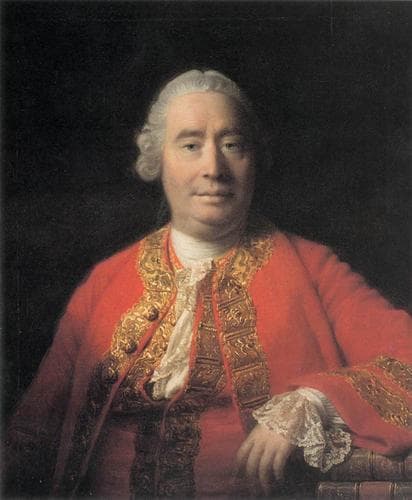
David Hume

David Hume was a Scottish Enlightenment philosopher, historian, economist, and essayist, best known for his highly influential A Treatise of Human Nature and An Enquiry Concerning Human Understanding. His work profoundly impacted the development of skepticism and empiricism. Hume's critical examination of religious belief is also evident in his posthumously published Dialogues Concerning Natural Religion.