BookBrief
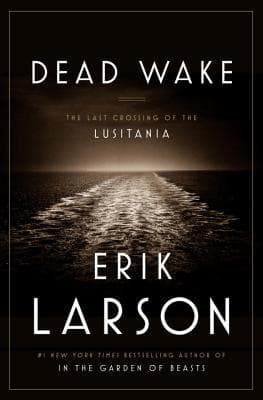
Dead Wake: The Last Crossing of the Lusitania cover
Archivist's Choice

Dead Wake: The Last Crossing of the Lusitania

Erik Larson (2015)

Genre

History

Reading Time

9-12 hours

Key Themes

See below

Track Your Reading

Sign in to track this book

On a luxury liner, a German U-boat, secret intelligence, and tragic choices collide in the North Atlantic, drawing America closer to World War I.

Core Idea

Dead Wake shows how the RMS Lusitania's final voyage became a disaster. The ship's perceived invincibility, changing naval warfare rules, and intelligence failures all contributed to the sinking. The book argues this was not just an act of war but a complex tragedy of human decisions, limited technology, and the fear of unseen threats. It ultimately pushed American public opinion and the nation closer to entering World War I.
Reading time
9-12 hours
Difficulty
Medium
✓ Read this if...
You enjoy immersive historical narratives that blend meticulous research with novelistic pacing, focusing on the human drama and intricate details leading up to a pivotal disaster.
✗ Skip this if...
You prefer broad historical overviews to detailed, day-by-day accounts of specific events, or if you are not interested in maritime history or the lead-up to WWI.

Core idea

The central argument and framework that powers the entire book.

Dead Wake shows how the RMS Lusitania's final voyage became a disaster. The ship's perceived invincibility, changing naval warfare rules, and intelligence failures all contributed to the sinking. The book argues this was not just an act of war but a complex tragedy of human decisions, limited technology, and the fear of unseen threats. It ultimately pushed American public opinion and the nation closer to entering World War I.

At a glance

Reading time

9-12 hours

Difficulty

Medium

Read this if...

You enjoy immersive historical narratives that blend meticulous research with novelistic pacing, focusing on the human drama and intricate details leading up to a pivotal disaster.

Skip this if...

You prefer broad historical overviews to detailed, day-by-day accounts of specific events, or if you are not interested in maritime history or the lead-up to WWI.

Key Takeaways

1

The Illusion of Invincibility

Even the fastest, most luxurious vessels are vulnerable to evolving threats and human hubris.

Quote

Captain Turner placed tremendous faith in the gentlemanly strictures of warfare that for a century had kept civilian ships safe from attack. He knew, moreover, that his ship - the fastest then in service - could outrun any threat.

The Lusitania was a marvel, a 'Greyhound' of the Atlantic, representing advanced technology and luxury. Captain William Thomas Turner and many passengers believed in its speed and the 'gentlemanly' rules of war that supposedly protected civilian ships. This led to a dangerous overconfidence. The ship's speed was not an absolute defense against a new threat like the U-boat. This shows how relying too much on past ideas and current abilities can blind people and groups to new dangers, leaving them unprepared for a shift in threats. The ...

Supporting evidence

Captain Turner's decision to maintain a predictable course and speed, despite explicit warnings about U-boat activity, stemmed from his faith in the ship's speed and the unlikelihood of a direct attack on a passenger liner.

Apply this

When assessing risks, always challenge assumptions based on past successes or current capabilities. Actively seek out and understand new or unconventional threats, rather than dismissing them based on established norms. Prioritize adaptability and contingency planning over rigid adherence to what 'always worked before.'

hubrisrisk-assessmenttechnological-vulnerabilitycomplacency
2

The Shifting Rules of Engagement

Warfare evolves, and clinging to outdated conventions can have catastrophic consequences.

Quote

Germany, however, was determined to change the rules of the game, and Walther Schwieger, the captain of Unterseeboot-20, was happy to oblige.

The Lusitania's sinking changed naval warfare, ending the 'cruiser rules' that required warning and evacuating civilian ships before attack. Germany, facing a British blockade and wanting to stop supply lines, had declared the waters around Britain a war zone, announcing a new, unlimited submarine war. Captain Schwieger of U-20 did not follow the 'gentlemanly' code Captain Turner expected. This clash between old ideas of war and a new, brutal reality directly caused the tragedy. It shows that in any conflict, one side's adherence to o...

Supporting evidence

Germany's pre-sailing newspaper advertisements warning travelers of the war zone, juxtaposed with the British Admiralty's perceived intelligence failures and Turner's adherence to traditional maritime practices, illustrate this clash of old and new rules.

Apply this

In any strategic endeavor, continuously monitor and adapt to changes in the operational environment. Do not assume adversaries will adhere to traditional norms or ethical boundaries. Proactively assess worst-case scenarios and develop strategies for unconventional threats, rather than being reactive.

unrestricted-warfareparadigm-shiftstrategic-blindnessmilitary-innovation
3

The Perils of Compartmentalized Intelligence

Critical information, if not shared effectively, is as good as nonexistent in a crisis.

Quote

Meanwhile, an ultra-secret British intelligence unit tracked Schwieger's U-boat, but told no one.

One frustrating part of the Lusitania disaster is that British intelligence tracked U-20, the submarine that sank the liner. Yet, this important information was not fully or effectively given to Captain Turner, nor was an escort provided. The reasons for this failure are complex, including extreme secrecy around codebreaking and possible bureaucratic slowness or a desire to avoid panic. Regardless of the intent, the result was catastrophic. This shows how crucial clear information flow is in high-stakes situations. Failing to share in...

Supporting evidence

The existence of Room 40, the British Admiralty's codebreaking unit, which intercepted and decoded German U-boat communications, including those of U-20, but whose findings were not fully actionable by those who needed them most.

Apply this

Establish clear protocols for sharing critical intelligence across relevant departments and operational units. Prioritize the 'need to know' over excessive secrecy when lives or major assets are at stake. Regularly review and stress-test communication channels during crisis simulations.

intelligence-failureinformation-siloscommunication-breakdownsecrecy-dilemma
4

The Butterfly Effect of Small Factors

A confluence of seemingly minor events can amplify a disaster.

Quote

As U-20 and the Lusitania made their way toward Liverpool, an array of forces both grand and achingly small - hubris, a chance fog, a closely guarded secret, and more--all converged to produce one of the great disasters of history.

The Lusitania's sinking was not just from one torpedo; it was the result of many small factors. A chance fog slowed the Lusitania, U-20's patrol area unexpectedly changed, the ship's specific route, coal dust in its bunkers (possibly causing a second explosion), and even the exact angle of the torpedo's impact all played a part. Larson shows how these 'aching small' details, combined with the larger strategic context and human choices, created a perfect storm. This highlights how complex disasters are, where small changes can lead to ...

Supporting evidence

The fog that delayed the Lusitania, placing it directly in U-20's path; the decision to reduce boiler usage for fuel conservation, affecting maximum speed; the precise location of the second, more devastating explosion, often attributed to coal dust ignition.

Apply this

When conducting post-mortems or risk assessments, look beyond the obvious primary cause. Analyze the entire chain of events, no matter how minor each link seems. Implement safeguards at multiple points in a process, recognizing that single points of failure are often compounded by other small factors.

systemic-failurecausal-chainunintended-consequencesfragility
5

The Human Element in Disaster

Even in grand historical events, individual choices, emotions, and experiences shape the narrative.

Quote

Full of glamour, mystery, and real-life suspense, Dead Wake brings to life a cast of evocative characters, from famed Boston bookseller Charles Lauriat to pioneering female architect Theodate Pope Riddle to President Wilson, a man lost to grief, dreading the widening war but also captivated by the prospect of new love.

Larson makes history human. The Lusitania's story is about the lives of its passengers and crew, their hopes, fears, and final moments. We meet figures like bookseller Charles Lauriat and architect Theodate Pope Riddle, whose personal stories offer close views into the larger narrative. Even President Wilson's personal grief and growing romance are included, showing how personal states can affect, or be affected by, global events. This emphasizes that history is not abstract but made of countless individual stories, making the impact ...

Supporting evidence

Detailed accounts of specific passengers' experiences before, during, and after the sinking, such as Lauriat's attempt to save manuscripts or Riddle's traumatic survival and subsequent ghost stories.

Apply this

When analyzing complex situations, remember to consider the human impact and individual perspectives. In leadership, foster empathy and understanding of how decisions affect people directly. In storytelling or presentations, leverage personal narratives to make complex information more engaging and impactful.

narrative-historyempathyindividual-impacthuman-condition
6

The Public's Hunger for Scapegoats

In the wake of tragedy, blame is often sought quickly, sometimes at the expense of truth.

Quote

The public outcry following the sinking was immense, and Captain Turner found himself a convenient target for blame, despite the complex web of contributing factors.

After such a terrible loss of life, people naturally seek answers and often someone to blame. Captain Turner became an immediate scapegoat. He was criticized for his course, speed, and perceived lack of alertness, even though he operated under unclear orders and faced an unprecedented threat. This quick judgment often simplifies complex events, overlooking systemic failures, intelligence breakdowns, and the actions of other key players. The Lusitania's aftermath shows how public and political pressure can twist the truth, unfairly con...

Supporting evidence

The official inquiries and public discourse that heavily scrutinized Captain Turner's actions, leading to a narrative that largely attributed the disaster to his alleged negligence, despite evidence of British Admiralty's complicity and intelligence failures.

Apply this

When faced with a crisis, resist the urge for immediate blame. Conduct thorough, unbiased investigations that consider all contributing factors, not just the most obvious. Foster a culture of learning from mistakes rather than simply punishing individuals, especially when systemic issues are at play.

scapegoatingpost-mortempublic-opinionaccountability-bias
7

The Psychological Impact of Unseen Threats

Invisible dangers can sow profound dread and alter behavior.

Quote

The passengers were anxious. Germany had declared the seas around Britain to be a war zone, and for months, its U-boats had brought terror to the North Atlantic.

Even before the Lusitania sailed, passengers and crew knew about the U-boat threat. Submarine warfare—the unseen predator under the waves—created a unique terror. This was not a visible enemy ship that could be outmaneuvered or fought, but a silent, hidden danger that could strike without warning. This psychological effect, the constant fear of an invisible threat, shaped the atmosphere on board and influenced decisions, both rational and irrational. Larson captures this widespread anxiety, showing how the psychological part of a thre...

Supporting evidence

The German embassy's warning advertisements in New York newspapers, the anxious conversations among passengers, and the crew's heightened awareness of submarine activity, even if some of it was dismissed as unlikely to affect *their* ship.

Apply this

When communicating risks, acknowledge the psychological component of fear and uncertainty. Provide clear, actionable information to help people cope with unseen threats. Understand that fear can lead to both hyper-vigilance and denial, and tailor responses accordingly.

anxietypsychological-warfareinvisible-threatfear-management
8

The Catalyst for War

While not immediate, the Lusitania's sinking significantly shaped America's path toward WWI.

Quote

Gripping and important, Dead Wake captures the sheer drama and emotional power of a disaster that helped place America on the road to war.

The Lusitania's sinking, with its many American deaths, deeply angered the American public and pressured President Woodrow Wilson. While the United States did not immediately declare war, the incident changed public opinion and government policy. It showed the brutality of unlimited submarine warfare and challenged America's neutrality. The memory of the Lusitania remained, influencing later diplomatic talks and contributing to the conditions that led America to enter World War I two years later. Larson shows the event as a turning po...

Supporting evidence

President Wilson's strong diplomatic protests to Germany following the sinking, the subsequent 'Sussex Pledge' (which Germany later rescinded), and the enduring public outrage that fueled interventionist sentiment.

Apply this

Recognize that single, dramatic events can have long-lasting, transformative impacts on geopolitical landscapes, even if the immediate consequences are not a full realization of the ultimate outcome. Understand how public sentiment, fueled by such events, can shape national policy over time.

geopolitical-impactcasus-bellipublic-opinion-shiftwar-causation

Critical analysis

Notable Quotes

The sea, as ever, was a fickle mistress, and she had a way of humbling even the most arrogant of men.

General reflection on the power of the ocean and human vulnerability.

The Germans, for their part, were convinced that the Lusitania was a legitimate target, a wolf in sheep's clothing, bristling with hidden armaments.

Describing the German perspective and their justification for the U-boat attack.

In the end, it was a single torpedo, launched from a depth of no more than thirty feet, that sealed the fate of the great ship.

Narrating the immediate cause of the Lusitania's sinking.

They were, in essence, sailing into a war zone, albeit one that most passengers seemed to believe they would safely traverse.

Highlighting the passengers' naivete or denial about the dangers of the Atlantic crossing.

The British Admiralty, in its infinite wisdom, had chosen to ignore the warnings, to dismiss the threat as mere bluster.

Critiquing the British government's underestimation of the German U-boat threat.

Terror, like a contagion, spread quickly through the ship, infecting even those who had initially remained calm.

Describing the rapid onset of panic among the passengers after the torpedo strike.

The Lusitania, despite her grandeur, was a fragile thing, a thin skin of steel separating life from oblivion.

Metaphorical description of the ship's inherent vulnerability despite its impressive size.

He knew, with a certainty that chilled him to the bone, that he was witnessing the end of an era, the death of innocence.

A character's realization of the profound impact of the sinking on the world.

The human capacity for self-deception, it seemed, was boundless, even in the face of imminent peril.

Reflecting on the human tendency to ignore or downplay danger.

The sea does not discriminate. It takes the rich and the poor, the young and the old, with equal indifference.

A poignant observation on the indiscriminate nature of the sea and disaster.

In the chaos that followed, acts of heroism and cowardice intertwined, each revealing the raw essence of human nature.

Describing the diverse reactions of individuals during the sinking.

The torpedo struck with a dull, sickening thud, a sound that would forever haunt the memories of those who survived.

Detailing the impact of the torpedo and its lasting psychological effect.

The world, as they knew it, had shifted on its axis, and nothing would ever be quite the same.

Emphasizing the profound and lasting global impact of the Lusitania's sinking.

The true measure of a society, perhaps, was not how it celebrated its triumphs, but how it mourned its losses.

A reflective thought on the societal response to tragedy.

Quiz

Test Your Knowledge

Ready to see how well you understood this book? Take our interactive quiz with 10 questions.

10
Questions
~5
Minutes
?
Best Score

Key Questions (FAQ)

The Lusitania was a luxury ocean liner, the fastest of its time, that was torpedoed by a German U-boat in May 1915 during World War I. Its sinking was a pivotal event that outraged public opinion, particularly in the United States, and significantly contributed to America's eventual entry into the war.

About the author